Plan a trip
Language: English
Trip plannerPlan your trip on a map

Top destinations

EnglishDeutschFrançaisEspañolPortuguêsPortuguês (BR)Italiano
Travel advisory · MexicoSome governments advise against travel to parts of Mexico.The warnings cover only these areas: Colima, Guerrero, Sinaloa, Chiapas, Chihuahua, Federal Highway 199 San Cristóbal de las Casas–Palenque, Guanajuato, south of Highways 43D and 45D, Guatemala border region, Chiapas, Lagunas de Zempoala National Park, Michoacán, Nayarit, within 20 km of Sinaloa and Durango border, Nuevo León, except Monterrey, Piedras Negras, Route 85 Monterrey–Nuevo Laredo, Sonora, Tamaulipas, Tecate, Tijuana, US border region, Zacatecas.Advice depends on your passport. Read your own government's advice before you book.Official advice
Areas with warnings
  • Colima · avoid all travel · Canada, Germany, France, UK
  • Guerrero · avoid all travel · Canada, Germany, Spain, France, New Zealand, UK
  • Sinaloa · avoid all travel · Canada, Germany, Spain, France, New Zealand, UK
  • Chiapas · avoid non-essential travel · Canada, Spain, France
  • Chihuahua · avoid non-essential travel · Canada, France, UK
  • Federal Highway 199 San Cristóbal de las Casas–Palenque · avoid non-essential travel · France, UK
  • Guanajuato, south of Highways 43D and 45D · avoid non-essential travel · Canada, New Zealand
  • Guatemala border region, Chiapas · avoid non-essential travel · Germany, France, New Zealand
  • Lagunas de Zempoala National Park · avoid non-essential travel · Canada, New Zealand
  • Michoacán · avoid non-essential travel · Canada, Germany, New Zealand, UK
  • Nayarit, within 20 km of Sinaloa and Durango border · avoid non-essential travel · Canada, New Zealand
  • Nuevo León, except Monterrey · avoid non-essential travel · Canada, New Zealand
  • Piedras Negras · avoid non-essential travel · Spain, France
  • Route 85 Monterrey–Nuevo Laredo · avoid non-essential travel · Spain, France
  • Sonora · avoid non-essential travel · Canada, New Zealand
  • Tamaulipas · avoid non-essential travel · Canada, France, UK
  • Tecate · avoid non-essential travel · France, UK
  • Tijuana · avoid non-essential travel · France, UK
  • US border region · avoid non-essential travel · Germany, Spain, France
  • Zacatecas · avoid non-essential travel · Canada, Germany, Spain, France, UK

Also named by one government: Celaya–Irapuato–Salamanca triangle, Guanajuato (France), Culiacán and surrounding area (France), North of Ciudad Victoria, Tamaulipas (Germany), Route 129 Martinez de la Torre–Teziutlán (France), Route 131 Tapacoyan–Perote (France), Route 180 Martinez de la Torre–Papantla secondary roads (France), Route 40 Monterrey–Reynosa (France), Southern Michoacán from Uruapán to the coast (France), Acapulco (France), Baja California, except Tijuana and Tecate (France), Ciudad Acuña (Spain), Ciudad Juárez and surrounding area (Spain), Ciudad Obregón (France), Coahuila, except southern part (New Zealand), Coatzacoalcos (France), Colonias north and north-east of the Zócalo, Mexico City (France), Durango (France), East Nuevo León, bordering Tamaulipas (France), Guanajuato (Spain), Guanajuato, Highway 45 between León and Irapuato (New Zealand), Guanajuato, south-west of Highway 45D (UK), Jalisco, within 50 km of Michoacán border (Canada), Monclova (Spain), Morelos (France), Nayarit (France), Nogales (France), Non-tourist rural areas of Baja California (Spain), Non-tourist rural areas of Chihuahua (Spain), Non-tourist rural areas of Coahuila (Spain), Non-tourist rural areas of Durango (Spain), Non-tourist rural areas of Sonora (Spain), Northern municipalities of Jalisco (UK), Northern Tamaulipas from San Fernando to US border (Spain), Northern Veracruz bordering Tamaulipas (Spain), Northern Veracruz from Martinez de la Torre (France), Route 150D Puebla–Orizaba (France), Route 190 Oaxaca–Santo Domingo Tehuantepec (France), Route 85 and 83 Monterrey–Ciudad Victoria–Tampico (France), Route 95 Mexico City–Cuernavaca (France), Selva Lacandona (France), South and south-west of Lake Chapala, Jalisco (UK), South-west Jalisco and Los Altos, except Puerto Vallarta (France), South-west Michoacán (France), South-west Tamaulipas (France), Southern Guanajuato state (France), Southern Michoacán south of Morelia (Spain), Strip within 40 km of Guatemalan border, Chiapas (UK), Tepic (New Zealand), Toluca (France), Veracruz city (France)

GovernmentAdviceUpdatedRead the advice
United Kingdom (FCDO)No advice against the whole country (regional advisories)–Read the advice
United States (State Dept)Exercise increased cautionMay 29, 2026Read the advice
Canada (Global Affairs)Exercise a high degree of caution (regional advisories)–Read the advice
Germany (Auswärtiges Amt)Besondere Vorsicht walten lassen (Sicherheitslage) (regional advisories)Oct 19, 2026Read the advice
New Zealand (SafeTravel)Exercise increased caution (regional advisories)–Read the advice
France (Ministry for Europe and Foreign Affairs)Vigilance renforcée pour le reste du pays (regional advisories)–Read the advice

Checked daily from the governments' published advice; last checked Nov 2, 2026. RoamLedger summarises official advice; it is not advice from any government.

Mercado San Juan de Dios
Market

Mercado Libertad - San Juan de Dios

Mercado Libertad (San Juan de Dios) in Guadalajara: three floors, close to 3,000 stalls, a big food section and tips on what to eat and buy.

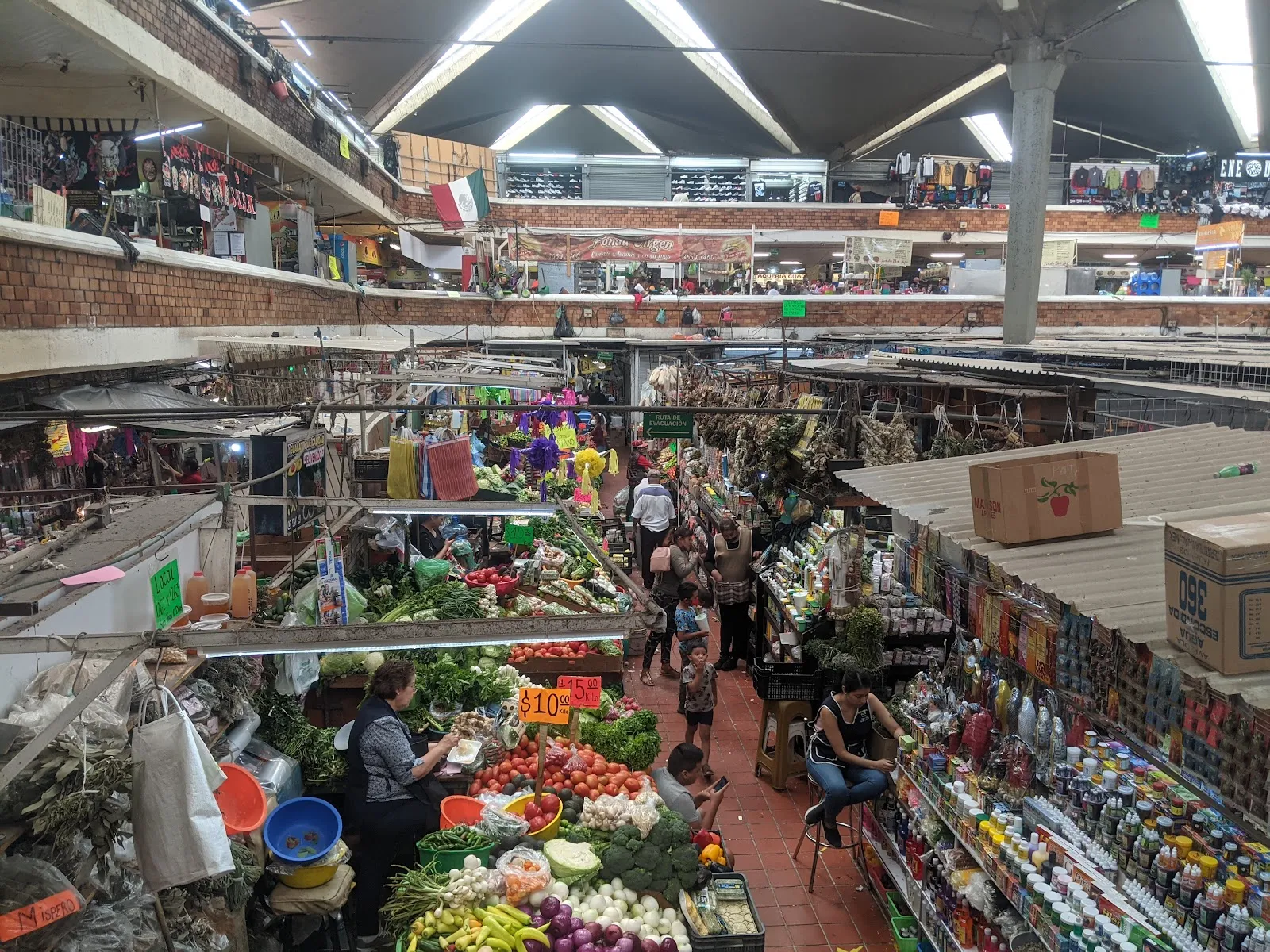
Mercado Libertad, known locally as Mercado San Juan de Dios, is a covered market on Calle Dionisio Rodríguez in Guadalajara, just south of the Hospicio Cabañas. It opened in 1958 and has three floors with close to 3,000 stalls. Leather goods, sandals, sweets, football jerseys, fruit, spices and household items fill the aisles, and a large food section serves torta ahogada, birria and pozole. The layout is a maze, so plan several hours. The Plaza de los Mariachis is right outside.

Name, architect and opening in 1958
Mercado Libertad - San Juan de Dios

The market is officially Mercado Libertad. Most people in Guadalajara call it Mercado San Juan de Dios, after the barrio and the church of the same name. It stands just south of the Hospicio Cabañas, a short walk from the historic center.

The architect was Alejandro Zohn, and the market was inaugurated on 30 December 1958. It replaced an older market on the site. The design relies on bold lines and a practical layout, planned to hold a very large number of stalls and the daily traffic of buyers and sellers.

Today the building has three floors and close to 3,000 stands and stalls. It is open every day and works as a working neighborhood market as much as a sight, so locals shop here alongside visitors.

What is sold inside
Mercado Libertad - San Juan de Dios

The range is wide. Stalls sell fresh fruit and vegetables, seafood, spices, candies, fabric, jewelry, toys, household goods and clothing. There are leather sandals, belts, shoes and phone cases, guitars, and football jerseys that can be made with a custom name. Services are here too, including lottery sales and money exchange. You may also see live chickens for sale.

The largest part of the market is general retail, and some stalls sell imitation branded goods. Many souvenir stalls carry the same items, so a walk through before buying saves time and money.

For handmade work, the artisan towns of Tlaquepaque and Tonalá, just outside Guadalajara, are better sources. Their workshops make silver jewelry, glassware, copper pieces and ceramics. The Tonalá street market runs on Thursdays and Sundays.

Bargaining is usual here, as long as it stays polite. Prices in most other Guadalajara shops are fixed, so this is the place to practice.

Eating in the market

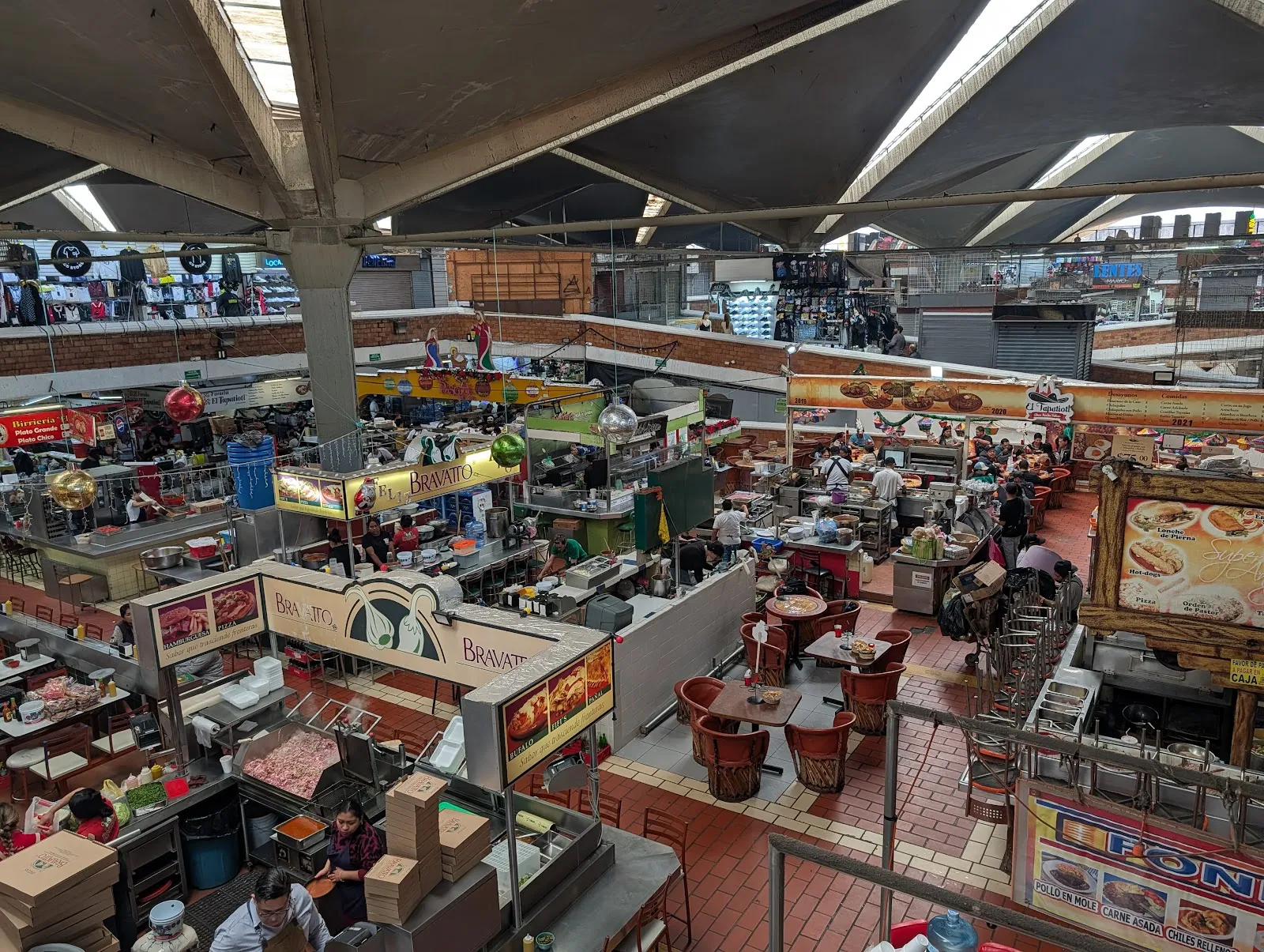
The food section is big enough to take up a visit by itself. Stalls and small counters sell regional dishes, and there are even sushi and ramen stands. A simple way to choose is to watch where local customers are sitting and take a stool there.

The local dish to try is torta ahogada. It is a bread roll filled with fried pork and covered in a tomato and chile sauce. It comes with avocado, onion and radish. The sauce is often made with chiles de árbol, and the sandwich is traditionally eaten with a spoon. Some versions are very hot, and many stalls put extra hot sauce on the side.

Other dishes to look for are birria, a slow-cooked goat or lamb in a tomato broth with tortillas and salsa, and pozole, a pork or chicken stew with corn. Fish ceviche is made with whatever is fresh that day and served on tostadas. Breakfast stalls serve eggs with beans, white cheese and tortillas. Tacos al pastor, barbacoa and carnitas are common, and the market is the one place in the city to find the torta loca.

To drink, try tejuino, a chilled fermented corn drink served with lime and salt. Fresh juices are sold at stalls throughout.

Getting around and planning the visit

The aisles are tightly packed and the layout is a maze, so allow enough time and ask a vendor if you are looking for something specific. Staff and vendors are generally helpful when asked.

Getting to the market by car can be slow, particularly at weekends. There is a paid parking lot. The entrance, a restroom and the parking area are wheelchair accessible. Card and mobile payments are accepted at the market, though the restrooms charge a small fee in coins.

The Plaza de los Mariachis is right outside, and the Hospicio Cabañas is close by, so many visitors combine the three.

Guided street food walks pass through the market and stop at several stalls. They explain the history of the market and the origin of each dish, which helps if the number of stalls feels overwhelming.

FAQ

How long do you need at Mercado Libertad?

Plan two to four hours. The market has three floors and a maze-like layout, and the food section can take up much of the visit.

What should you eat at Mercado San Juan de Dios?

Start with torta ahogada, the Guadalajara sandwich in spicy sauce. Birria, pozole, tacos al pastor and tejuino, a fermented corn drink, are also common.

Is Mercado Libertad the same as Mercado San Juan de Dios?

Yes. Mercado Libertad is the official name, and San Juan de Dios is the name locals use, after the barrio where it stands.

Can you bargain at the market?

Polite bargaining is expected at many stalls. Most shops elsewhere in Guadalajara have fixed prices.

Is the market wheelchair accessible?

The entrance, a restroom and the parking lot are wheelchair accessible. The aisles are crowded, so the market is easier to navigate on a weekday.

When did Mercado Libertad open?

It was inaugurated on 30 December 1958. Alejandro Zohn designed it to replace an older market.

More must-sees in Guadalajara

Explore all