Plan a trip
Language: English
Trip plannerPlan your trip on a map

Top destinations

EnglishDeutschFrançaisEspañolPortuguêsPortuguês (BR)Italiano
Travel advisory · MexicoSome governments advise against travel to parts of Mexico.The warnings cover only these areas: Colima, Guerrero, Sinaloa, Chiapas, Chihuahua, Federal Highway 199 San Cristóbal de las Casas–Palenque, Guanajuato, south of Highways 43D and 45D, Guatemala border region, Chiapas, Lagunas de Zempoala National Park, Michoacán, Nayarit, within 20 km of Sinaloa and Durango border, Nuevo León, except Monterrey, Piedras Negras, Route 85 Monterrey–Nuevo Laredo, Sonora, Tamaulipas, Tecate, Tijuana, US border region, Zacatecas.Advice depends on your passport. Read your own government's advice before you book.Official advice
Areas with warnings
  • Colima · avoid all travel · Canada, Germany, France, UK
  • Guerrero · avoid all travel · Canada, Germany, Spain, France, New Zealand, UK
  • Sinaloa · avoid all travel · Canada, Germany, Spain, France, New Zealand, UK
  • Chiapas · avoid non-essential travel · Canada, Spain, France
  • Chihuahua · avoid non-essential travel · Canada, France, UK
  • Federal Highway 199 San Cristóbal de las Casas–Palenque · avoid non-essential travel · France, UK
  • Guanajuato, south of Highways 43D and 45D · avoid non-essential travel · Canada, New Zealand
  • Guatemala border region, Chiapas · avoid non-essential travel · Germany, France, New Zealand
  • Lagunas de Zempoala National Park · avoid non-essential travel · Canada, New Zealand
  • Michoacán · avoid non-essential travel · Canada, Germany, New Zealand, UK
  • Nayarit, within 20 km of Sinaloa and Durango border · avoid non-essential travel · Canada, New Zealand
  • Nuevo León, except Monterrey · avoid non-essential travel · Canada, New Zealand
  • Piedras Negras · avoid non-essential travel · Spain, France
  • Route 85 Monterrey–Nuevo Laredo · avoid non-essential travel · Spain, France
  • Sonora · avoid non-essential travel · Canada, New Zealand
  • Tamaulipas · avoid non-essential travel · Canada, France, UK
  • Tecate · avoid non-essential travel · France, UK
  • Tijuana · avoid non-essential travel · France, UK
  • US border region · avoid non-essential travel · Germany, Spain, France
  • Zacatecas · avoid non-essential travel · Canada, Germany, Spain, France, UK

Also named by one government: Celaya–Irapuato–Salamanca triangle, Guanajuato (France), Culiacán and surrounding area (France), North of Ciudad Victoria, Tamaulipas (Germany), Route 129 Martinez de la Torre–Teziutlán (France), Route 131 Tapacoyan–Perote (France), Route 180 Martinez de la Torre–Papantla secondary roads (France), Route 40 Monterrey–Reynosa (France), Southern Michoacán from Uruapán to the coast (France), Acapulco (France), Baja California, except Tijuana and Tecate (France), Ciudad Acuña (Spain), Ciudad Juárez and surrounding area (Spain), Ciudad Obregón (France), Coahuila, except southern part (New Zealand), Coatzacoalcos (France), Colonias north and north-east of the Zócalo, Mexico City (France), Durango (France), East Nuevo León, bordering Tamaulipas (France), Guanajuato (Spain), Guanajuato, Highway 45 between León and Irapuato (New Zealand), Guanajuato, south-west of Highway 45D (UK), Jalisco, within 50 km of Michoacán border (Canada), Monclova (Spain), Morelos (France), Nayarit (France), Nogales (France), Non-tourist rural areas of Baja California (Spain), Non-tourist rural areas of Chihuahua (Spain), Non-tourist rural areas of Coahuila (Spain), Non-tourist rural areas of Durango (Spain), Non-tourist rural areas of Sonora (Spain), Northern municipalities of Jalisco (UK), Northern Tamaulipas from San Fernando to US border (Spain), Northern Veracruz bordering Tamaulipas (Spain), Northern Veracruz from Martinez de la Torre (France), Route 150D Puebla–Orizaba (France), Route 190 Oaxaca–Santo Domingo Tehuantepec (France), Route 85 and 83 Monterrey–Ciudad Victoria–Tampico (France), Route 95 Mexico City–Cuernavaca (France), Selva Lacandona (France), South and south-west of Lake Chapala, Jalisco (UK), South-west Jalisco and Los Altos, except Puerto Vallarta (France), South-west Michoacán (France), South-west Tamaulipas (France), Southern Guanajuato state (France), Southern Michoacán south of Morelia (Spain), Strip within 40 km of Guatemalan border, Chiapas (UK), Tepic (New Zealand), Toluca (France), Veracruz city (France)

GovernmentAdviceUpdatedRead the advice
United Kingdom (FCDO)No advice against the whole country (regional advisories)–Read the advice
United States (State Dept)Exercise increased cautionMay 29, 2026Read the advice
Canada (Global Affairs)Exercise a high degree of caution (regional advisories)–Read the advice
Germany (Auswärtiges Amt)Besondere Vorsicht walten lassen (Sicherheitslage) (regional advisories)Oct 19, 2026Read the advice
New Zealand (SafeTravel)Exercise increased caution (regional advisories)–Read the advice
France (Ministry for Europe and Foreign Affairs)Vigilance renforcée pour le reste du pays (regional advisories)–Read the advice

Checked daily from the governments' published advice; last checked Nov 2, 2026. RoamLedger summarises official advice; it is not advice from any government.

Catedral
Church

Guadalajara's Cathedral

Guadalajara Cathedral in the Centro Histórico: neo-Gothic towers, crypts, stained glass and evening lights on the plaza. You can go inside for free.

Guadalajara Cathedral, formally the Catedral Basílica de la Asunción de María Santísima, stands on Avenida Alcalde in the Centro Histórico. Its two yellow-tiled neo-Gothic towers rise about 65 metres and mark the city's skyline. The body of the church is Spanish Renaissance, and chapels, altars and stained glass fill the interior. Below the main altar are the crypts, where archbishops and bishops are buried. Entry is free, and the building is still an active church, so daytime services are part of the visit. Come back after dark to see the facade lit.

From an adobe church to the 1618 cathedral
Guadalajara's Cathedral

The first church on this site went up in 1541. It was made of adobe with a thatched roof, and a fire destroyed it soon after. The city had been founded in 1542, and when the Catholic see moved here in 1560, the King of Spain ordered a new cathedral.

Construction began in the 1560s and continued for roughly five decades, with the building finished in the early 17th century. The mix of styles you see today comes from that long build and from later reconstruction.

The towers and the facade
Guadalajara's Cathedral

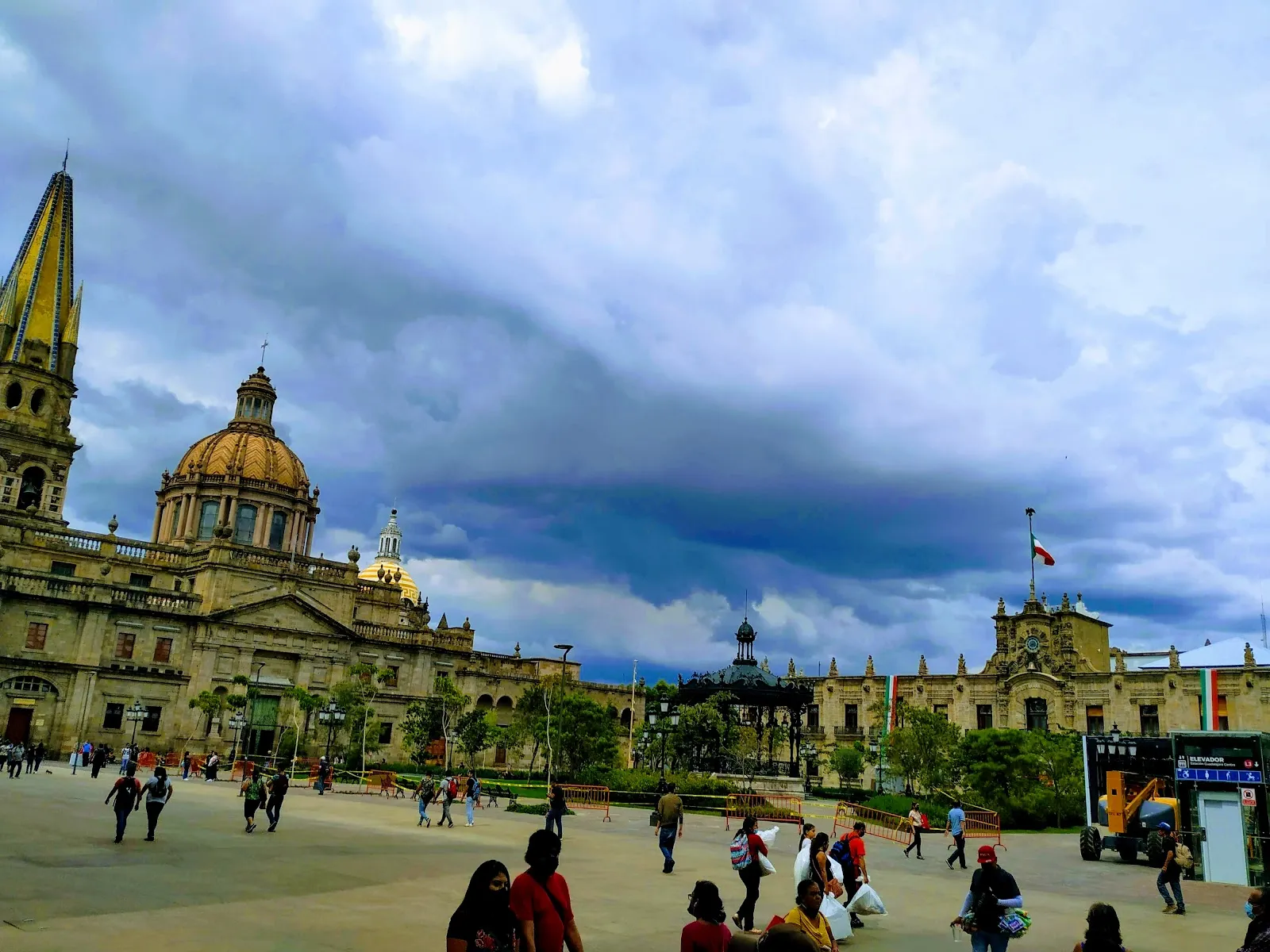
The towers are the part everyone recognises. Earthquake damage in 1818 brought the original towers down, and the neo-Gothic pair that replaced them was built in the 19th century. They are covered in yellow tiles and are about 65 metres tall.

The rest of the church is Spanish Renaissance, and the facade combines elements usually described as Gothic, Baroque and Neoclassical. Because of this, the towers and the body of the building look noticeably different from each other. The cathedral faces Plaza de los Laureles, and the Plaza de Armas runs along its side.

Inside the cathedral

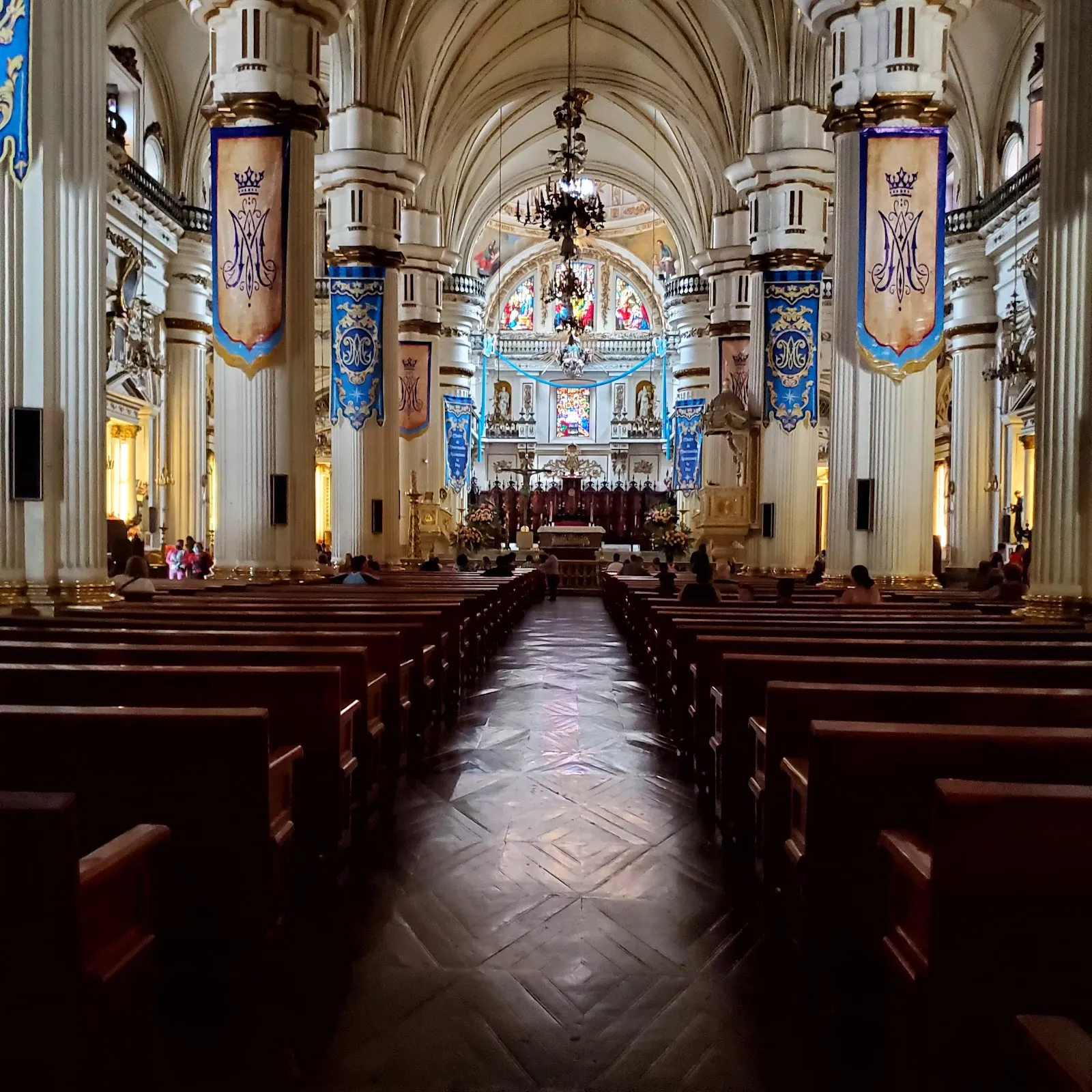
The nave is spacious and quiet, and the stained glass softens the light. Above the altar, a stained-glass Last Supper catches the daylight at the right hour. A pipe organ is still in use, and the acoustics are noticeable when a service or wedding is under way.

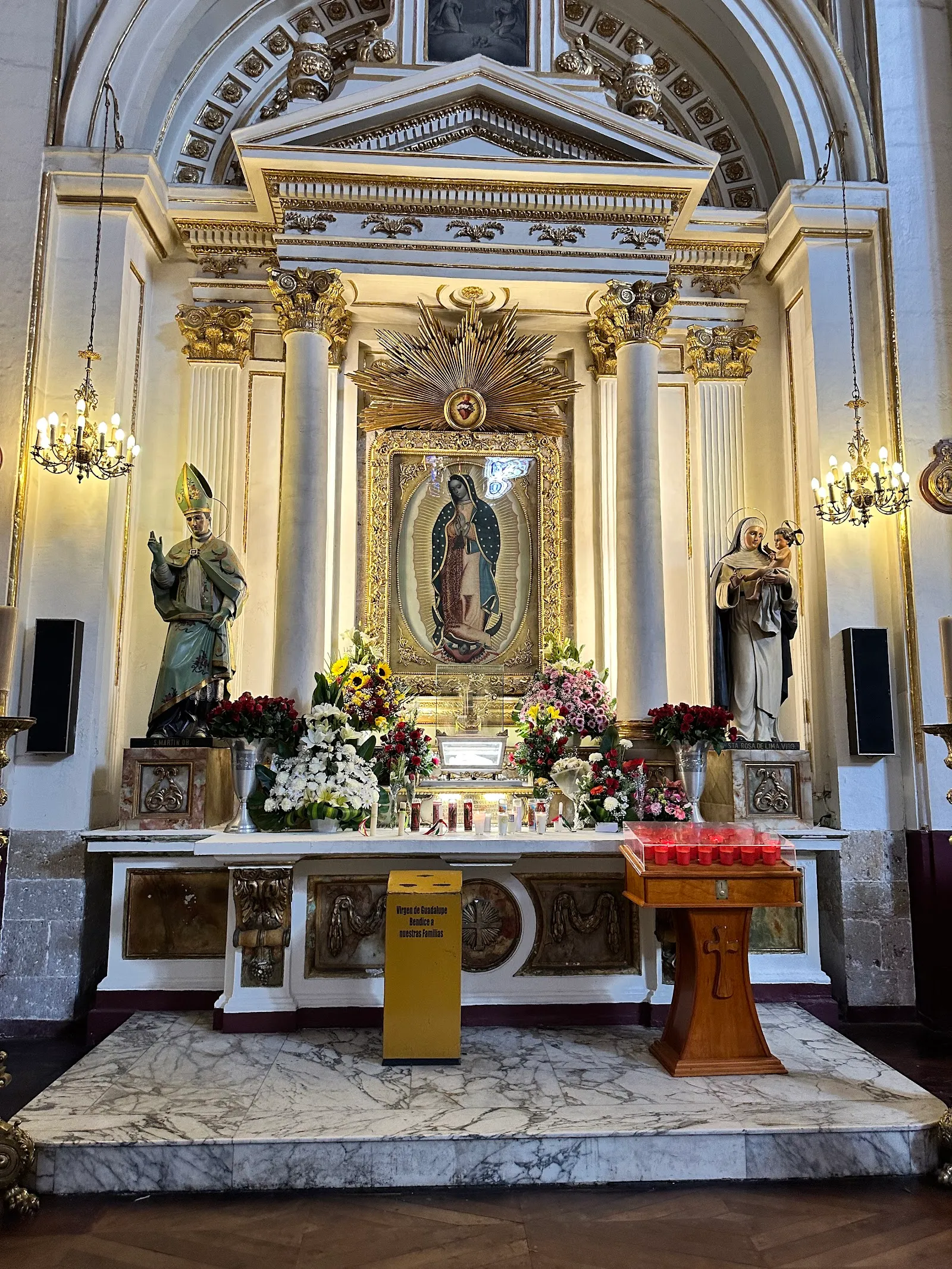
Several chapels hold paintings attributed to Cristóbal de Villalpando, Miguel Cabrera and Murillo. The cathedral also keeps a martyr's relic, a sculpture of the Virgen de la Rosa and the remains of Santa Inocencia.

Beneath the main altar are the crypts. The archbishops and other church leaders of the diocese rest there.

The plaza and the evening

The cathedral sits among plazas, and the surrounding area is a place to sit and watch the city. Mariachi music plays nearby, and street vendors work around the Plaza de Armas. Churches around the centre ring their bells, so the soundscape is lively by day.

After dark the building is lit, and the plaza is lit in colour. On some nights a history show is projected onto the cathedral walls, so an evening visit adds something even if you saw the interior earlier in the day.

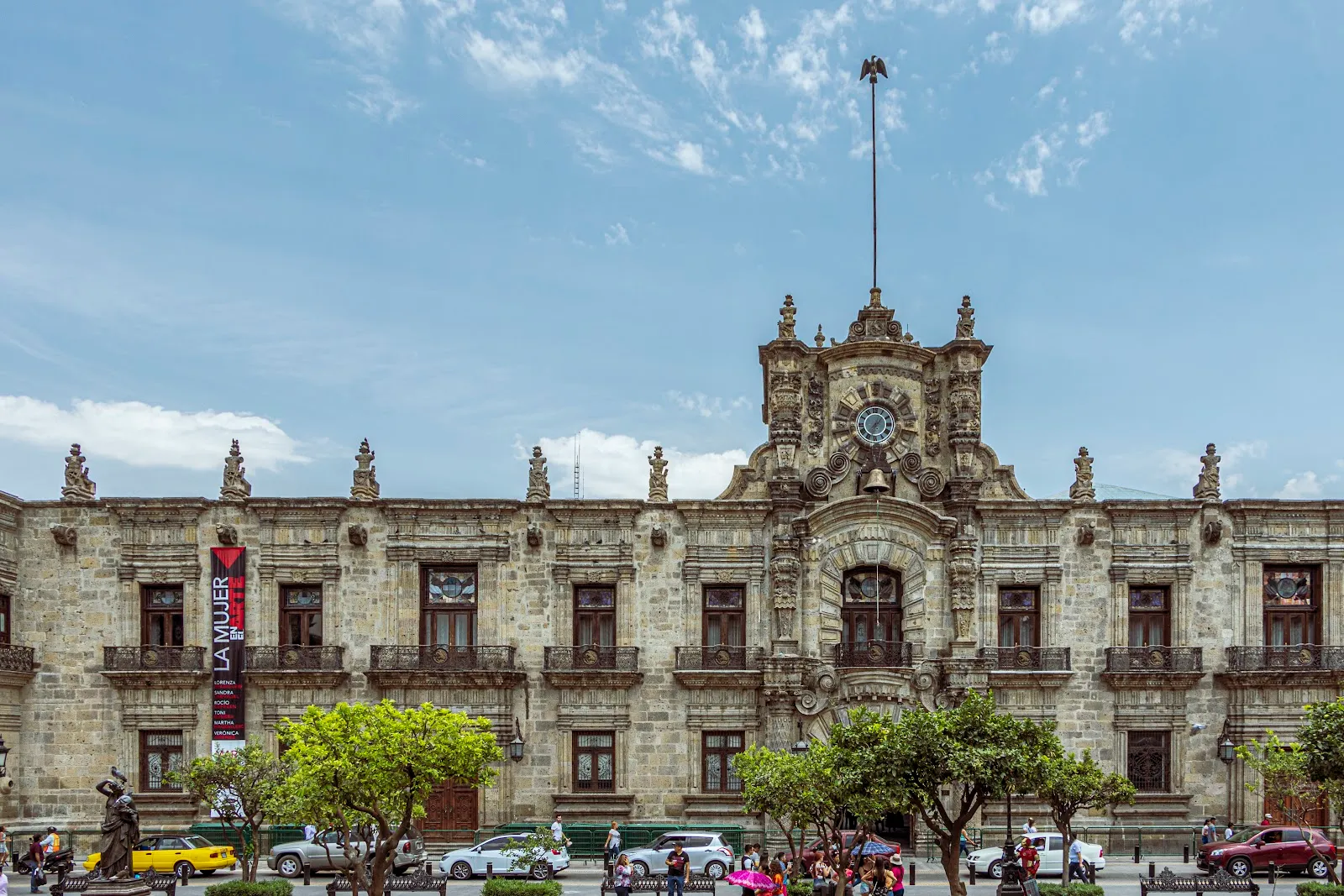
The Palacio de Gobierno, with Orozco murals inside, and the Teatro Degollado are both close by on foot.

FAQ

Is there an entry fee for Guadalajara Cathedral?

No. Visitors can go inside for free, or simply enjoy the building from the plaza.

Where is Guadalajara Cathedral?

It is at Av. Alcalde 10 in the Zona Centro, in the Centro Histórico. The Plaza de Armas is beside it and the Plaza de los Laureles is in front.

Can you see the crypts?

Yes. The crypts lie beneath the main altar and hold the remains of archbishops and bishops.

Is the cathedral lit at night?

Yes. The building is lit in the evening, and the plaza has coloured lights. On some nights a history show is projected onto the walls.

Is there wheelchair access?

The cathedral has a wheelchair accessible entrance and a wheelchair accessible parking lot.

More must-sees in Guadalajara

Explore all