Plan a trip
Language: English
Trip plannerPlan your trip on a map

Top destinations

EnglishDeutschFrançaisEspañolPortuguêsPortuguês (BR)Italiano
Travel advisory · MexicoSome governments advise against travel to parts of Mexico.The warnings cover only these areas: Colima, Guerrero, Sinaloa, Chiapas, Chihuahua, Federal Highway 199 San Cristóbal de las Casas–Palenque, Guanajuato, south of Highways 43D and 45D, Guatemala border region, Chiapas, Lagunas de Zempoala National Park, Michoacán, Nayarit, within 20 km of Sinaloa and Durango border, Nuevo León, except Monterrey, Piedras Negras, Route 85 Monterrey–Nuevo Laredo, Sonora, Tamaulipas, Tecate, Tijuana, US border region, Zacatecas.Advice depends on your passport. Read your own government's advice before you book.Official advice
Areas with warnings
  • Colima · avoid all travel · Canada, Germany, France, UK
  • Guerrero · avoid all travel · Canada, Germany, Spain, France, New Zealand, UK
  • Sinaloa · avoid all travel · Canada, Germany, Spain, France, New Zealand, UK
  • Chiapas · avoid non-essential travel · Canada, Spain, France
  • Chihuahua · avoid non-essential travel · Canada, France, UK
  • Federal Highway 199 San Cristóbal de las Casas–Palenque · avoid non-essential travel · France, UK
  • Guanajuato, south of Highways 43D and 45D · avoid non-essential travel · Canada, New Zealand
  • Guatemala border region, Chiapas · avoid non-essential travel · Germany, France, New Zealand
  • Lagunas de Zempoala National Park · avoid non-essential travel · Canada, New Zealand
  • Michoacán · avoid non-essential travel · Canada, Germany, New Zealand, UK
  • Nayarit, within 20 km of Sinaloa and Durango border · avoid non-essential travel · Canada, New Zealand
  • Nuevo León, except Monterrey · avoid non-essential travel · Canada, New Zealand
  • Piedras Negras · avoid non-essential travel · Spain, France
  • Route 85 Monterrey–Nuevo Laredo · avoid non-essential travel · Spain, France
  • Sonora · avoid non-essential travel · Canada, New Zealand
  • Tamaulipas · avoid non-essential travel · Canada, France, UK
  • Tecate · avoid non-essential travel · France, UK
  • Tijuana · avoid non-essential travel · France, UK
  • US border region · avoid non-essential travel · Germany, Spain, France
  • Zacatecas · avoid non-essential travel · Canada, Germany, Spain, France, UK

Also named by one government: Celaya–Irapuato–Salamanca triangle, Guanajuato (France), Culiacán and surrounding area (France), North of Ciudad Victoria, Tamaulipas (Germany), Route 129 Martinez de la Torre–Teziutlán (France), Route 131 Tapacoyan–Perote (France), Route 180 Martinez de la Torre–Papantla secondary roads (France), Route 40 Monterrey–Reynosa (France), Southern Michoacán from Uruapán to the coast (France), Acapulco (France), Baja California, except Tijuana and Tecate (France), Ciudad Acuña (Spain), Ciudad Juárez and surrounding area (Spain), Ciudad Obregón (France), Coahuila, except southern part (New Zealand), Coatzacoalcos (France), Colonias north and north-east of the Zócalo, Mexico City (France), Durango (France), East Nuevo León, bordering Tamaulipas (France), Guanajuato (Spain), Guanajuato, Highway 45 between León and Irapuato (New Zealand), Guanajuato, south-west of Highway 45D (UK), Jalisco, within 50 km of Michoacán border (Canada), Monclova (Spain), Morelos (France), Nayarit (France), Nogales (France), Non-tourist rural areas of Baja California (Spain), Non-tourist rural areas of Chihuahua (Spain), Non-tourist rural areas of Coahuila (Spain), Non-tourist rural areas of Durango (Spain), Non-tourist rural areas of Sonora (Spain), Northern municipalities of Jalisco (UK), Northern Tamaulipas from San Fernando to US border (Spain), Northern Veracruz bordering Tamaulipas (Spain), Northern Veracruz from Martinez de la Torre (France), Route 150D Puebla–Orizaba (France), Route 190 Oaxaca–Santo Domingo Tehuantepec (France), Route 85 and 83 Monterrey–Ciudad Victoria–Tampico (France), Route 95 Mexico City–Cuernavaca (France), Selva Lacandona (France), South and south-west of Lake Chapala, Jalisco (UK), South-west Jalisco and Los Altos, except Puerto Vallarta (France), South-west Michoacán (France), South-west Tamaulipas (France), Southern Guanajuato state (France), Southern Michoacán south of Morelia (Spain), Strip within 40 km of Guatemalan border, Chiapas (UK), Tepic (New Zealand), Toluca (France), Veracruz city (France)

GovernmentAdviceUpdatedRead the advice
United Kingdom (FCDO)No advice against the whole country (regional advisories)–Read the advice
United States (State Dept)Exercise increased cautionMay 29, 2026Read the advice
Canada (Global Affairs)Exercise a high degree of caution (regional advisories)–Read the advice
Germany (Auswärtiges Amt)Besondere Vorsicht walten lassen (Sicherheitslage) (regional advisories)Oct 19, 2026Read the advice
New Zealand (SafeTravel)Exercise increased caution (regional advisories)–Read the advice
France (Ministry for Europe and Foreign Affairs)Vigilance renforcée pour le reste du pays (regional advisories)–Read the advice

Checked daily from the governments' published advice; last checked Nov 2, 2026. RoamLedger summarises official advice; it is not advice from any government.

Basílica de Zapopan
Church

Basílica de Nuestra Señora de Zapopan

Basílica de Zapopan, Guadalajara: baroque church, the small Virgin of Zapopan statue, the October pilgrimage and a Friday and Saturday light show.

The Basílica de Nuestra Señora de Zapopan is a Franciscan church in the historic centre of Zapopan, Guadalajara. It was built in the baroque style between 1689 and 1730 and holds the small wooden statue of the Virgin of Zapopan, patroness of Jalisco, whom pilgrims visit all year. Inside are the main prayer area with a section on each side, paintings and sculpture, and a statue of Pope John Paul II that draws admiration. Outside, a wide promenade leads to a plaza with shops, restaurants and local vendors.

The Virgin of Zapopan
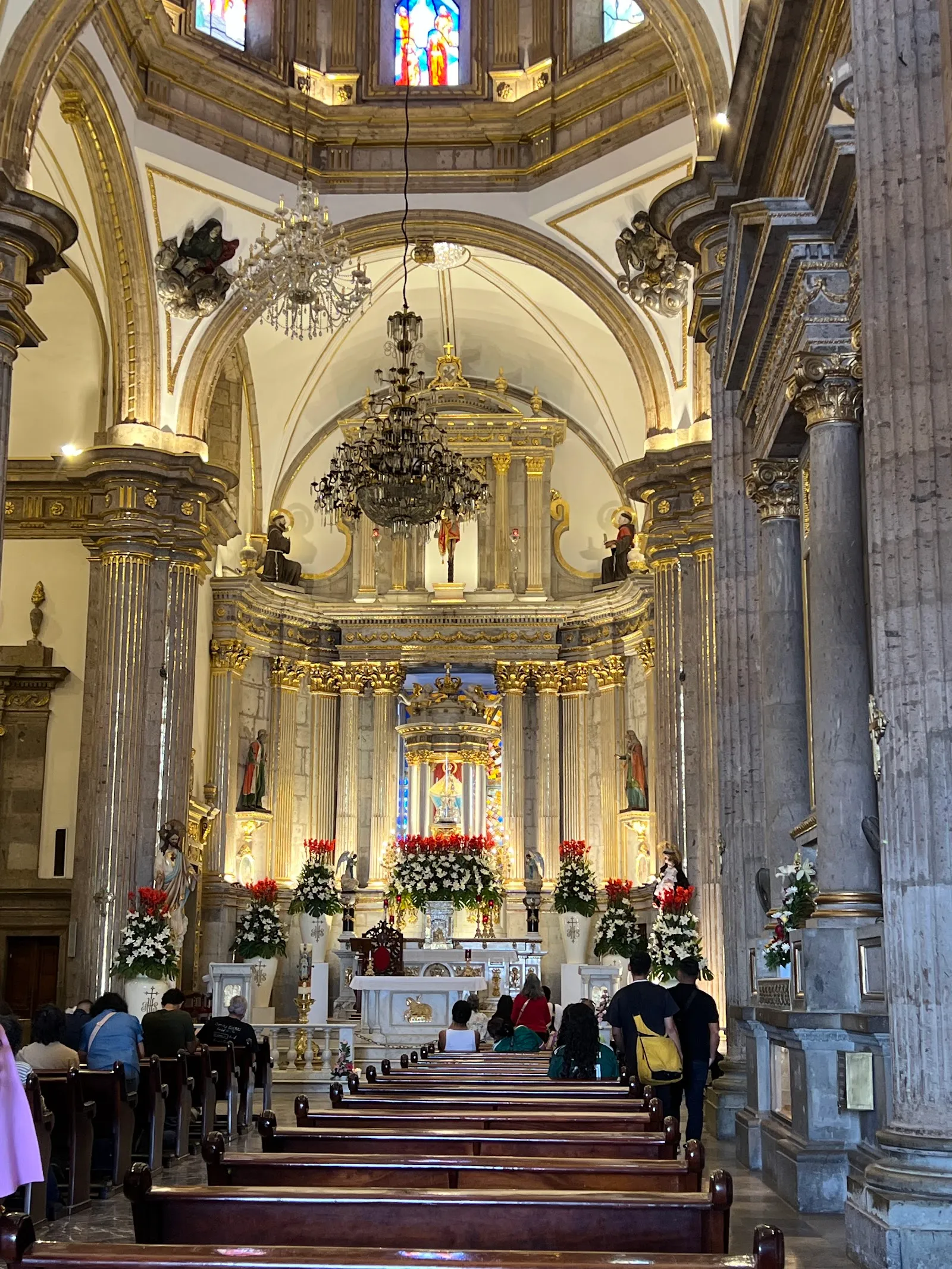
Basílica de Nuestra Señora de Zapopan

The basilica was built to house Nuestra Señora de Zapopan, a wooden figure of the Virgin Mary about 34 centimetres tall that dates from the 16th century. Pilgrims visit it year-round. The Virgin is the patroness of Jalisco and is also invoked as patroness of storms. The Catholic Church has officially recognised the statue for its miracles, and believers travel from many countries to see it.

The church holds the title of basilica, an honour given to certain buildings tied to a historical event or a major saint. It is described as the third most important pilgrimage site in Mexico.

The pilgrimage on 12 October
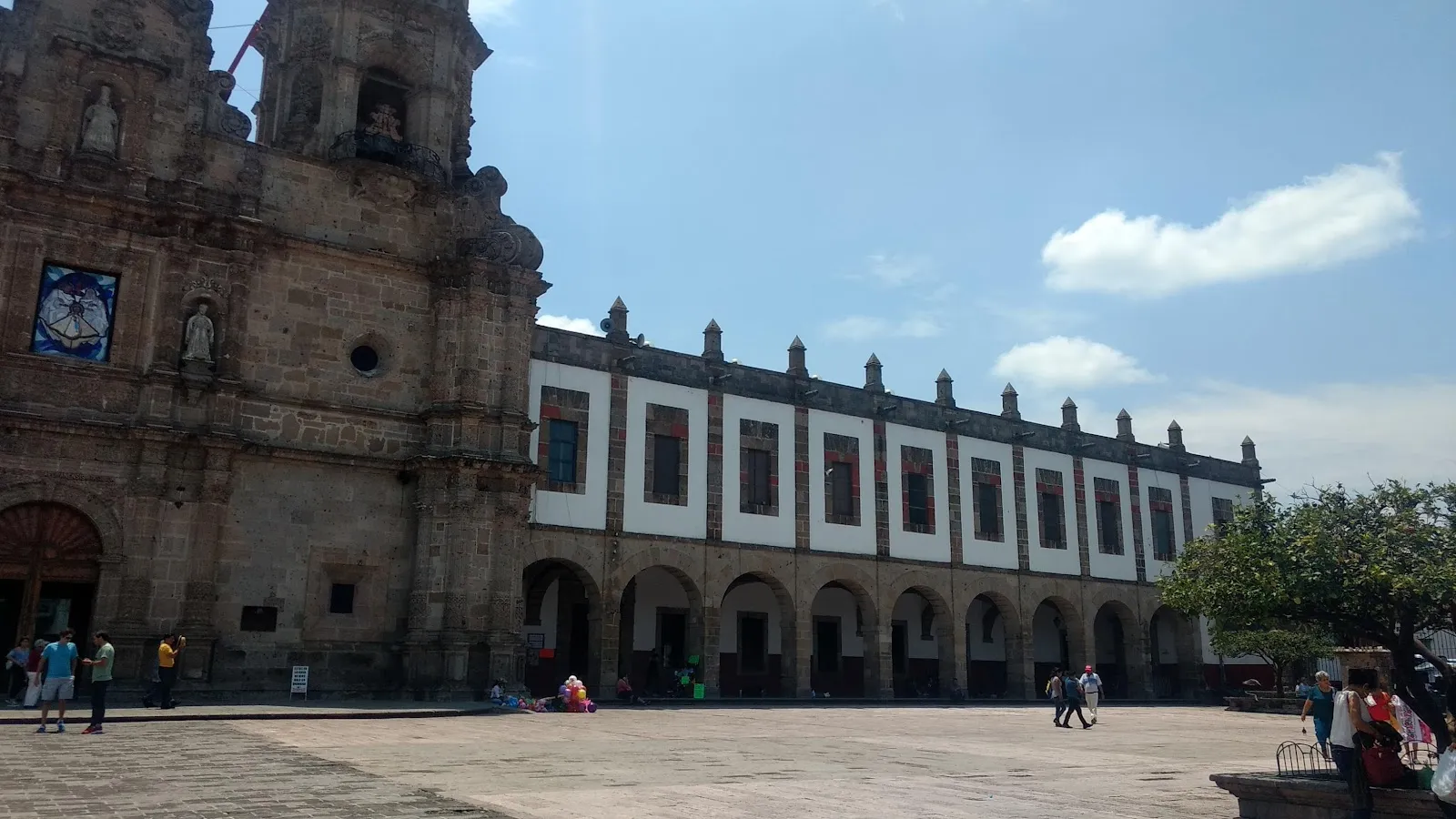
Basílica de Nuestra Señora de Zapopan

Every year on 12 October the statue is at the centre of one of the largest pilgrimages in Mexico. It is carried in procession between Guadalajara Cathedral and the basilica, a route of about five miles (8 km). Many of the faithful follow on their knees, and the final stretch is made up the basilica's aisle to the altar, where they pray for favours. The procession has dancing and colourful traditional dress.

The festivities continue through October, when the plaza fills with dance, food and stalls selling souvenirs. If you want quiet, choose another month.

Architecture and what is inside

The Franciscans built the church between 1689 and 1730. The style is mainly baroque, with plateresque elements. The façade is approached along a wide promenade several blocks long that ends at a large plaza and garden square.

Inside, the main prayer area is flanked by a section on each side, and each is worth a look. The church holds paintings and sculptures, and a permanent exhibit of Huichol, Tepehuan and Cora art. The interior decoration is rich. Some visitors find the modern advertising inside out of place, so the view of the church from the plaza outside is a good counterpoint. The statue of Pope John Paul II is another point of interest.

The plaza and the evening light show

On Friday and Saturday evenings the plaza fills with food stands, vendors, friends catching up and children running about. At 9pm the plaza darkens and the crowd falls quiet. A 3D light and sound show is then projected onto the façade, telling the history of Zapopan, a colonial town that became a suburb, and of the basilica itself.

On other days the streets around the church are still busy with small shops and restaurants, and local vendors set up right in front of the building.

Getting there and what is nearby

The basilica is a short walk from the LRT. The turquoise air-conditioned TUR buses also run to Zapopan, passing just south and west of the town centre, and continue to Tlaquepaque and Tonalá.

The Art Museum of Zapopan (MAZ), the city's main contemporary art gallery, is nearby, as is the Monumento Arcos de Zapopan at the eastern edge of the centre. To combine the church with a walk, leave Bosque los Colomos by its northern Avenida Patria entrance. Historic downtown Zapopan is about 20 minutes uphill on foot.

FAQ

Is there an entry fee for the Basílica de Zapopan?

The basilica is among the free attractions of historic downtown Zapopan. It is an active church, so keep your voice low.

How long do you need at the basilica?

Allow 30 to 60 minutes for the church and plaza. Stay longer if you want to see the evening light show or explore the shops and restaurants around it.

When is the light show?

On Friday and Saturday evenings, at 9pm. It is a 3D light and sound show projected onto the façade, telling the history of Zapopan and the basilica.

What happens on 12 October?

A major pilgrimage takes place, with the statue of the Virgin of Zapopan carried in procession between Guadalajara Cathedral and the basilica. Many of the faithful follow on their knees, and the area is very busy.

How do you get to the Basílica de Zapopan?

It is a short walk from the LRT. The turquoise TUR buses also run to Zapopan.

More must-sees in Guadalajara

Explore all