Plan a trip
Language: English
Trip plannerPlan your trip on a map

Top destinations

EnglishDeutschFrançaisEspañolPortuguêsPortuguês (BR)Italiano
Travel advisory · MexicoSome governments advise against travel to parts of Mexico.The warnings cover only these areas: Colima, Guerrero, Sinaloa, Chiapas, Chihuahua, Federal Highway 199 San Cristóbal de las Casas–Palenque, Guanajuato, south of Highways 43D and 45D, Guatemala border region, Chiapas, Lagunas de Zempoala National Park, Michoacán, Nayarit, within 20 km of Sinaloa and Durango border, Nuevo León, except Monterrey, Piedras Negras, Route 85 Monterrey–Nuevo Laredo, Sonora, Tamaulipas, Tecate, Tijuana, US border region, Zacatecas.Advice depends on your passport. Read your own government's advice before you book.Official advice
Areas with warnings
  • Colima · avoid all travel · Canada, Germany, France, UK
  • Guerrero · avoid all travel · Canada, Germany, Spain, France, New Zealand, UK
  • Sinaloa · avoid all travel · Canada, Germany, Spain, France, New Zealand, UK
  • Chiapas · avoid non-essential travel · Canada, Spain, France
  • Chihuahua · avoid non-essential travel · Canada, France, UK
  • Federal Highway 199 San Cristóbal de las Casas–Palenque · avoid non-essential travel · France, UK
  • Guanajuato, south of Highways 43D and 45D · avoid non-essential travel · Canada, New Zealand
  • Guatemala border region, Chiapas · avoid non-essential travel · Germany, France, New Zealand
  • Lagunas de Zempoala National Park · avoid non-essential travel · Canada, New Zealand
  • Michoacán · avoid non-essential travel · Canada, Germany, New Zealand, UK
  • Nayarit, within 20 km of Sinaloa and Durango border · avoid non-essential travel · Canada, New Zealand
  • Nuevo León, except Monterrey · avoid non-essential travel · Canada, New Zealand
  • Piedras Negras · avoid non-essential travel · Spain, France
  • Route 85 Monterrey–Nuevo Laredo · avoid non-essential travel · Spain, France
  • Sonora · avoid non-essential travel · Canada, New Zealand
  • Tamaulipas · avoid non-essential travel · Canada, France, UK
  • Tecate · avoid non-essential travel · France, UK
  • Tijuana · avoid non-essential travel · France, UK
  • US border region · avoid non-essential travel · Germany, Spain, France
  • Zacatecas · avoid non-essential travel · Canada, Germany, Spain, France, UK

Also named by one government: Celaya–Irapuato–Salamanca triangle, Guanajuato (France), Culiacán and surrounding area (France), North of Ciudad Victoria, Tamaulipas (Germany), Route 129 Martinez de la Torre–Teziutlán (France), Route 131 Tapacoyan–Perote (France), Route 180 Martinez de la Torre–Papantla secondary roads (France), Route 40 Monterrey–Reynosa (France), Southern Michoacán from Uruapán to the coast (France), Acapulco (France), Baja California, except Tijuana and Tecate (France), Ciudad Acuña (Spain), Ciudad Juárez and surrounding area (Spain), Ciudad Obregón (France), Coahuila, except southern part (New Zealand), Coatzacoalcos (France), Colonias north and north-east of the Zócalo, Mexico City (France), Durango (France), East Nuevo León, bordering Tamaulipas (France), Guanajuato (Spain), Guanajuato, Highway 45 between León and Irapuato (New Zealand), Guanajuato, south-west of Highway 45D (UK), Jalisco, within 50 km of Michoacán border (Canada), Monclova (Spain), Morelos (France), Nayarit (France), Nogales (France), Non-tourist rural areas of Baja California (Spain), Non-tourist rural areas of Chihuahua (Spain), Non-tourist rural areas of Coahuila (Spain), Non-tourist rural areas of Durango (Spain), Non-tourist rural areas of Sonora (Spain), Northern municipalities of Jalisco (UK), Northern Tamaulipas from San Fernando to US border (Spain), Northern Veracruz bordering Tamaulipas (Spain), Northern Veracruz from Martinez de la Torre (France), Route 150D Puebla–Orizaba (France), Route 190 Oaxaca–Santo Domingo Tehuantepec (France), Route 85 and 83 Monterrey–Ciudad Victoria–Tampico (France), Route 95 Mexico City–Cuernavaca (France), Selva Lacandona (France), South and south-west of Lake Chapala, Jalisco (UK), South-west Jalisco and Los Altos, except Puerto Vallarta (France), South-west Michoacán (France), South-west Tamaulipas (France), Southern Guanajuato state (France), Southern Michoacán south of Morelia (Spain), Strip within 40 km of Guatemalan border, Chiapas (UK), Tepic (New Zealand), Toluca (France), Veracruz city (France)

GovernmentAdviceUpdatedRead the advice
United Kingdom (FCDO)No advice against the whole country (regional advisories)–Read the advice
United States (State Dept)Exercise increased cautionMay 29, 2026Read the advice
Canada (Global Affairs)Exercise a high degree of caution (regional advisories)–Read the advice
Germany (Auswärtiges Amt)Besondere Vorsicht walten lassen (Sicherheitslage) (regional advisories)Oct 19, 2026Read the advice
New Zealand (SafeTravel)Exercise increased caution (regional advisories)–Read the advice
France (Ministry for Europe and Foreign Affairs)Vigilance renforcée pour le reste du pays (regional advisories)–Read the advice

Checked daily from the governments' published advice; last checked Nov 3, 2026. RoamLedger summarises official advice; it is not advice from any government.

Catedral de Morelia
Church

Catedral de Morelia

Morelia Cathedral, a baroque landmark of pink cantera stone built 1660 to 1744. See the twin towers, the organ and the Saturday night light show.

Morelia Cathedral stands on Avenida Madero in the historic center, next to the Plaza de Armas. Builders worked on it from 1660 to 1744, and the pink cantera stone facade is among the finest examples of Mexican Baroque. Its twin towers are visible from much of the old town. Inside are gilded altars, a large pipe organ and paintings by 18th-century artists. It is still a working church, so Mass is held here. The cathedral is lit after dark, and on Saturday evenings the streets around it fill with a light and fireworks show.

Built between 1660 and 1744
Catedral de Morelia
Catedral de Morelia

Construction of the cathedral began in 1660 and finished in 1744, a span of 84 years. That long timeline explains why the building mixes architectural styles. By the time it was completed it was one of the most important cathedrals in Mexico, and it remains one of the country's best examples of Spanish Baroque design.

The walls are made of cantera, a pink local stone. Over the centuries most of the surface has weathered to a softer pink, but some areas still show the stone's first, brighter color.

The towers and the facade
Catedral de Morelia
Catedral de Morelia

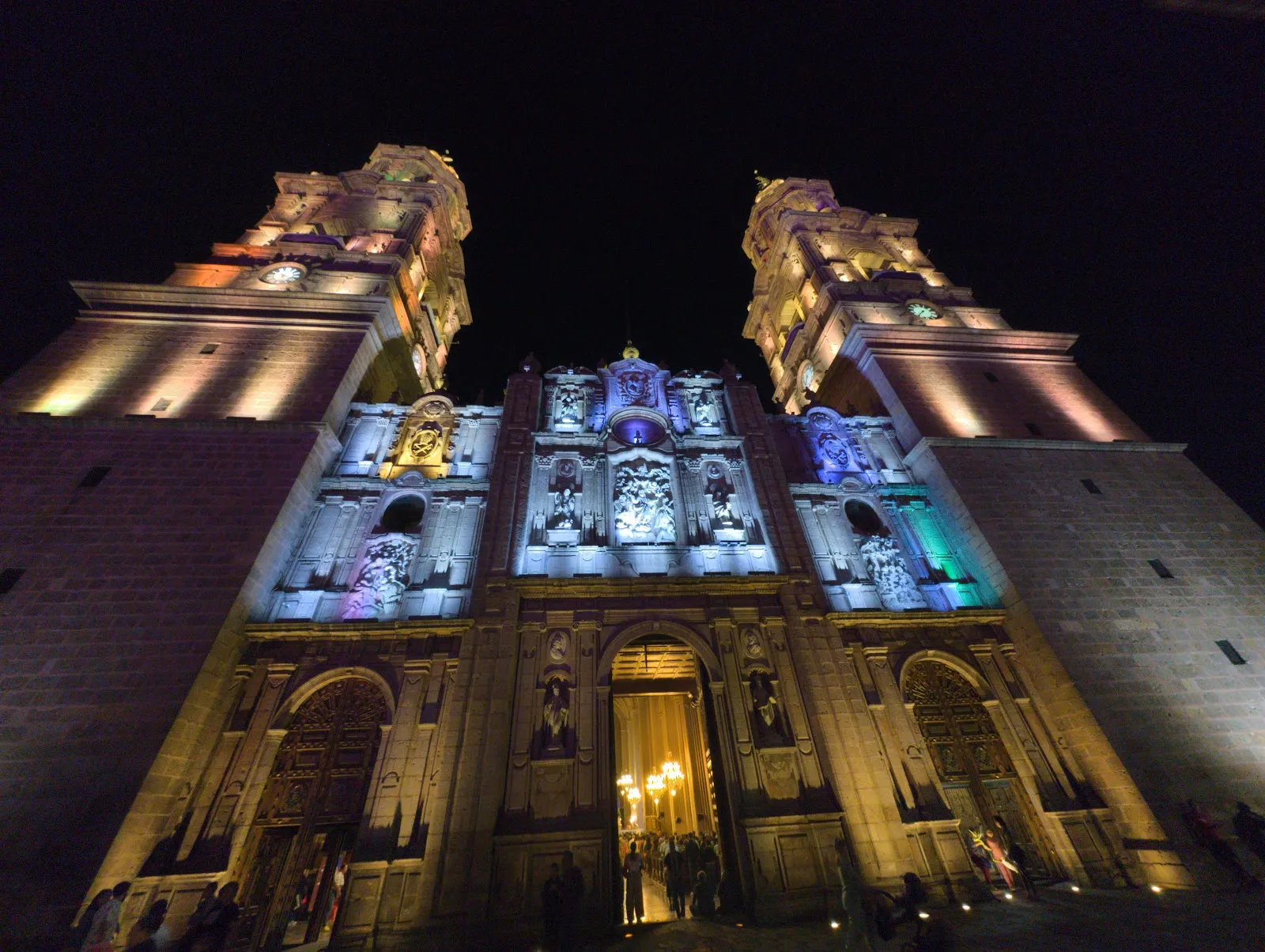
The twin towers are the cathedral's signature feature, and they rank among the tallest cathedral towers in Mexico. Each one shows the three phases of the long build. The bases follow a classical Herreresque style, the middle sections are baroque, and the tops are neoclassical, with many columns.

The cathedral runs along the side of the central plaza instead of facing it, and there is a plaza on each side. This gives you open space to step back and take in the full height of the front. The towers can be seen from far down the streets of the historic center.

Inside the cathedral

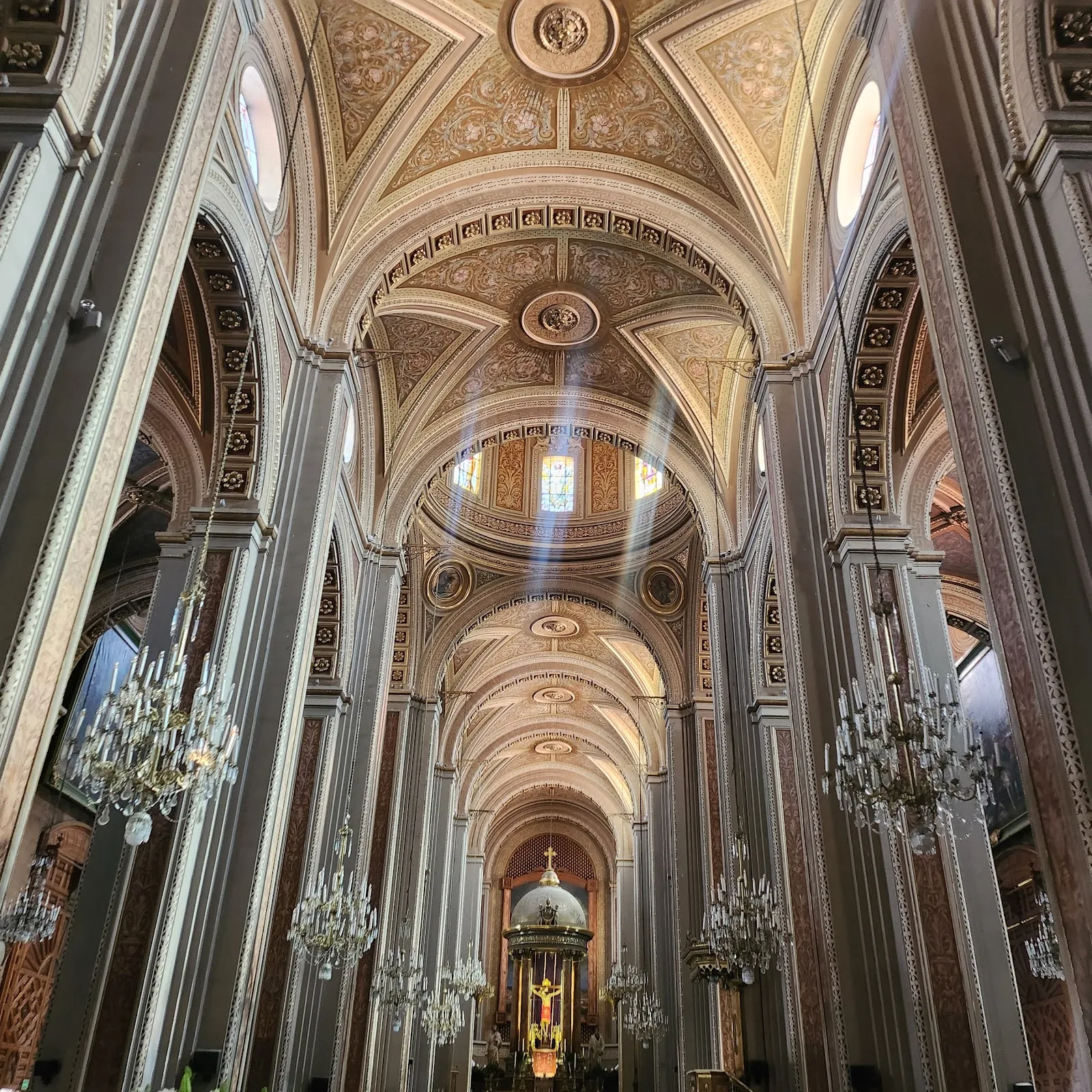
The interior has ornate, gilded altars and stained glass. A pipe organ, described as German and more than a century old, has around 4,600 pipes. The cathedral also holds paintings by 18th-century artists, among them Juan Rodríguez Juárez, José Maria de Ibarra and Miguel Cabrera.

You can attend Mass here, and there is an art museum connected to the cathedral. The building is kept clean and well maintained both inside and out.

After dark and on Saturday evenings

The cathedral is lit at night, and its carved stone details stand out against the dark sky. Every Saturday evening a light show with fireworks takes place at the cathedral. The street beside it is closed to traffic, and the area fills with people in their best clothes, vendors and families.

The cathedral is also a natural starting point for a tour of Morelia. The Plaza de Armas is right next to it, and guided walking tours of the center include it alongside other churches, squares and gardens.

FAQ

When was Morelia Cathedral built?

Work started in 1660 and ended in 1744, so it took 84 years. This is why the towers combine classical, baroque and neoclassical elements.

Is there a light show at the cathedral?

Yes. The cathedral is lit at night, and on Saturday evenings there is a light and fireworks show. The street beside it is closed to traffic then.

What is inside Morelia Cathedral?

There are gilded altars, stained glass, a pipe organ with about 4,600 pipes, and paintings by 18th-century artists such as Miguel Cabrera. An art museum is also linked to the cathedral.

Where is the cathedral?

It is on Avenida Francisco I. Madero Poniente in the historic center of Morelia, next to the Plaza de Armas.

Is the entrance wheelchair accessible?

Yes, the cathedral has a wheelchair accessible entrance and a wheelchair accessible parking lot. Restrooms are also available.
More must-sees in Morelia

Explore all