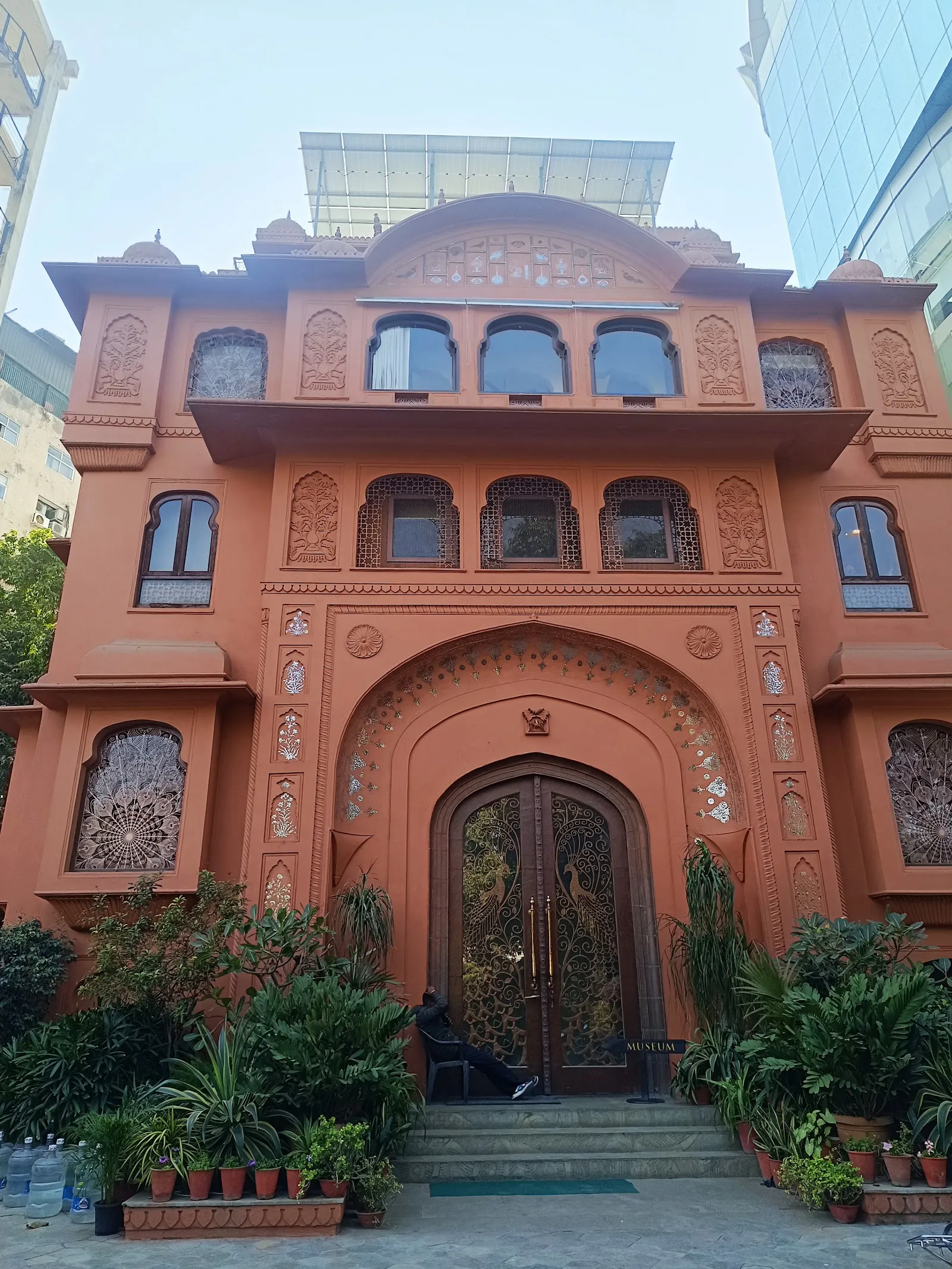
Hawa Mahal, the Palace of Winds, is a five-storey sandstone landmark on Hawa Mahal Road in Jaipur’s old city. Built in 1799 for the royal women to watch street life without being seen, it is known for its pink-and-red façade and 953 small lattice windows, or jharokhas. Go inside to see the courtyards, carved details and changing light through the windows, then climb the steep stairs for views over the old city. Across the road, rooftop cafés give you another angle on the famous façade.
A palace built for looking out
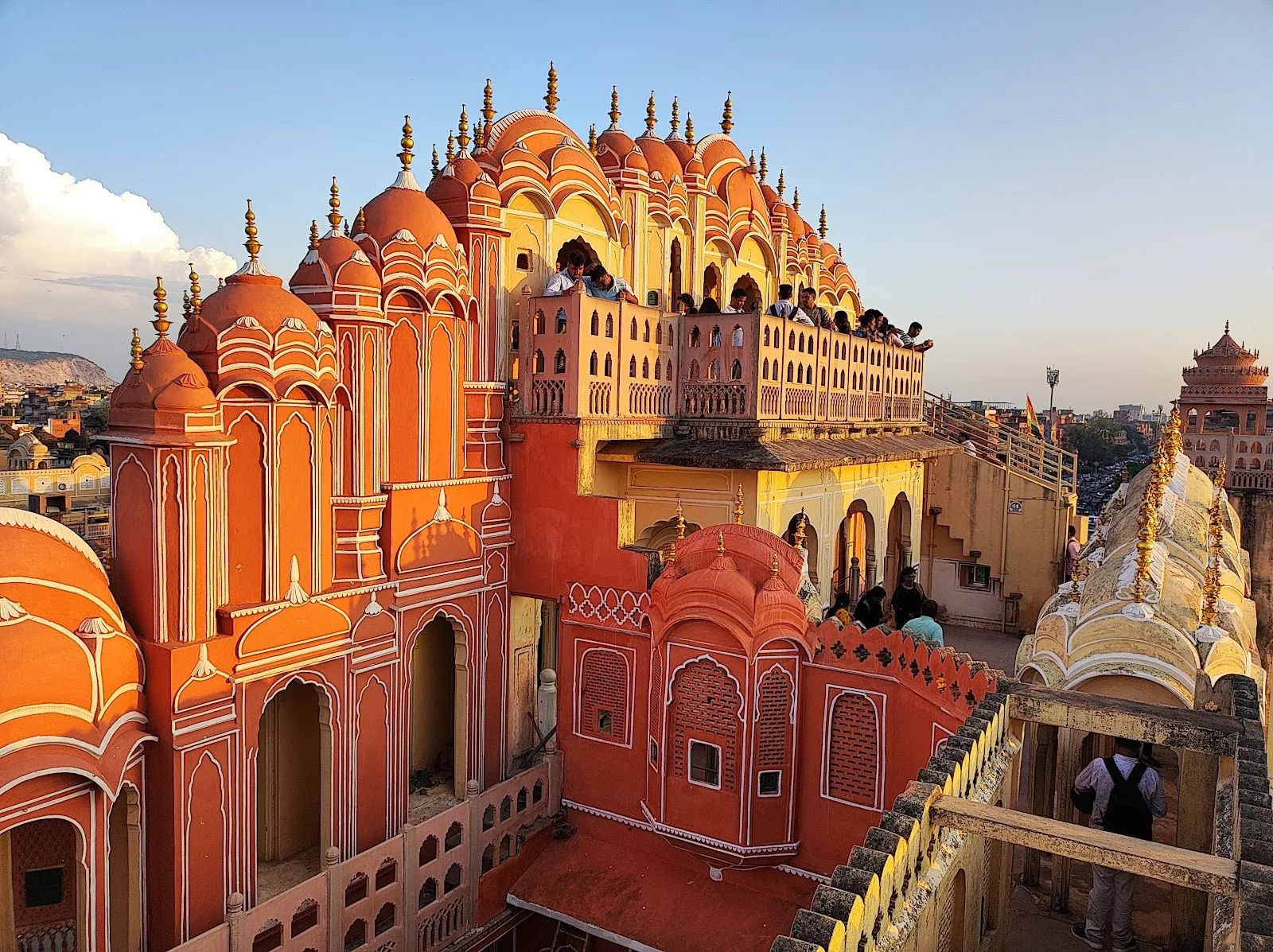
Maharaja Sawai Pratap Singh commissioned Hawa Mahal in 1799. The five-storey building was made as an extension of the City Palace and served the royal women of the household. Its many small windows let them watch processions, celebrations and everyday activity in the streets while remaining out of public view, in keeping with purdah customs.
The jharokhas, or small lattice windows, give the façade its honeycomb appearance. There are 953 of them, arranged across the tall pink-and-red sandstone front. Their screens provided privacy, while openings in the structure let air pass through the chambers. This airflow is the source of the name Hawa Mahal, commonly translated as Palace of Winds.
The building is also associated with the form of Lord Krishna’s crown. Its distinctive exterior is often the first thing people come to see, but the inside offers a different perspective: from within, you can look through the same screened windows that once framed the city for the royal household.
Inside the palace
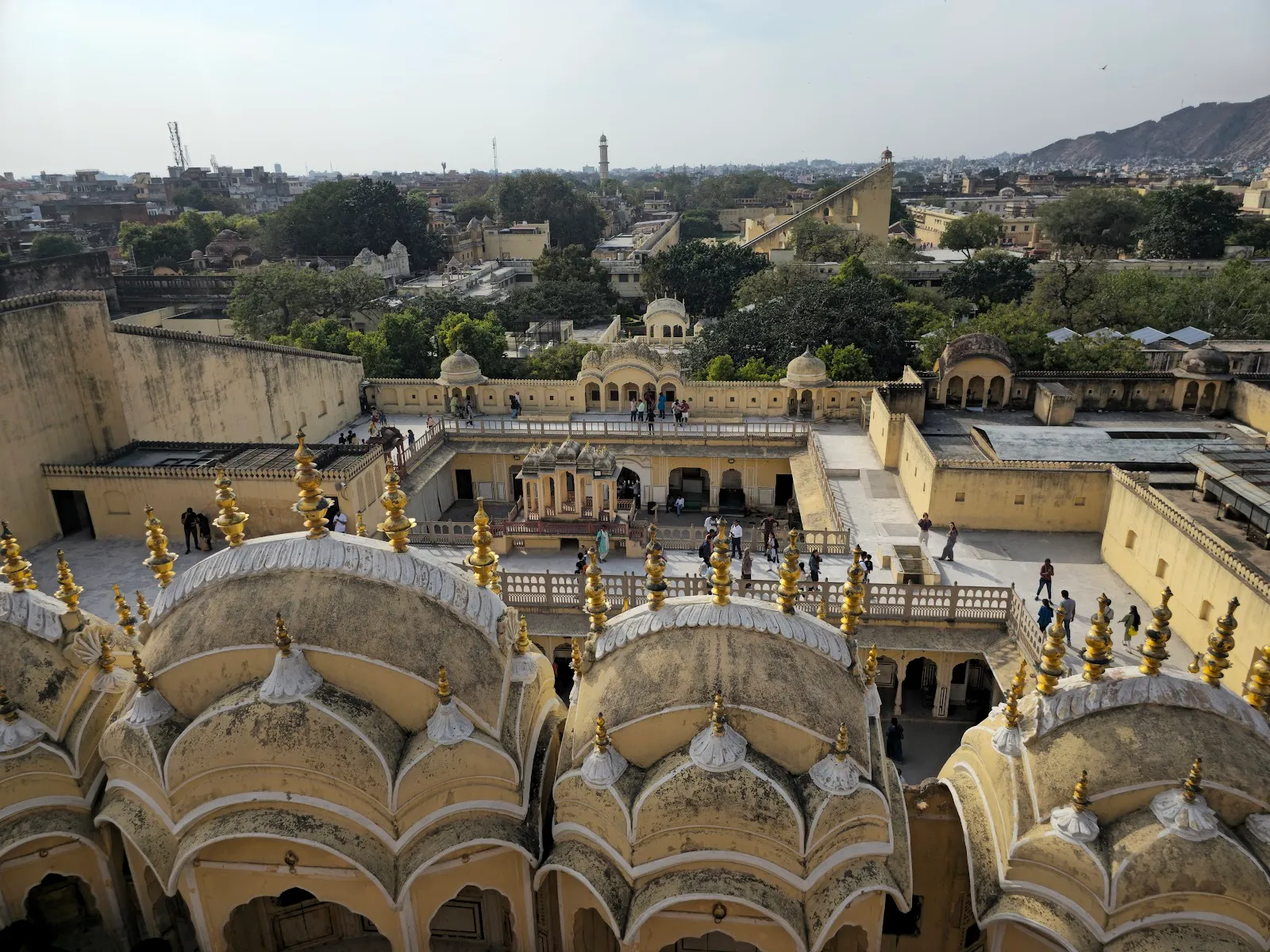
Enter through the rear of the structure rather than expecting the famous street-facing façade to be the main entrance. Inside, courtyards and chambers lead towards the upper levels. Take time to notice the carved stonework and the patterns created by the lattice screens. As daylight enters through the windows, it falls across the interior in changing shapes and colours.
The upper floors look across the old city and its streets. The climb involves steep stairs, so sturdy, comfortable shoes help. The airy design is easier to appreciate from inside, where the breeze passes through the many openings. Give yourself time to explore rather than treating the palace as only a photo stop from the road.
Planning your visit
An early visit can bring softer light and fewer people around the façade. The road in front is busy, so photographing the building from street level can take patience. For a view from across the road, rooftop cafés nearby provide a higher vantage point; they are also a place to pause after climbing through the palace.
Hawa Mahal is close to other central Jaipur sights, including City Palace and Jantar Mantar, which can be combined in a day of sightseeing. A local guide at the entrance can explain the building’s history and purpose. The official Rajasthan tourism booking page is listed for Hawa Mahal, and advance tickets are recommended.
FAQ
Why was Hawa Mahal built?
It was built so the royal women could watch street processions and daily life without being seen from outside.
How many windows does Hawa Mahal have?
The palace is known for 953 small lattice windows called jharokhas.
How long should I spend at Hawa Mahal?
Allow about 90 minutes to explore the interior and climb to the upper levels.
When is a good time to visit Hawa Mahal?
Go early in the morning for softer light and fewer crowds.