
The Würzburg Residence is a Baroque palace in Würzburg, built between 1720 and 1744 as the home of the city's prince-bishops. It is a UNESCO World Heritage Site. Its grand staircase opens onto the world's largest fresco, painted by Giovanni Battista Tiepolo. Inside, more than 40 rooms, a State Gallery and the Court Chapel show Baroque and rococo craft. Behind the palace, the Hofgarten offers a calm place to walk between rooms. Plan an hour or two indoors, and join a guided tour if you want the history explained.
Built for the prince-bishops
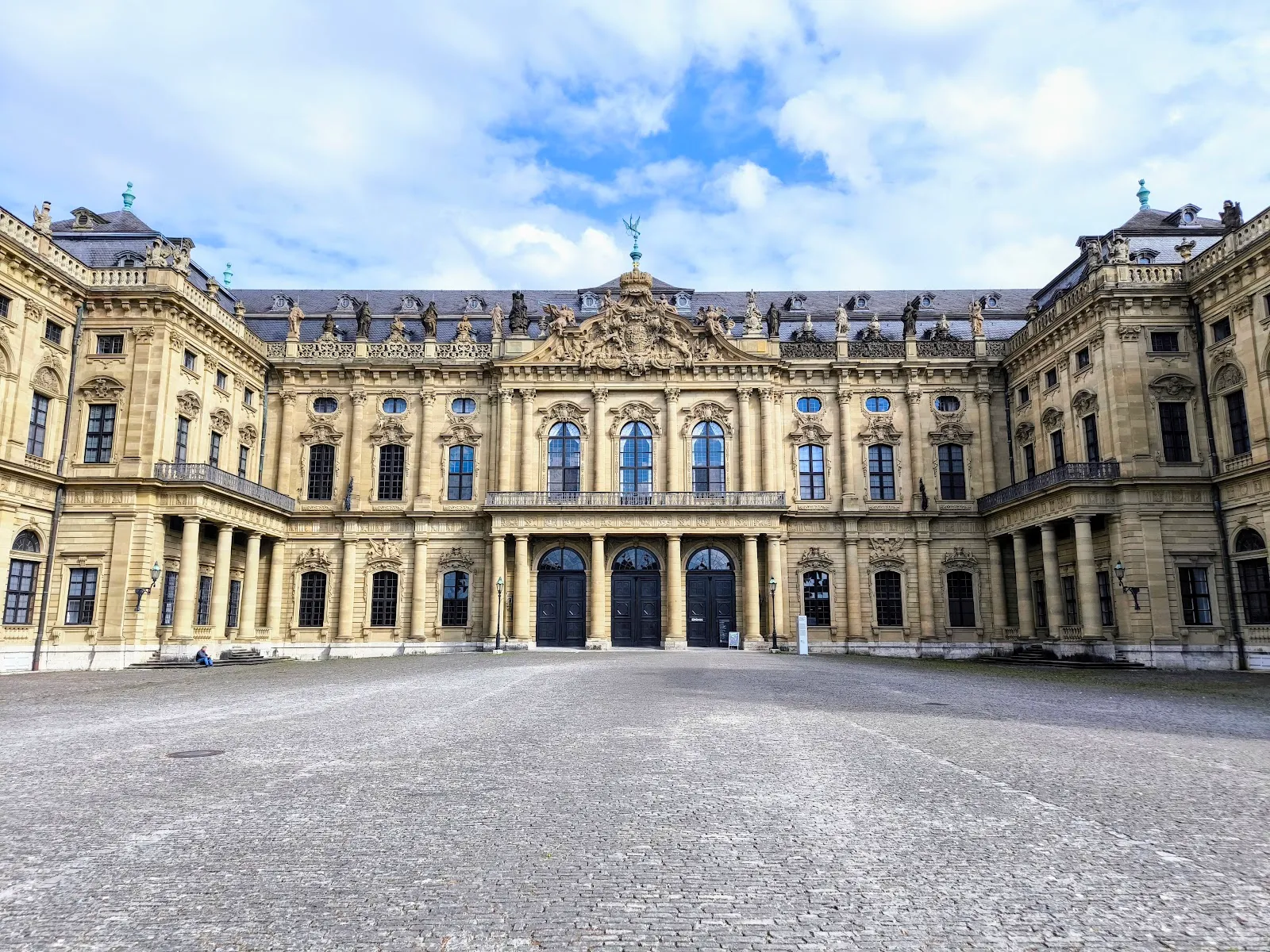
Work on the Residence began in 1720, when Prince-Bishop Johann Philipp Franz von Schönborn and his brother Friedrich Carl von Schönborn commissioned it. The family wanted a palace that could stand beside the finest in Europe, and the court was meant to rival the grandeur of Versailles. Balthasar Neumann, court architect to the bishop, was the lead architect. The main building was completed in 1744.
Other architects of the period also drew up plans, among them Lukas von Hildebrandt of Vienna and the Parisians Robert de Cotte and Germain Boffrand. The interior decoration took longer than the building itself and continued for decades after 1744.
In 1803, after the Napoleonic wars, Würzburg was secularized and absorbed into Bavaria.
The grand staircase and Tiepolo's fresco
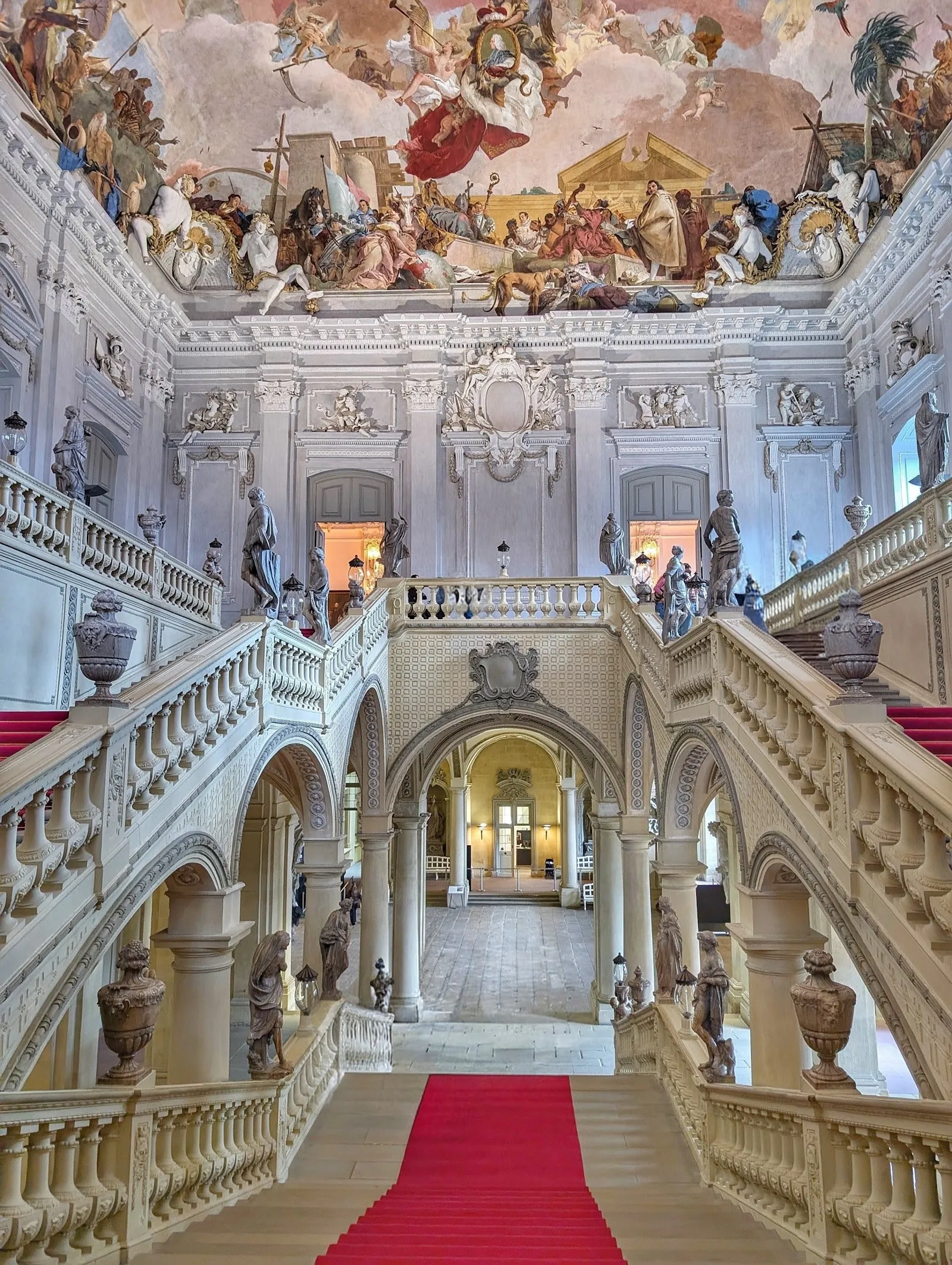
The grand staircase is the part most visitors remember. Its route zigzags up through the entrance hall to a landing beneath the ceiling fresco by Giovanni Battista Tiepolo, the Venetian painter. The fresco shows allegories of the four continents then known: Europe, Africa, America and Asia. Tiepolo worked on it with his son Domenico.
Most of the palace was badly damaged in the Second World War, but the ceiling frescoes came through and can be seen in their original form. Guided tours explain the restoration that followed the war.
Rooms, chapel and gallery
The palace has more than 40 rooms, including reception rooms, royal apartments and an Imperial Hall. The State Gallery is part of the visit as well.
The Court Chapel is also open to visitors. It is decorated with Baroque and rococo artwork, so it suits anyone who enjoys ornament.
Gardens and the Hofgarten
The palace, its Court Gardens and the Residence Square were designated a UNESCO World Heritage Site in 1981. The gardens blend a French formal layout with English-style greenery. The South Garden has a symmetrical design, with flower beds, fountains and sculptures. The Upper Garden has raised views over the city.
The Hofgarten at the back is a quiet spot to sit between rooms.
How a visit works
Guided tours run in English and German. English tours leave at 11am and 3pm year-round, with extra English tours at 1:30pm and 4:30pm from April to October.
Advance tickets are recommended. Children under 18 are admitted free. Ask at the entrance about photography before you start.
FAQ
Is there an entry fee?
Yes. The palace and the Court Chapel are open to visitors for a fee, and children under 18 are admitted free. Check the official website for current prices.
How long do you need?
Plan one to two hours for the palace. Add time if you want to see the gardens and the Court Chapel.
Are there English tours?
Yes. English tours run at 11am and 3pm year-round, with extra tours at 1:30pm and 4:30pm from April to October.
Is the Residence wheelchair accessible?
Yes. The entrance and the parking lot are both wheelchair accessible.
Should I book tickets in advance?
Advance tickets are recommended, especially if you want a specific tour time.


