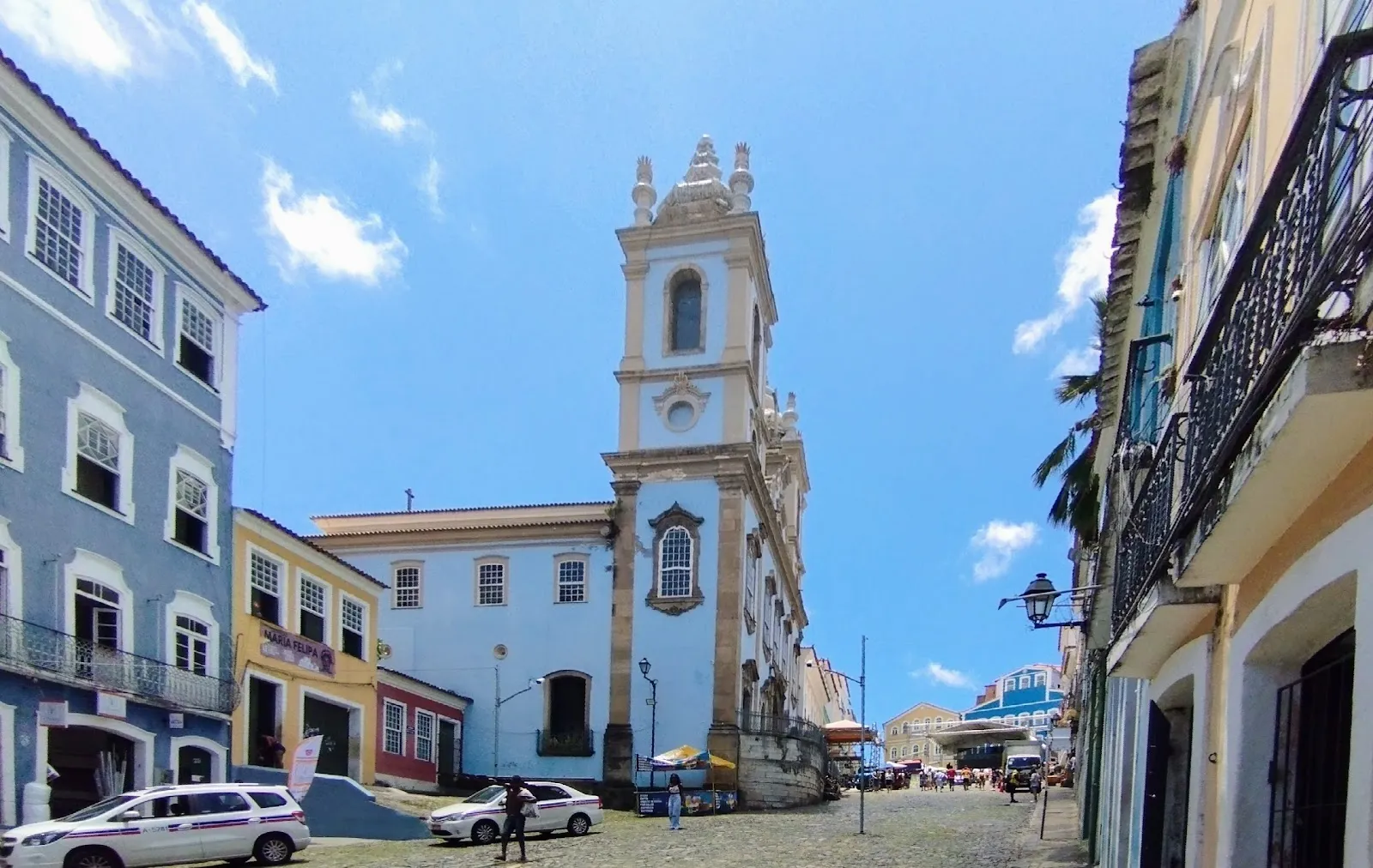
In Largo do Pelourinho, this Baroque church tells the story of Black brotherhoods in Salvador. Enslaved and freed Black people built it through the Brotherhood of Our Lady of the Rosary of Black Men, with construction taking nearly a century. Inside, information boards explain its history, and an upper floor adds more to explore. The church is also known for Catholic worship accompanied by music influenced by Candomblé. Its setting among Pelourinho’s colorful buildings makes it a meaningful stop in the historic center.
A church built by Black brotherhoods
The church stands in Largo do Pelourinho, in Salvador’s historic center. Its construction began in 1709 and took nearly a century. Members of the Brotherhood of Our Lady of the Rosary of Black Men carried out the work. Enslaved people built the church in their spare time, alongside freed Black builders and craftspeople.
The brotherhood was among Brazil’s early Black religious associations. Its role in creating and maintaining the church gives the building a particular place in Salvador’s history. The site is part of the protected historic area of Pelourinho.
Inside the church
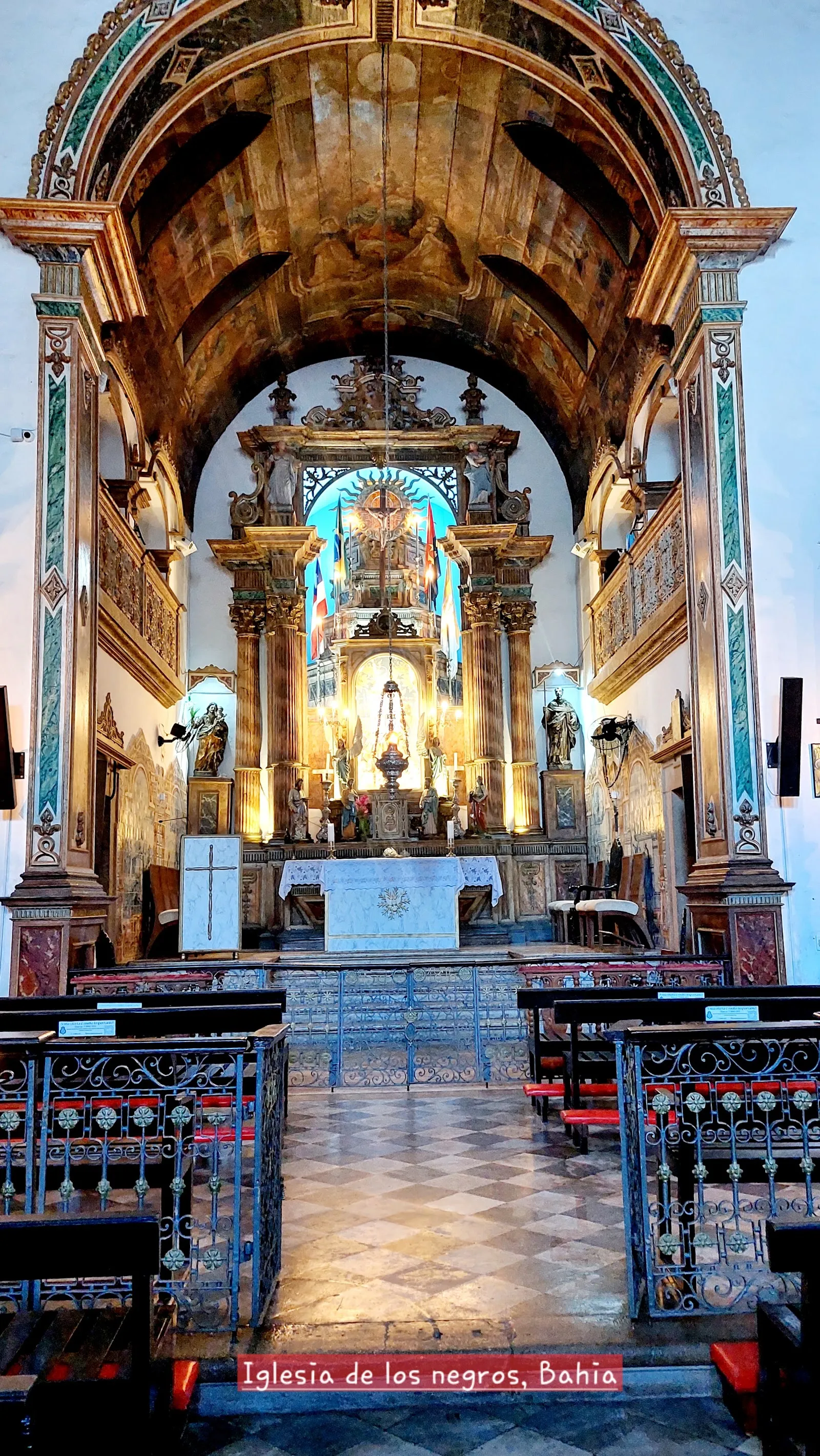
Information boards explain the church’s history, with material available in English. Take time to look around the upper floor for further details about the building and its architecture.
The church remains Catholic, and its liturgy uses music influenced by Candomblé traditions, including atabaque drums. This connection is part of the place’s living religious character. Approach the space with respect, especially if worship is taking place.
FAQ
Where is the Church of Our Lady of the Rosary of the Black People?
It is at Largo do Pelourinho in Salvador’s historic center.
Who built the church?
Members of the Brotherhood of Our Lady of the Rosary of Black Men built it, including enslaved and freed Black people.
What can you see inside the church?
Historical information boards explain its past, and the upper floor provides more to explore.
What is distinctive about worship at the church?
Catholic liturgy here uses music influenced by Candomblé traditions, including atabaque drums.