
Beside St Davids Cathedral in Pembrokeshire, the Bishop’s Palace is a medieval ruin with enough walls, rooms and stairways to suggest the scale of its former life. Bishop Henry de Gower reshaped it in the 14th century as a residence and place to entertain guests. Look for the great hall and its circular window, then climb a narrow spiral staircase for views over the site and cathedral. Informative panels explain the rooms and their use; allow time to explore at an unhurried pace.
A bishop’s residence beside the cathedral
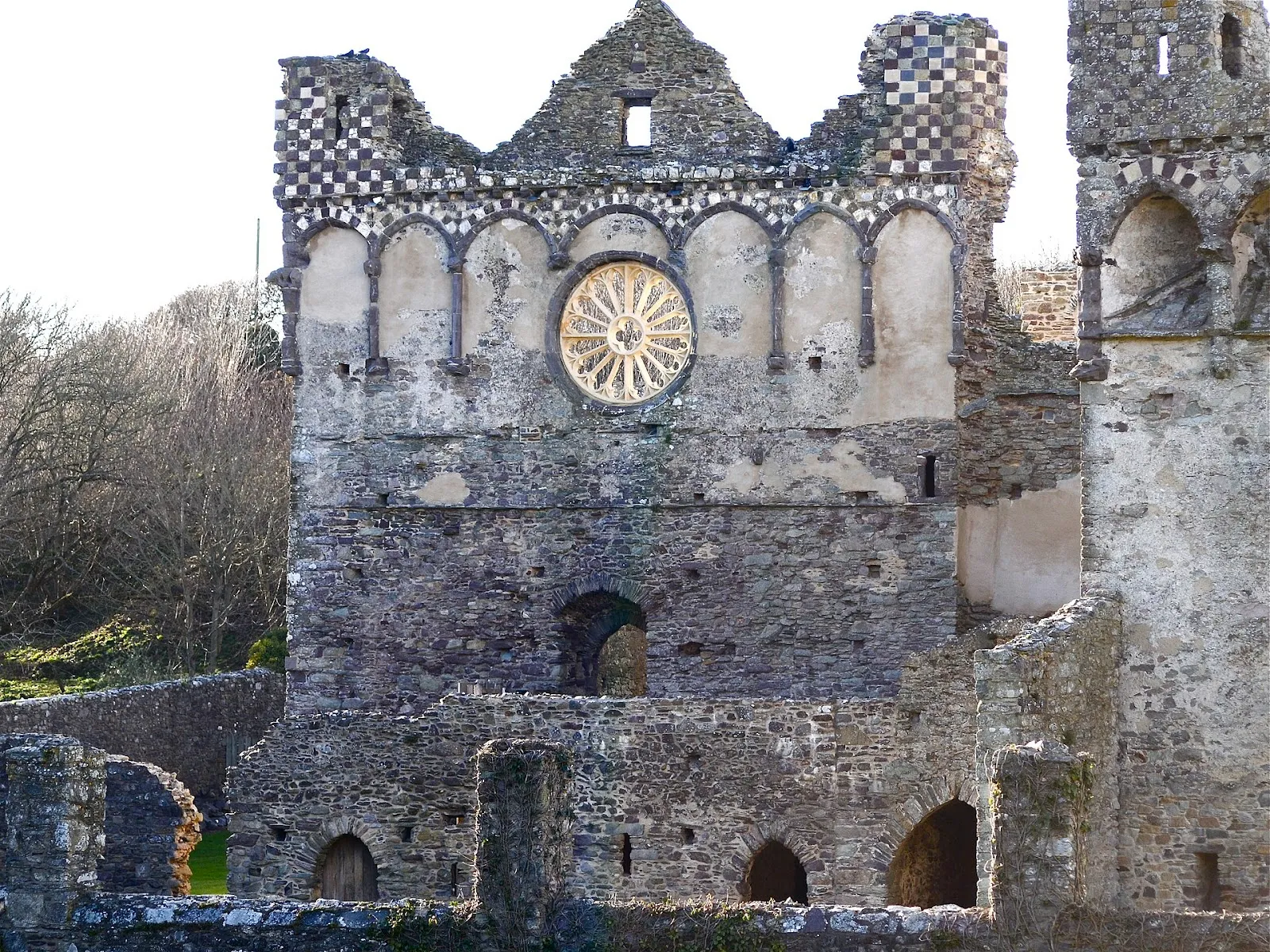
The palace stands beside St Davids Cathedral, close to the River Alun. The site began alongside the cathedral and developed into a residence for the bishops of St Davids, who also received and entertained guests here. Its position beside the cathedral reflects the close relationship between religious life and the bishop’s household in the medieval city.
The palace took much of its imposing form under Henry de Gower, bishop from 1327 to 1347. He expanded it into a grand residence, with separate ranges for private life and formal occasions. The east range is associated with the bishop’s private domain; the more imposing south range included the great hall, used for banqueting. The remaining walls let you trace the size and arrangement of the rooms, including places that once had more than one level.
Stonework, rooms and views
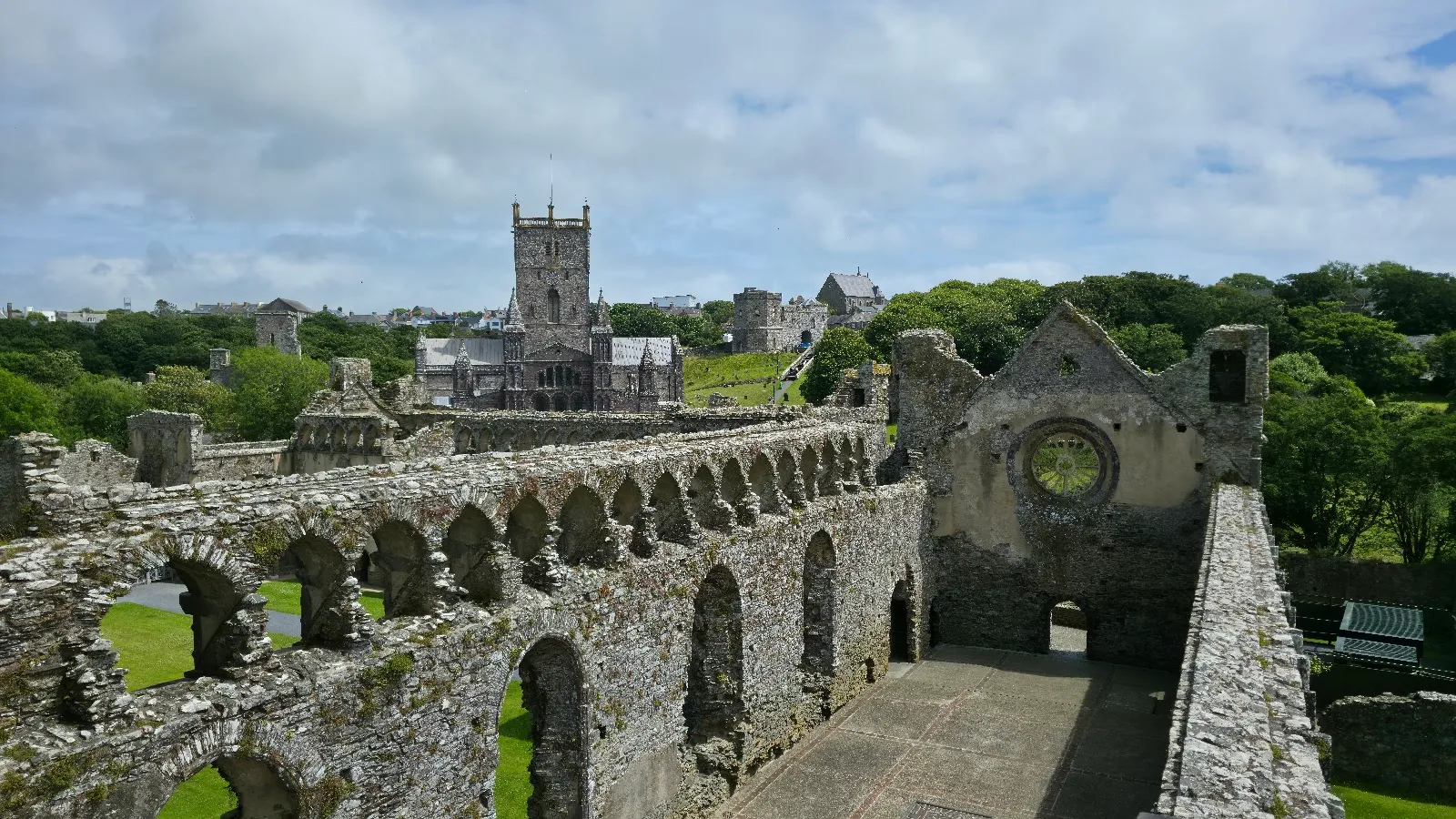
Look around the courtyard for the arcaded parapet, whose purple and yellow stone blocks form a chequerboard pattern. Carved corbels beneath the arches depict animals, human heads and fantastical creatures. These details give the courtyard a sense of the care invested in the palace’s decoration, even in its ruined state.
The great hall is one of the site’s key spaces. Its circular window is a notable feature, and the surrounding remains help convey how the hall fitted into the larger residence. Information panels around the ruins explain the rooms and what daily life was like when the palace was in use. Some visitors have found displays or lighting out of order, so the panels and the architecture itself are the most dependable parts of the visit.
Narrow spiral staircases lead up through parts of the building. From higher points, you can look over the palace and towards the cathedral. The steps are tight, and the route is not suitable for everyone; you can still explore the grounds and rooms without climbing.
After the palace’s medieval life
The palace was once a powerful bishop’s residence, but it fell into disrepair after the Reformation. Its surviving walls now leave much of the building open to the weather. The contrast between the formal stonework and the broken rooms makes it possible to read both its former scale and the changes that came later.
The cathedral next door makes a natural companion visit. Together, the two sites give a sense of the religious centre that grew in St Davids: the cathedral for worship and the palace for the bishop’s household and guests. Allow around an hour or more for the palace if you want to follow the panels, explore the remains and take the stairs. In fine weather, picnic benches provide a place to pause in the grounds.
FAQ
How long do you need at St Davids Bishop’s Palace?
Allow about one to two hours to explore the rooms, read the panels and, if you choose, climb the spiral staircases.
Is there an entry fee?
Entry is paid, though visitor information says CADW members can enter free. Check current membership terms before your visit.
Are the staircases easy to climb?
No. The spiral staircases are very narrow and may be difficult for some visitors. You can explore the rest of the site without climbing them.
Is there shelter if it rains?
Sheltered areas are available around the site. Picnic benches in the grounds are best suited to dry weather.


