Plan a trip
Language: English
Trip plannerPlan your trip on a map

Top destinations

EnglishDeutschFrançaisEspañolPortuguêsPortuguês (BR)Italiano
Travel advisory · ThailandSome governments advise against travel to parts of Thailand.The warnings cover only these areas: 50 km strip along the Cambodian border, Narathiwat, Pattani, Southern Songkhla (Chana, Na Thawi, Thepha and Saba Yoi districts), Thailand-Cambodia border region (entire length), Yala, 20 km strip along the Cambodian border.Advice depends on your passport. Read your own government's advice before you book.Official advice
Areas with warnings
  • 50 km strip along the Cambodian border · avoid all travel · Canada, France, New Zealand
  • Narathiwat · avoid all travel · Canada, Germany, Spain, France, Ireland, Italy, New Zealand, UK
  • Pattani · avoid all travel · Canada, Germany, Spain, France, Ireland, Italy, New Zealand, UK
  • Southern Songkhla (Chana, Na Thawi, Thepha and Saba Yoi districts) · avoid all travel · Canada, Germany, France, Ireland, Italy, New Zealand, UK
  • Thailand-Cambodia border region (entire length) · avoid all travel · Spain, Ireland, Italy
  • Yala · avoid all travel · Canada, Germany, Spain, France, Ireland, Italy, New Zealand, UK
  • 20 km strip along the Cambodian border · avoid non-essential travel · Germany, UK

Also named by one government: Border zones of Buriram province (Spain), Border zones of Sisaket province (Spain), Border zones of Surin province (Spain), Border zones of Ubon Ratchathani province (Spain), East of Highways 408 and 4113, including Sakom (Canada), Entire Myanmar border (except Mae Sot) (France), Hat Yai city (Canada), Areas near the Thai-Malaysia border (Ireland), Hat Yai to Padang Besar train line (UK), Myanmar border in Mae Hong Son and Tak provinces (Italy), Myanmar border in Tak and Chiang Mai provinces (Spain), Phatthalung province (France), Preah Vihear Temple zone (Sisaket) (Italy), Satun province (France)

GovernmentAdviceUpdatedRead the advice
United Kingdom (FCDO)No advice against the whole country (regional advisories)–Read the advice
United States (State Dept)Exercise normal precautionsJul 7, 2026Read the advice
Canada (Global Affairs)Exercise a high degree of caution (regional advisories)–Read the advice
Germany (Auswärtiges Amt)No advice against the whole country; partial warnings for border and southern areas (regional advisories)Oct 26, 2026Read the advice
New Zealand (SafeTravel)Exercise increased caution (regional advisories)–Read the advice
Ireland (Department of Foreign Affairs)Normal Precautions (regional advisories)–Read the advice
France (Ministry for Europe and Foreign Affairs)Increased vigilance across the country (regional advisories)–Read the advice

Checked daily from the governments' published advice; last checked Nov 3, 2026. RoamLedger summarises official advice; it is not advice from any government.

Pai Canyon
Landmark

Pai Canyon

Pai Canyon near Pai, Thailand: red sandstone ridges, a 3 km loop trail and sunset views. Check the trail, footwear and best time before you walk.

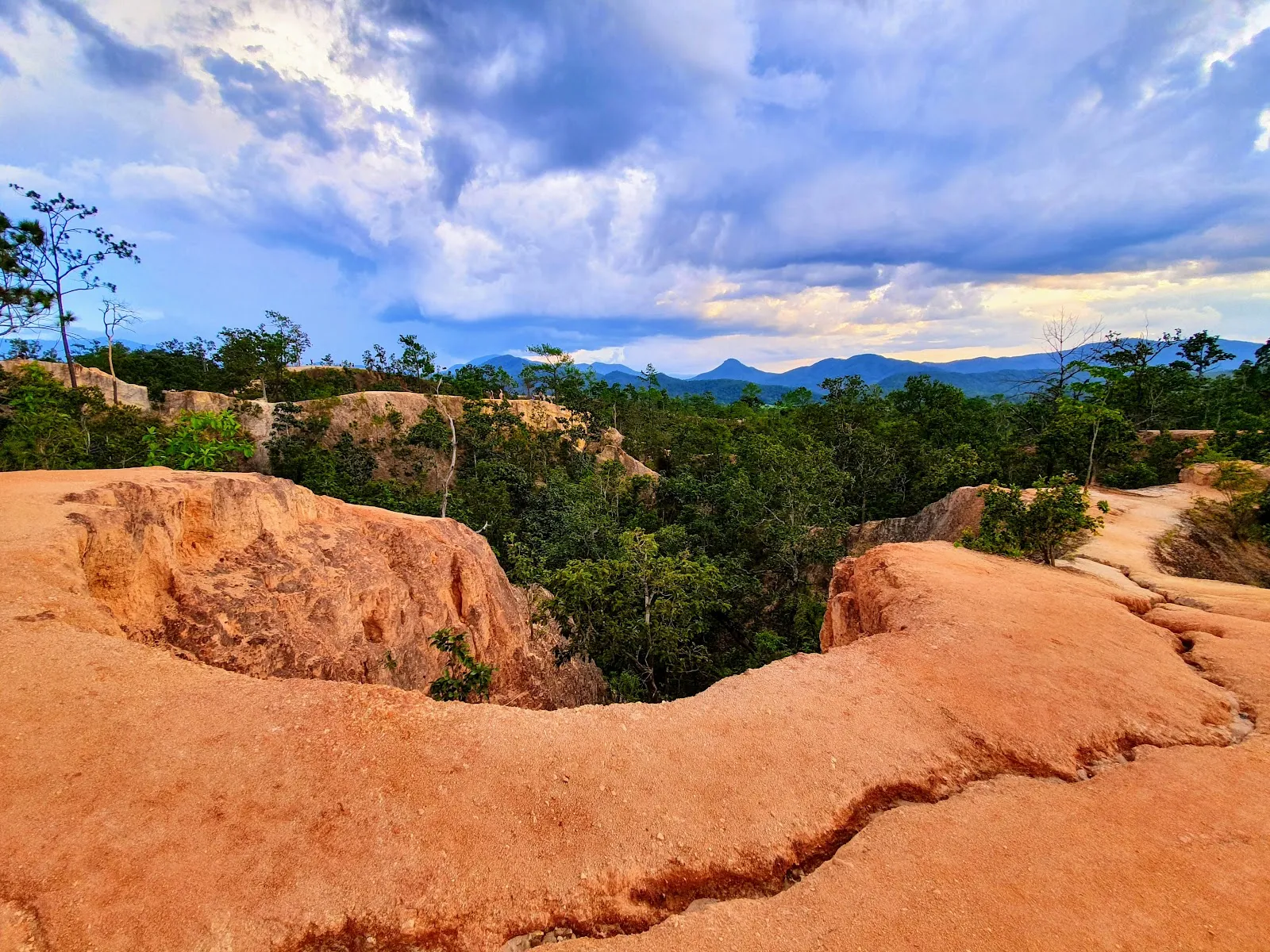
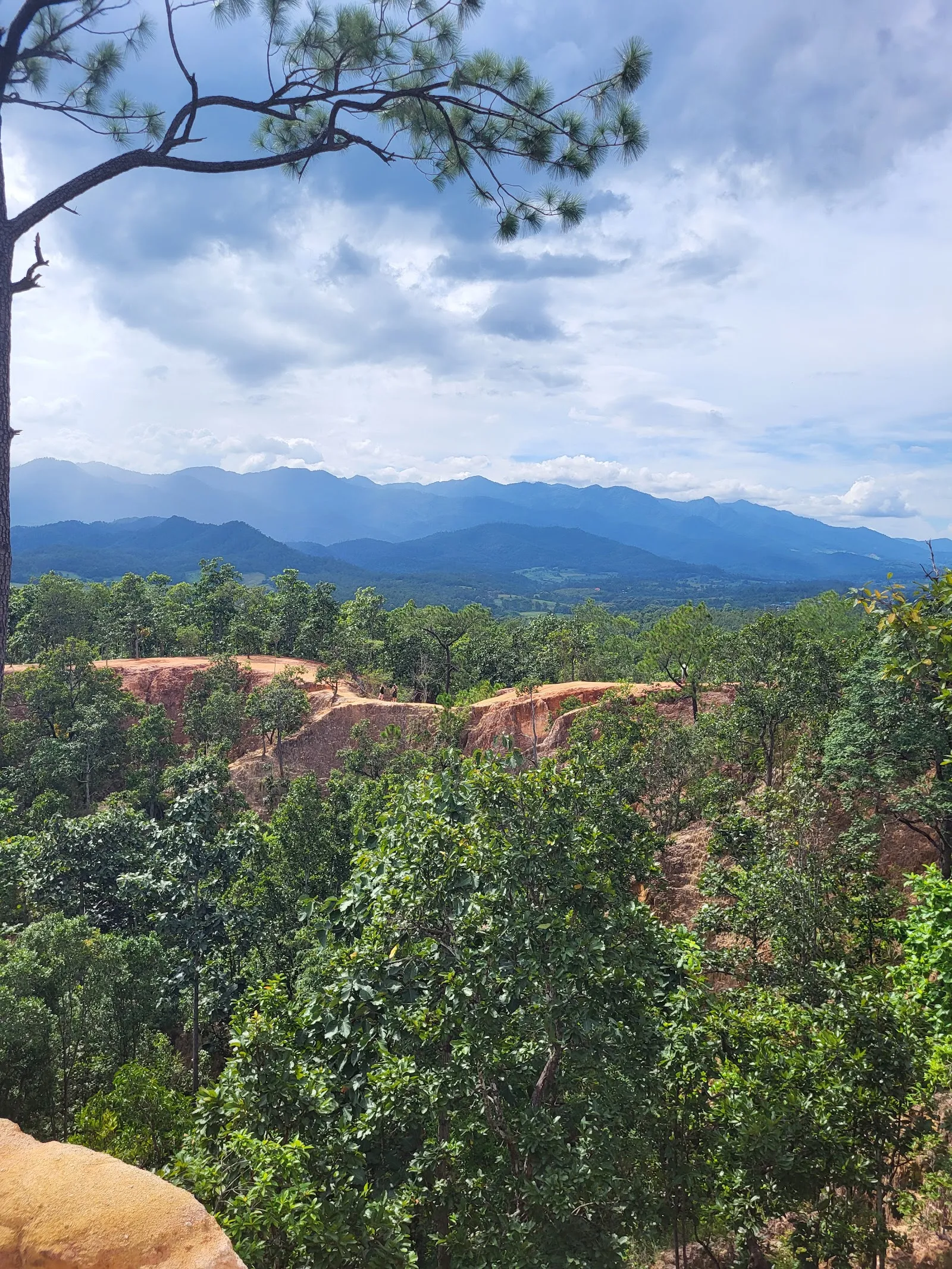
Pai Canyon, also called Kong Lan, is a formation of eroded rock about 8 km from Pai town on the road towards Chiang Mai. Wind and rain have cut narrow ledges and walkways into the rock, and a loop trail of about 3 km runs along the ridges and through open forest to two lookouts. Go for the walk, the views over the valley and mountains, and the warm light on the rock at sunset. Wear shoes with good grip and bring water.

Getting to Pai Canyon
Pai Canyon
Pai Canyon

Pai Canyon is about 8 km from Pai town, along the road towards Chiang Mai. The entrance has a parking lot, and the entrance and parking are listed as wheelchair accessible.

From the parking area, the path to the canyon is about 200 metres long and climbs steeply. The surface is concrete, so it is firm underfoot in dry weather.

The Pai Memorial Bridge, a World War II landmark, is close by. Some visitors stop there on the way back to Chiang Mai.

How the canyon formed
Pai Canyon
Pai Canyon

The canyon is the result of erosion that has continued for decades. Water and wind wore away the rock, and the harder slabs and ledges that survived became narrow walkways on the ridges of tall rock walls. These walls run out into the forested valley below.

The Thai name Kong Lan is the one most often used locally. The site is also known as Kong Moo.

The ground is dusty, and the colours of the rock change with the light through the day.

The loop trail

The loop runs about 3 km and goes around the canyon. Outside the most visited section, the path crosses open forest before it returns to the rock. It reaches both lookouts, and their heights differ, so each gives a different view.

The start of the trail is the narrowest part. It is single file, and some passages are only about two or three feet wide with a steep drop beside them. Some gaps are tight, so people who find narrow passages hard may prefer to turn back at the lookouts.

Bring water and sun protection. There is little shade on the exposed sections.

Visiting at sunset

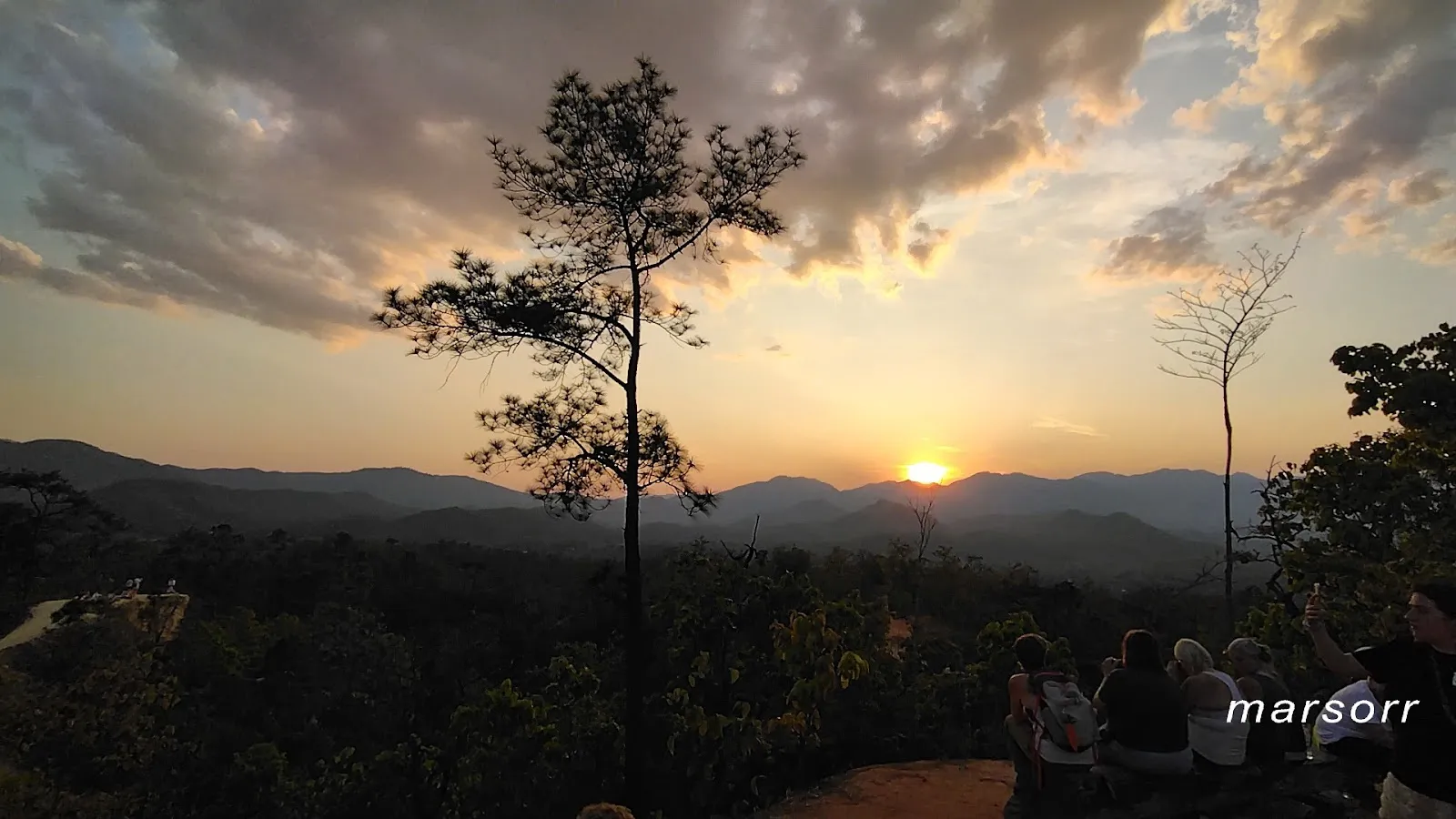
Sunset is the busiest time. Many visitors arrive in the late afternoon, and young backpackers from the town often gather on the ridges. The canyon is then crowded, and the space for each viewpoint is limited.

Some visitors have been loud, pushed for photographs or ignored safety rules. Keep your voice down, wait your turn for the best spot and step back from the edge when others are passing.

On-site facilities include a restroom, a restaurant and a small cafe inside the grounds, which is a good place to rest after the walk.

FAQ

How far is Pai Canyon from Pai?

Pai Canyon is about 8 km from Pai town, along the road towards Chiang Mai.

How long do you need at Pai Canyon?

A typical visit takes 1 to 2 hours, including the loop trail of about 3 km and time at the lookouts.

Is Pai Canyon wheelchair accessible?

The entrance and parking lot are listed as wheelchair accessible. The ridge trails are narrow and uneven, and some edges have no railings.

When is the best time to visit Pai Canyon?

Late afternoon, arriving before sunset, gives the warmest light. Morning visits are quieter.

Do I need special shoes for Pai Canyon?

Closed shoes with good grip are advised, since some ridges are narrow and uneven.
More must-sees in Pai

Explore all