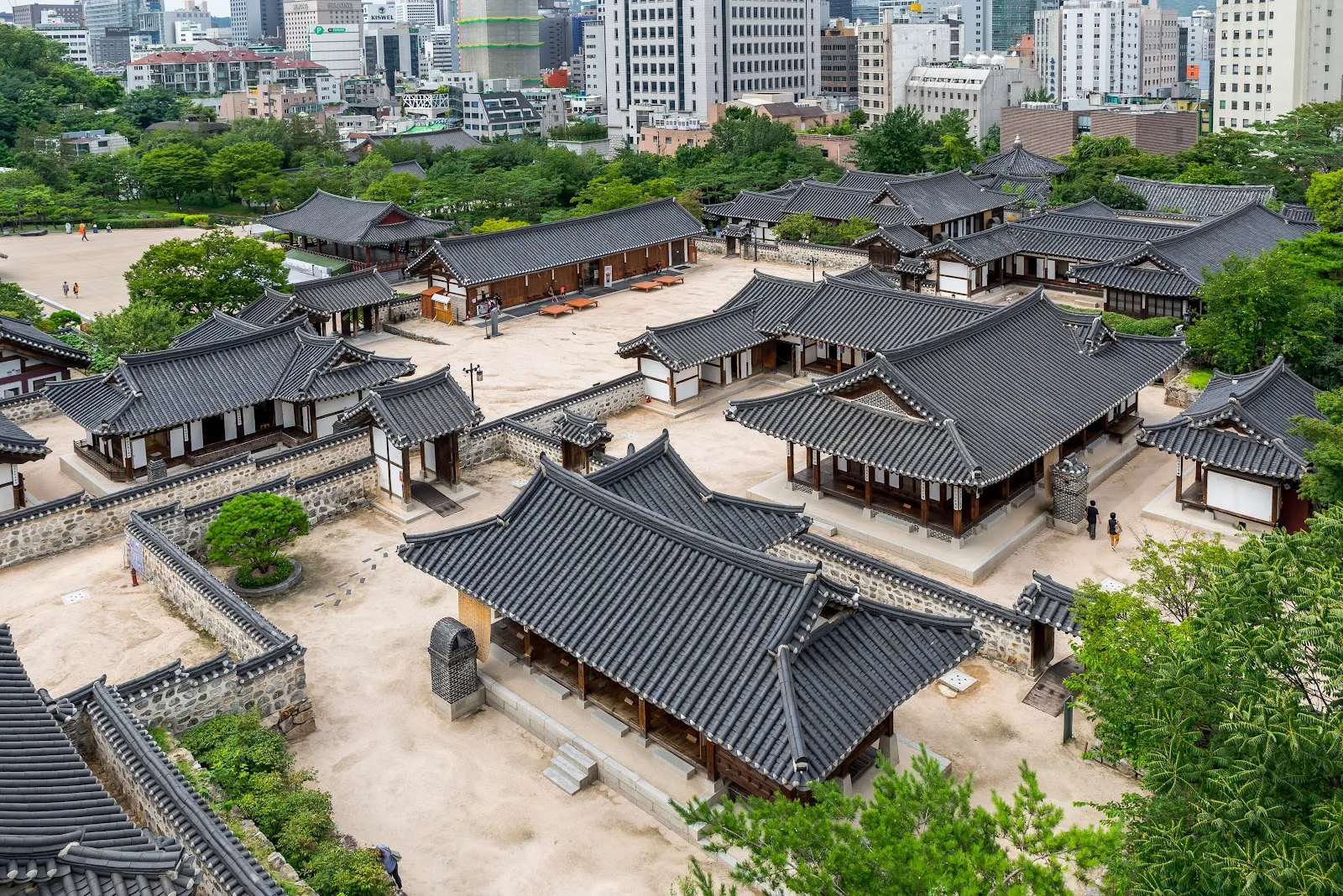
Namsangol Hanok Village is a free-entry cultural park in Pil-dong, at the foot of Namsan Mountain in central Seoul. Five restored hanok houses, moved here from different parts of the city, give a glimpse of Joseon-era homes across several social classes. Wander among their courtyards and furnishings, then follow the garden paths past water features and open spaces. Namsan Tower can be seen from the grounds, and the village makes a quieter alternative to visiting a residential hanok neighborhood.
Five houses brought together
Namsangol Hanok Village is a recreated cultural site in Pil-dong, in Seoul’s Jung District, at the northern foot of Namsan. Its five hanok houses were moved here from different parts of the city and restored. Together, they give visitors a look at homes linked to different levels of Joseon society, from common households to noble and official families.
The houses are not preserved in their original neighborhood settings. They were gathered at this site to show traditional Korean architecture and domestic life in one place. That makes the village a practical stop if you want to see several kinds of historic home without visiting a residential area.
What the houses reveal
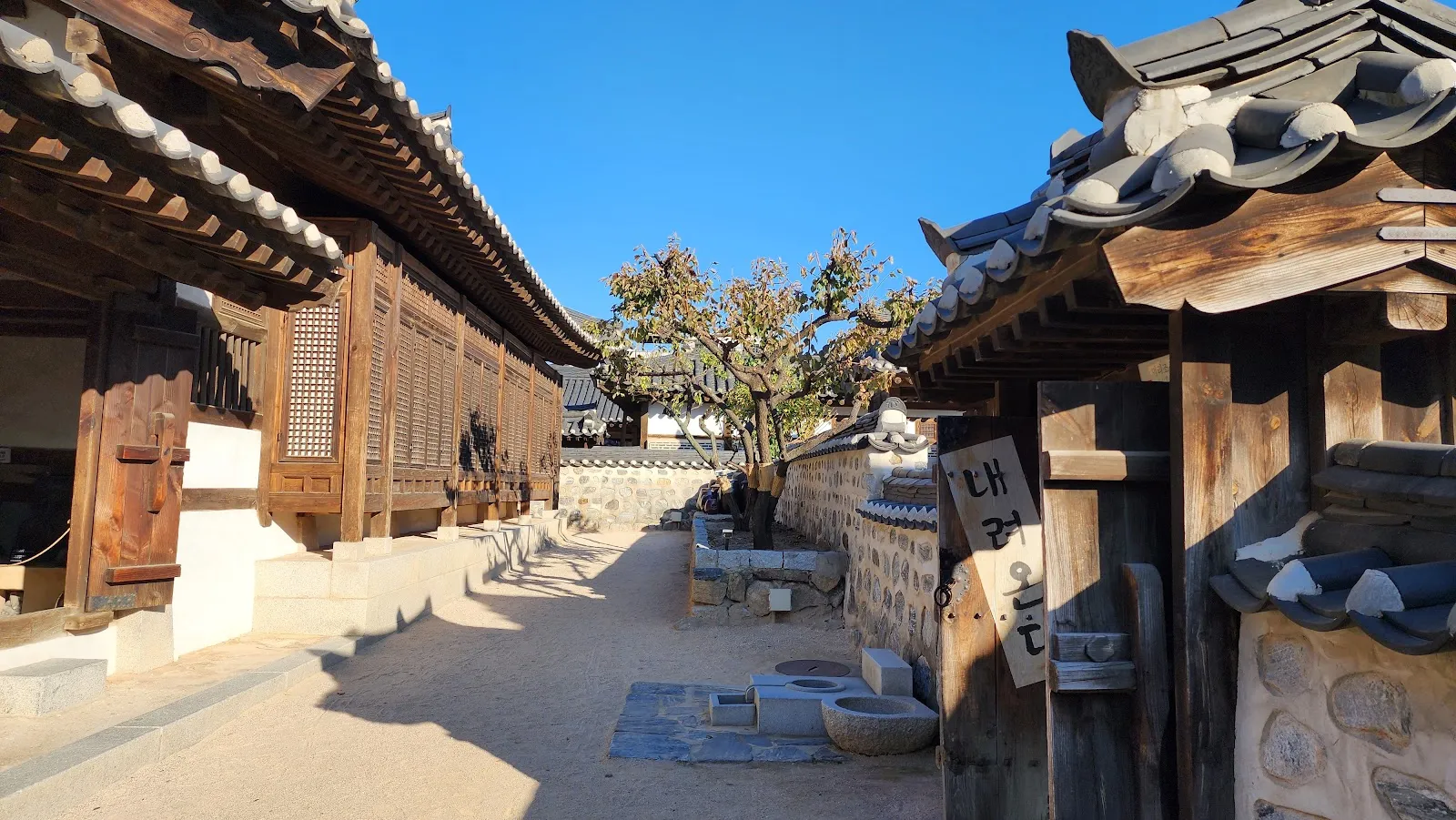
The homes are associated with people from varied backgrounds, including a military officer, a government official and members of families connected to the royal court. One belonged to the mother of Queen Yun, consort of King Sunjong. Another was the residence of Yun Taek-yeong, King Sunjong’s father-in-law. The collection also includes a house associated with Min Yeong-hui, a relative of Empress Myeongseong, and one linked to Lee Seung-eop, who was responsible for construction at Gyeongbokgung Palace.
Inside, furnishings and household objects help show how a home’s arrangement differed according to its occupants. Look at the structures as well as the objects: tiled roofs, low partitions and courtyards are part of the architectural experience. The village presents these buildings as examples of traditional life, not as an untouched residential settlement.
Paths, performances and a guided visit
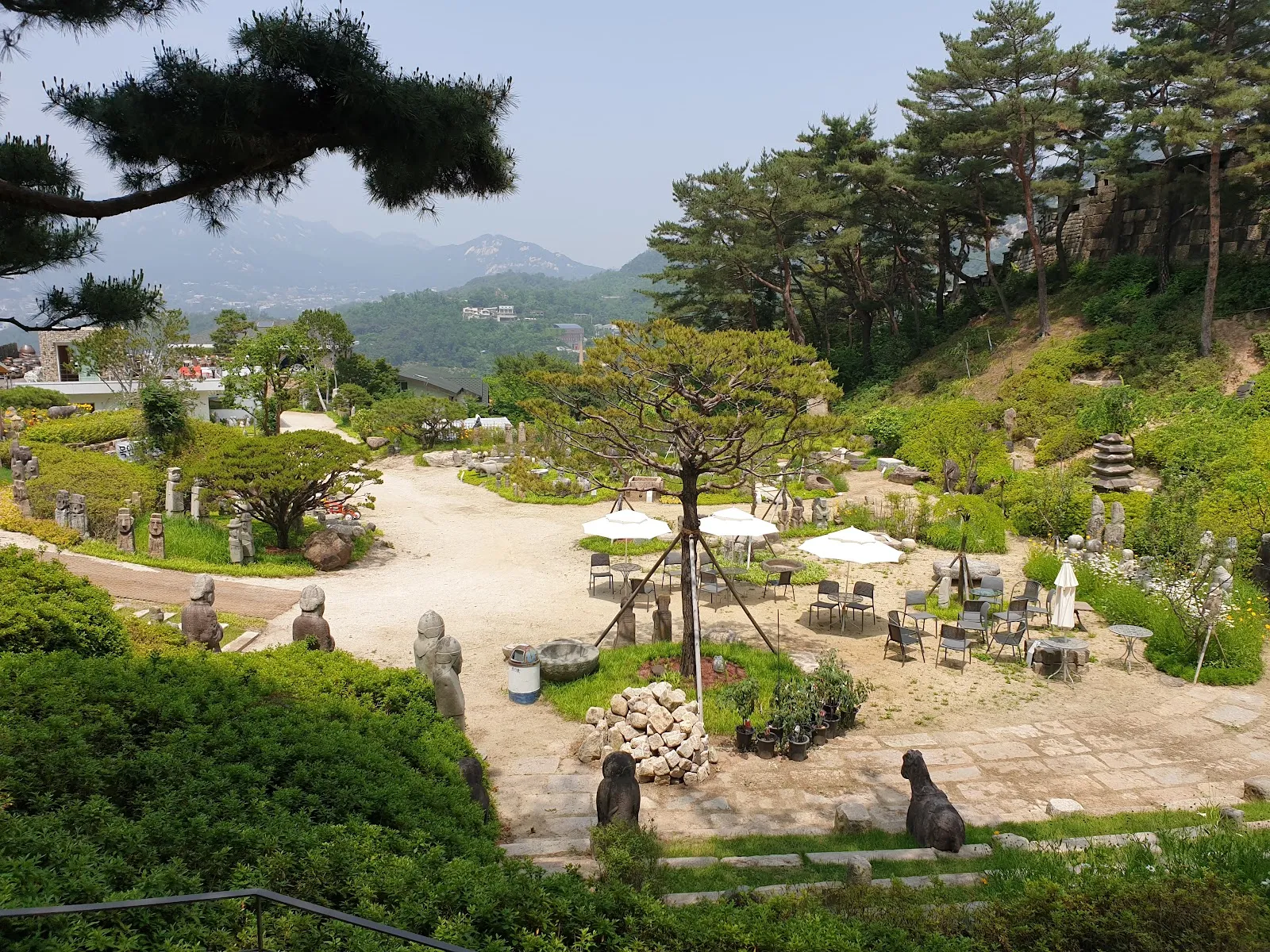
The houses sit within a park with a traditional garden, pond, pavilion, open areas and paths. A time capsule plaza is also part of the grounds, and the setting provides views towards Namsan Tower. Traditional games have been set up in the central courtyard, and cultural performances have taken place at the village. Seoul Namsan Gugakdang, a traditional theatre, is also located here.
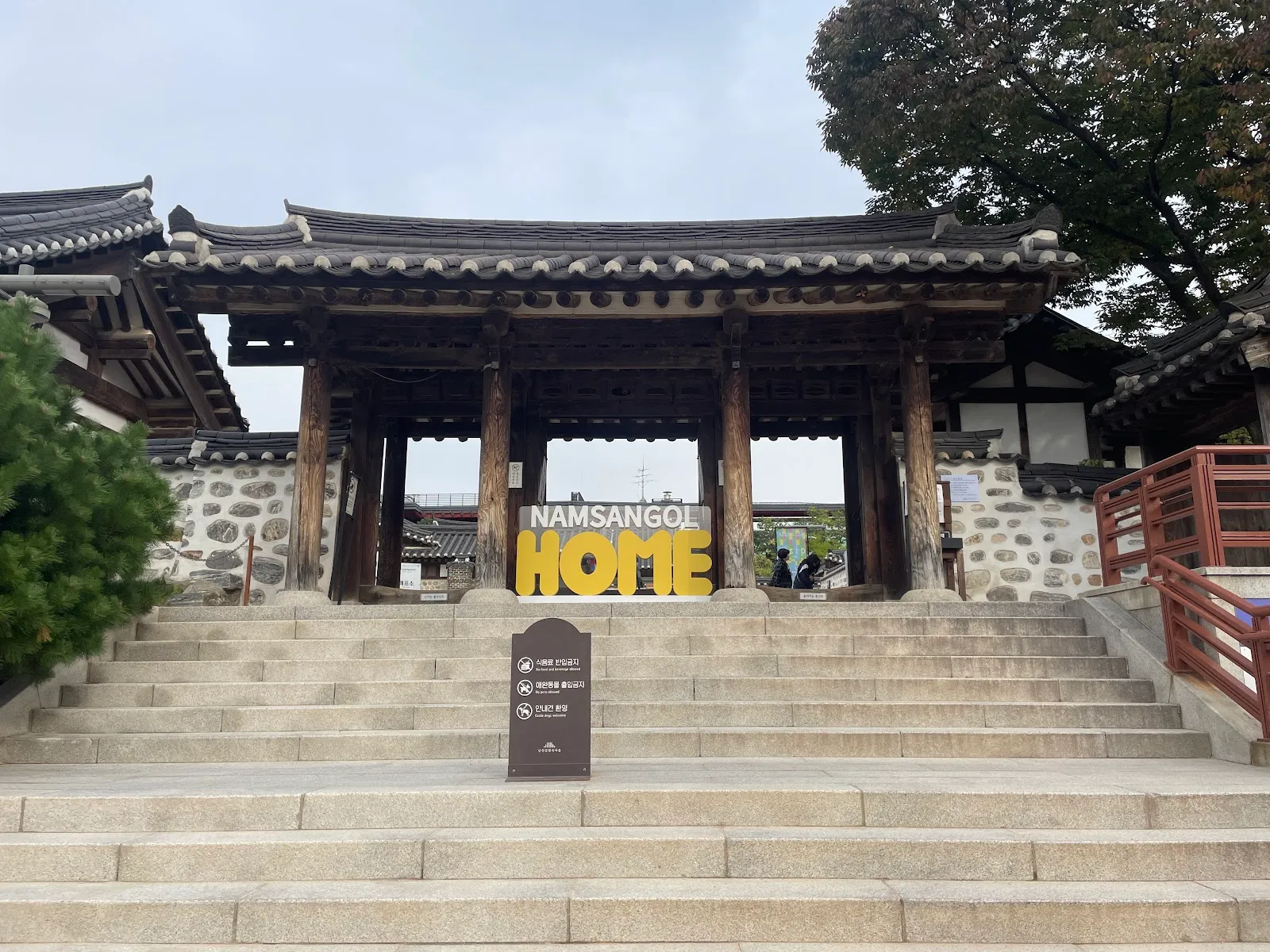
An office to the right of the entrance gate provides free English guided tours. The supplied schedule lists tours at noon from Thursday to Sunday, and at 2 pm on Tuesday, Wednesday, Saturday and Sunday. Since tour times and activities can change, check the village’s website before planning around one. Admission to the village is free; the site is closed on Mondays.
FAQ
Is Namsangol Hanok Village free to enter?
Yes. Admission is free.
How many traditional houses are at Namsangol Hanok Village?
The village has five restored hanok houses, relocated from different parts of Seoul.
Are guided tours available in English?
Free English guided tours are listed at the office to the right of the entrance. The supplied schedule gives noon tours Thursday to Sunday and 2 pm tours on Tuesday, Wednesday, Saturday and Sunday.
When is Namsangol Hanok Village closed?
The village is closed on Mondays.