
Sinaia Monastery sits a short walk from Peleș Castle, in the forest at the foot of the Carpathians. Prince Mihail Cantacuzino founded it in 1695 after a pilgrimage to Mount Sinai, and the town took its name from it. The complex has two churches side by side: the old one with its frescoes, and the larger Great Church, both in Brâncovenesc style. The inner courtyard is quiet and well kept, and the small museum holds icons, manuscripts and liturgical objects.
Founding and name
Prince Mihail Cantacuzino founded the monastery in 1695 after a pilgrimage to Mount Sinai in Egypt. It was named after Saint Catherine's Monastery on Mount Sinai, and the town of Sinaia grew up around it and took its name from it.
The monastery was first built to house 12 monks, a number that echoes the twelve apostles. As the community grew, a new church was added, and the complex became the two-church site that stands today. The monastery is still inhabited by Orthodox monks.
The royal family stayed at the monastery during visits to Sinaia before Peleș Castle was finished.
The two churches
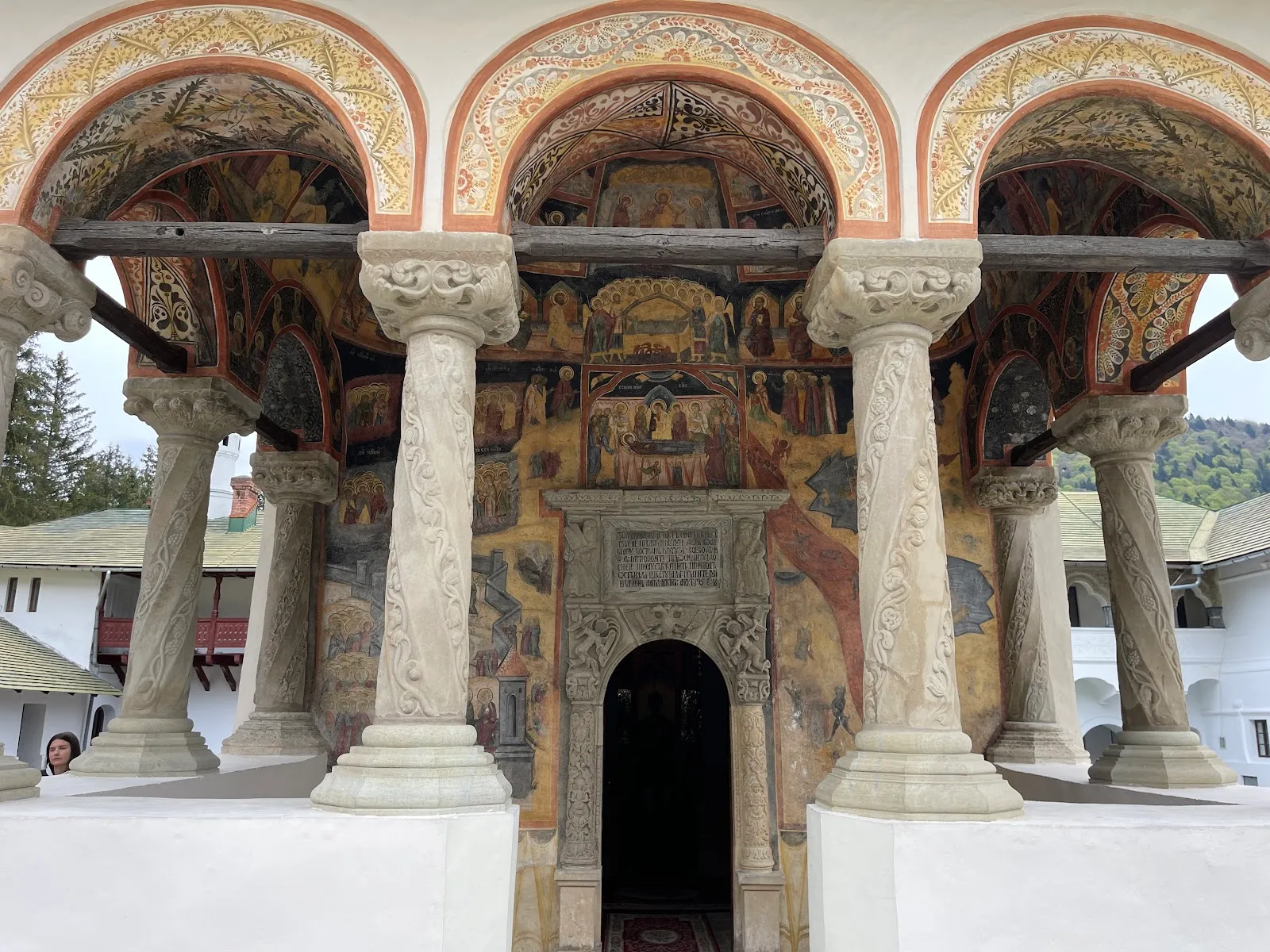
The old church dates from the founding in 1695. It is built in Brâncovenesc style, the Romanian architectural style of the period, with carved stone and floral decoration. Its interior holds frescoes, and some of its original paintings survive on the exterior.
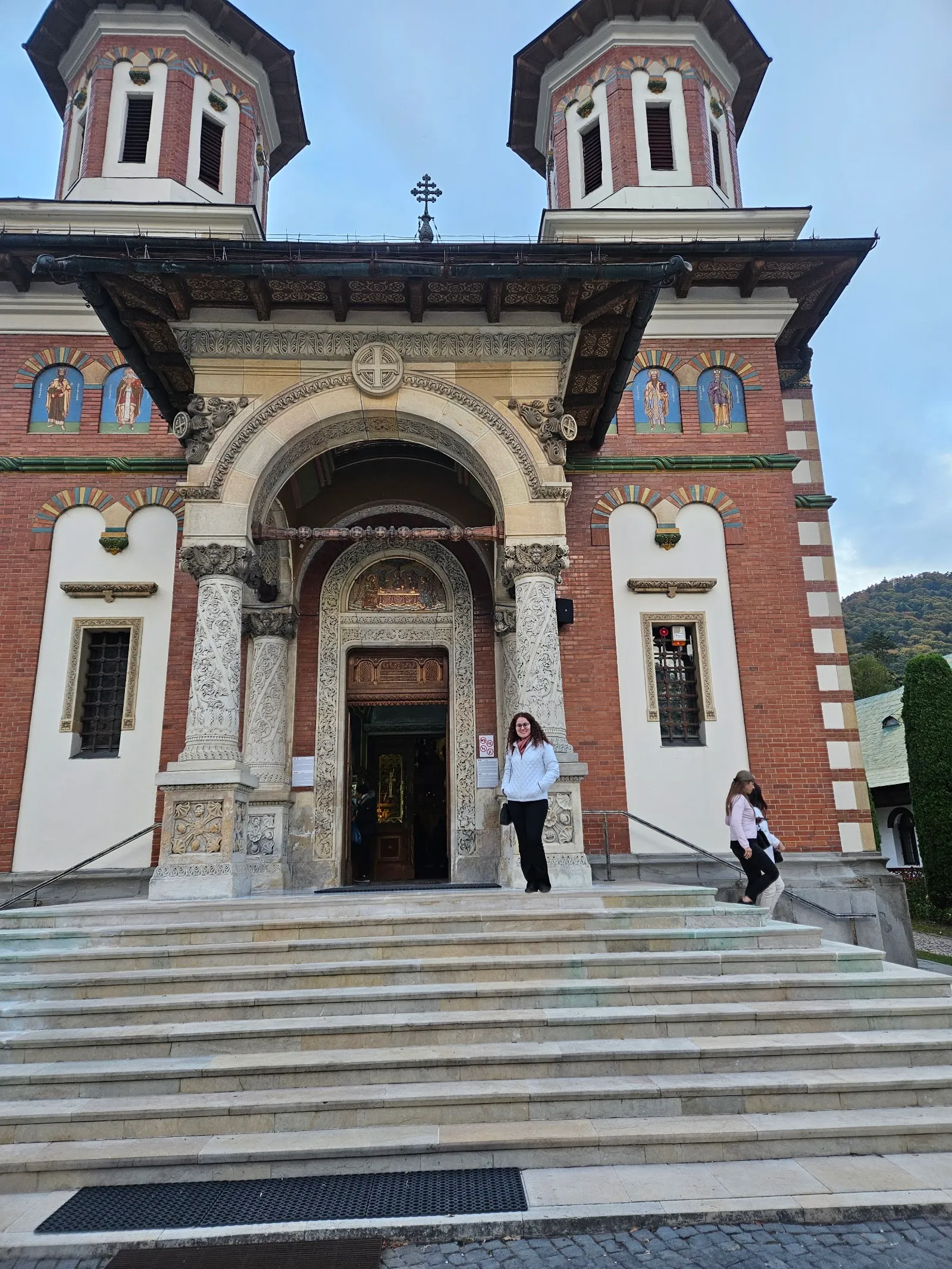
The Great Church, built in 1846, stands behind the old one. It sits within a small defensive wall and a cluster of monastic buildings, so the two churches form one complex.
A bell tower was added on the southern side of the compound in 1892. It holds a bell of about 1,700 kg that was brought from the Colțea Tower in Bucharest.
Courtyard, gardens and museum
The inner courtyard is quiet and well kept, and it sets the tone for the visit. Gardens around the grounds include dahlia displays, which are at their best in autumn.
The small museum on site holds icons, manuscripts and liturgical objects. It also preserves the first Bible translated into Romanian, which is one of the monastery's best-known possessions.
Getting there and moving around
The monastery is a short walk from Peleș Castle. A forest path links the two, and it passes through a area of souvenir stands near the castle.
Local bus lines run along the main street and up toward the castle, with stops close to both the monastery and Peleș Castle. Tickets for the bus must be bought before boarding, at the station kiosks or through the Sinaia Transport app.
The entrance, the restroom and the parking lot are wheelchair accessible.
FAQ
Is Sinaia Monastery wheelchair accessible?
The entrance, the restroom and the parking lot are wheelchair accessible.
How do I get from Peleș Castle to Sinaia Monastery?
It is a short walk along a forest path from Peleș Castle. Local bus lines also stop close to both the monastery and the castle.
Where should I park for Sinaia Monastery?
A municipal paid parking area is about 50 metres from the monastery. Cars are better kept out of the inner courtyard.
Is there a museum at Sinaia Monastery?
Yes. The small museum holds icons, manuscripts and liturgical objects, including the first Bible translated into Romanian.

