Plan a trip
Language: English
Trip plannerPlan your trip on a map

Top destinations

EnglishDeutschFrançaisEspañolPortuguêsPortuguês (BR)Italiano
Travel advisory · MexicoSome governments advise against travel to parts of Mexico.The warnings cover only these areas: Colima, Guerrero, Sinaloa, Chiapas, Chihuahua, Federal Highway 199 San Cristóbal de las Casas–Palenque, Guanajuato, south of Highways 43D and 45D, Guatemala border region, Chiapas, Lagunas de Zempoala National Park, Michoacán, Nayarit, within 20 km of Sinaloa and Durango border, Nuevo León, except Monterrey, Piedras Negras, Route 85 Monterrey–Nuevo Laredo, Sonora, Tamaulipas, Tecate, Tijuana, US border region, Zacatecas.Advice depends on your passport. Read your own government's advice before you book.Official advice
Areas with warnings
  • Colima · avoid all travel · Canada, Germany, France, UK
  • Guerrero · avoid all travel · Canada, Germany, Spain, France, New Zealand, UK
  • Sinaloa · avoid all travel · Canada, Germany, Spain, France, New Zealand, UK
  • Chiapas · avoid non-essential travel · Canada, Spain, France
  • Chihuahua · avoid non-essential travel · Canada, France, UK
  • Federal Highway 199 San Cristóbal de las Casas–Palenque · avoid non-essential travel · France, UK
  • Guanajuato, south of Highways 43D and 45D · avoid non-essential travel · Canada, New Zealand
  • Guatemala border region, Chiapas · avoid non-essential travel · Germany, France, New Zealand
  • Lagunas de Zempoala National Park · avoid non-essential travel · Canada, New Zealand
  • Michoacán · avoid non-essential travel · Canada, Germany, New Zealand, UK
  • Nayarit, within 20 km of Sinaloa and Durango border · avoid non-essential travel · Canada, New Zealand
  • Nuevo León, except Monterrey · avoid non-essential travel · Canada, New Zealand
  • Piedras Negras · avoid non-essential travel · Spain, France
  • Route 85 Monterrey–Nuevo Laredo · avoid non-essential travel · Spain, France
  • Sonora · avoid non-essential travel · Canada, New Zealand
  • Tamaulipas · avoid non-essential travel · Canada, France, UK
  • Tecate · avoid non-essential travel · France, UK
  • Tijuana · avoid non-essential travel · France, UK
  • US border region · avoid non-essential travel · Germany, Spain, France
  • Zacatecas · avoid non-essential travel · Canada, Germany, Spain, France, UK

Also named by one government: Celaya–Irapuato–Salamanca triangle, Guanajuato (France), Culiacán and surrounding area (France), North of Ciudad Victoria, Tamaulipas (Germany), Route 129 Martinez de la Torre–Teziutlán (France), Route 131 Tapacoyan–Perote (France), Route 180 Martinez de la Torre–Papantla secondary roads (France), Route 40 Monterrey–Reynosa (France), Southern Michoacán from Uruapán to the coast (France), Acapulco (France), Baja California, except Tijuana and Tecate (France), Ciudad Acuña (Spain), Ciudad Juárez and surrounding area (Spain), Ciudad Obregón (France), Coahuila, except southern part (New Zealand), Coatzacoalcos (France), Colonias north and north-east of the Zócalo, Mexico City (France), Durango (France), East Nuevo León, bordering Tamaulipas (France), Guanajuato (Spain), Guanajuato, Highway 45 between León and Irapuato (New Zealand), Guanajuato, south-west of Highway 45D (UK), Jalisco, within 50 km of Michoacán border (Canada), Monclova (Spain), Morelos (France), Nayarit (France), Nogales (France), Non-tourist rural areas of Baja California (Spain), Non-tourist rural areas of Chihuahua (Spain), Non-tourist rural areas of Coahuila (Spain), Non-tourist rural areas of Durango (Spain), Non-tourist rural areas of Sonora (Spain), Northern municipalities of Jalisco (UK), Northern Tamaulipas from San Fernando to US border (Spain), Northern Veracruz bordering Tamaulipas (Spain), Northern Veracruz from Martinez de la Torre (France), Route 150D Puebla–Orizaba (France), Route 190 Oaxaca–Santo Domingo Tehuantepec (France), Route 85 and 83 Monterrey–Ciudad Victoria–Tampico (France), Route 95 Mexico City–Cuernavaca (France), Selva Lacandona (France), South and south-west of Lake Chapala, Jalisco (UK), South-west Jalisco and Los Altos, except Puerto Vallarta (France), South-west Michoacán (France), South-west Tamaulipas (France), Southern Guanajuato state (France), Southern Michoacán south of Morelia (Spain), Strip within 40 km of Guatemalan border, Chiapas (UK), Tepic (New Zealand), Toluca (France), Veracruz city (France)

GovernmentAdviceUpdatedRead the advice
United Kingdom (FCDO)No advice against the whole country (regional advisories)–Read the advice
United States (State Dept)Exercise increased cautionMay 29, 2026Read the advice
Canada (Global Affairs)Exercise a high degree of caution (regional advisories)–Read the advice
Germany (Auswärtiges Amt)Besondere Vorsicht walten lassen (Sicherheitslage) (regional advisories)Oct 19, 2026Read the advice
New Zealand (SafeTravel)Exercise increased caution (regional advisories)–Read the advice
France (Ministry for Europe and Foreign Affairs)Vigilance renforcée pour le reste du pays (regional advisories)–Read the advice

Checked daily from the governments' published advice; last checked Nov 2, 2026. RoamLedger summarises official advice; it is not advice from any government.

The Diver
Landmark

The Diver

Watch cliff divers plunge into the Pacific at El Clavadista on Mazatlán's Malecón. Best at sunset, with tips on donations and what to bring.

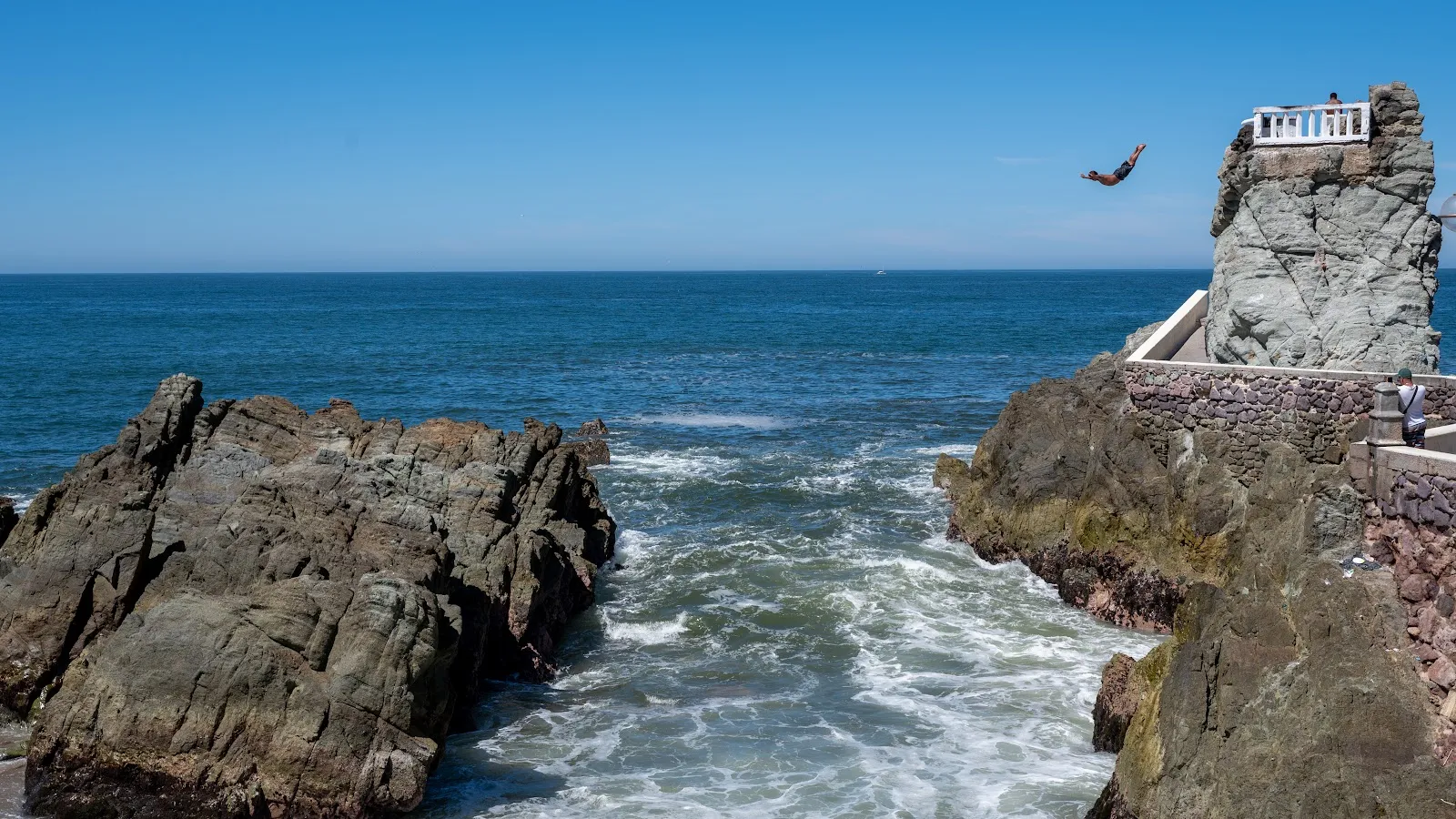
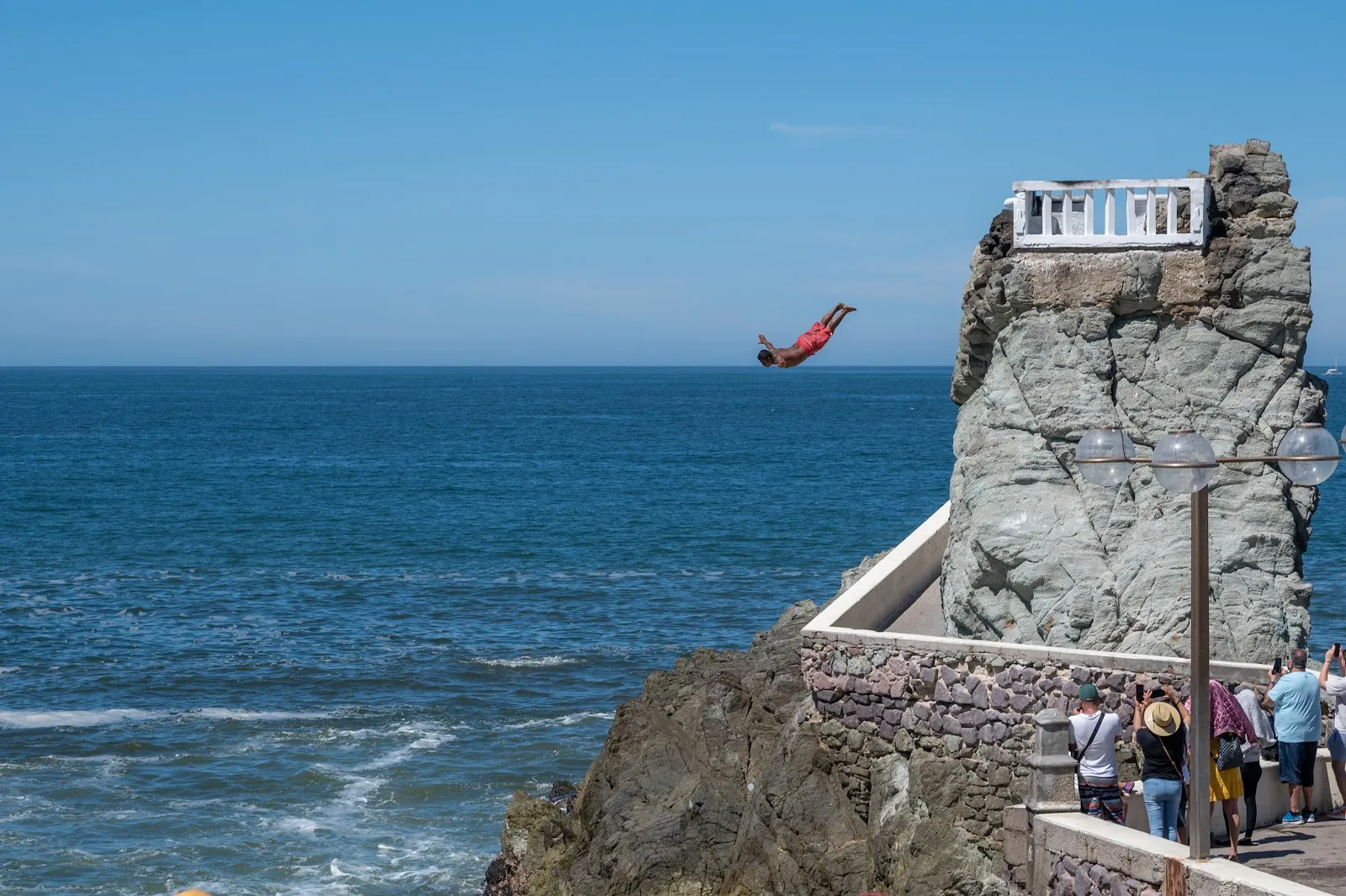
The Diver, known locally as El Clavadista, is a cliff-diving spot on the Malecón in Mazatlán. A diver stands on a rocky platform marked by a white rail and drops head first into the Pacific, once the swell is large enough. The dives are performed daily, and sunset is the time most often recommended for watching. The divers are paid through donations, so bring some pesos. The old sea pools at the southern end of the Malecón are close by, which makes this an easy stop on a seafront walk.

What happens at El Clavadista

The Diver
The Diver

You will know the spot by the white rail on top of a rocky platform above the water. From the street it looks modest, but the drop is high, and the rock overhangs the sea below.

A diver climbs to the top and waits for the swell. When a wave is big enough, he dives head first into the water. The performance takes place daily, though the sea decides the timing, so allow a little time for the right wave.

The dive is dangerous, especially when the waves are large. Divers have died performing it at this location. Watch quietly, and remember that only the divers go off the rock. Spectators are not allowed to jump.

Donations and how the divers are paid
The Diver
The Diver

The divers work as a group. While one of them is on the rock, other members of the group stand up on the street and ask spectators for donations. That money goes back to the diver and is how he is paid.

A guide told visitors that about 1 USD per person is an adequate amount. Pesos are the usual way to give. The requests can be repeated in this area, and a polite refusal is accepted. If you enjoyed the dive, a tip is the accepted thanks for the risk involved.

The sea pools next door

At the southern tip of the Malecón are Mazatlán's sea pools. They include a stark concrete waterslide and saltwater bathing pools that date from 1915. The pools are close to El Clavadista, so the two stops combine into one short outing on the seafront.

The Diver is also easy to reach on foot along the Malecón.

Sun, timing and access

Shade is scarce, and the heat can be strong while you wait for a wave. A hat and sunscreen help. Sunset gives the most dramatic view and is the time most often suggested for a visit.

The entrance is listed as wheelchair accessible, and a restroom is nearby. Some payment options are listed as cash-only, so keep pesos on hand.

FAQ

Is there an entry fee to see The Diver?

The input mentions no ticket. The divers are paid through donations that people on the street collect on their behalf. A guide suggested about 1 USD per person.

When is the best time to watch the dives?

Sunset is the time most often recommended for the view. The dive itself happens when the swell is big enough, so the sea affects the timing.

Where is The Diver in Mazatlán?

It is at El Clavadista on the Malecón de Mazatlán. The Malecón's sea pools, at the southern tip, are nearby.

Is the cliff dive dangerous?

Yes. The waves can be large, and divers have died performing at this spot. That is why tipping is the accepted way to show thanks.

What should I bring?

Bring a hat, sunscreen and small peso notes for donations. The sun can be strong while you wait.
More must-sees in Mazatlán

Explore all