Pianifica un viaggio
Lingua: Italiano
Pianificatore di viaggiPianifica il tuo viaggio su una mappa

Le migliori destinazioni

EnglishDeutschFrançaisEspañolPortuguêsPortuguês (BR)Italiano
Avviso di viaggio · MessicoAlcuni governi sconsigliano di viaggiare in alcune zone di Messico.Gli avvisi riguardano solo queste aree: Colima, Guerrero, Sinaloa, Chiapas, Chihuahua, Strada federale 199 San Cristóbal de las Casas–Palenque, Guanajuato, a sud delle strade 43D e 45D, Regione di confine con il Guatemala, Chiapas, Parco nazionale Lagunas de Zempoala, Michoacán, Nayarit, entro 20 km dal confine con Sinaloa e Durango, Nuevo León, eccetto Monterrey, Piedras Negras, Strada 85 Monterrey–Nuevo Laredo, Sonora, Tamaulipas, Tecate, Tijuana, Regione di confine con gli Stati Uniti, Zacatecas.Le indicazioni dipendono dal tuo passaporto. Leggi quelle del tuo governo prima di prenotare.Indicazioni ufficiali
Aree con avvisi
  • Colima · evitare ogni viaggio · Canada, Germania, Francia, Regno Unito
  • Guerrero · evitare ogni viaggio · Canada, Germania, Spagna, Francia, Nuova Zelanda, Regno Unito
  • Sinaloa · evitare ogni viaggio · Canada, Germania, Spagna, Francia, Nuova Zelanda, Regno Unito
  • Chiapas · evitare i viaggi non essenziali · Canada, Spagna, Francia
  • Chihuahua · evitare i viaggi non essenziali · Canada, Francia, Regno Unito
  • Strada federale 199 San Cristóbal de las Casas–Palenque · evitare i viaggi non essenziali · Francia, Regno Unito
  • Guanajuato, a sud delle strade 43D e 45D · evitare i viaggi non essenziali · Canada, Nuova Zelanda
  • Regione di confine con il Guatemala, Chiapas · evitare i viaggi non essenziali · Germania, Francia, Nuova Zelanda
  • Parco nazionale Lagunas de Zempoala · evitare i viaggi non essenziali · Canada, Nuova Zelanda
  • Michoacán · evitare i viaggi non essenziali · Canada, Germania, Nuova Zelanda, Regno Unito
  • Nayarit, entro 20 km dal confine con Sinaloa e Durango · evitare i viaggi non essenziali · Canada, Nuova Zelanda
  • Nuevo León, eccetto Monterrey · evitare i viaggi non essenziali · Canada, Nuova Zelanda
  • Piedras Negras · evitare i viaggi non essenziali · Spagna, Francia
  • Strada 85 Monterrey–Nuevo Laredo · evitare i viaggi non essenziali · Spagna, Francia
  • Sonora · evitare i viaggi non essenziali · Canada, Nuova Zelanda
  • Tamaulipas · evitare i viaggi non essenziali · Canada, Francia, Regno Unito
  • Tecate · evitare i viaggi non essenziali · Francia, Regno Unito
  • Tijuana · evitare i viaggi non essenziali · Francia, Regno Unito
  • Regione di confine con gli Stati Uniti · evitare i viaggi non essenziali · Germania, Spagna, Francia
  • Zacatecas · evitare i viaggi non essenziali · Canada, Germania, Spagna, Francia, Regno Unito

Segnalata anche da un solo governo: Triangolo Celaya–Irapuato–Salamanca, Guanajuato (Francia), Culiacán e dintorni (Francia), A nord di Ciudad Victoria, Tamaulipas (Germania), Strada 129 Martínez de la Torre–Teziutlán (Francia), Strada 131 Tapacoyan–Perote (Francia), Strade secondarie della 180 Martínez de la Torre–Papantla (Francia), Strada 40 Monterrey–Reynosa (Francia), Sud del Michoacán, da Uruapan alla costa (Francia), Acapulco (Francia), Bassa California, eccetto Tijuana e Tecate (Francia), Ciudad Acuña (Spagna), Ciudad Juárez e dintorni (Spagna), Ciudad Obregón (Francia), Coahuila, eccetto il sud (Nuova Zelanda), Coatzacoalcos (Francia), Quartieri a nord e nord-est dello Zócalo, Città del Messico (Francia), Durango (Francia), Est del Nuevo León, al confine con Tamaulipas (Francia), Guanajuato (Spagna), Guanajuato, strada statale 45 tra León e Irapuato (Nuova Zelanda), Guanajuato, a sud-ovest della strada 45D (Regno Unito), Jalisco, entro 50 km dal confine con il Michoacán (Canada), Monclova (Spagna), Morelos (Francia), Nayarit (Francia), Nogales (Francia), Zone rurali non turistiche della Baja California (Spagna), Zone rurali non turistiche di Chihuahua (Spagna), Zone rurali non turistiche di Coahuila (Spagna), Zone rurali non turistiche di Durango (Spagna), Zone rurali non turistiche di Sonora (Spagna), Comuni del nord di Jalisco (Regno Unito), Tamaulipas settentrionale, da San Fernando al confine con gli USA (Spagna), Veracruz settentrionale, al confine con il Tamaulipas (Spagna), Veracruz settentrionale da Martínez de la Torre (Francia), Strada 150D, Puebla–Orizaba (Francia), Strada 190, Oaxaca–Santo Domingo Tehuantepec (Francia), Strade 85 e 83 Monterrey–Ciudad Victoria–Tampico (Francia), Strada 95 Città del Messico–Cuernavaca (Francia), Selva Lacandona (Francia), Sud e sud-ovest del lago di Chapala, Jalisco (Regno Unito), Sud-ovest del Jalisco e Los Altos, eccetto Puerto Vallarta (Francia), Sud-ovest del Michoacán (Francia), Sud-ovest del Tamaulipas (Francia), Sud dello stato di Guanajuato (Francia), Sud del Michoacán, a sud di Morelia (Spagna), Fascia entro 40 km dal confine con il Guatemala, Chiapas (Regno Unito), Tepic (Nuova Zelanda), Toluca (Francia), Città di Veracruz (Francia)

GovernoConsigliAggiornatoLeggi le indicazioni
Regno Unito (FCDO)No advice against the whole country (regional advisories)–Leggi le indicazioni
Stati Uniti (Dipartimento di Stato)Exercise increased caution29 mag 2026Leggi le indicazioni
Canada (Affari globali)Exercise a high degree of caution (regional advisories)–Leggi le indicazioni
Germania (Auswärtiges Amt)Besondere Vorsicht walten lassen (Sicherheitslage) (regional advisories)19 ott 2026Leggi le indicazioni
Nuova Zelanda (SafeTravel)Exercise increased caution (regional advisories)–Leggi le indicazioni
Francia (Ministero per l'Europa e gli Affari esteri)Vigilance renforcée pour le reste du pays (regional advisories)–Leggi le indicazioni

Verificato ogni giorno dalle indicazioni pubblicate dai governi; ultima verifica 3 nov 2026.RoamLedger riassume le indicazioni ufficiali; non è un consiglio di alcun governo.

The Diver
Luogo simbolo

The Diver

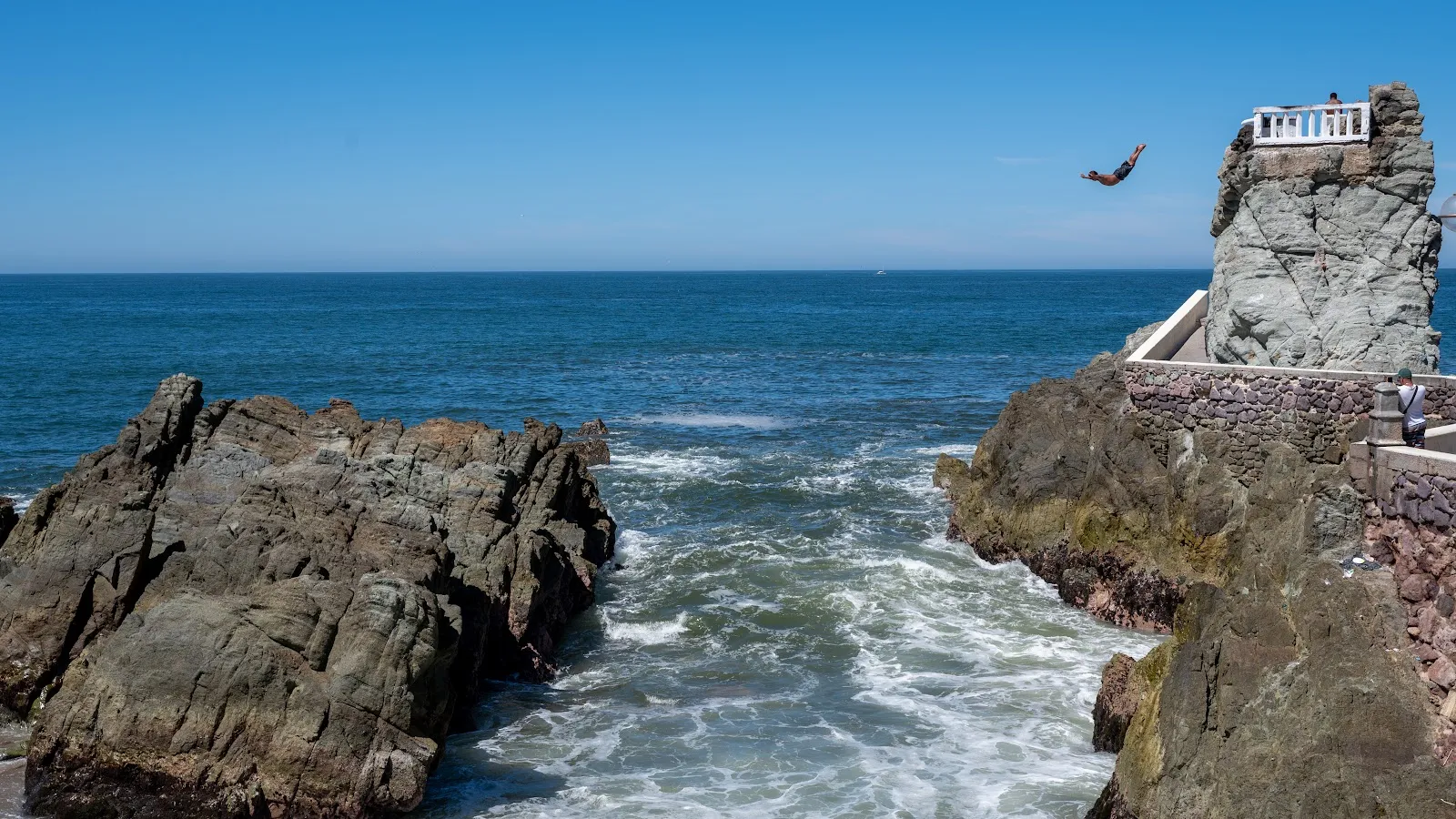
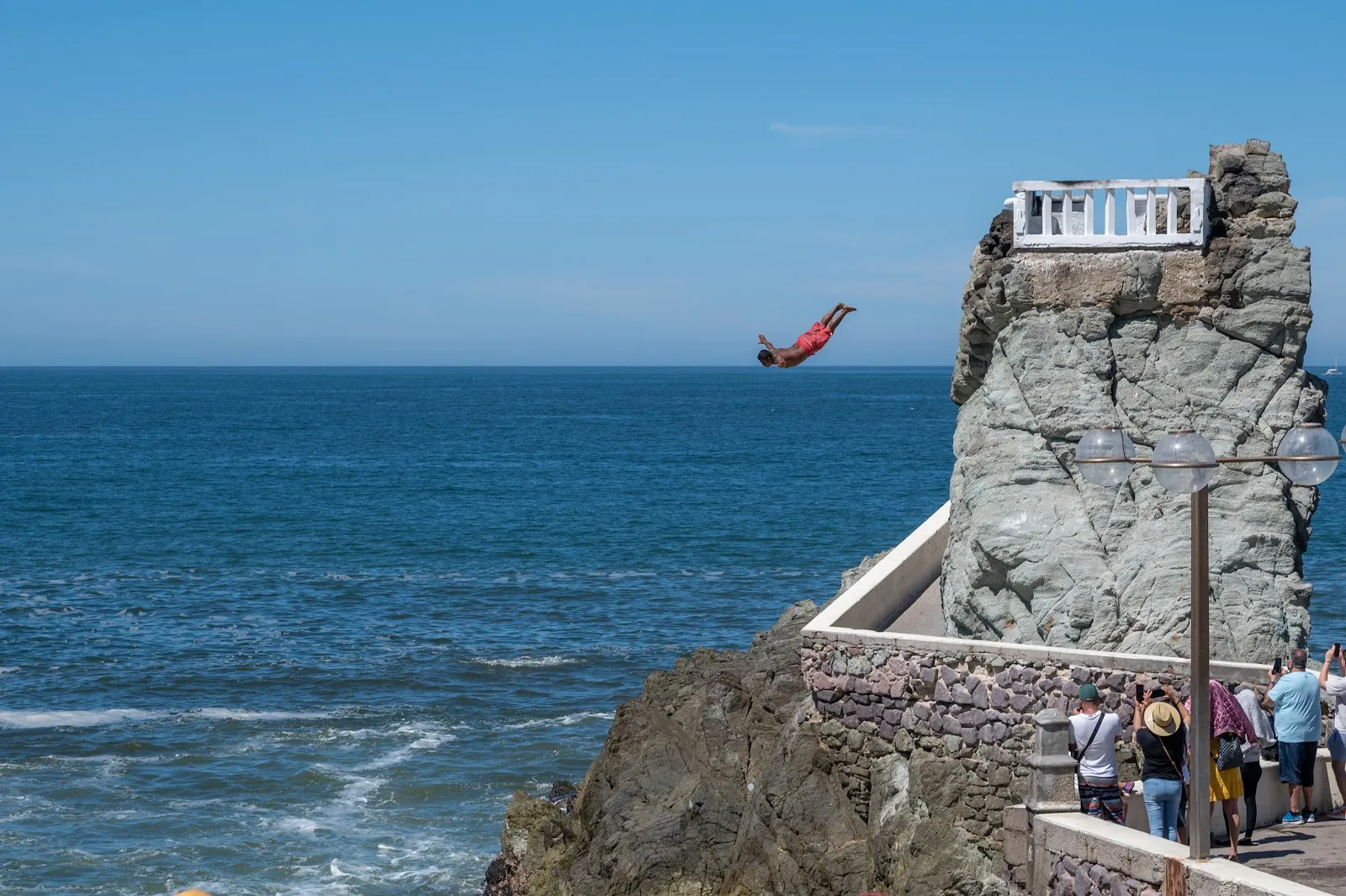
The Diver, known locally as El Clavadista, is a cliff-diving spot on the Malecón in Mazatlán.

The Diver, known locally as El Clavadista, is a cliff-diving spot on the Malecón in Mazatlán. A diver stands on a rocky platform marked by a white rail and drops head first into the Pacific, once the swell is large enough. The dives are performed daily, and sunset is the time most often recommended for watching. The divers are paid through donations, so bring some pesos. The old sea pools at the southern end of the Malecón are close by, which makes this an easy stop on a seafront walk.

What happens at El Clavadista

The Diver
The Diver

You will know the spot by the white rail on top of a rocky platform above the water. From the street it looks modest, but the drop is high, and the rock overhangs the sea below.

A diver climbs to the top and waits for the swell. When a wave is big enough, he dives head first into the water. The performance takes place daily, though the sea decides the timing, so allow a little time for the right wave.

The dive is dangerous, especially when the waves are large. Divers have died performing it at this location. Watch quietly, and remember that only the divers go off the rock. Spectators are not allowed to jump.

Donations and how the divers are paid
The Diver
The Diver

The divers work as a group. While one of them is on the rock, other members of the group stand up on the street and ask spectators for donations. That money goes back to the diver and is how he is paid.

A guide told visitors that about 1 USD per person is an adequate amount. Pesos are the usual way to give. The requests can be repeated in this area, and a polite refusal is accepted. If you enjoyed the dive, a tip is the accepted thanks for the risk involved.

The sea pools next door

At the southern tip of the Malecón are Mazatlán's sea pools. They include a stark concrete waterslide and saltwater bathing pools that date from 1915. The pools are close to El Clavadista, so the two stops combine into one short outing on the seafront.

The Diver is also easy to reach on foot along the Malecón.

Sun, timing and access

Shade is scarce, and the heat can be strong while you wait for a wave. A hat and sunscreen help. Sunset gives the most dramatic view and is the time most often suggested for a visit.

The entrance is listed as wheelchair accessible, and a restroom is nearby. Some payment options are listed as cash-only, so keep pesos on hand.

FAQ

Is there an entry fee to see The Diver?

The input mentions no ticket. The divers are paid through donations that people on the street collect on their behalf. A guide suggested about 1 USD per person.

When is the best time to watch the dives?

Sunset is the time most often recommended for the view. The dive itself happens when the swell is big enough, so the sea affects the timing.

Where is The Diver in Mazatlán?

It is at El Clavadista on the Malecón de Mazatlán. The Malecón's sea pools, at the southern tip, are nearby.

Is the cliff dive dangerous?

Yes. The waves can be large, and divers have died performing at this spot. That is why tipping is the accepted way to show thanks.

What should I bring?

Bring a hat, sunscreen and small peso notes for donations. The sun can be strong while you wait.
Altre attrazioni imperdibili a Mazatlán

Esplora tutto