
In Rome’s San Paolo district, this papal basilica stands over the traditional burial place of the Apostle Paul. Its vast five-aisled interior has long lines of granite and marble columns, a coffered ceiling and mosaics above the apse and triumphal arch. Look for the tomb beneath the main altar, the portraits of popes along the walls and the medieval cloister with its patterned, twisted columns. The basilica is one of Rome’s four major papal basilicas and is often a quieter stop than churches closer to the historic centre.
A basilica built over Paul’s burial place
The basilica stands outside the ancient city walls, on the Ostiense Way, over the place traditionally associated with the burial of the Apostle Paul. Its origins are linked to Emperor Constantine, who commissioned an early church at the site. In 386, Emperor Theodosius began a larger building, and the basilica grew into one of the principal churches of Rome.
The location explains its name, Saint Paul Outside the Walls. The church has drawn pilgrims for centuries and is one of Rome’s four major papal basilicas. Its connection to Paul remains central to a visit: beneath the main altar is the tomb, marked by a slab bearing the inscription “PAULO APOSTOLO MARTYRI.” An opening above the slab is associated with the ancient practice of pouring offerings at the tomb.
Inside the church
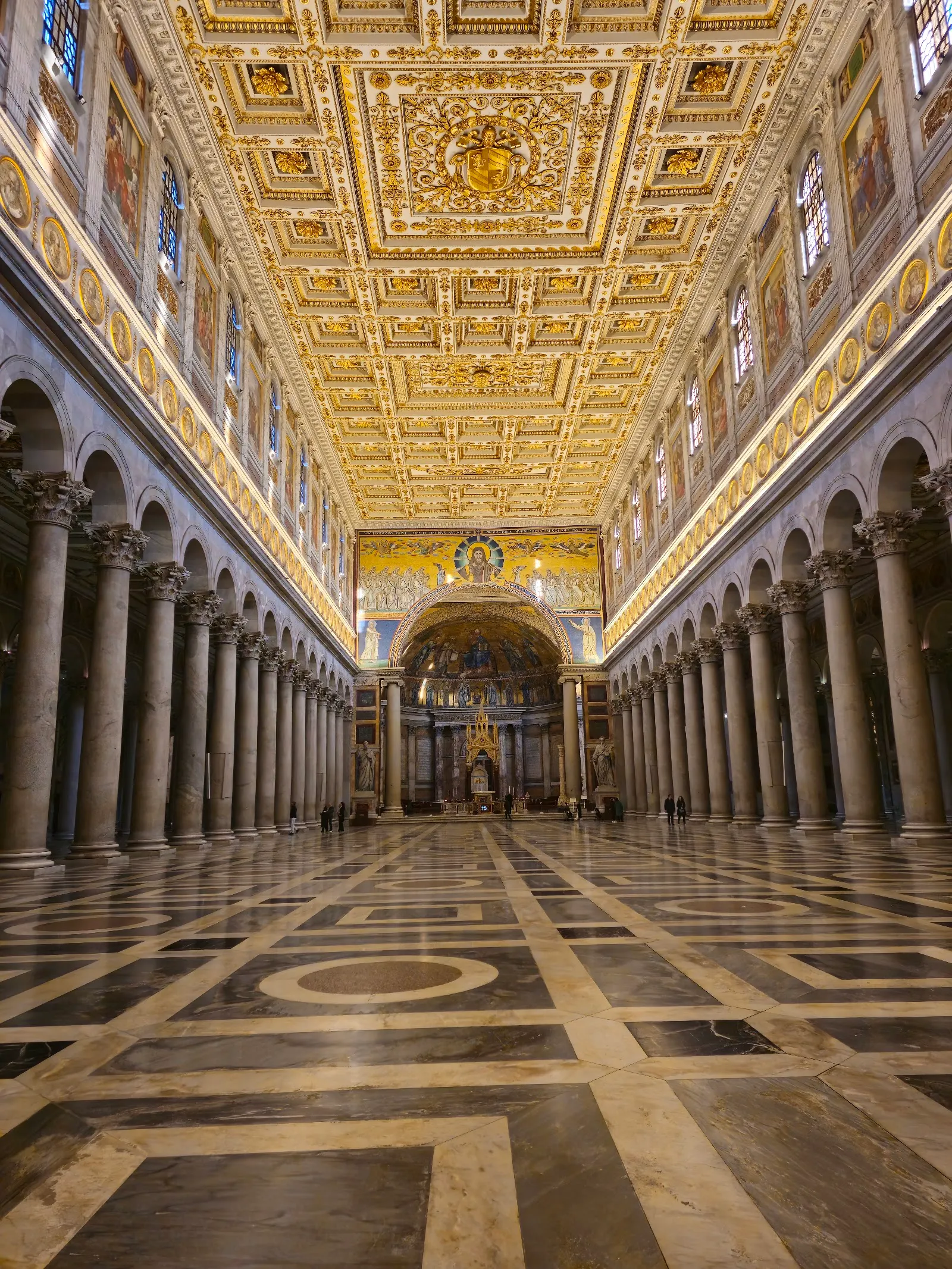
A fire in 1823 destroyed much of the basilica. It was rebuilt in the nineteenth century, following the earlier church’s broad five-aisled plan. The result is an unusually expansive interior, with long ranks of columns leading the eye towards the altar. Pause to take in the coffered ceiling and the mosaics above the choir, including the work on the triumphal arch and in the apse.
A sequence of portraits of popes runs along the upper walls. The church also preserves works and details from earlier periods, including mosaics that survived the fire. The scale of the nave gives these features room to stand out; look up as you move through the building, rather than focusing only on the altar.
The courtyard and cloister
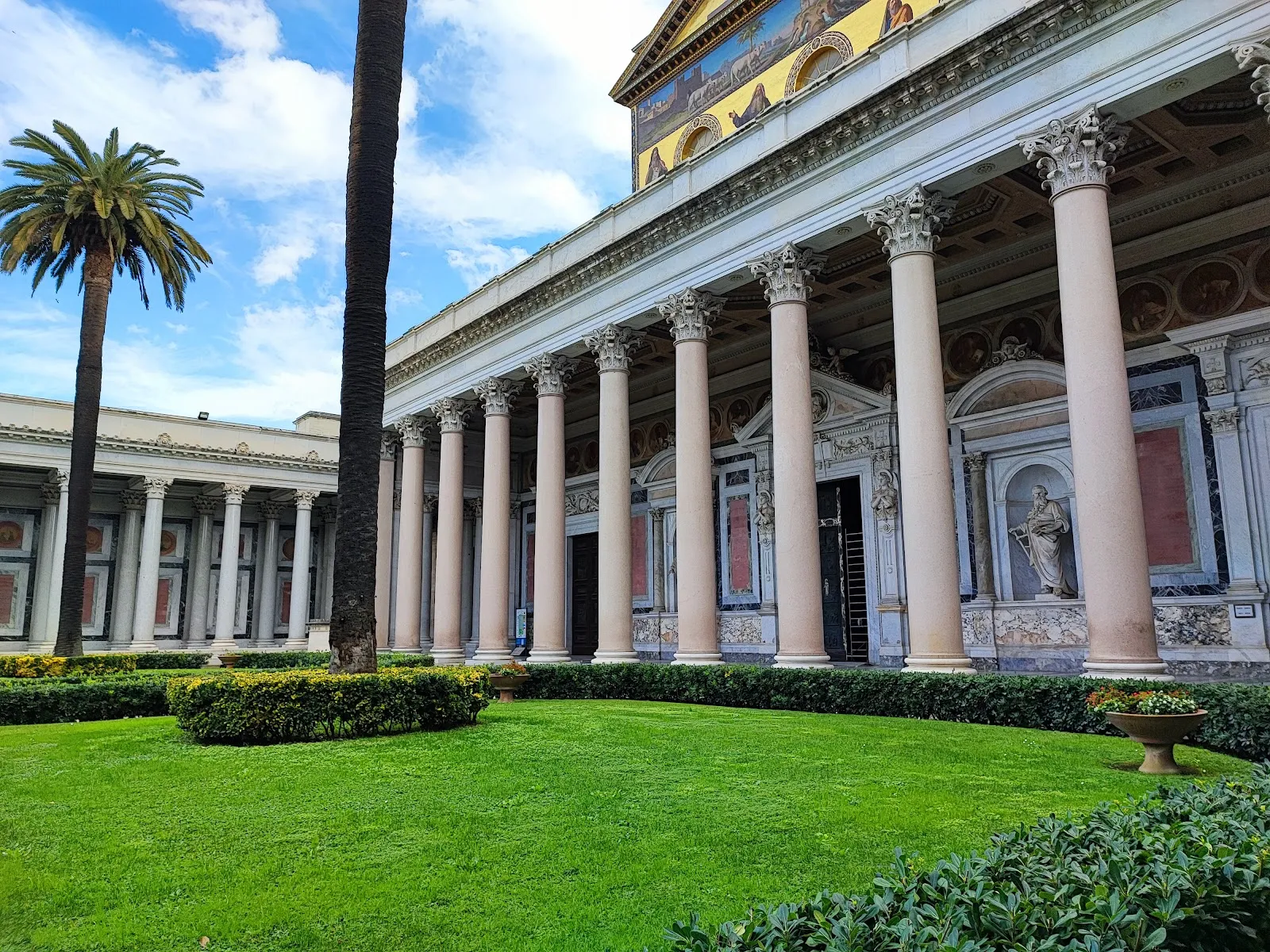
Before entering the church, cross the courtyard, or quadriporticus, where a statue of Saint Paul stands among rows of columns. The open space offers a different view of the basilica from the long interior nave.
The medieval cloister is another highlight. Its Cosmatesque decoration includes twisted marble columns, with intricate patterns that reward a slower look. A lapidarium in the cloister holds carved stone pieces that survived the fire. Set aside time for this quieter part of the visit as well as the main church.
Getting there and entering respectfully
The basilica is in the San Paolo district, south of Rome’s central tourist area. Metro Line B stops at San Paolo, making public transport a direct way to reach it. Its position away from the main cluster of central sights can mean a calmer visit, though special events and busy periods can bring more people.
This is an active Catholic place of worship. Cover your shoulders and knees when entering, and keep a respectful manner inside. Online booking is suggested for convenience during peak periods and major events. The basilica is also associated with the Holy Door, which opens on a cycle of 25 years.
FAQ
How do you get to Saint Paul Outside the Walls?
Take Metro Line B to San Paolo station, in the San Paolo district.
What should you see inside the basilica?
Look for the tomb beneath the main altar, the mosaics, the papal portraits along the walls and the rows of columns. The courtyard and medieval cloister are also worth visiting.
What should you wear to enter?
Cover your shoulders and knees as a courtesy when entering this Catholic church.


