Plan a trip
Language: English
Trip plannerPlan your trip on a map

Top destinations

EnglishDeutschFrançaisEspañolPortuguêsPortuguês (BR)Italiano
Travel advisory · IndiaRajasthan is in or near an area where governments advise against all travel: Within 10 km of the India-Pakistan border.Advice depends on your passport. Read your own government's advice before you book.Official advice
Areas with warnings
  • Jammu and Kashmir (Union Territory) · avoid all travel · Canada, Germany, Ireland, New Zealand, UK, US
  • Kashmir Valley · avoid all travel · Spain, France, Italy
  • Manipur · avoid all travel · Canada, Germany, Spain, Ireland, Italy, New Zealand, UK
  • Within 10 km of the India-Pakistan border · avoid all travel · Canada, Germany, Spain, France, Ireland, Italy, New Zealand, UK, US
  • Bihar · avoid non-essential travel · Spain, Italy
  • Chhattisgarh · avoid non-essential travel · Spain, Italy, New Zealand
  • Jharkhand · avoid non-essential travel · Spain, Italy
  • Odisha (Orissa) · avoid non-essential travel · Spain, Italy
  • Rural West Bengal · avoid non-essential travel · Spain, Italy
  • Srinagar–Ladakh road · avoid non-essential travel · France, Italy

Also named by one government: Jammu region (Spain), Tripura (Ireland), Assam border areas with Bangladesh (New Zealand), Border areas of Jammu and Kashmir (Italy), Gulmarg (Italy), Imphal (Ireland), India-Myanmar border (France), Ladakh (Spain), Ladakh border with China (immediate vicinity) (France), Nagaland border areas with Myanmar (New Zealand), Pahalgam (Italy), Rural Andhra Pradesh (Spain), Sonamarg (Italy), Srinagar (Italy)

GovernmentAdviceUpdatedRead the advice
United Kingdom (FCDO)No advice against the whole country (regional advisories)–Read the advice
United States (State Dept)Exercise increased caution (regional advisories)Jun 16, 2025Read the advice
Canada (Global Affairs)Exercise a high degree of caution (regional advisories)–Read the advice
Germany (Auswärtiges Amt)No warning against the whole country; partial warnings for specific areas (regional advisories)Oct 14, 2026Read the advice
New Zealand (SafeTravel)Exercise increased caution (regional advisories)–Read the advice
Ireland (Department of Foreign Affairs)High Degree of Caution (regional advisories)–Read the advice
France (Ministry for Europe and Foreign Affairs)Pays relativement sûr dans son ensemble, sous réserve de respecter certaines règles et de tenir compte du risque terroriste (regional advisories)–Read the advice

Checked daily from the governments' published advice; last checked Nov 2, 2026. RoamLedger summarises official advice; it is not advice from any government.

Saheliyon-ki-Bari
Garden

Saheliyon ki bari

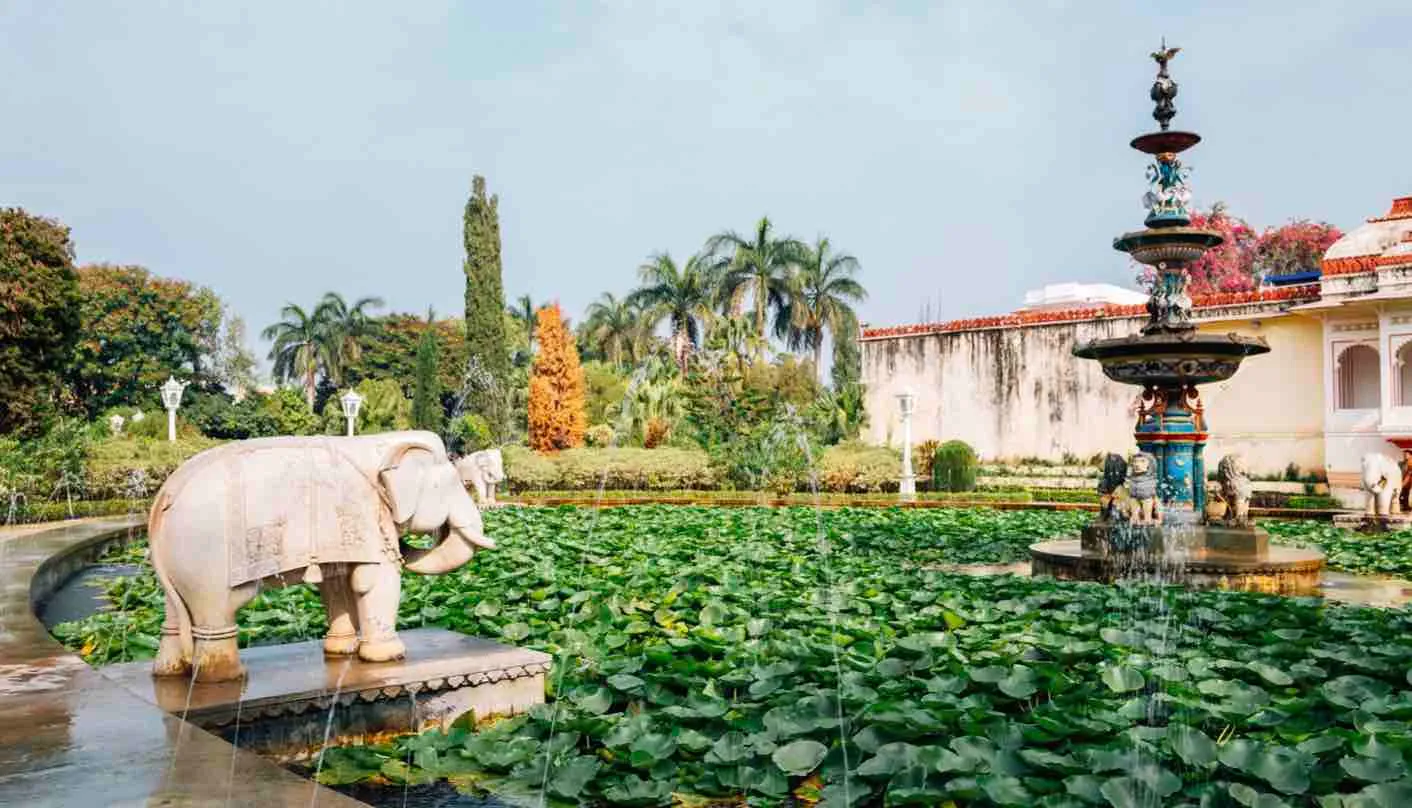
Visit Saheliyon Ki Bari in Udaipur for its lotus pools, marble elephants and distinctive fountains, including the Savan Bhado fountain area.

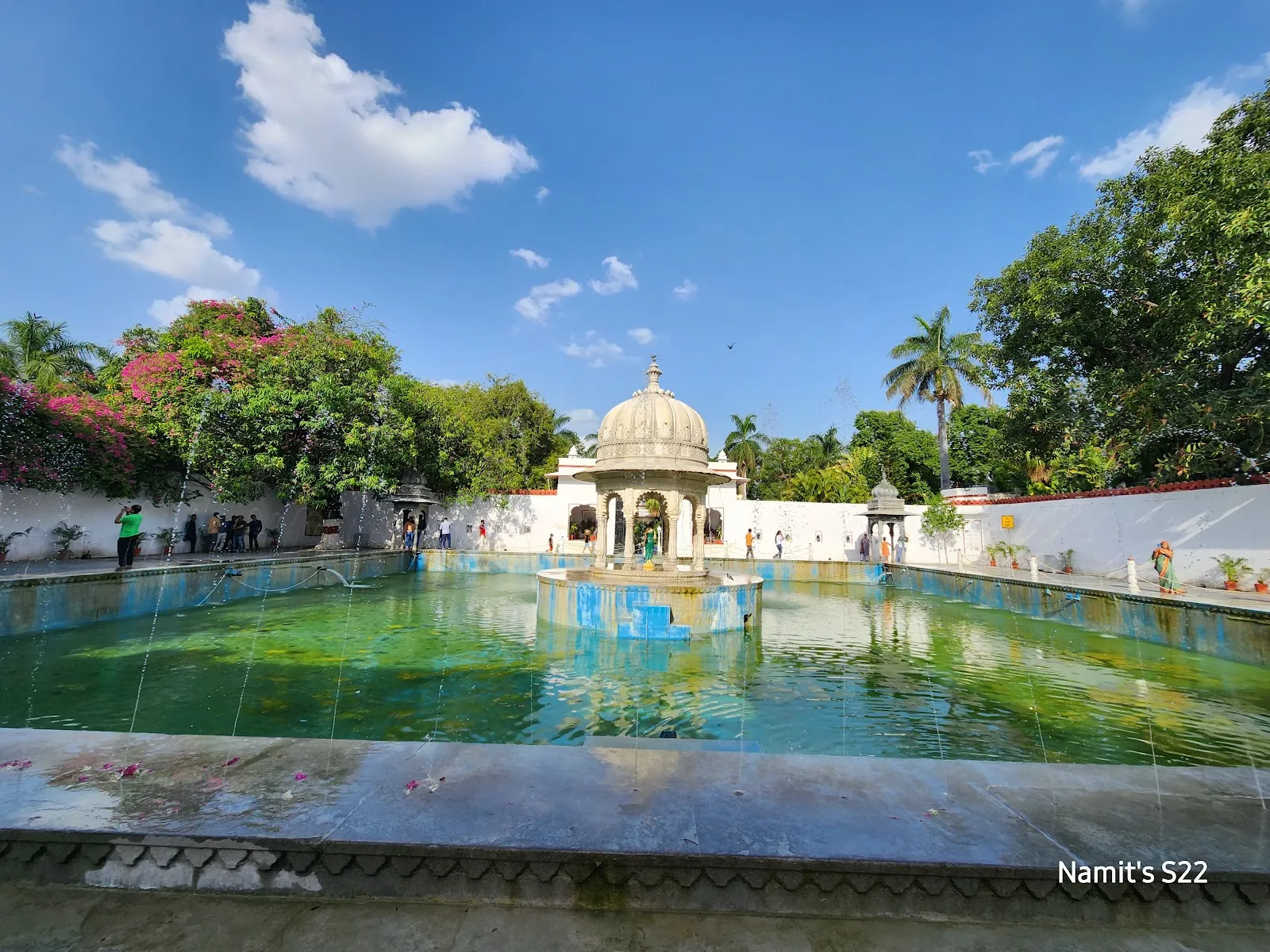
Saheliyon Ki Bari, the “Garden of the Maidens,” is a historic garden in northern Udaipur, near Fateh Sagar Lake. Built in the 18th century for royal women and their companions, it pairs green lawns and flowerbeds with lotus pools, marble pavilions and fountains. Look for the marble elephants and the garden’s distinctive fountain areas, including Savan Bhado and Bin Badal Barsat. It is a calm stop for a stroll or photographs, though there is limited shade in the sunny sections.

A royal garden for women companions
Saheliyon ki bari
Saheliyon ki bari

Saheliyon Ki Bari means “Garden of the Maidens.” Maharana Sangram Singh commissioned the garden in the early 18th century as a place for the queen and the women who accompanied her. Accounts connect the garden with 48 attendants who came with a princess as part of her marriage arrangements.

The garden’s original role was leisure: its lawns, pools and water features provided a setting for the royal women to spend time together. It is now open to the public and is among Udaipur’s best-known garden attractions.

Pools, marble and fountains
Saheliyon ki bari
Saheliyon ki bari

Water is central to the garden’s design. Pools, lotus flowers and fountains sit among lawns, flowerbeds and marble structures. Marble elephants, carved kiosks and pavilions add sculpted detail to the paths and water edges. The fountains were designed to work through water pressure, without pumps, a detail a guide can explain during a visit.

Savan Bhado and Bin Badal Barsat are among the named fountain spots inside the garden. Take time to notice how water, stone and planting shape each area. The sound of flowing water gives the garden a quieter feel than the surrounding city.

The small museum and a comfortable visit

A small museum on the grounds contains objects associated with the royal household. Material listed for the collection includes household items, paintings and stuffed animals. It offers a different point of interest from the garden’s outdoor features, particularly if you want to look beyond the pools and fountains.

The garden is in Panchwati, in northern Udaipur, near Fateh Sagar Lake. Early morning and late afternoon are suggested times for a more peaceful visit. Some areas have little shade, so a midday walk can mean more exposure to the sun. If you want more context on the water features, consider hiring a guide. The garden’s traditional fountains are noted for operating without electricity.

FAQ

Where is Saheliyon Ki Bari?

It is in Panchwati, in northern Udaipur, near Fateh Sagar Lake.

What is inside Saheliyon Ki Bari?

The garden has fountains, lotus pools, marble elephants, kiosks and pavilions. There is also a small museum with objects associated with the royal household.

When is a good time to visit?

Early morning or late afternoon is suggested for a quieter visit and less exposure to the sun.

Is there an entry fee?

One supplied account lists a fee of ₹10 for Indian visitors and ₹50 for foreign visitors. Check current details before setting out.
More must-sees in Rajasthan

Explore all