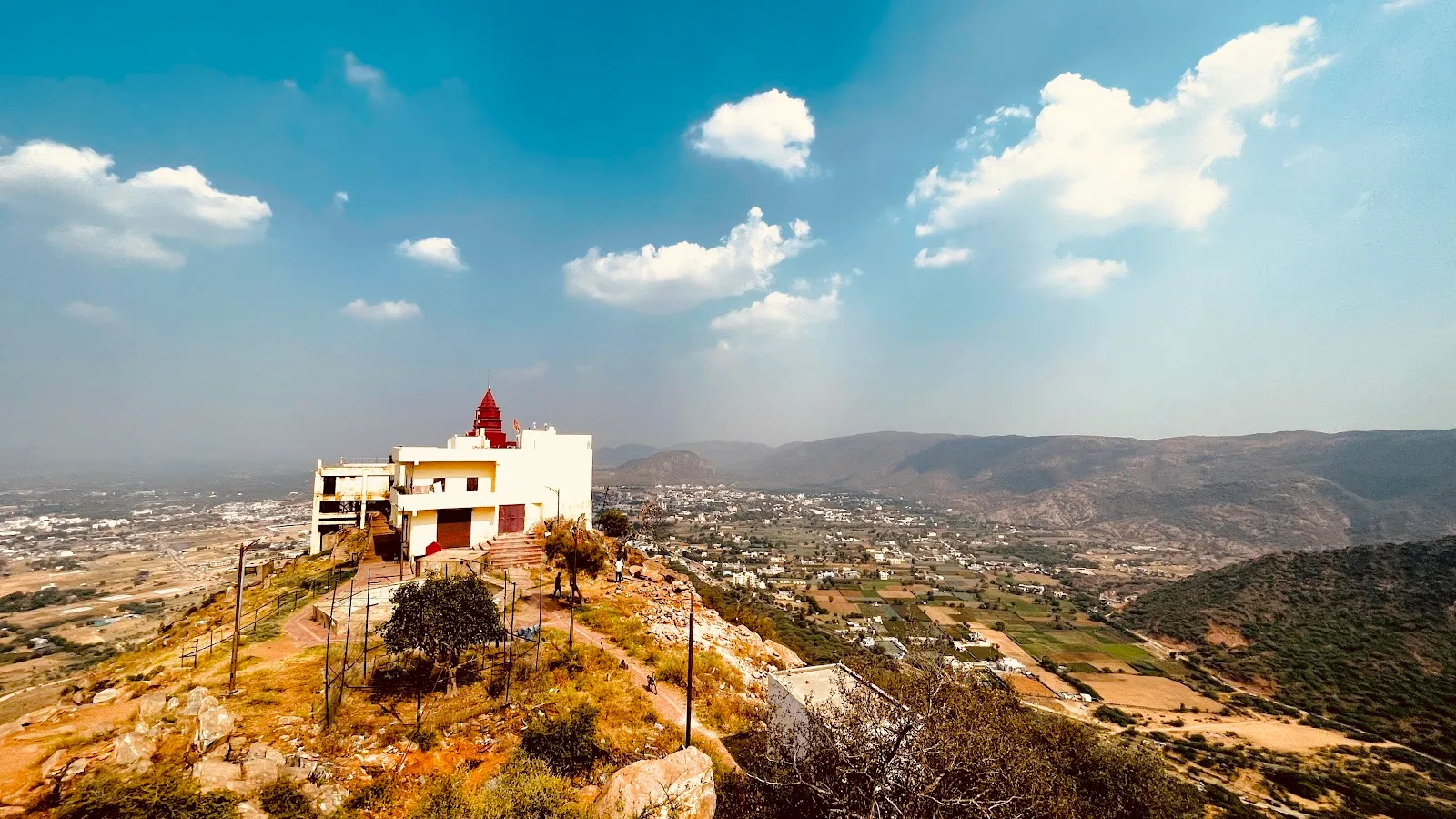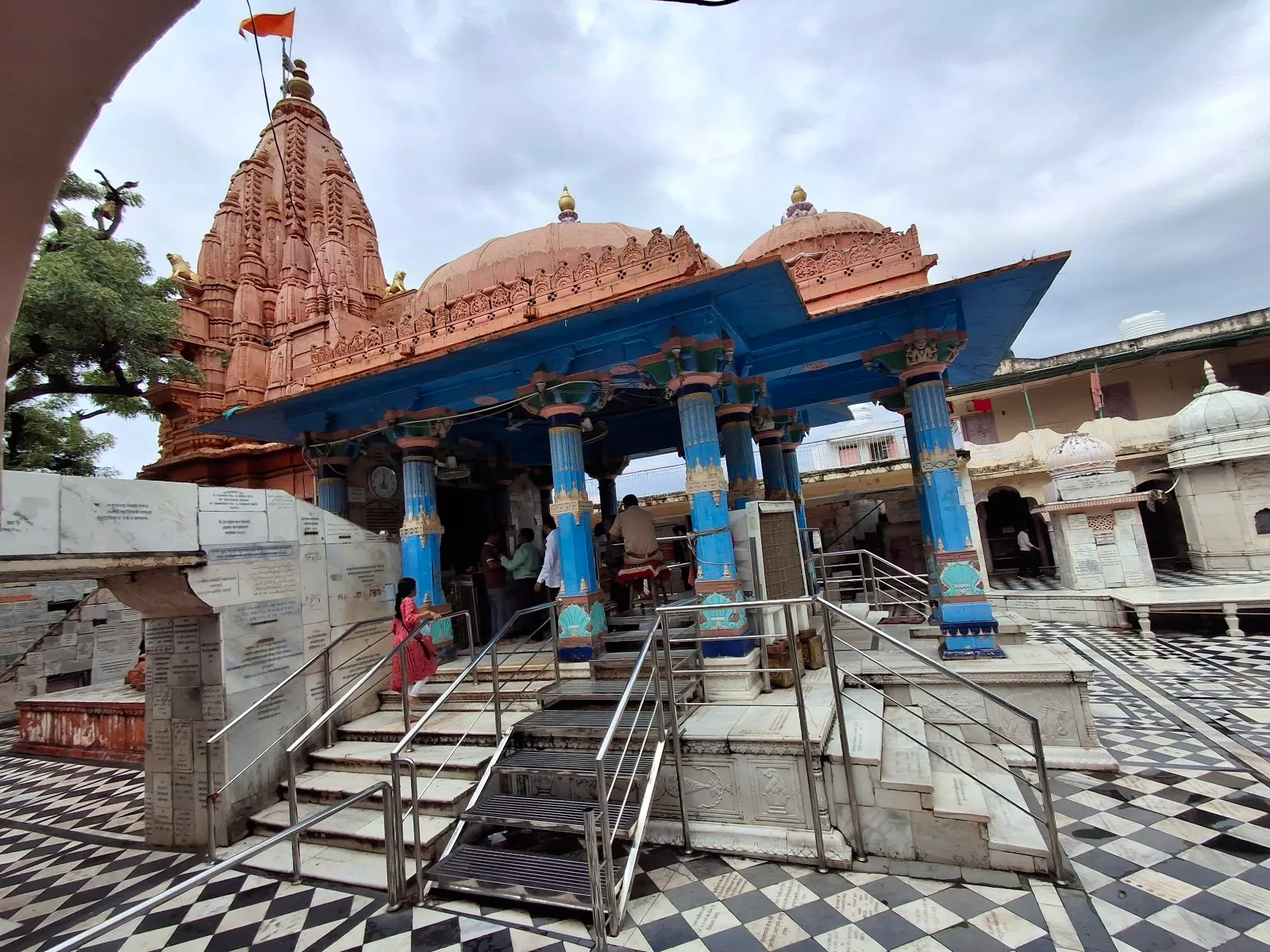
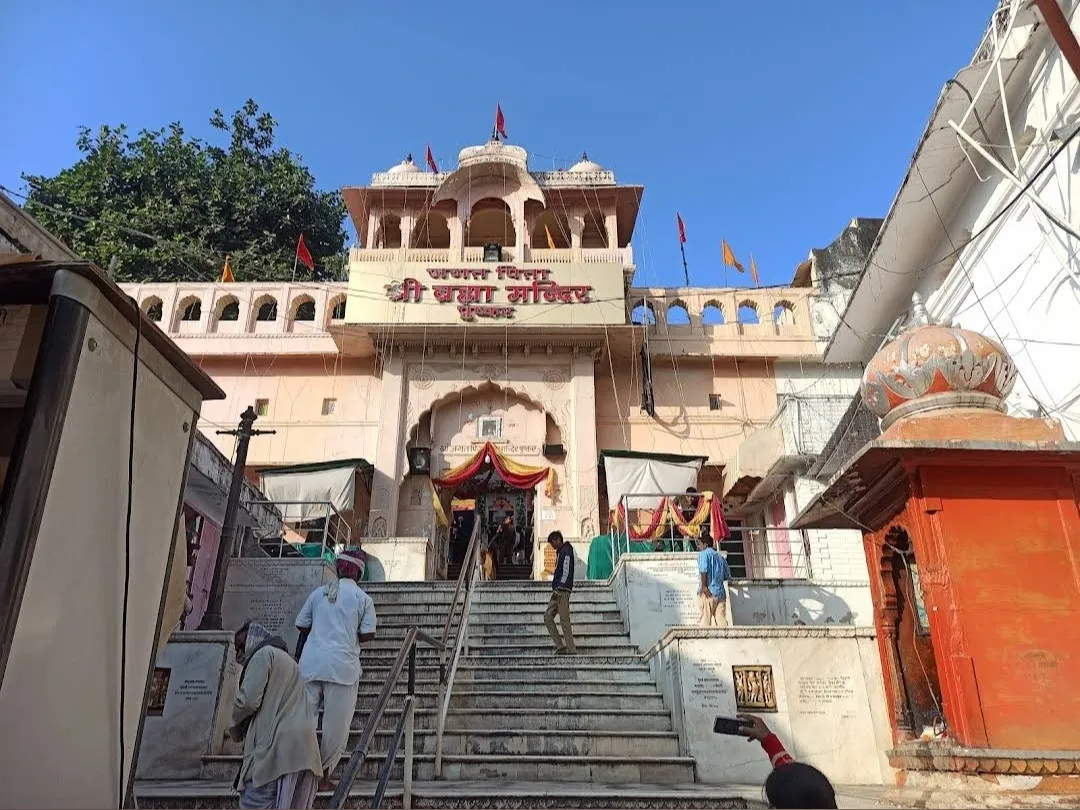
Jagatpita Brahma Mandir is on the edge of Pushkar Lake in Rajasthan and is dedicated to Brahma, the creator god of the Hindu trinity. Most Hindu temples honour Vishnu or Shiva, and few honour Brahma, so Pushkar draws pilgrims for this shrine in particular. The white marble building has a red spire, and its walls are inlaid with silver coins left by pilgrims. The present structure dates to the 14th century, on a site believed to be far older. Most visitors combine the darshan with a walk along the ghats beside the lake.
The legend behind Pushkar
The temple is tied to the story of Pushkar Lake. In most versions of the legend, Brahma killed the demon Vajranabha, and three petals of his lotus fell to the earth. Springs rose where they landed, and the place became known as Pushkar. Brahma is later said to have performed a yagna here.
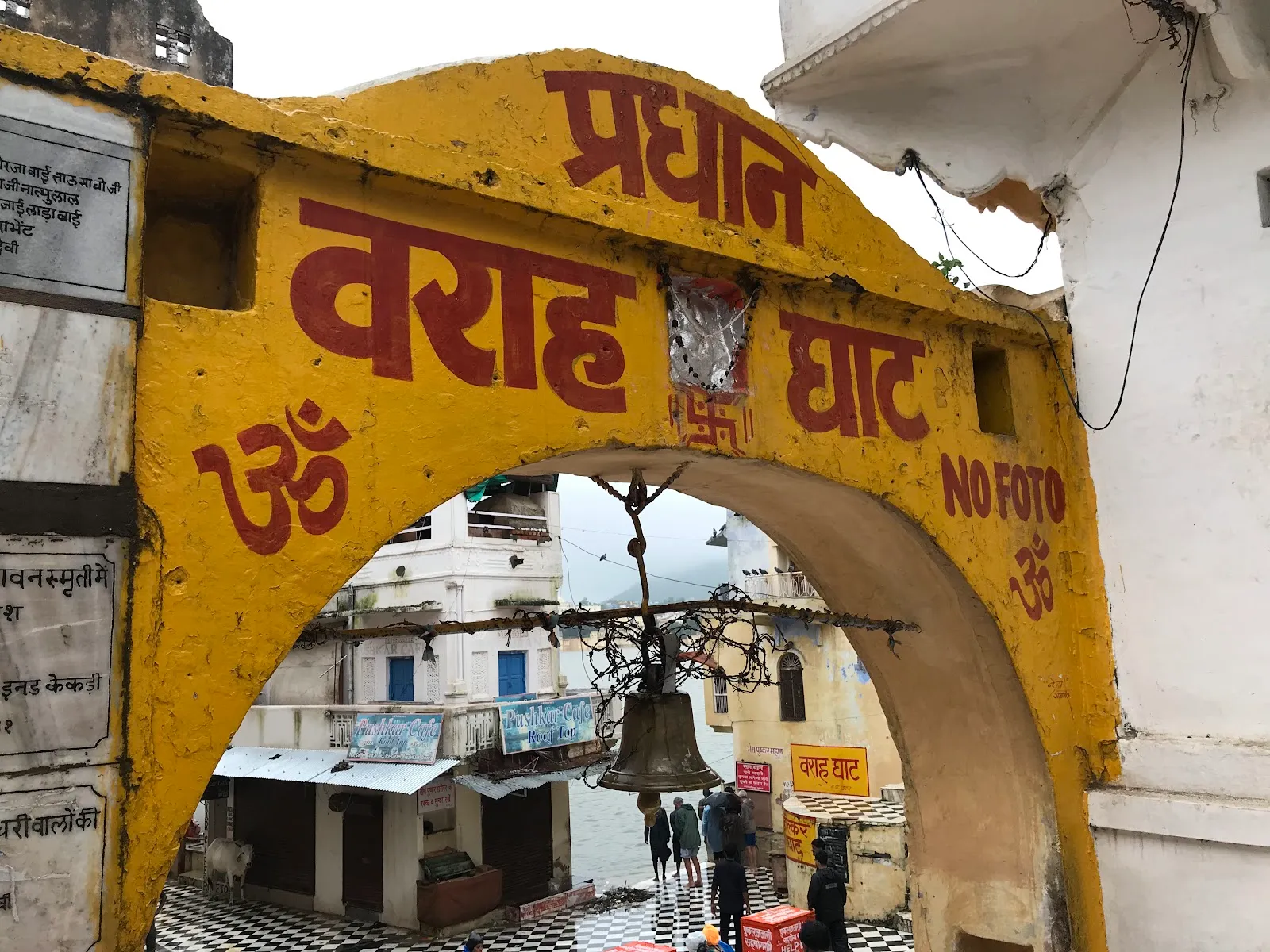
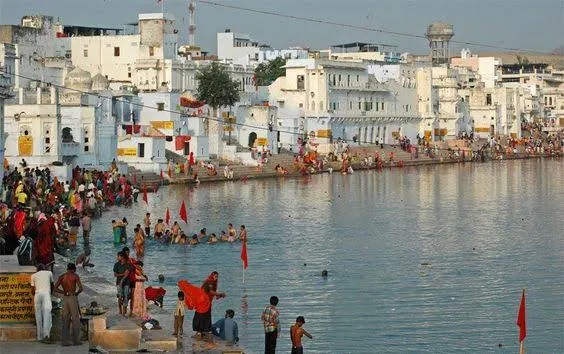
The lake is ringed by ghats, each named after a Hindu god, with one dedicated to Gandhi. Pushkar has hundreds of shrines and temples, and the Brahma temple is the most important of them. It is the best known of the few Brahma temples in India.
Age and architecture
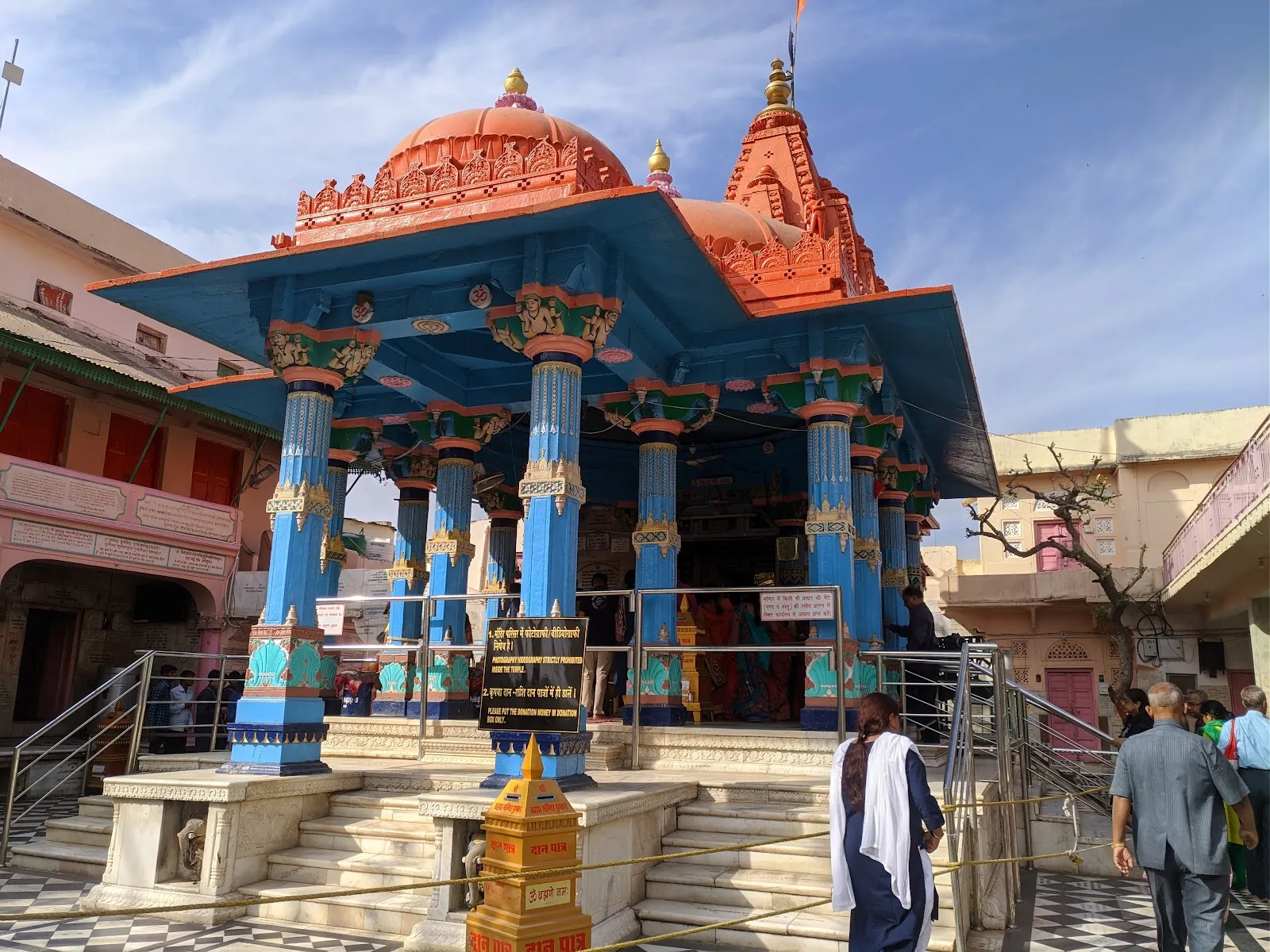
The site is thought to be about 2,000 years old, though the building you see today dates to the 14th century. It is built of marble and stone and topped with a red pinnacle, which makes it easy to pick out from the lake.
Look at the walls and floors as you pass through. They are inlaid with silver coins, offered over the years by pilgrims. Inside, the main shrine is dedicated to Brahma, and Gayatri is also worshipped here alongside him.
The approach and the lanes outside
The temple lies close to the lake, and the lanes leading to it are crowded with small shops. They sell flowers, prasad and souvenirs, so you can buy an offering on the way in. One visitor reports a small prasad offering at around Rs 21, but prices vary from stall to stall.
If you arrive from Ajmer, the road is a pleasant part of the trip. It crosses Anasagar Lake and runs through wooded hills.
Rules, guides and donations
Remove your footwear well before the main gate, not at the door. Phones and cameras are not allowed inside, so plan to leave them behind. Many visitors find that this keeps the visit calmer.
Guides and priests often approach new arrivals in Pushkar and offer to take them to the lake and the temple. They can explain the legend and the rituals. If you would rather go alone, a polite refusal is enough. Donations are left to your own discretion, and the amount for a priest's dakshina is up to you. The temple is run by a trust formed by its priests, which is responsible for its upkeep.
Festival days and Kartik Purnima
Kartik Purnima falls on the night of the full moon. According to tradition, this is the day Brahma brought forth the lake, and many people bathe in the sacred water. The temple and the lanes around it are at their most crowded then, and on other festival days. If you want a quieter visit, choose an ordinary weekday morning.
FAQ
Are phones and cameras allowed inside the Brahma Temple?
No. Phones and cameras are not allowed inside the temple, so leave them behind or keep them out of sight before you enter.
Where do I take off my shoes?
Footwear has to come off well before the main gate, not at the entrance itself. Plan to leave your shoes outside the temple lanes.
How old is the Brahma Temple in Pushkar?
The site is believed to be about 2,000 years old. The building you see today dates to the 14th century.
When is the best time to avoid crowds?
Go early in the morning, especially in peak tourist season. Festival days and Kartik Purnima are the busiest times. On a weekend, expect a wait of roughly 10 to 30 minutes.
Is the temple wheelchair accessible, and is there parking?
The entrance is wheelchair accessible, and there is a free parking lot, including accessible parking. Restrooms are available on site.