The Imperial Castle of Nuremberg, the Kaiserburg, stands on a sandstone ridge at the northern edge of the Altstadt. It is a group of fortified buildings rather than a single castle, and it was a residence of the Holy Roman emperors between 1050 and 1571. Inside you can see the Palas with its Knights' Hall and Romanesque double chapel, the castle museum, the Sinwell Tower and the 48 m Deep Well. The grounds are free to enter and give wide views over the rooftops. Allow about two hours, and bring shoes for the steep climb.
From the first fortifications to the last emperor's visit
The first fortified buildings on this rock date to around the year 1000, and the castle appears in writing for the first time in 1050. From then until 1571 it was a residence of the German emperors. The Holy Roman emperors had no single capital, so they moved between castles, and Nuremberg sat at a junction of imperial roads.
The complex grew in stages. Work under the Salian kings ran from 1027 to 1125, and the Hohenstaufen emperors expanded it from 1138 to 1254, the period of the great Palas. From the 15th century the city of Nuremberg took over the castle and added powerful bastions and the imperial stables.
The castle's standing was fixed in law in 1356. The Golden Bull of Emperor Charles IV decreed that every newly elected ruler had to hold his first Imperial Diet in Nuremberg.
Three parts on one ridge
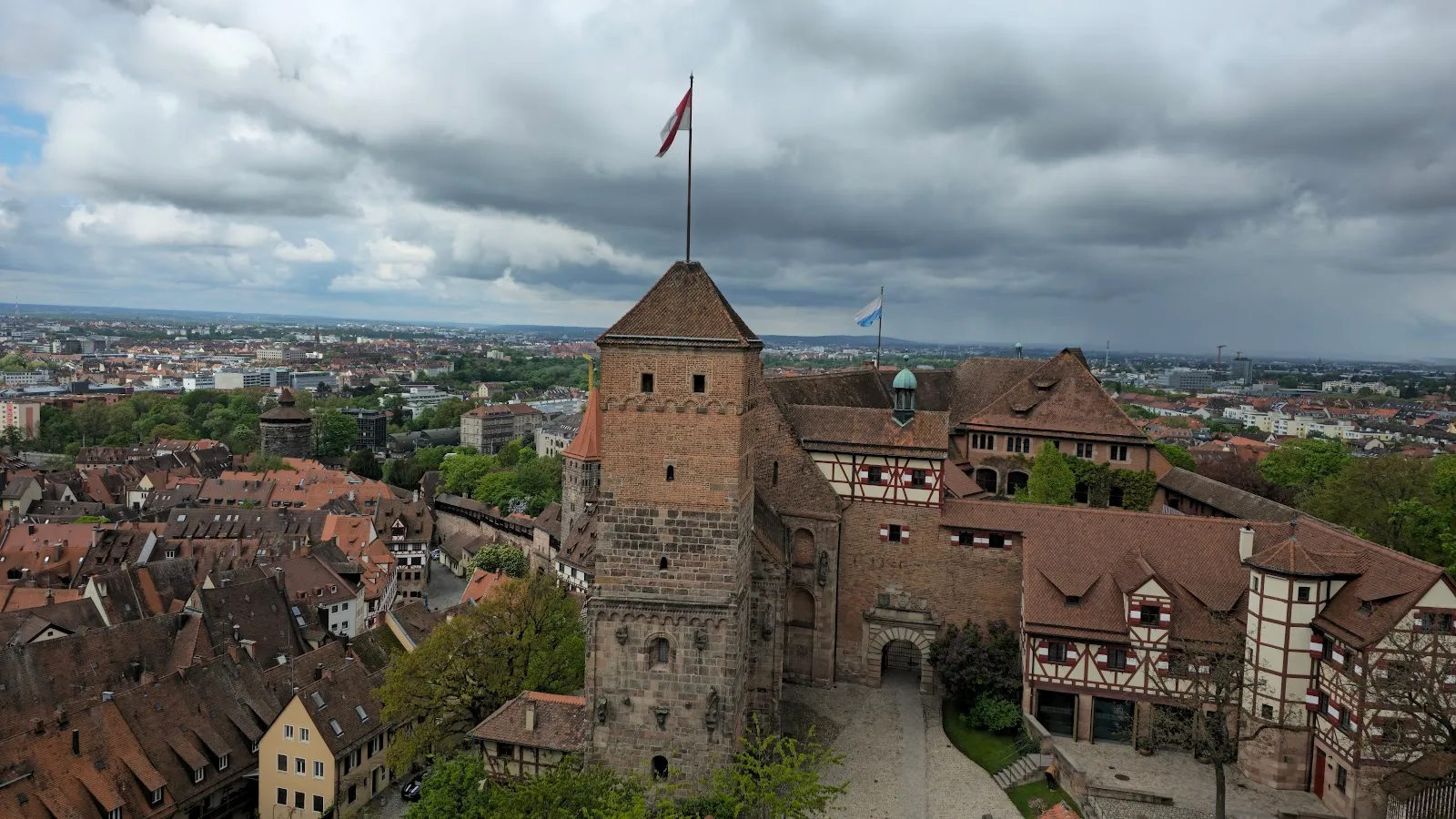
The site is about 220 m long and 50 m wide, and it is divided into three sections separated by gates and courtyards. These are the Imperial Castle itself, the Burgraves' castle, and the buildings of the city's own fortifications to the east. Of the roughly 45 buildings, only a few are open to the public: the chapel, the living quarters, the well and the tower.
The Palas was almost entirely destroyed by bombing in the Second World War. It was rebuilt after the war as a long range of buildings along the rock. Much of what you see today dates from the 15th century or later, even though the site is far older.
Part of the old imperial stables now houses a youth hostel. That entrance is for guests only, so use the main castle entrance instead.
Inside the Palas and the museum
The main interior visit is the Palas, the residential wing. Its rooms include the Knights' Hall and the Imperial Hall, and an animated version of the arrival procession painted above the windows plays in the Knights' Hall. When an emperor returned, his arrival was marked by a procession, festive music and ringing bells.
The Romanesque double chapel is also part of the tour. An exhibition on how the Holy Roman Empire worked explains Nuremberg's place in it.
The castle museum covers the military and building history of the complex, with armour and weaponry on display. A separate Art Bunker, 24 m underground, was created at the start of the Second World War to protect important works of art. Check its current opening details before you plan around it. Seating areas inside allow you to rest between rooms.
The tower, the well and the grounds
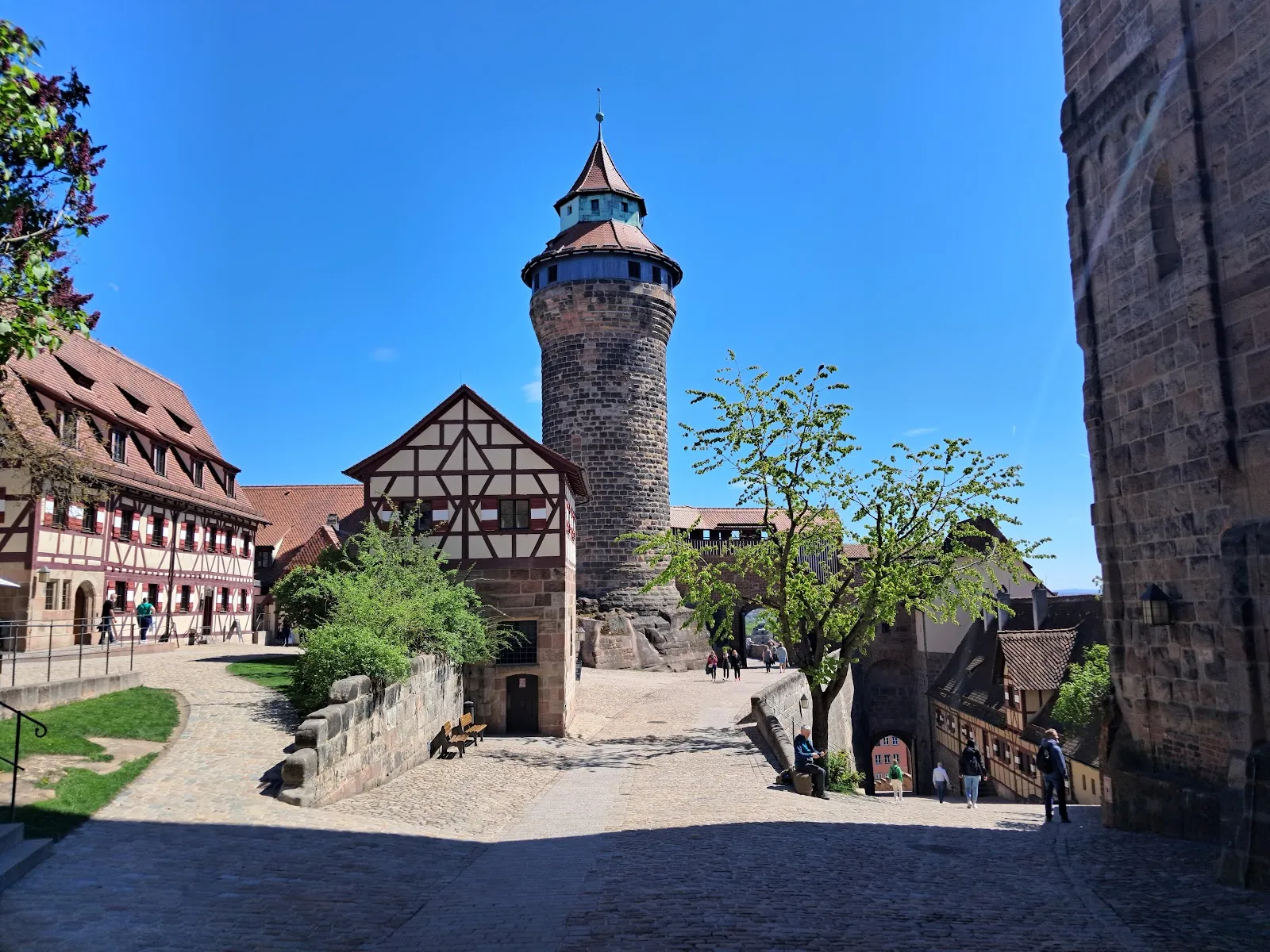
The Sinwell Tower gives the widest view of the Altstadt, with the spires of the main churches in sight. A map-style panel on the walls helps you pick out landmarks. The Deep Well, the Tiefer Brunnen, was cut dozens of metres into the rock and reaches 48 m. Guides show it to small groups, so you may have to wait your turn.
You do not need a ticket for the courtyards, the ramparts or the gardens in the old outer fortifications. The wall views and the lanes below the castle are free, so you can see the setting even if you skip the interiors. The site has a souvenir shop and a cafe at the top, and a restaurant stands just before the entrance.
Planning the visit
The castle is a short, uphill walk north of the Hauptmarkt through the old streets. Plan on about two hours to see the interiors at a comfortable pace, and more if you also walk the gardens and walls.
The entrance, the restrooms and the seating are wheelchair accessible. Family and child discounts are offered, and tickets are best bought online in advance.
FAQ
Is there an entry fee for the Imperial Castle of Nuremberg?
The grounds, including the courtyards and ramparts, are free to enter. The interior museum, the Deep Well and the Sinwell Tower need a ticket. Check the official website for current prices.
How long do you need at the Imperial Castle?
About two hours is enough to see the interiors, the tower and the well at an easy pace. Add time if you want to walk the gardens and the walls.
Is the walk up to the castle steep?
Yes, the climb is steep. From the Hauptmarkt it is a walk through medieval lanes, so wear comfortable shoes.
Should I buy tickets in advance?
Yes, buying online in advance is recommended. Going early in the day also helps you avoid the crowds.
Is the castle wheelchair accessible?
The entrance, restrooms and parking lot are wheelchair accessible, and there is accessible seating. The site is on a steep hill, so check the access route before you go.