
The Ruhmeshalle, or Hall of Fame, stands above Munich’s Theresienwiese beside the statue of Bavaria, the state’s female personification. Designed by Leo von Klenze and built between 1843 and 1853 for King Ludwig I, the open Neoclassical gallery honors people who shaped Bavaria in politics, science and the arts. Walk its three wings to see more than 100 busts, then look up to the statue, which rises over 18 metres above the grounds. The colonnade and its Greek-inspired details make the building worth seeing as well as the people it commemorates.
A hall built to honour Bavarians
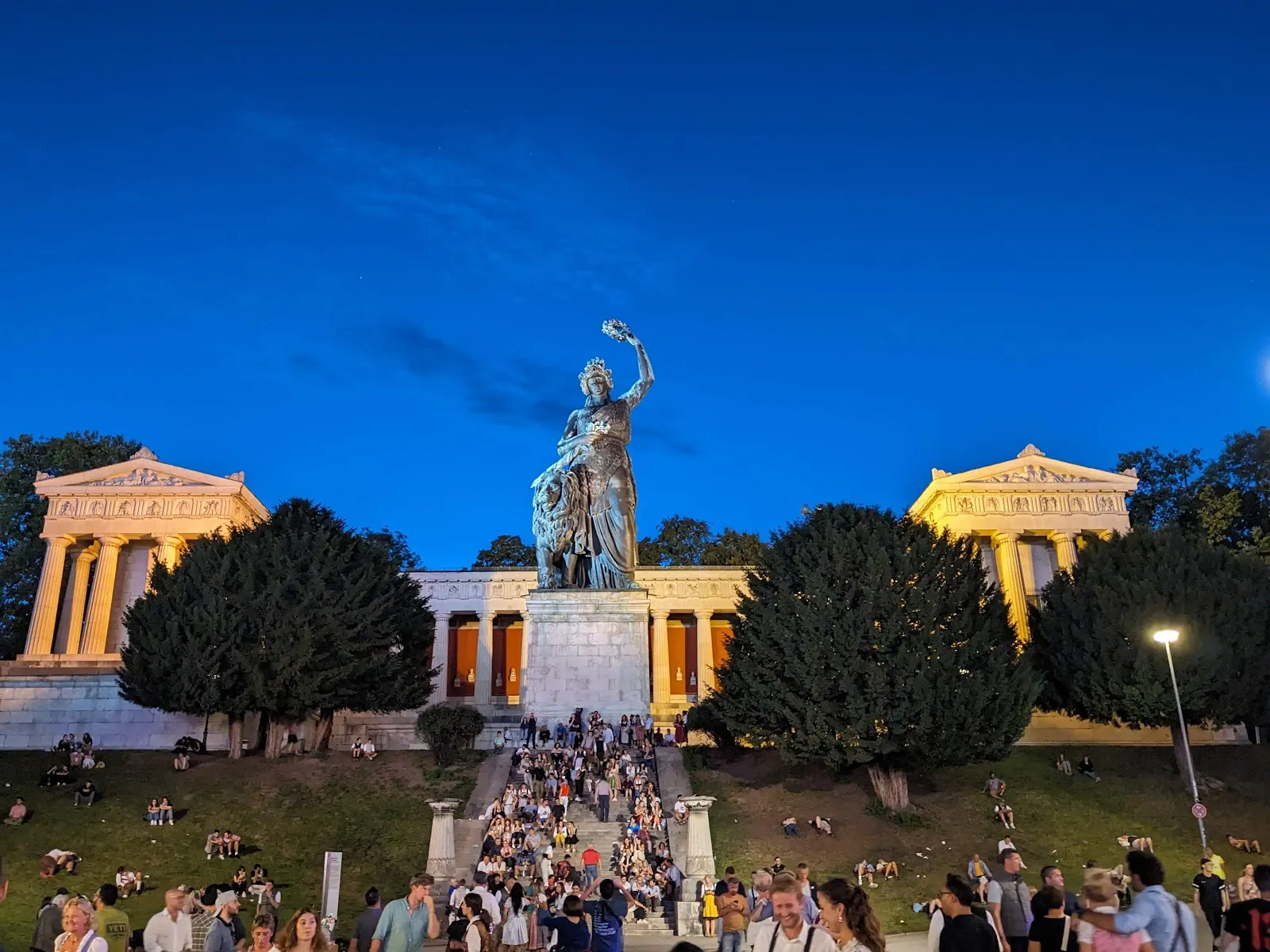
King Ludwig I commissioned the Ruhmeshalle as a monument to people who had contributed to Bavaria. Leo von Klenze designed it, and construction took place between 1843 and 1853. Its name means Hall of Fame. The people commemorated here came from fields including politics, science and the arts.
The selection reflected an idea associated with Ludwig I’s Enlightenment outlook: a nation is shaped by the achievements of its citizens, not only by its rulers. Members of the royal family were deliberately left out. The busts instead represent individuals whose work contributed to Bavarian life and history.
The open Neoclassical gallery
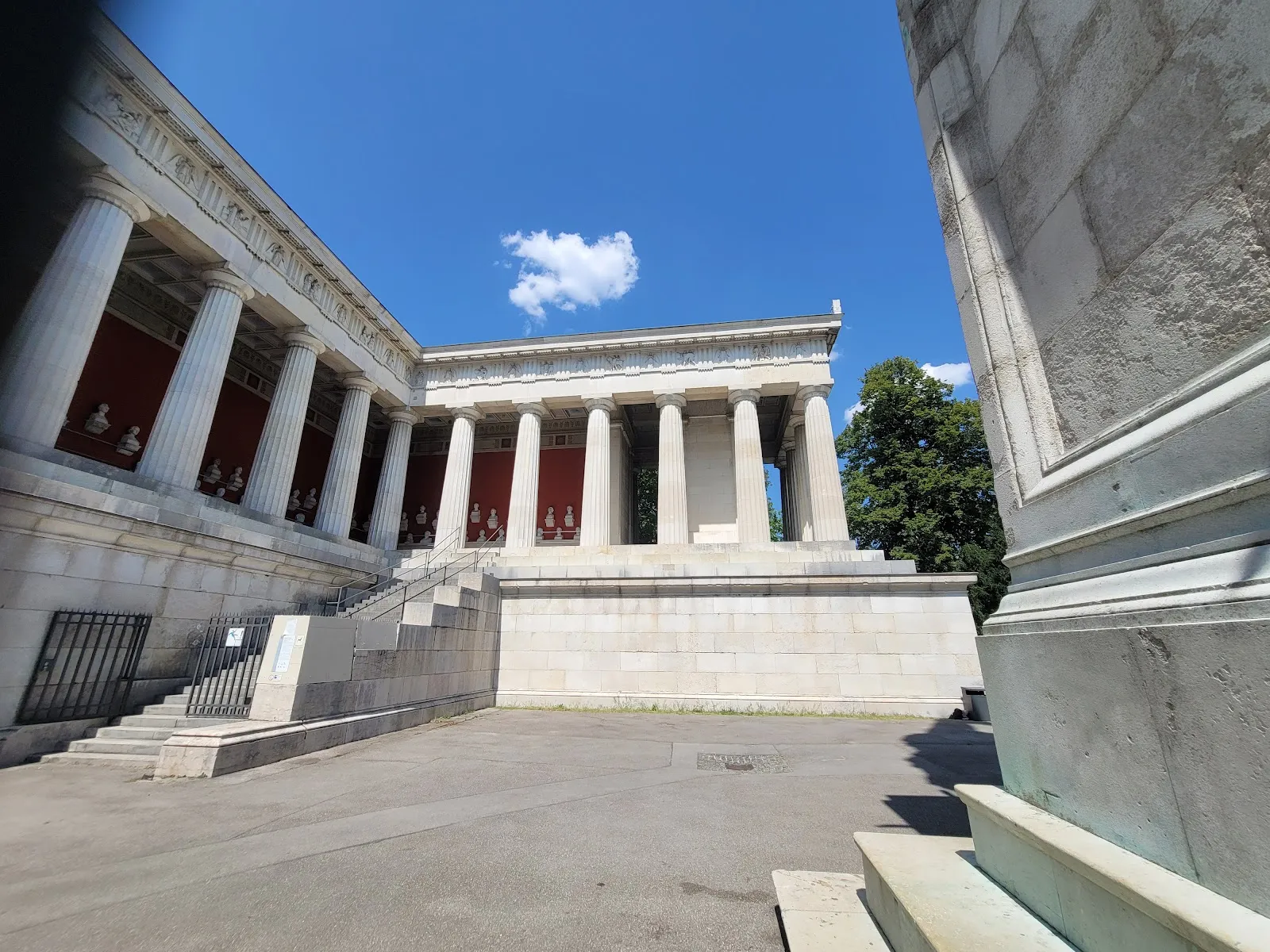
The building is an open colonnade arranged in three wings, with busts displayed along its corridors. Klenze drew on classical architecture, including the forms of ancient Greek temples. Doric columns and the building’s symmetrical structure give the gallery a clear, measured appearance. Look at the façade and the sculptural details as you approach, then notice how the open design lets the gallery sit above the Theresienwiese.
Inside, more than 100 busts line the walls. They depict Bavarians from different periods and professions, including artists, scholars, politicians, military leaders and clergy. Allow time to move through the corridors and examine the individual portraits; the collection turns the building into a record of people recognised for their contributions, rather than a display focused on a single ruler.
The Bavaria statue and Theresienwiese
Beside the Hall of Fame stands the statue of Bavaria, a female personification of the state. At over 18 metres tall, it overlooks the Theresienwiese and forms a prominent part of the monument complex. Its scale and position make it a natural point to look for from the grounds and a subject for photographs.
The hall and statue can be seen together as part of one visit: the statue gives the site its most visible landmark, while the busts offer a closer look at the people the monument was built to honour. The Theresienwiese is also the setting for Oktoberfest, so the grounds provide a nearby point of interest to combine with the visit.
FAQ
What is the Ruhmeshalle in Munich?
It is a Neoclassical Hall of Fame built to honour people who contributed to Bavaria, with more than 100 busts displayed in its gallery.
Who designed the Ruhmeshalle, and when was it built?
Leo von Klenze designed it for King Ludwig I. It was built between 1843 and 1853.
What is the statue beside the Hall of Fame?
It is a statue of Bavaria, the female personification of the state. It stands over 18 metres high and overlooks the Theresienwiese.
What can you see inside the Ruhmeshalle?
The three-winged gallery displays more than 100 busts of notable Bavarians, including artists, scholars, politicians, military leaders and clergy.


