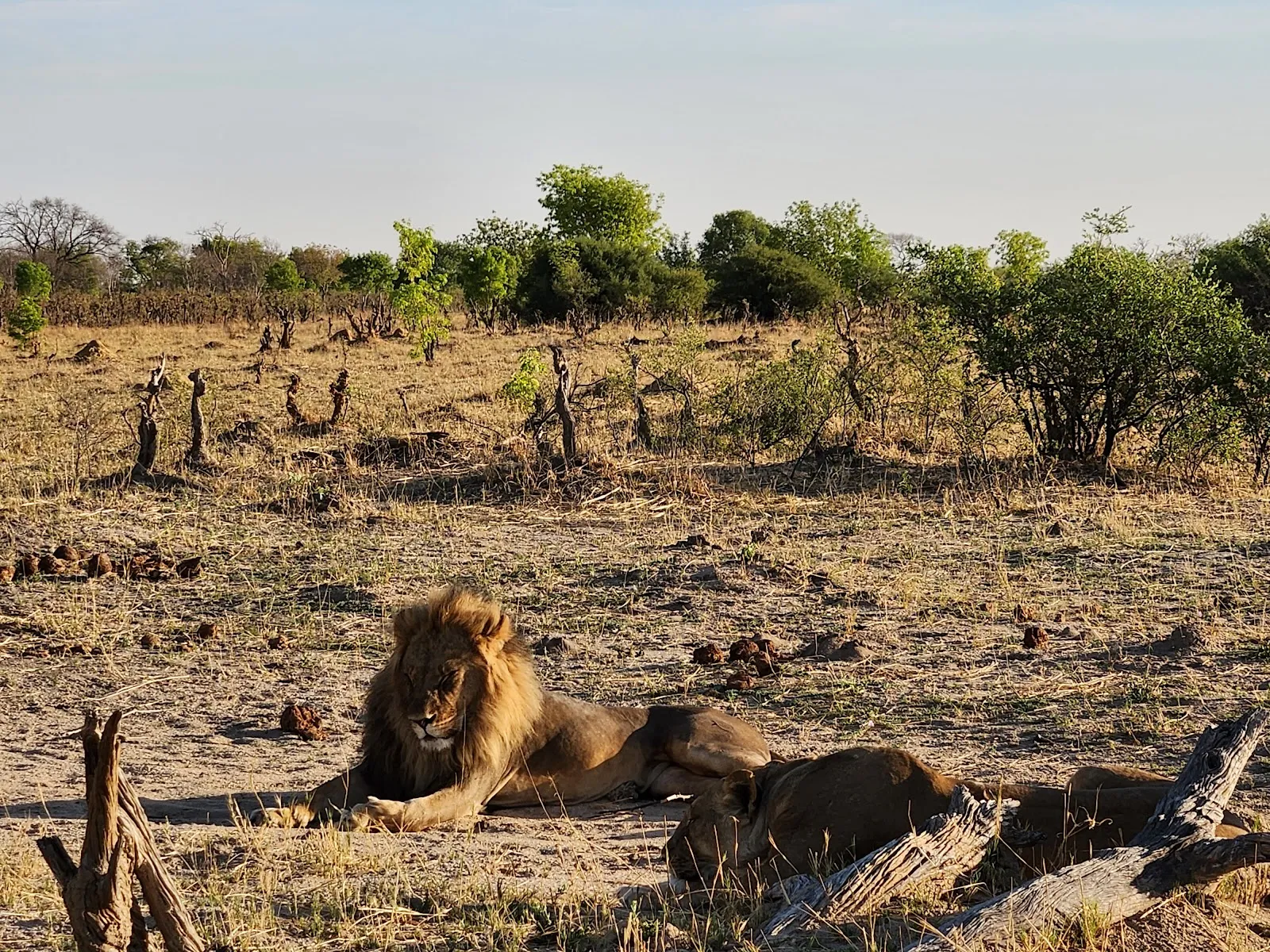
Hwange National Park
Hwange National Park is Zimbabwe's largest national park, and its dry-season waterholes draw elephants, buffalo and predators into view.
We may earn a commission. It never decides our picks.
Hwange National Park is in western Zimbabwe and is the country's largest national park. The park mixes Kalahari sand woodland, teak forest and open grassland, with a network of artificial waterholes and natural pans. Elephants are the best-known draw, and large herds often gather at water. Buffalo, giraffe, lions, African wild dogs and many bird species also live here.
Many trips pair Hwange with Victoria Falls. Allow at least two nights for several game drives, which usually leave early in the morning and in the late afternoon. Most sightings happen from a vehicle on these drives. The dry season, roughly June to October, gives the strongest sightings because animals gather at the remaining water. From about November to March, the rains bring green scenery and birds, but roads are harder going and animals spread out.
Hwange National Park in five
- Book park entry through ZimParksHwange is run by the Zimbabwe Parks and Wildlife Management Authority (ZimParks), which sets the entry fees. Check the current rates on its website before you travel, because they change.
- Book a guided game driveMost of the wildlife you will see comes from guided drives with a licensed guide and tracker. Ask whether the vehicle is open-sided, how many seats it has and what time the drive leaves.Tours and tickets
- Carry clean US dollar notesCards work at many lodges, but cash is still needed for small payments and tips away from them. Bring small, clean US dollar notes, because torn or marked notes are often refused.Money and costs
- Ask a travel clinic about malariaMalaria occurs in and around Hwange. Ask a travel clinic which prophylaxis suits you, and start the course on the schedule they give you before you arrive.
- Plan the road from Victoria FallsVictoria Falls is the usual gateway, and you reach the park by road transfer. Tracks inside Hwange are sandy and rough, and in the wet season some become impassable.Getting around
Things to do in Hwange National Park
See all attractions in Hwange National Park
Need to know
- Currency
- US dollar (USD) and Zimbabwe Gold (ZWG)
- Entry
- Visa or e-visa needed by many passports; check yours before travel
- Emergency
- 995 police; ask your lodge or camp to call for an ambulance
- Tipping
- Customary for guides, trackers and in restaurants
- Time
- UTC+2, no daylight saving
Weather by month
- Best
- Good
- Mixed
- Poor
- JanuaryRainy season
- FebruaryRainy, green
- MarchLate rains
- AprilGreen, drying
- MayDry season starts
- JuneDry, cool
- JulyDry, cool
- AugustPeak game viewing
- SeptemberDry, dusty
- OctoberHot, waterholes busy
- NovemberStorms begin
- DecemberRainy season
Right now in Hwange National Park
Local time, today's weather and the exchange rate, refreshed through the day.

29
- Feels like
- 28°
- Humidity
- 29%
- Wind
- 1 km/h
- Chance of rain
- 0%
Hwange National Park
11:14 PM
Monday, November 2
- Today36°21°0%Monday: Cloudy. High 36°, Low 21°. Chance of rain 0%.
- Tue37°21°4%Tuesday: Clear. High 37°, Low 21°. Chance of rain 4%.
- Wed36°23°8%Wednesday: Partly cloudy. High 36°, Low 23°. Chance of rain 8%.
- Thu37°24°4%Thursday: Partly cloudy. High 37°, Low 24°. Chance of rain 4%.
- Fri37°23°10%Friday: Partly cloudy. High 37°, Low 23°. Chance of rain 10%.
- Sat36°25°20%Saturday: Partly cloudy. High 36°, Low 25°. Chance of rain 20%.
- Sun36°20°71%Sunday: Thunderstorms. High 36°, Low 20°. Chance of rain 71%.
Updated 07:22 PM local time · Weather data by Open-Meteo.com
Money
Mid-market rate1 EUR = 1.116 USD
Rates from Nov 2, 2026 · Rates By Exchange Rate API
Before you go to Hwange National Park
Rules for Hwange National Park, checked
- Walk in the park only on guided walks led by a licensed guide, and never walk alone in the bush.
- Keep your distance from elephants, lions and buffalo, and stay in the vehicle when your guide tells you to.
- Ask ZimParks for permission before flying a drone, and check its rules on the park's official website.
- Check Zimbabwe visa and entry requirements for your nationality with the Department of Immigration before you travel.
- Dial 995 for police in Zimbabwe, and ask your lodge or guide to help you reach medical care in an emergency.
Plan around Hwange National Park
Country basics, Victoria Falls and the wider route
Read the guideVisas and entryVisa rules and entry steps for your passport
Read the guideMoney and costsCash, cards and typical park and lodge prices
Read the guideWhere to stayLodges and camps inside and near the park
Read the guideGetting aroundRoad transfers from Victoria Falls and into the park
Read the guideTours and ticketsGuided drives and multi-day safari options
Read the guideHwange National Park FAQ
How many days do you need in Hwange National Park?
Two nights covers one or two guided drives. Three or four nights allows more drives and time to sit at a waterhole.
When is the best time to visit Hwange National Park?
The dry season, roughly June to October, is the best time for game viewing, because animals gather at the remaining waterholes. The wet season from about November to March brings green scenery and heavy rain, and roads can become impassable.
Can you self-drive in Hwange National Park?
Yes, the main park roads can be driven in a suitable vehicle, but many tracks are sandy and rough. First-time visitors usually do better on guided drives, since guides track recent sightings.
How do you get to Hwange National Park from Victoria Falls?
By road transfer, arranged through a lodge, tour operator or hired car. Ask how long the transfer takes and whether the park entry fee is included.
Which animals can you see in Hwange National Park?
Elephants, buffalo, giraffe, zebra and lions are commonly seen, especially around waterholes. Leopards are harder to find, and no sighting is guaranteed.