Thien Mu Pagoda stands on Ha Khe Hill above the Perfume River, about 5 km from Hue’s city centre. Founded in 1601, it is an active Buddhist site and one of the city’s best-known landmarks. The seven-storey Phuoc Duyen Tower marks the entrance, while the grounds lead to temple buildings, gardens and a bonsai courtyard. Take time to walk beyond the tower: the rear paths reach a cemetery, and an exhibition there concerns the monk Thich Quang Duc. River views and a quiet setting make this a rewarding stop for architecture and history.
A pagoda above the Perfume River
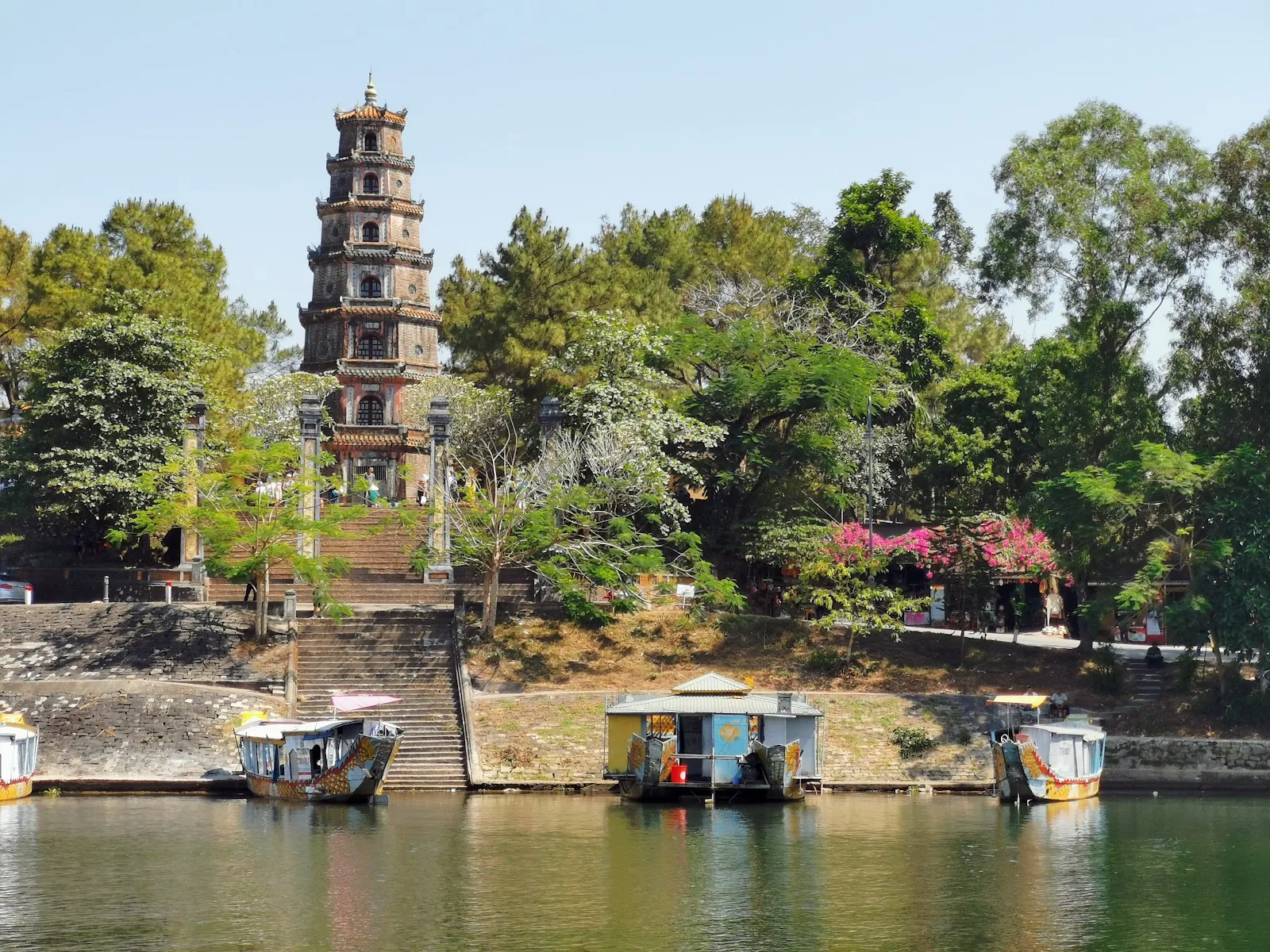
Thien Mu Pagoda, also called Linh Mu Pagoda, sits on Ha Khe Hill on the north bank of the Perfume River. The site was founded in 1601 by Nguyen Hoang, a Nguyen ruler. A local legend links its name to a prophecy: an old woman appeared on the hill and foretold that a lord would build a pagoda there. The name is often translated as Pagoda of the Celestial Lady.
The elevated setting gives the grounds views across the river and towards Hue. The pagoda has been rebuilt and restored over time, but it remains an active Buddhist site. Its location and long history have made it one of the most recognised landmarks in the city.
The tower and temple grounds
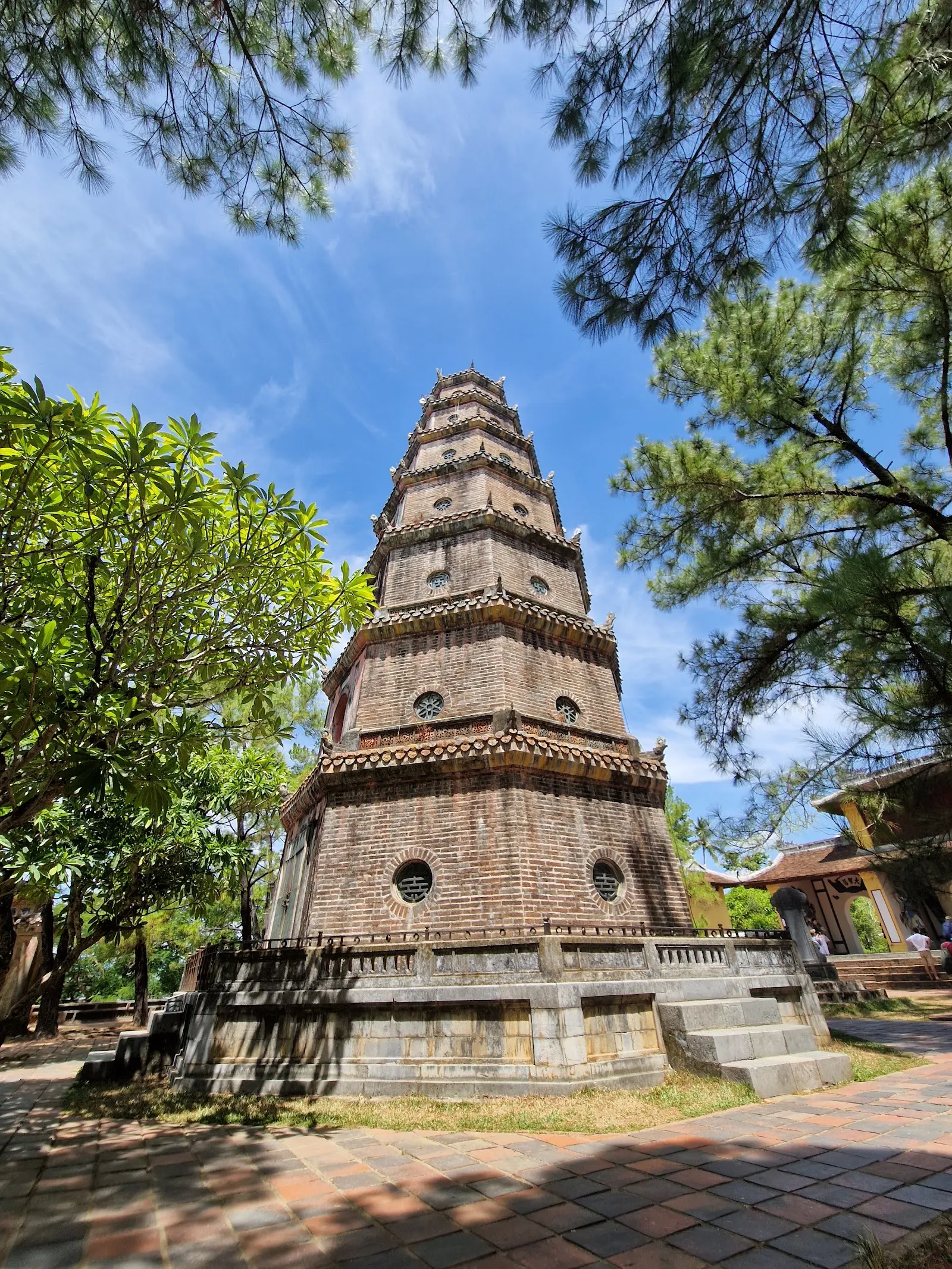
The seven-storey Phuoc Duyen Tower is the site’s most familiar structure. Built in 1844 under Emperor Thieu Tri, the octagonal tower rises above the entrance and is an emblem of Hue. Its seven levels are associated with Buddhas who appeared in human form. The Dai Hung Shrine is another key building within the grounds.
Allow time to explore beyond the tower. The compound includes courtyards, gardens and a bonsai area, as well as further historical buildings. At the back, a path leads to a cemetery that can be easy to miss. The site also displays a blue Austin car associated with Thich Quang Duc, the Buddhist monk who set himself on fire in protest in 1963. An exhibition there provides context for this politically significant episode.
Planning a respectful visit
Entry to the pagoda is free. A visit can take about half an hour if you focus on the main structures; allow longer to walk the grounds and reach the rear cemetery. Early morning is a practical choice before tour groups arrive. The site is open daily, with its posted closing time at 5:30 pm.
This is a functioning religious place, so dress modestly and keep your voice low. Steps lead up from the road, and some paths are uneven. If mobility is a concern, take these surfaces into account when deciding how much of the grounds to explore. The pagoda is about 5 km from central Hue; check your route and transport arrangements before setting out.
FAQ
Is there an entry fee for Thien Mu Pagoda?
No. Entry to the pagoda is free.
How long should I spend at Thien Mu Pagoda?
Allow about 30 to 60 minutes to see the tower and walk around the grounds, including the rear paths.
What should I wear to Thien Mu Pagoda?
Dress modestly and behave respectfully. The pagoda is an active religious site.
Is Thien Mu Pagoda accessible for visitors with limited mobility?
There are steps and uneven paths around the grounds, which can make the visit difficult for visitors with limited mobility.