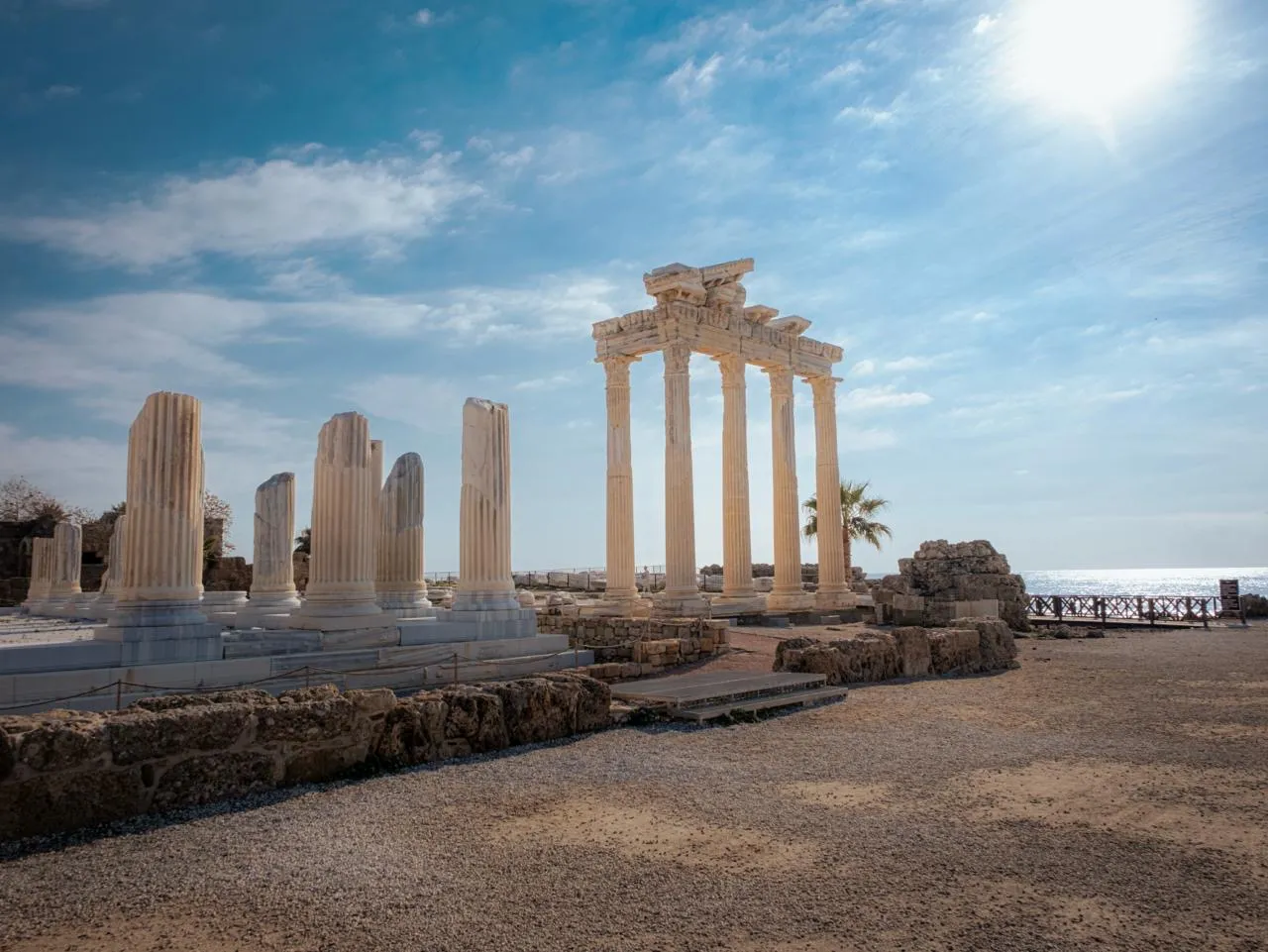
The Temple of Apollon stands on the coast of Side, in the Manavgat district of Antalya province, next to the harbour. It was dedicated to the Greek god of light and the arts, and what remains today is a group of columns and friezes. The ruins are small, but the seaside setting makes them one of the best-known sights in Side. Entry is free and the site is open around the clock. Evening is the favourite hour, when the stone turns golden in the low light and the temple is illuminated after dark.
What remains of the temple
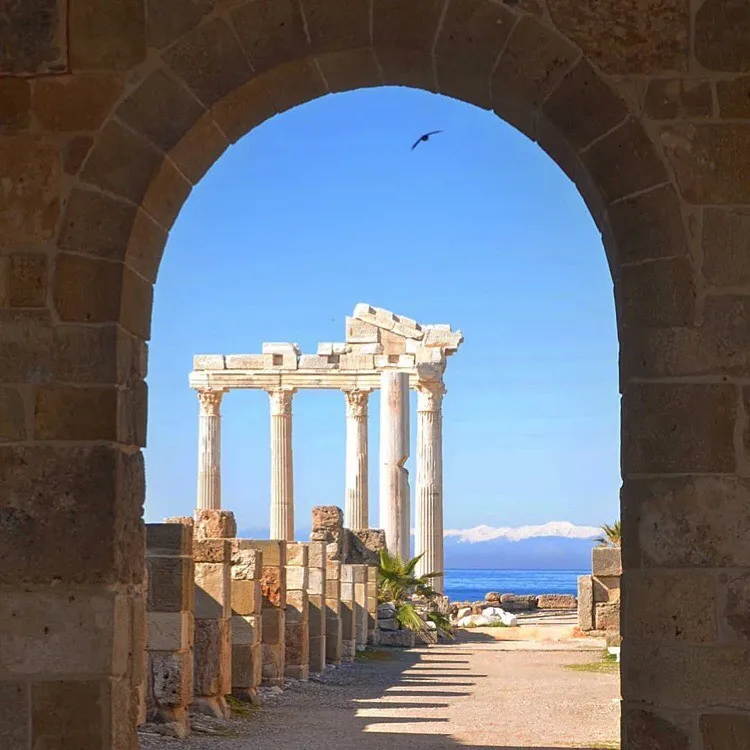
The temple was dedicated to Apollon, the Greek god of light and the arts. Today the standing columns and the surviving friezes are what you see. The sculpture, construction and architecture carry the character of the Roman period, and they reward a slow look at the stonework.
The site is not large, so it works as a short stop within a longer day in Side. Restoration work has been carried out on the site, so the view can change from one visit to the next. The Temple of Apollon sits among other ancient monuments in Side, including the Temple of Athena and the amphitheater.
Setting by the harbour
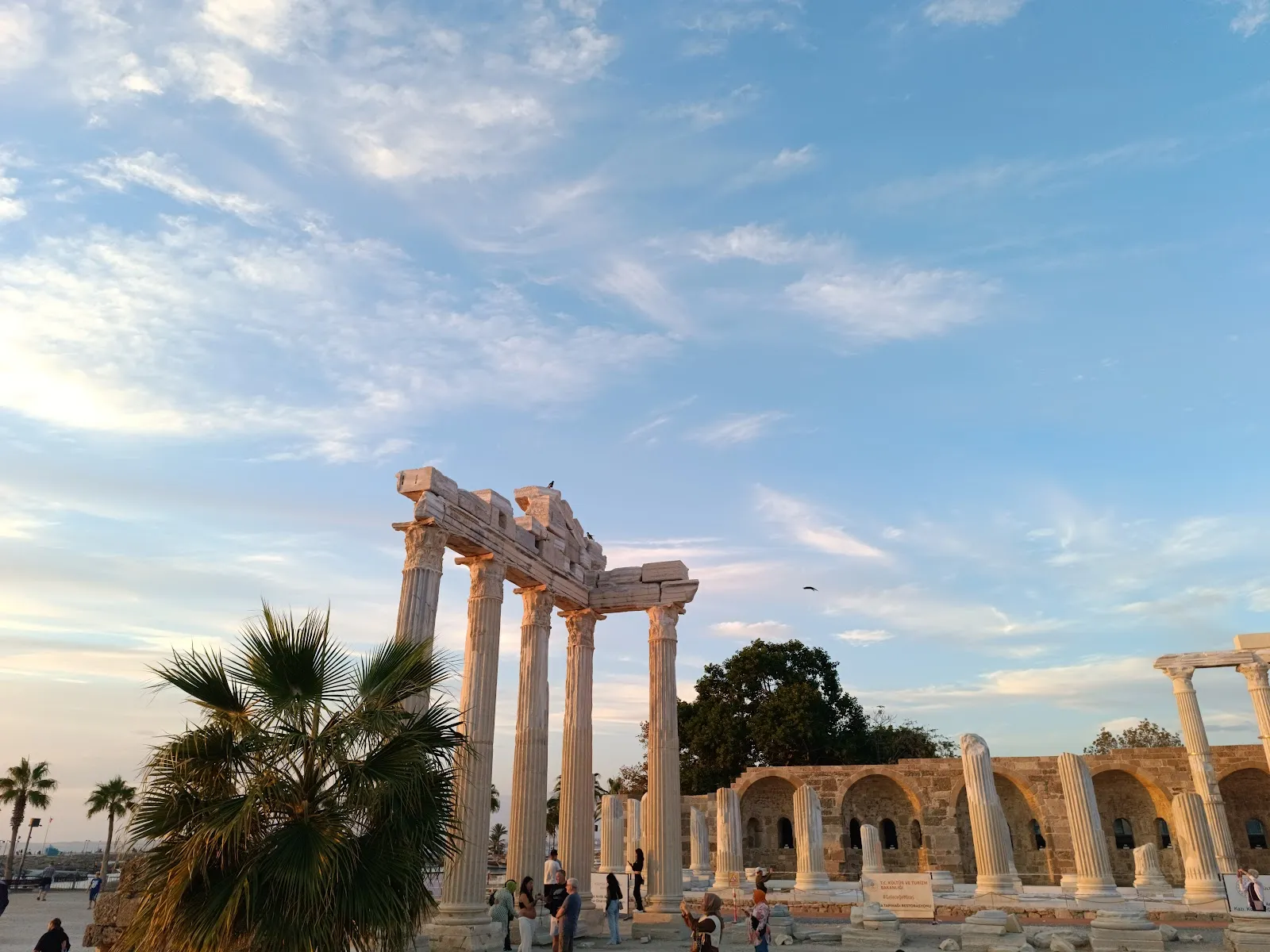
The temple is on the coast by the harbour, and the easiest way to reach it is on foot along the seafront. Around the corner are the Side sign and the harbour, lined with small shops. Prices in these shops run on the high side, and the same goods can be cheaper elsewhere in town.
The surrounding old town has boutique hostels, souvenir shops, cafes and restaurants, some of them right beside the sea. The site has an entrance that is wheelchair accessible. Both free and paid parking are available nearby. Side is a small village with ancient parts, an easy outing for families with children.
Evening light and the winter season
At sunset the Roman columns take on a honey-gold colour against the Mediterranean, and after dark the temple is lit. This is the most photographed moment, so a tripod is useful. Sunset falls at different times through the year, so plan your arrival around the actual time for your date.
Winter brings a different mood. Under cloud in February, the columns stand against a grey sky, the crowds are thin, and the sound of the waves carries across the site. Soft light under cloud is also easier for photography than harsh midday sun. Winter is cooler too, which suits a walk through the ruins and the town.
Other sights within a few steps
Side Museum is at the seaside, between the Temple of Apollon and the Roman Amphitheater. The Roman Theater and the Agora are also a short walk away, so the temple fits easily into a route through the ancient city. Walking the open areas costs nothing, but the museums charge their own entrance fees.
FAQ
Is there an entry fee for the Temple of Apollon in Side?
No, entry to the temple is free. Some museums nearby do charge an entrance fee.
How long do you need at the Temple of Apollon?
The ruins are small, so 30 to 60 minutes is enough. Allow longer if you want to stay for the sunset or walk on to the museum and the other ruins.
What is the best time to visit the Temple of Apollon?
Sunset is the favourite time, when the columns glow golden and the temple is illuminated. Winter is quieter and cooler than summer.
Is there parking near the Temple of Apollon?
Yes, there are free and paid parking areas and free street parking nearby. The temple is also within walking distance along the seafront.
Is the Temple of Apollon suitable for children and wheelchair users?
The site is good for children, and the entrance is wheelchair accessible. The visit is easy and mostly flat to reach along the seafront.