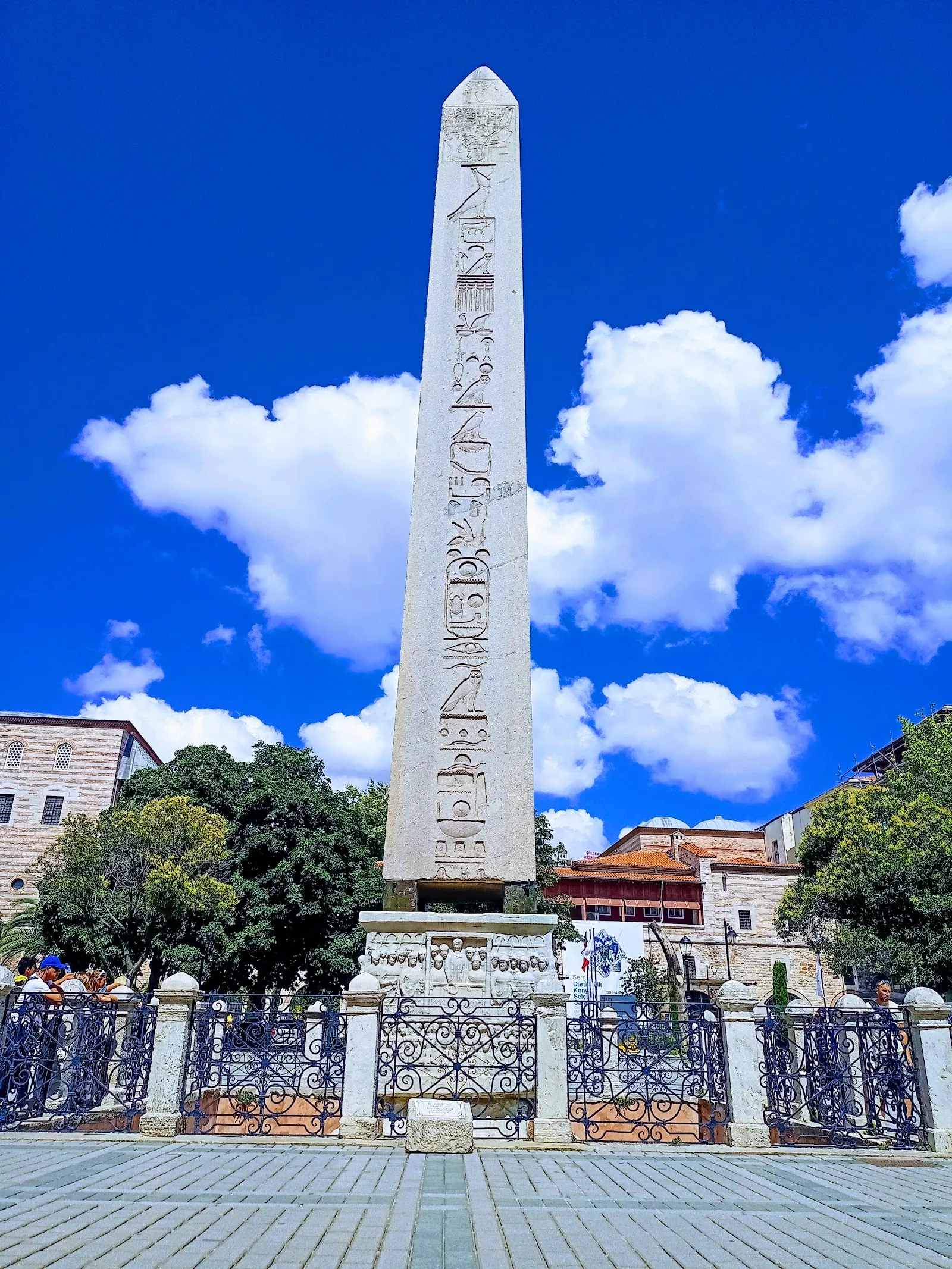
The Obelisk of Theodosius stands in Sultanahmet Square, on the site of Constantinople’s former Hippodrome. Carved in Egypt for Pharaoh Thutmose III around 3,500 years ago, its red granite shaft was brought to the city in the fourth century. Look up at the hieroglyphs, then study the marble base: its reliefs show Emperor Theodosius and his court, along with scenes of the obelisk being raised. It is an easy stop to pair with nearby landmarks, including the Blue Mosque and Hagia Sophia.
From Karnak to Constantinople
The obelisk began as a monument to Pharaoh Thutmose III at Karnak in Egypt, where its hieroglyphs commemorated his rule and military victories. It dates to around the fifteenth century BCE. The red granite shaft now in Sultanahmet is only part of the original: it fractured while Roman workers were lowering it at Karnak, and the surviving section was trimmed before its journey to Constantinople.
The monument reached the city under Emperor Theodosius I. In 390, workers raised it above the Hippodrome on bronze supports and set it on a marble base. The shaft had travelled from Egypt centuries after it was carved; its placement brought an ancient Egyptian royal monument into the ceremonial centre of the Roman city.
The obelisk in the Hippodrome
The Hippodrome was an arena for chariot races, and the obelisk stood on its central spine, the barrier running through the track. Monuments arranged along this axis formed a visual focus for the arena. The emperor watched from the kathisma, an imperial viewing lodge positioned across the track from the spectators.
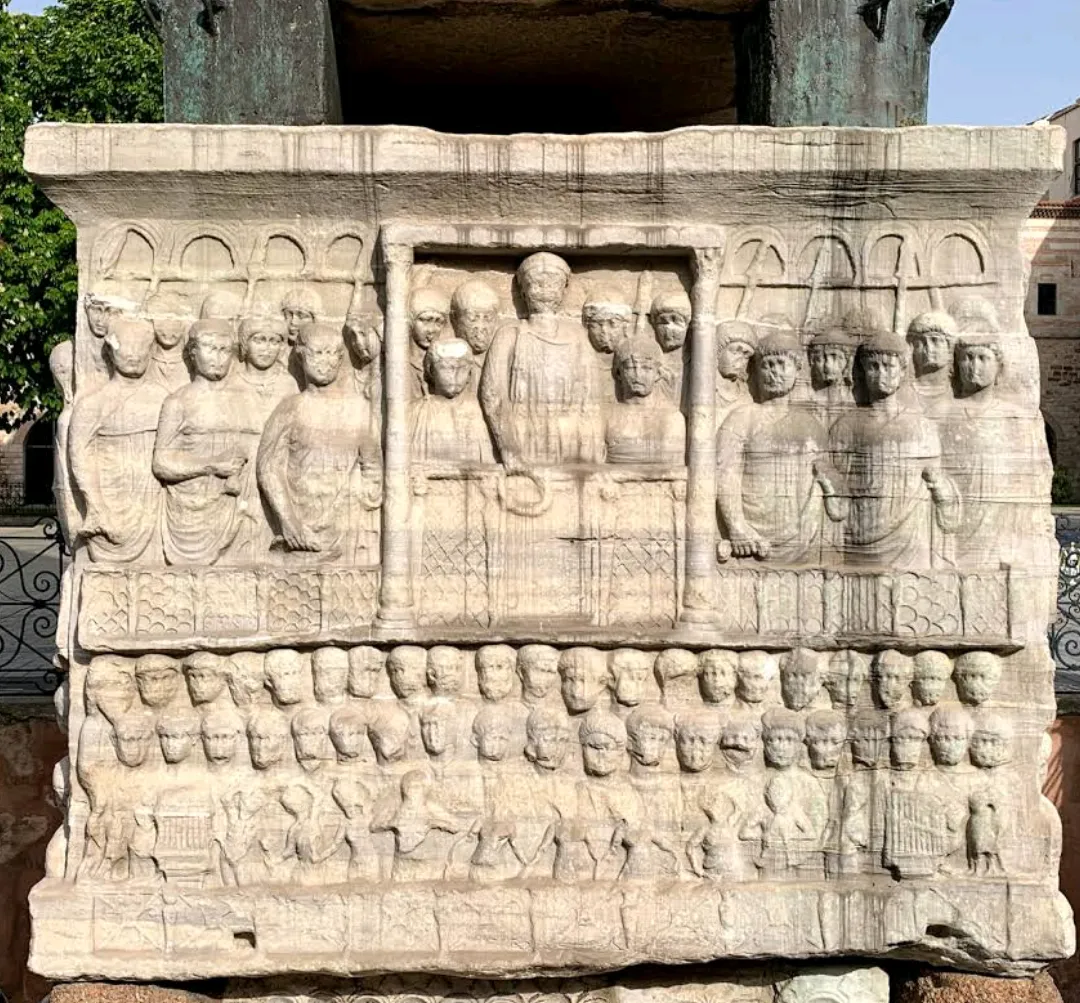
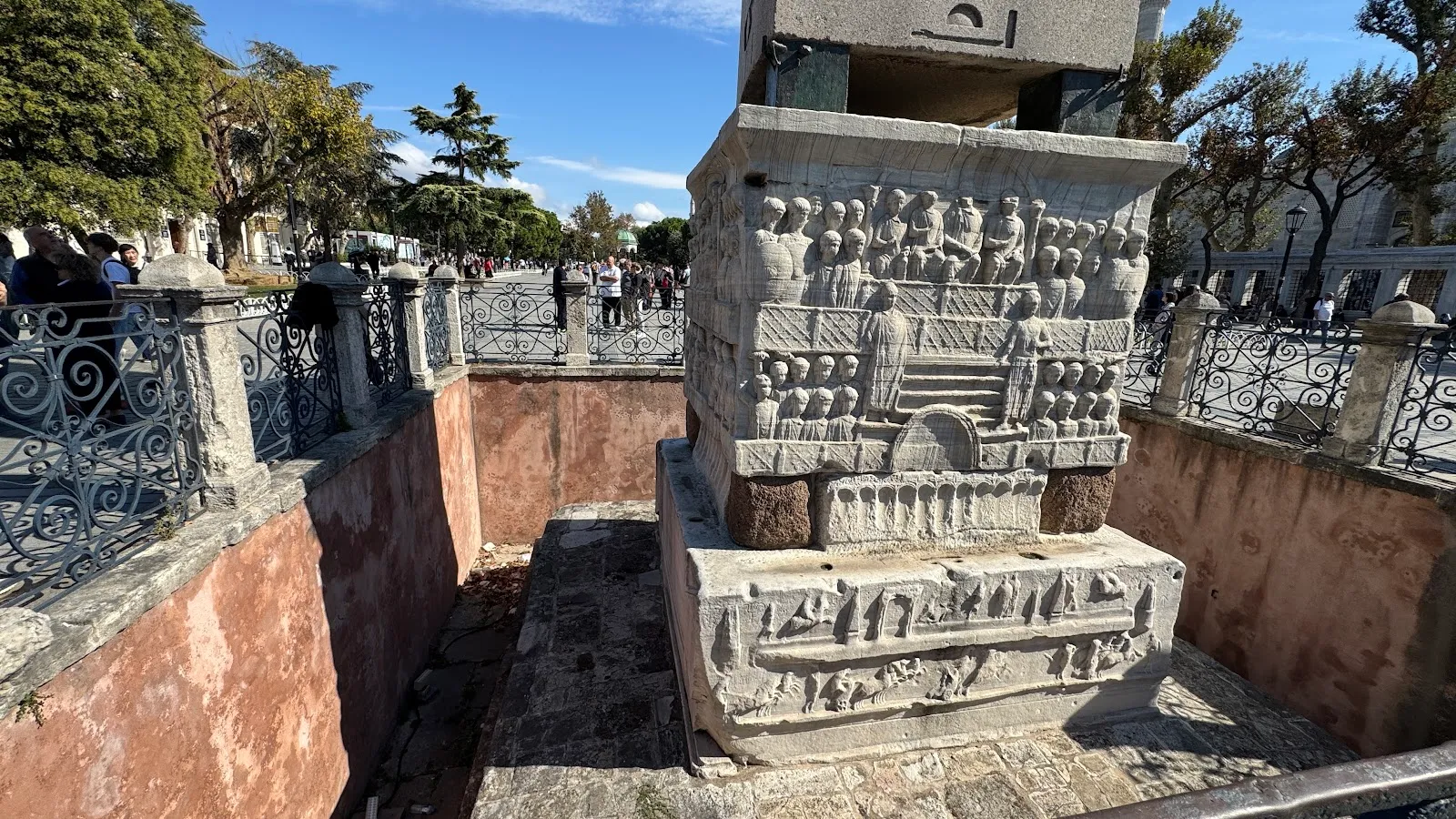
That setting helps explain why the base is worth more than a passing glance. Its reliefs present the imperial household as prominent and elevated, with officials and guards nearby. Musicians perform in other scenes, while workers appear below as they raise the obelisk. Foreign delegations kneel in submission. The carvings show public ceremony and imperial rank through the placement and scale of the figures.
What to look for on the base
Start with the hieroglyphs on the granite shaft, then bring your attention down to the marble. Among the lower panels are details of the lifting process, including ropes, winches and scaffolding. These scenes record the practical work behind raising the stone, while the figures above show the ceremony surrounding imperial authority.
The base also carries a Latin inscription. It names Maximus and Victor only as defeated “tyrants” and credits Proclus, the urban prefect responsible for the construction. After Proclus fell from favour, his name was removed and later restored in recut lettering. Look for the altered inscription alongside the sculpted scenes to see how the monument’s account of power changed over time.
FAQ
Where is the Obelisk of Theodosius?
It stands in Sultanahmet Square, on the site of Constantinople’s former Hippodrome.
What should I look for at the obelisk?
See the Egyptian hieroglyphs on the granite shaft, then inspect the marble base for scenes of imperial ceremony and the work of raising the monument.
When is a good time to visit?
Sunset is recommended because the low light brings out details on the shaft and base.
Can you visit it with other landmarks?
Yes. The Blue Mosque and Hagia Sophia are nearby, so you can include the obelisk in a walk around Sultanahmet.


