
The Blue Mosque, officially the Sultan Ahmed Mosque, is a working mosque in Istanbul’s Sultanahmet district, facing Hagia Sophia across a small park. Built for Sultan Ahmed I between 1609 and 1616, it is known for its six minarets, cascading domes and interior walls lined with blue İznik tiles. Visitors can admire the architecture outside and, when access is open to visitors, see the tiles and stained-glass windows inside. Dress modestly, remove your shoes before entering and follow mosque etiquette.
A mosque commissioned by Sultan Ahmed I
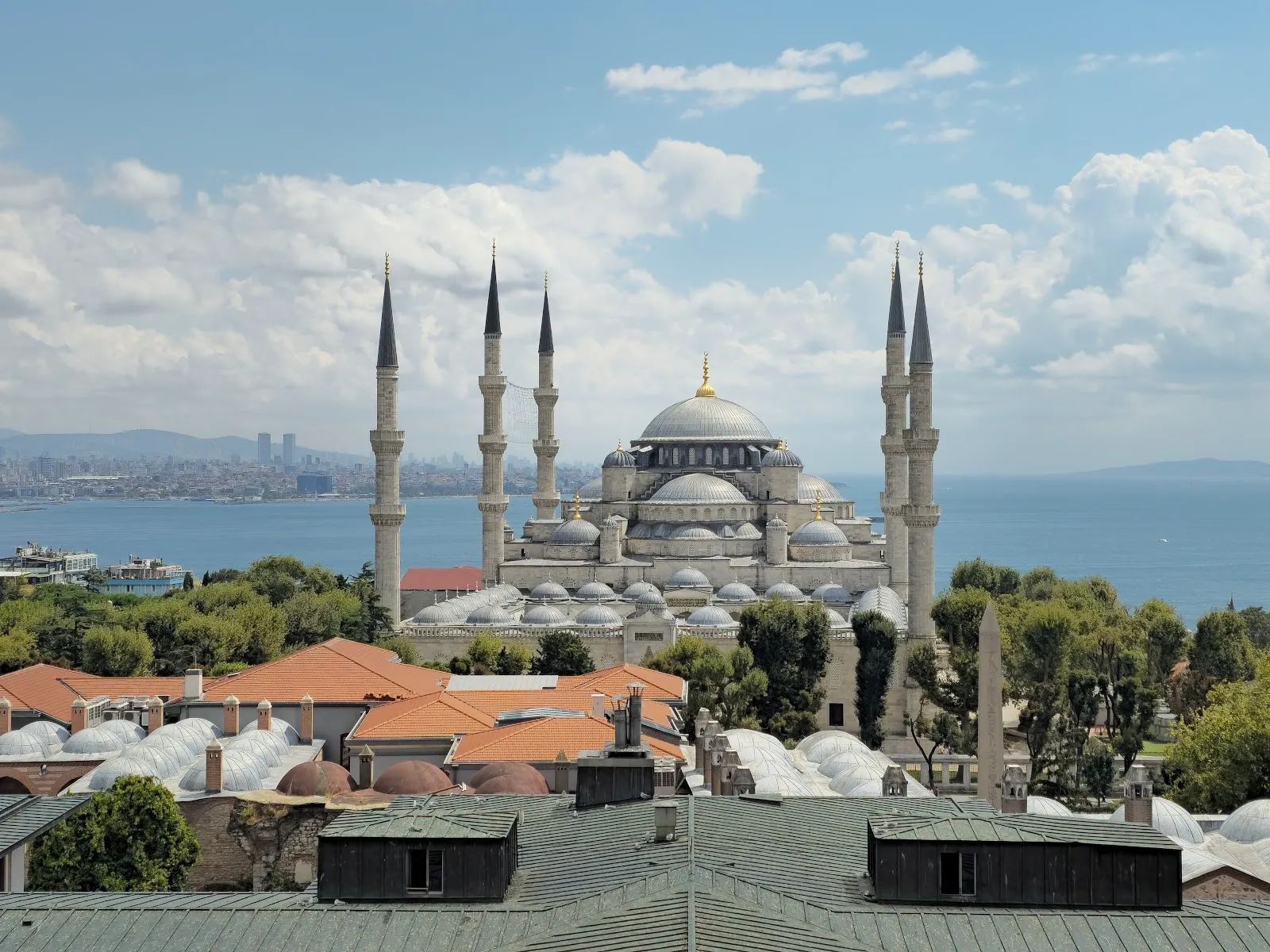
The Blue Mosque is officially called the Sultan Ahmed Mosque, after the ruler who commissioned it. Construction began in 1609 and was completed in 1616, during Ahmed I’s reign. The architect was Mehmet Ağa, an imperial architect. The mosque was intended as a major imperial building near the Ottoman palace at Topkapi.
Its location helped make it a defining sight in Sultanahmet. The mosque stands opposite Hagia Sophia, with a small park between them. Its six minarets and tiered domes are visible from across the surrounding area. The six-minaret design drew criticism when it was built, as that number was associated with the mosque in Mecca. The mosque’s name in common English use comes from the blue tiles inside; its formal name remains Sultan Ahmed Mosque.
Domes, tiles and light
The exterior is arranged around a central dome, smaller domes and six slender minarets. From outside, look at how the domes step down across the building. This layered profile gives the mosque a strong presence beside the open space of Sultanahmet Park.
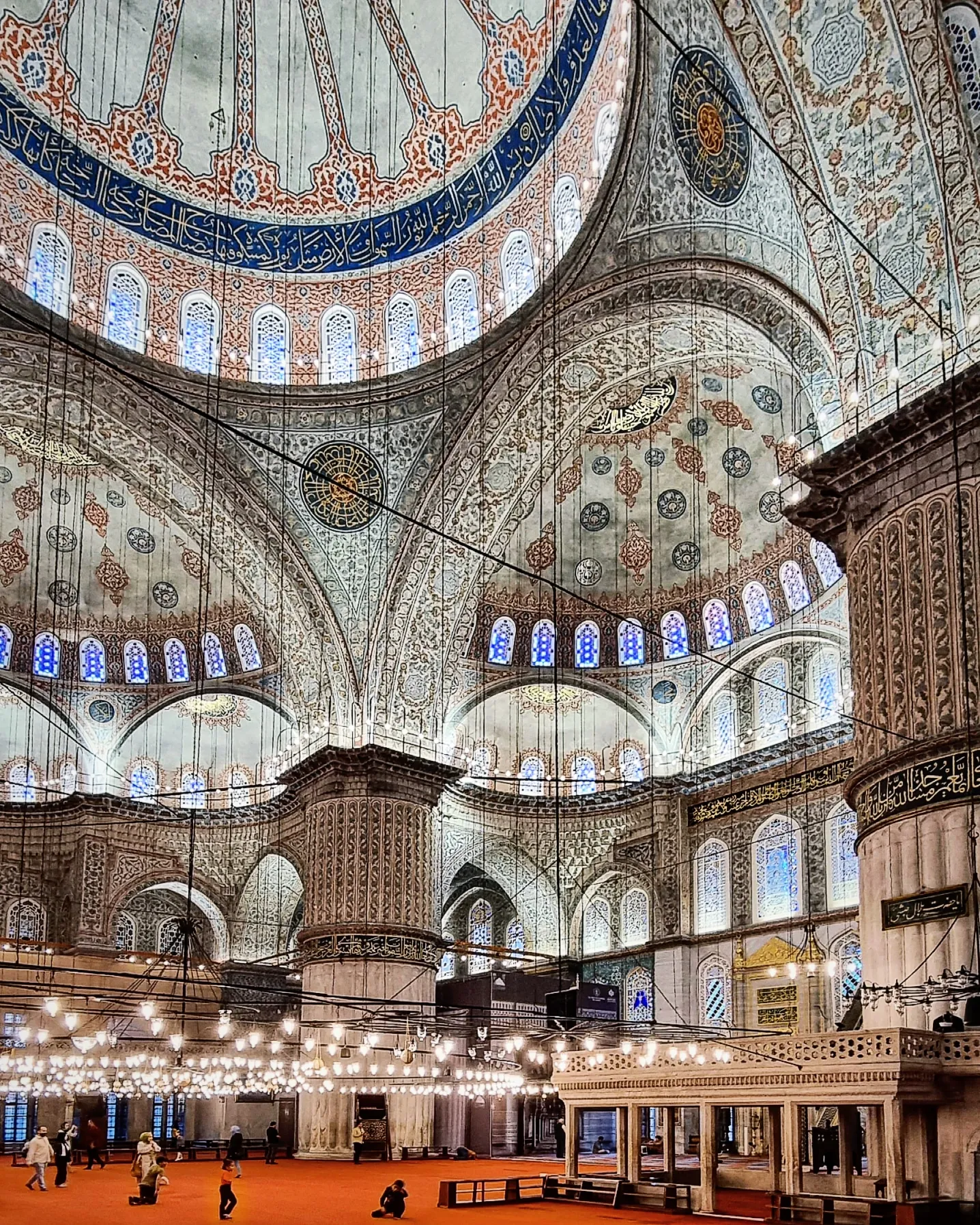
Inside, hand-painted İznik tiles cover the walls. Their designs include flowers, cypresses and fruit trees, with blue and green among the prominent colors. Some tiles have coral-red glaze, a detail to look for up close. The stained-glass windows bring natural light into the interior, adding to the sense of calm. Take time to notice both the individual tilework and how it fits into the larger design.
Visiting a working mosque
The Sultan Ahmed Mosque is an active place of worship, so visitor access follows mosque etiquette. Dress modestly, covering your shoulders and knees; women should bring a scarf. Shoes must be removed before entering. Follow any instructions given at the site and be mindful of people who are there to pray.
Access for visitors can be affected by prayer times and reconstruction work. The supplied visitor information recommends an afternoon visit to avoid larger crowds, but it does not establish a fixed daily visitor schedule. Check current arrangements before setting out, particularly if seeing the interior is central to your visit. The mosque is wheelchair accessible at the entrance, and the site information also lists an accessible restroom.
FAQ
What is the Blue Mosque’s official name?
It is officially called the Sultan Ahmed Mosque, or Sultanahmet Camii in Turkish.
Why is it called the Blue Mosque?
Its common English name refers to the blue İznik tiles that decorate the interior walls.
What should I wear to the Blue Mosque?
Dress modestly, with shoulders and knees covered. Women should bring a scarf, and everyone must remove their shoes before entering.
Is the Blue Mosque still used for prayer?
Yes. It is a working mosque, so follow mosque etiquette and any instructions about visitor access.


