The National Revolutionary Martyrs’ Shrine in Taipei’s Zhongshan District honors people who died in wars and revolutions in the service of the Republic of China. Its red-and-gold traditional architecture, formal courtyard and quiet grounds make a striking setting for a history stop. Inside and along the perimeter, information panels introduce fallen figures and key events. The hourly changing of the guard is the main event: watch the handover and drills, then take time to explore the shrine at a quieter pace.
A memorial in Zhongshan District
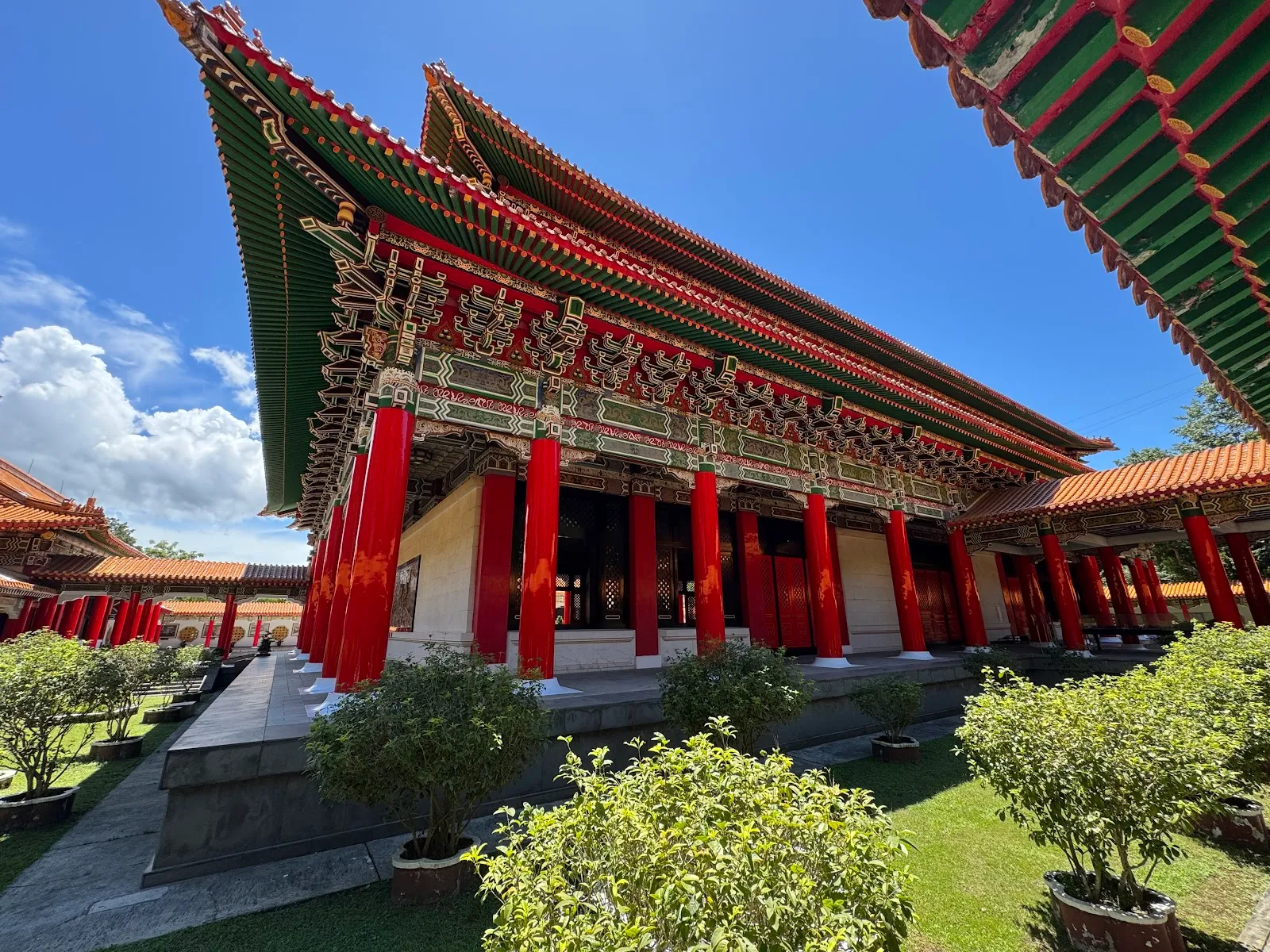
Built in 1969 on Chingshan Mountain, the shrine commemorates people who lost their lives in wars and revolutions in the service of the Republic of China. Its traditional Chinese design was modeled on the Hall of Supreme Harmony in Beijing’s Forbidden City. The main hall sits within a broad complex of grounds, with the Keelung River nearby.
The shrine’s memorial scope includes soldiers who died in conflicts with Japan and during the Chinese Civil War, as well as people who gave their lives in other periods. Displays around the site introduce martyrs and events in Taiwan’s history. Take time to read the information panels along the perimeter rather than treating the visit as only a photo stop.
The changing of the guard
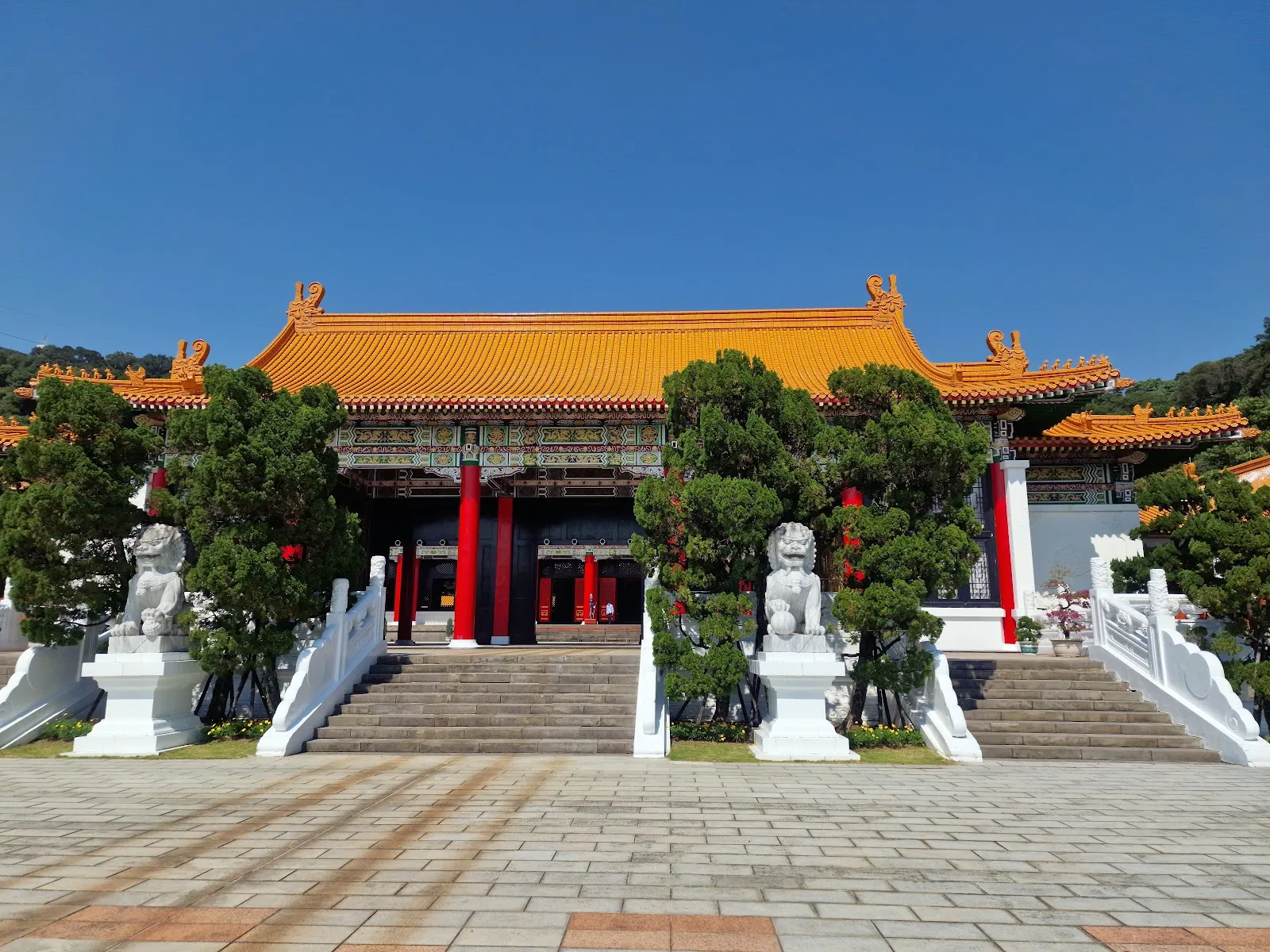
Ceremonial guards from Taiwan’s armed forces stand watch at the shrine. Their handover takes place every hour on the hour. The ceremony begins at the entrance, proceeds to the main shrine for the formal movements, then returns toward the gate for further drills.
Arriving shortly before the hour lets you follow the sequence from its start. Once it ends, the grounds are often quieter, giving you room to look at the building and memorial displays at your own pace. The ceremony is a central part of the visit, but the site is also a place of remembrance, so keep a respectful distance and speak quietly.
Visiting with respect
The shrine is a memorial to people who died in service, so modest, considerate behavior is appropriate. Remove your hat, stay quiet and bow before entering, as a gesture of respect. The grounds are spacious and the architecture’s strong symmetry and bright colors make it a notable setting for photographs; avoid letting photography interrupt the solemn atmosphere.
There is no entrance fee. The address is No. 139, Beian Road, in Zhongshan District. A bus stop is nearby, though local buses are not frequent, so plan your approach accordingly. The site is open daily from 9 am to 5 pm.
FAQ
Is there an entrance fee for the National Revolutionary Martyrs’ Shrine?
No. Entry is free.
When does the changing of the guard take place?
The ceremony takes place every hour on the hour. Arrive shortly beforehand to see it begin at the gate.
How long should I allow for a visit?
Allow about 30 to 60 minutes to see the shrine, read the displays and watch the guard ceremony.
How should I behave at the shrine?
Remove your hat, keep quiet and bow before entering as a sign of respect.