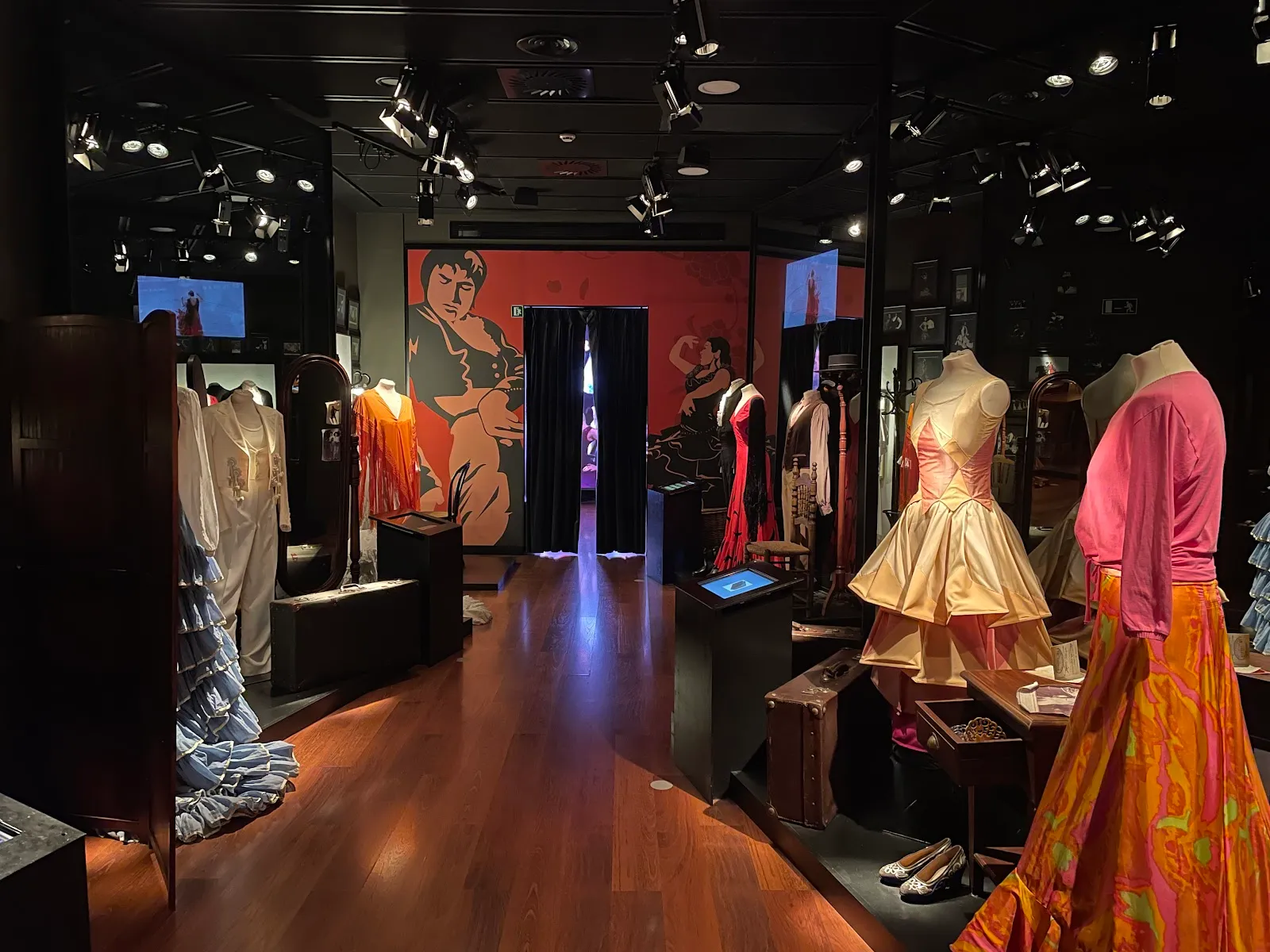
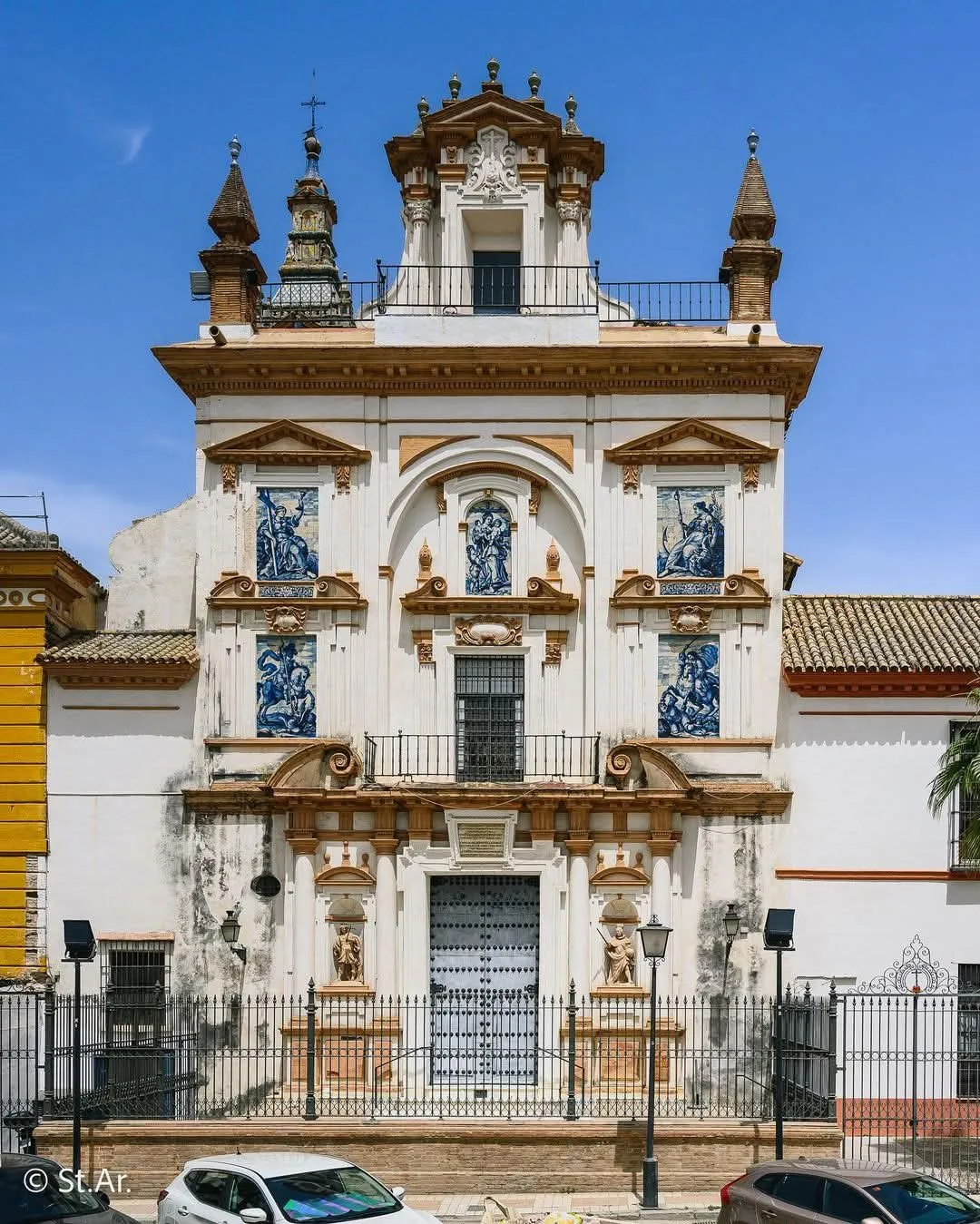
Set in the Mudéjar Pavilion in María Luisa Park, the Museum of Popular Arts and Customs of Seville traces everyday life and craft traditions in Andalusia. Its collections include clothing, ceramics, agricultural tools and household objects, with workshop displays devoted to crafts such as guitar-making, tailoring and lacework. Exhibitions on the ground floor change, while displays below include regional history and maritime culture. The building, designed by Aníbal González for the 1929 Ibero-American Exposition, is part of the visit too. Allow time to explore the park around it.
The pavilion and its setting
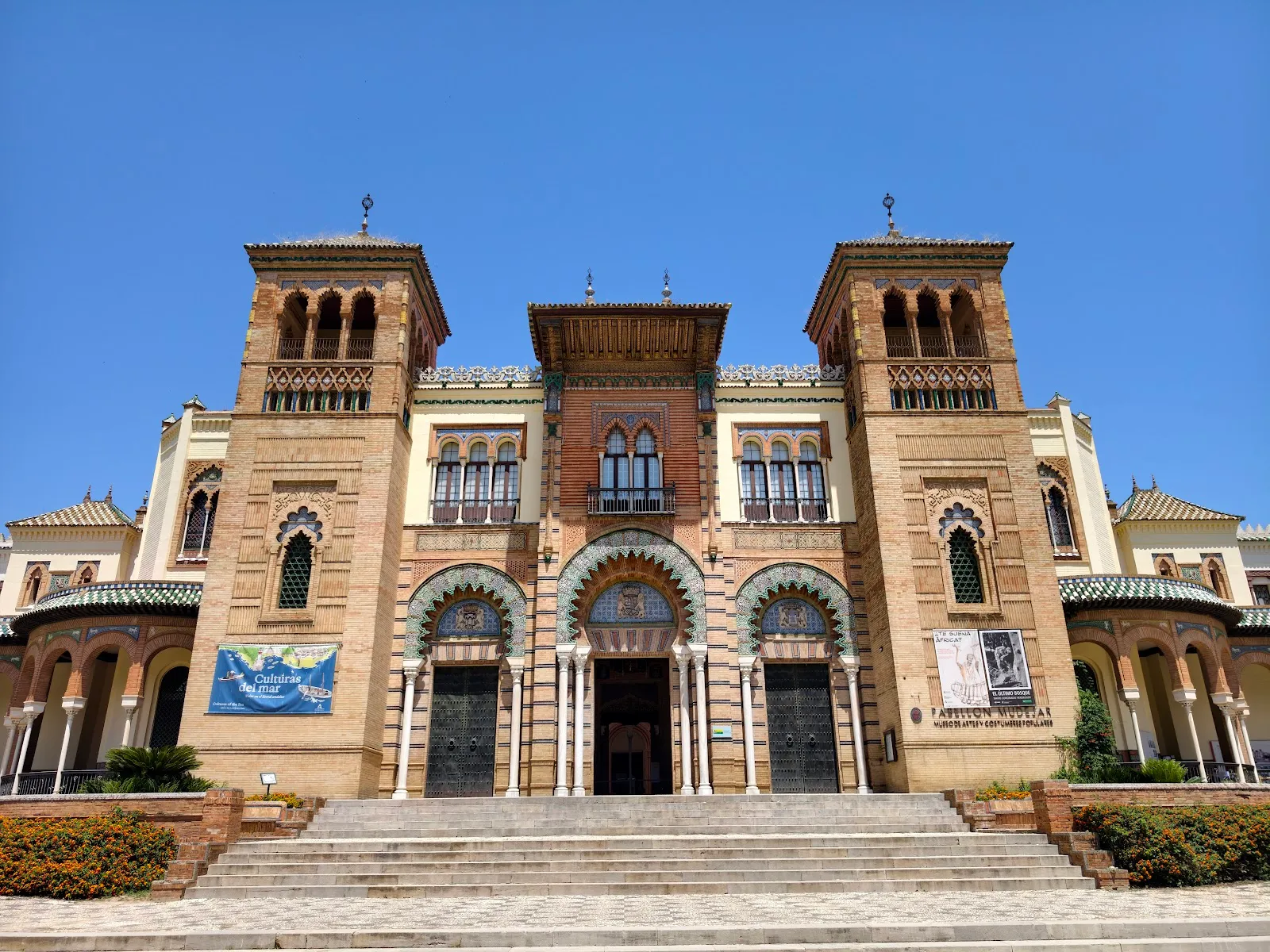
The museum occupies the Mudéjar Pavilion in Plaza de América, within María Luisa Park. Aníbal González designed the building for the 1929 Ibero-American Exposition. Its architectural details include Islamic-inspired tilework, geometric patterns and calligraphy, so look beyond the galleries when you arrive.
The pavilion was originally built for the exposition, and later became the home of the museum. Its location makes it easy to combine a museum visit with time among the park’s paths, water and planting. The Archaeological Museum is also in the park, beside Plaza de América.
Objects from everyday Andalusian life
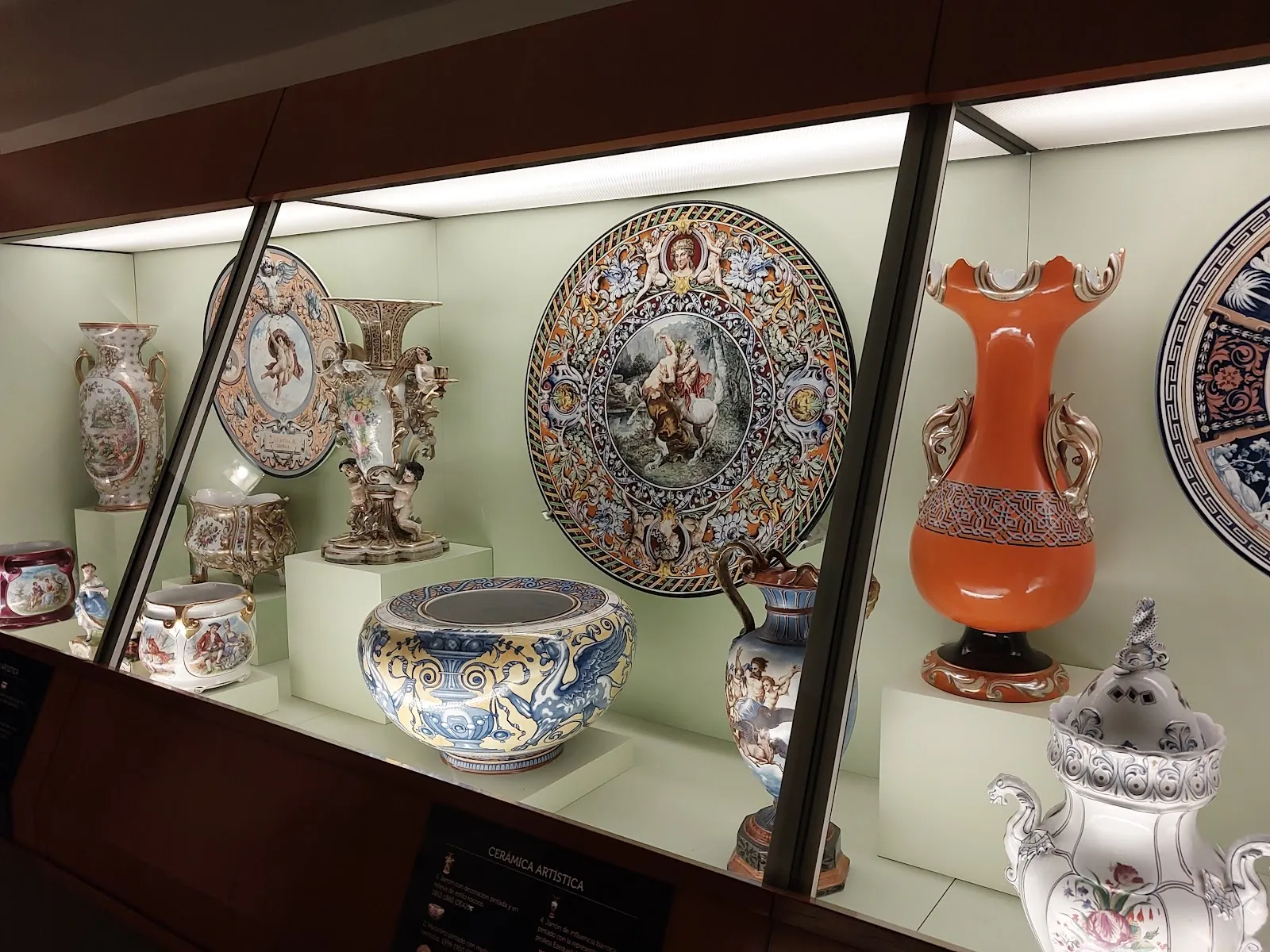
The collections focus on the material and social history of Andalusia. Clothing, ceramics, furniture, agricultural tools and household objects give a sense of how people lived and worked across the region. Rather than centring on rulers and political events, the displays turn attention to ordinary routines and the objects used in them.
Craft displays bring that focus down to the work itself. Look for examples connected with guitar-making, tailoring and lacework, alongside other traditional skills. The careful arrangement of tools and objects helps explain how a craft took shape, not only what its finished pieces looked like.
Changing exhibitions and regional themes
The ground floor has galleries for changing exhibitions, so the subjects on display can differ from one visit to another. Past themes have included life at sea, fishing and African music. A maritime exhibition has explored fishing off the coast near Cádiz, while other displays have presented regional materials and work such as cork-making.
Exhibitions also invite visitors to think about how ethnographic collections have been presented and interpreted. That critical perspective adds another layer to the objects: it asks whose lives are represented and how craft is valued. If a particular temporary show interests you, check what is currently on before setting out.
Planning a visit
Visitors have reported spending around one to one and a half hours in the museum. Admission is free for EU citizens, while the supplied visitor information gives a €1.50 charge for other visitors. The museum is closed on Mondays; its published hours are shown separately on this page.
The building has accessible entrances, an elevator and an accessible restroom. There are also restrooms on site. After seeing the galleries, take a break in the outdoor area or continue into María Luisa Park. A sunny day in spring or summer gives you more reason to linger outside.
FAQ
Is the Museum of Popular Arts and Customs of Seville free?
EU citizens enter free. The supplied visitor information gives an admission charge of €1.50 for other visitors.
How long should I allow for the museum?
Allow about 1 to 1.5 hours to see the exhibitions.
Is the museum open on Mondays?
No. The museum is closed on Mondays.
Where is the museum?
It is at Plaza de América, 3, inside María Luisa Park in Seville.