
The Museum of Human Evolution in Burgos sits on the south bank of the Arlanzón River and tells the story of human evolution through fossils from the Atapuerca sites nearby. Most exhibits have English text, and many are interactive. The highlights are the original fossils, including the skull of Miguelón, and the French-made models of hominids. The building is modern and bright, and the galleries move from early ancestors toward modern humans as you climb the floors. Set aside a couple of hours to see it properly.
The building and its setting
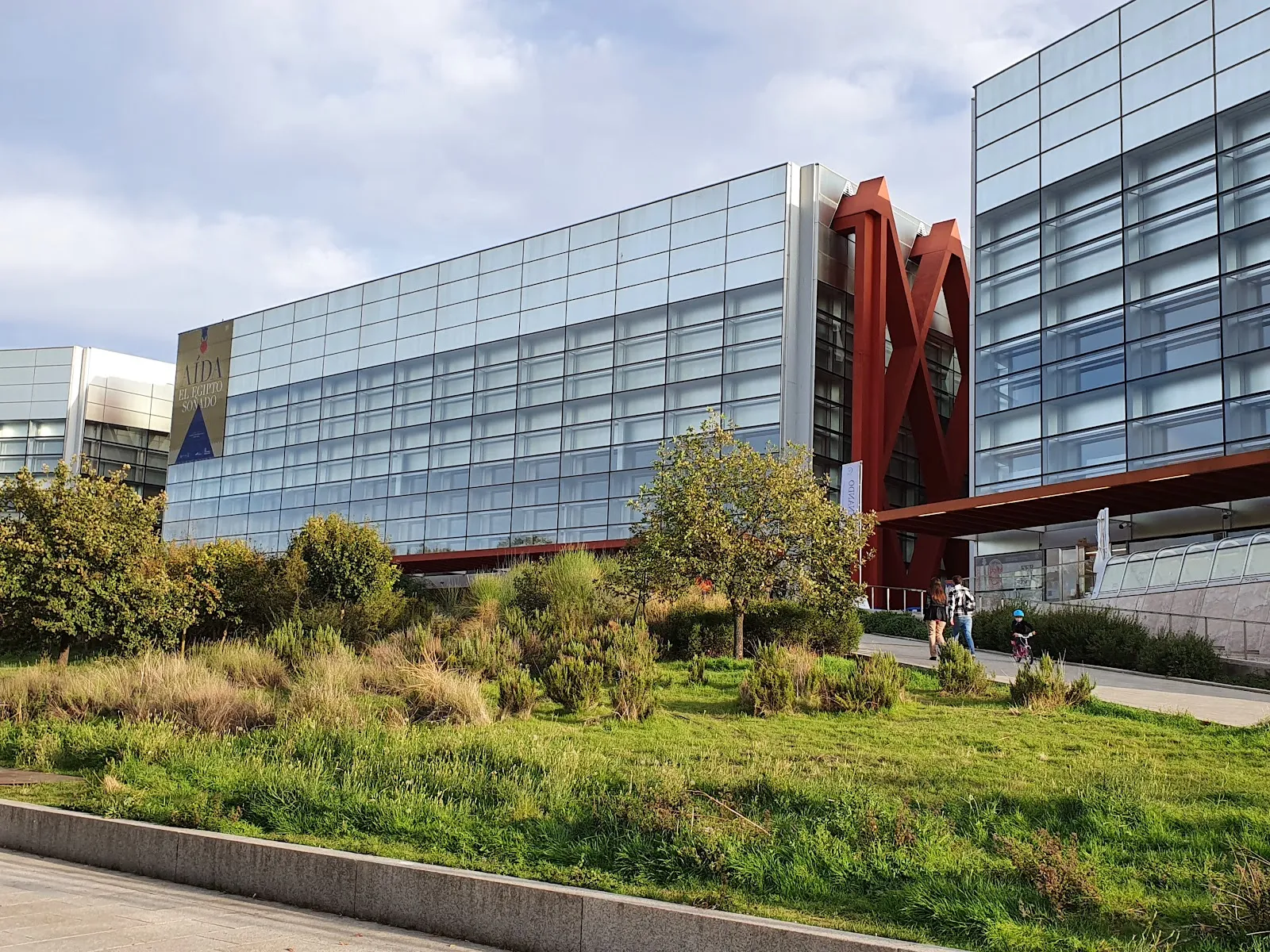
The museum opened in 2010 in a modern building designed by the architect Juan Navarro Baldeweg. It stands on the south bank of the Arlanzón River, and its large windows give the galleries a light, open feel that contrasts with the older streets of the city.
The museum is part of the Atapuerca System, which also includes the archaeological site, an interpretation centre and the Minas de la Esperanza. The fossils on show come from the Atapuerca sites, which lie outside the city, so the museum is the place to learn the scientific context before or after a visit to the site itself.
How the galleries are arranged
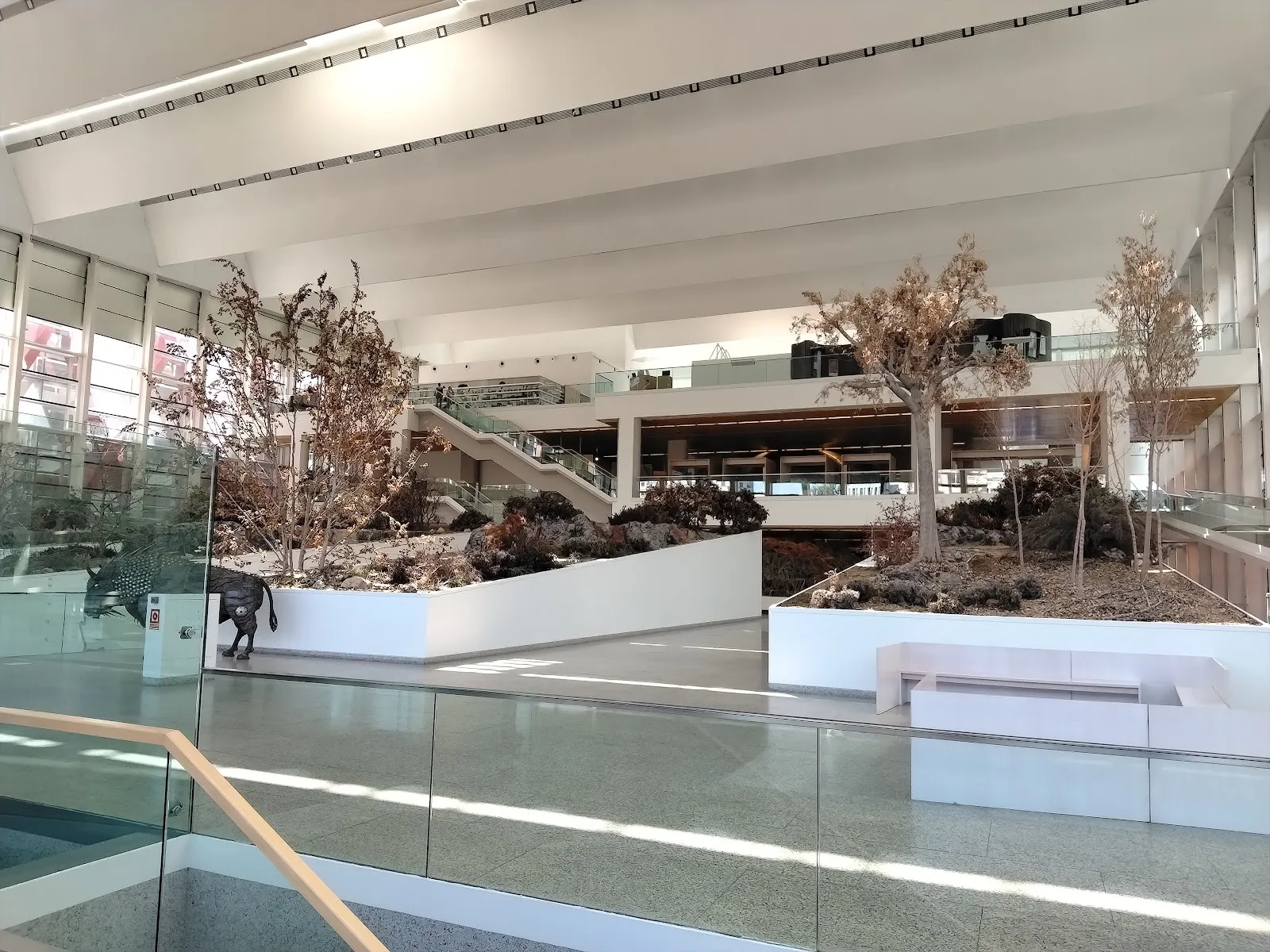
The exhibition is divided into four zones, one on each floor of the building. The suggested route starts on the lower level and moves upward. The basement recreates parts of the Atapuerca landscape, with a 3D model of the Sima de los Huesos, so it is worth starting there to understand where the finds were made.
As you climb to the upper floors, the displays follow the development of humankind over time. An audio guide, available at the ticket desk, helps you follow the sequence from early species such as Homo antecessor to Homo sapiens.
What to look for
The original fossils are the core of the collection. The skull of Miguelón, a specimen of Homo heidelbergensis, and the so-called Elvis pelvis are among the pieces to find. The Hominid Gallery combines reproductions with explanation, and the French-made models of hominids are the displays that visitors most often single out.
Many of the items are replicas, but the quality is high, and the labels explain how each piece was dated and where it was found.
Visiting with children
Families tend to spend longer here than they expect. A treasure map feature guides children through the galleries and keeps them interested from one room to the next. The sofas placed around the building give tired visitors a place to rest.
Children's admission is lower than the adult fee, and large families may enter free. The building has a changing table, a gender-neutral restroom and a hearing loop, and the museum is listed as family-friendly.
FAQ
Is there an entry fee?
Yes. Adult admission has been listed at 6 euros and children's admission at 4 euros, and large families may enter free. Check the official website for current prices.
How long do you need?
Plan at least a couple of hours to see the exhibits properly.
Do I need to book tickets ahead?
Getting tickets in advance is recommended.
Is the museum suitable for children?
Yes. It is family-friendly and has interactive displays, and a treasure map feature helps children move through the visit.
Is the museum wheelchair accessible?
Yes. The entrance, elevator, restroom and parking lot are listed as wheelchair accessible.


