
Cheomseongdae is a stone observatory in Gyeongju, the former capital of the Silla kingdom. It was built in the 7th century during the reign of Queen Seondeok and is considered one of the oldest surviving astronomical observatories in Asia. The bottle-shaped tower stands about nine meters tall on an open lawn inside a park, with the royal tombs of Daereungwon close by. Entry is free. Visit in daylight to see the tower's form and the flower fields, then stay into the evening, when the lights come on and the scene turns quiet.
Built under Queen Seondeok
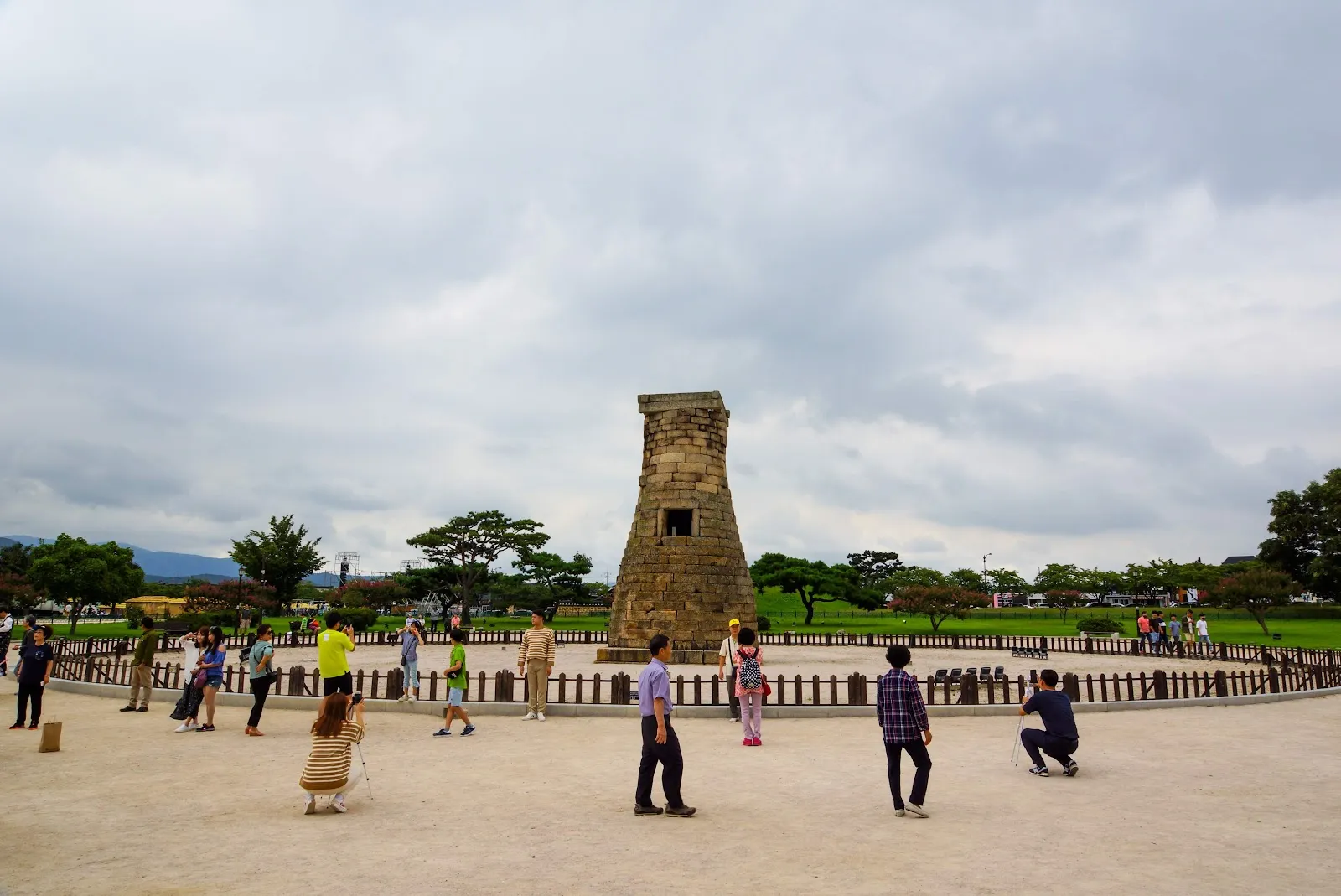
Cheomseongdae was built during the reign of Queen Seondeok, who ruled Silla from 632 to 647. Silla made Gyeongju its capital from the 1st century BCE to the 10th century CE, and the city still holds many archaeological remains from that period. The Gyeongju Historic Areas are listed by UNESCO as a World Heritage Site.
The observatory was used to watch the sky and to forecast the weather, which mattered for farming. It was designated a National Treasure of Korea in 1962.
The shape of the tower
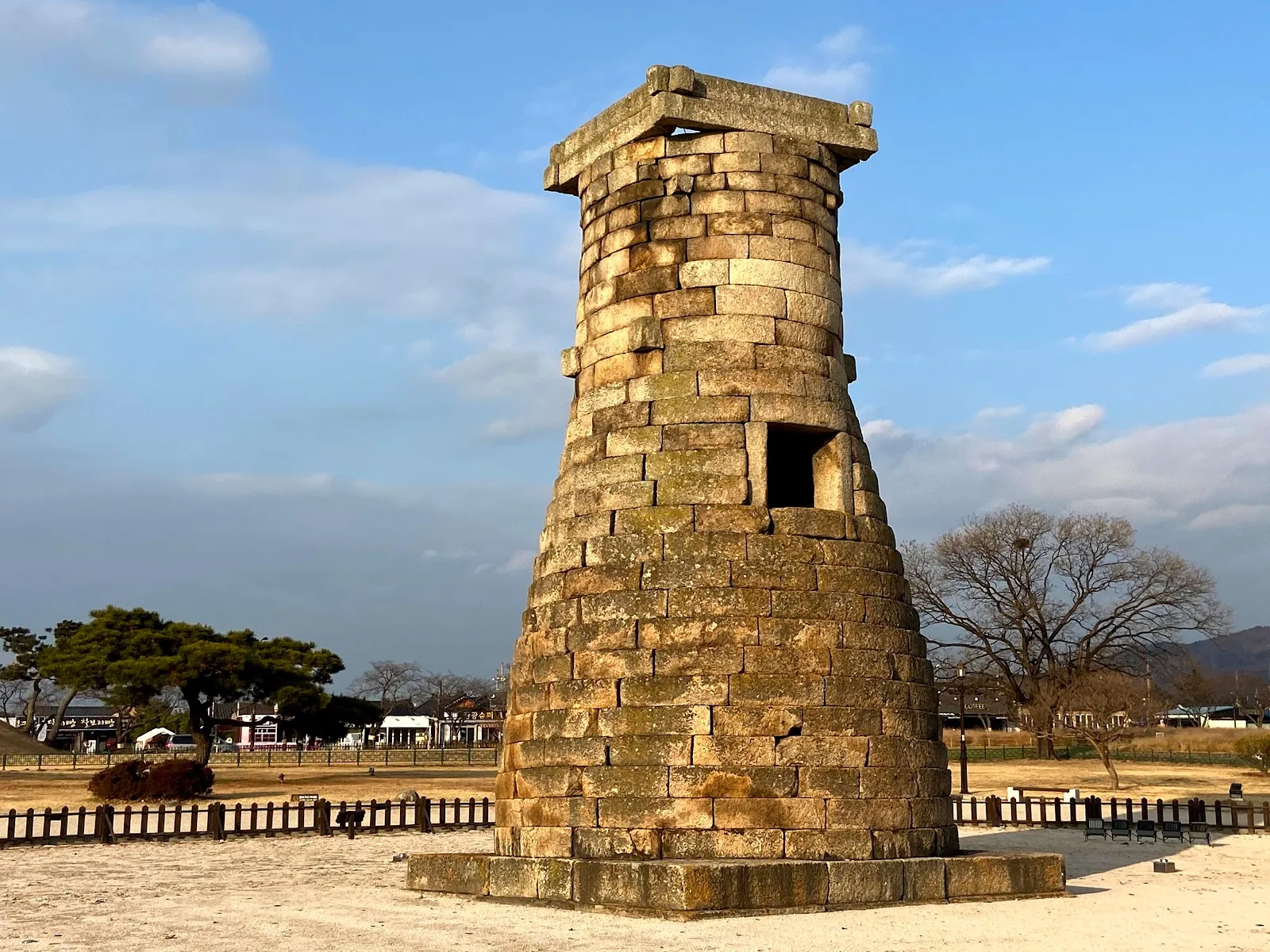
The tower is built from granite and is about nine meters tall. Its body is narrow and widens toward a square top. A central opening divides the body into layers, twelve above and twelve below, which stand for the months of the year and the 24 solar terms. The stones of the body represent the days of the year, and the base has 12 stones for the months.
Some visitors compare the shape to a bottle kiln. The tower was built for astronomy, not for pottery.
Inside and around the tower
The interior is closed. Visitors cannot go into the tower or touch the structure, so a visit is about walking around it, reading the signs and looking at its proportions.
A green lawn surrounds the base, and a fence keeps people back to protect the stone. English signs are good but do not cover every detail.
Visiting on foot and by bus
Entry is free, and no ticket is needed to enter. The entrance and the parking lot are wheelchair accessible. Parking includes a free lot, a paid lot and street parking. One visitor found the parking a little far from the tower.
Bus 10 goes directly to the observatory and to Lake Bomun Resort. Bus 11 is the faster choice for Donggung Palace, Wolji Pond, Gyeongju National Museum and northeastern Namsan.
Flowers through the seasons
Pink muhly grass covers the fields in October and November, when soft pink grass fills the park. Ripe persimmons add color nearby in autumn. In spring, tulips begin to bloom around the grounds. The lotus fields near the tower are at their best from mid-July to early August.
The flowers are the reason many visitors return in different seasons, and the lawn is green through the year.
Nearby sights to pair with it
Daereungwon Tomb Complex sits beside Hwangnidan Street. Its royal tombs spread across a wide plain, where you can walk between them. Gyerim Forest, a small wwood between burial mounds and old earthen fortifications, lies between the observatory and Wolseong. You can walk the road from Tumuli Park through Gyerim Forest.
Donggung Palace and Wolji Pond are a short distance away. Gyochon Village has traditional houses and restaurants that serve traditional food.
FAQ
Is there an entry fee?
No. Entry is free, and no ticket is needed to go in.
Can you go inside the tower?
No. The interior is closed, and visitors cannot touch the structure.
How long do you need?
Plan one to two hours including the park. Allow more time if you walk to nearby sights.
Is the observatory wheelchair accessible?
Yes. The entrance and the parking lot are wheelchair accessible.
Which bus goes there?
Bus 10 goes directly to the observatory. Bus 11 is a faster option for Donggung Palace and Wolji Pond.


