The Glasgow Necropolis is a Victorian cemetery on a hill beside Glasgow Cathedral, east of the city centre. Its winding paths pass ornate tombs, sculptures and memorials in styles ranging from Gothic to classical, with inscriptions that connect the site to Glasgow’s past. Cross the Bridge of Sighs at the entrance, then climb towards the John Knox monument for views across the city and down to the cathedral. The grounds are peaceful, but the steep paths make sturdy shoes useful.
A Victorian cemetery above the cathedral
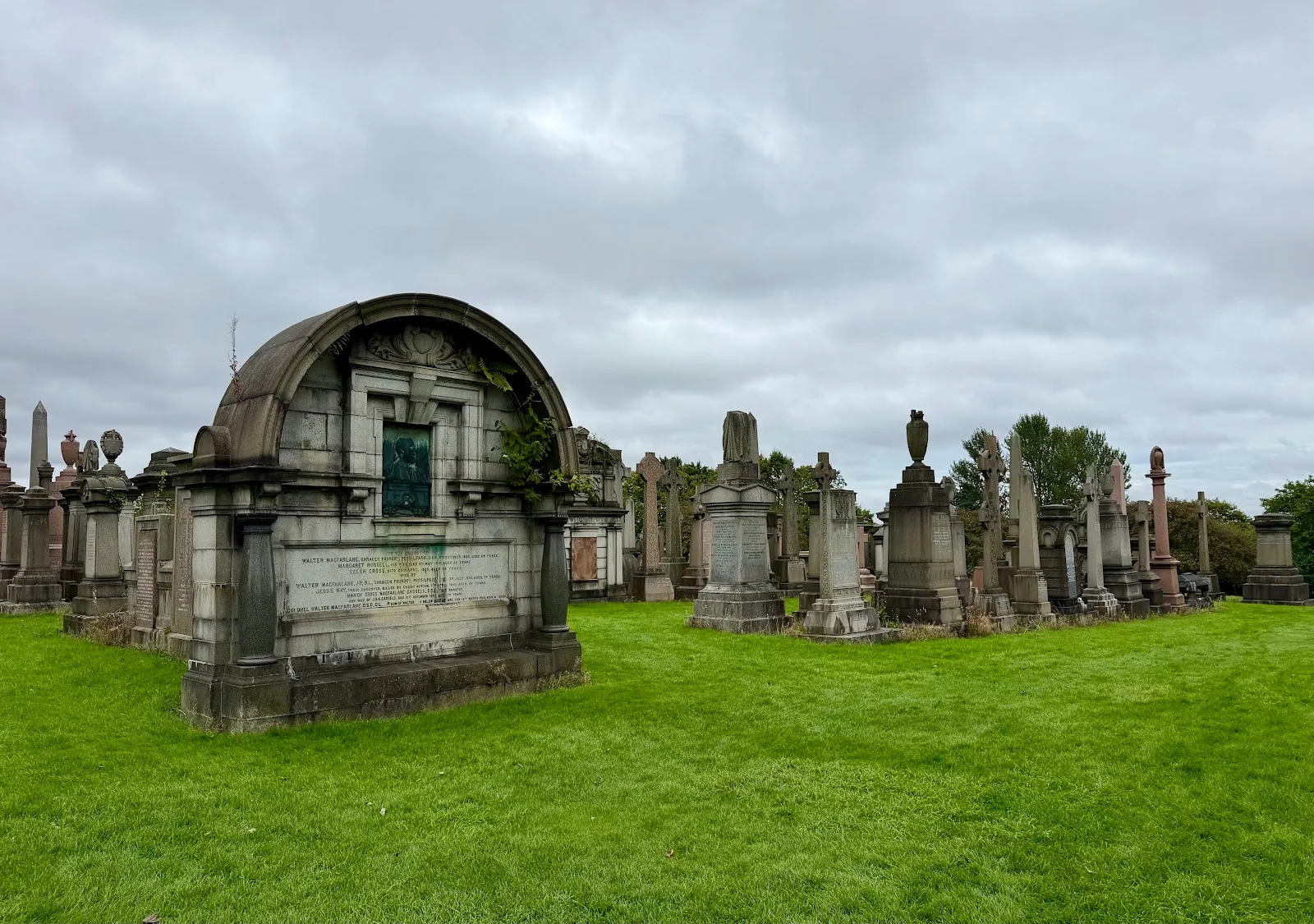
The Glasgow Necropolis occupies a hill immediately east of Glasgow Cathedral. Planned in the early 19th century and opened in 1833, it was inspired by Père-Lachaise Cemetery in Paris. Its founders created a landscaped burial ground at a time when Glasgow’s population was growing and traditional church burial grounds faced increasing pressure.
The site covers 37 acres and is estimated to hold around 50,000 burials. About 3,500 monuments mark some of them; many people buried here have no individual gravestone. The cemetery became a place where wealthy Glaswegian families commissioned substantial memorials, and its monuments record the people and fortunes that shaped the city during the Victorian era.
Monuments and inscriptions
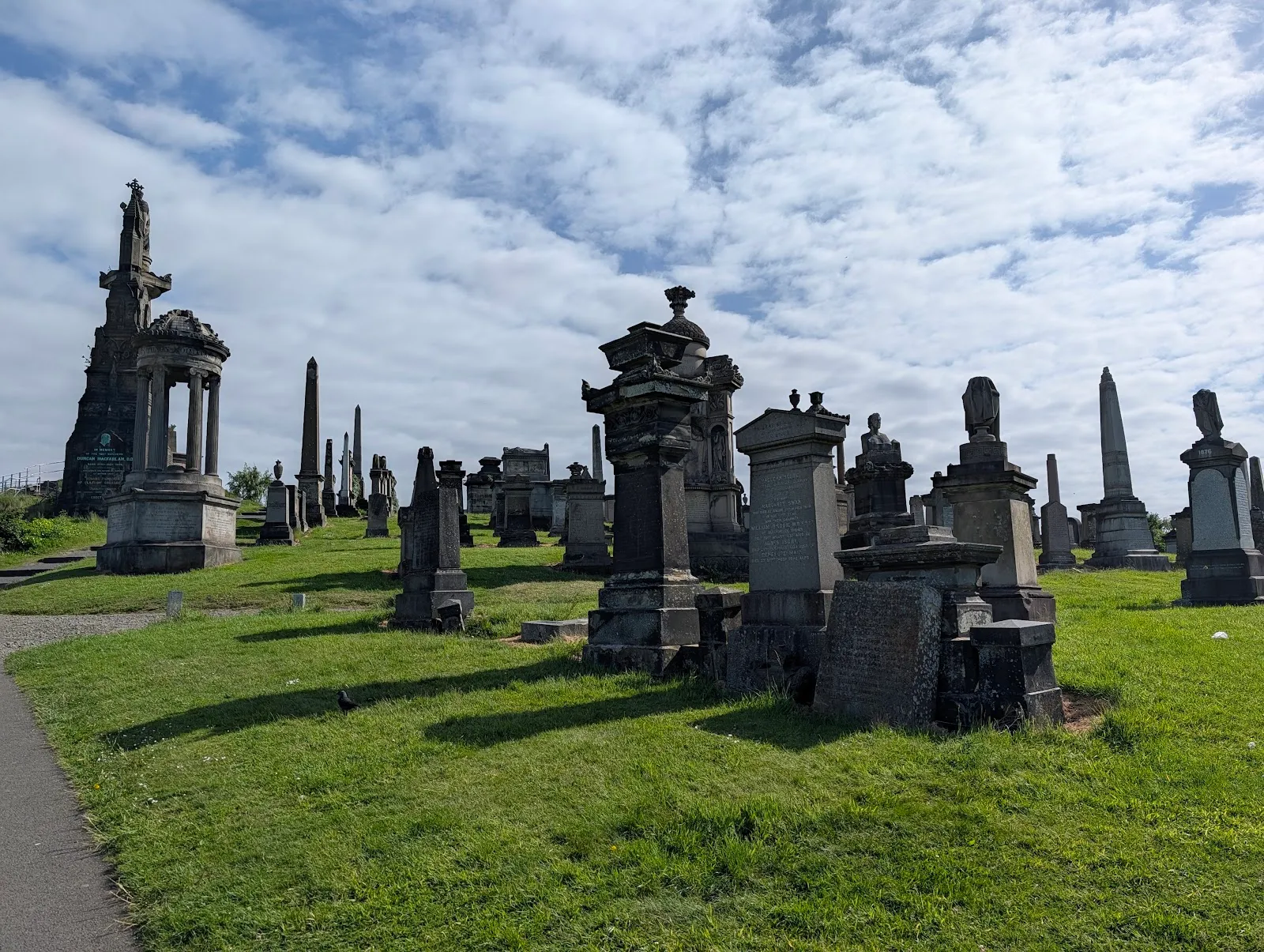
The paths wind up and around the hill, passing headstones, statues, mausoleums and larger memorials. Their designs vary: some recall classical buildings, while others draw on Gothic forms or take the shape of Egyptian-style tombs. Celtic crosses and detailed stone carvings add to the range. Architects associated with Glasgow, including Alexander Thomson and Charles Rennie Mackintosh, are linked to monuments here.
At the hilltop stands a large monument to John Knox, the Scottish Reformation leader. From this part of the grounds, look across the cemetery and towards the cathedral below. As you walk, inscriptions offer brief glimpses into the lives remembered here. Take time to read them; they give the stones a personal and local history beyond their architectural detail.
The Bridge of Sighs and the walking routes
The Bridge of Sighs marks a notable entrance to the Necropolis from the cathedral side. Its name is associated with funeral processions that passed over it on their way to the burial ground. Crossing it brings you onto a network of paths that climbs the hill and branches among the monuments.
The layout is sprawling and the ground rises and falls, so a guided walk can help make sense of the routes and the people commemorated along them. Friends of the Necropolis volunteers run walking tours, with donations suggested. Check the Friends of the Necropolis website for tour details before you go.
Allow time for the climb and for pauses at the memorials. Early morning and late afternoon provide changing light across the stonework and views. The grounds are a place of burial as well as a historic site, so keep your visit quiet and treat the monuments with care.
FAQ
Where is the Glasgow Necropolis?
It is on Castle Street, on a hill beside Glasgow Cathedral, east of Glasgow city centre.
How long should I spend at the Glasgow Necropolis?
Allow about 1 to 2 hours to walk the paths, see the monuments and take in the views.
Are there guided tours of the Glasgow Necropolis?
Friends of the Necropolis volunteers run walking tours. They are free, with a donation suggested; check the organisation’s website for details.
What should I wear to visit the Glasgow Necropolis?
Wear comfortable shoes, as the paths are winding and the ground climbs up the hillside.