The Bridge of Lies (Podul Minciunilor) is a small iron footbridge at Piața Mică in Sibiu's old town, built in 1859. It is Romania's first cast-iron bridge and links the Small Square with Huet Square, so it also joins the Upper Town and the Lower Town. Look for the Neo-Gothic details and the city coat of arms. From the bridge you see the rooftops and the Lower Town below. Local legend says the bridge creaks when someone lies on it, and most people stop to test it. The visit is short and fits easily into a walk around the historic centre.
A cast-iron bridge from 1859
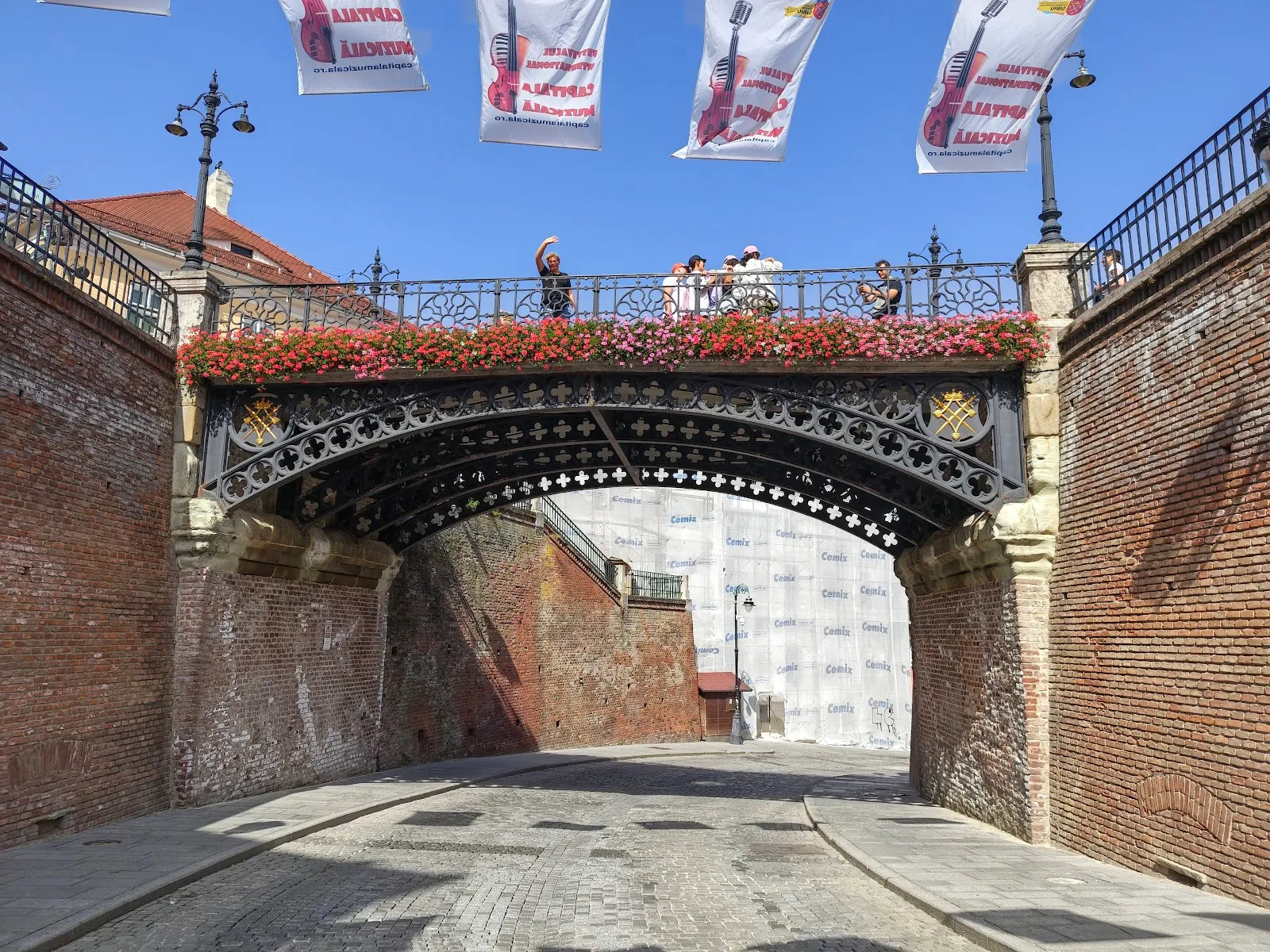
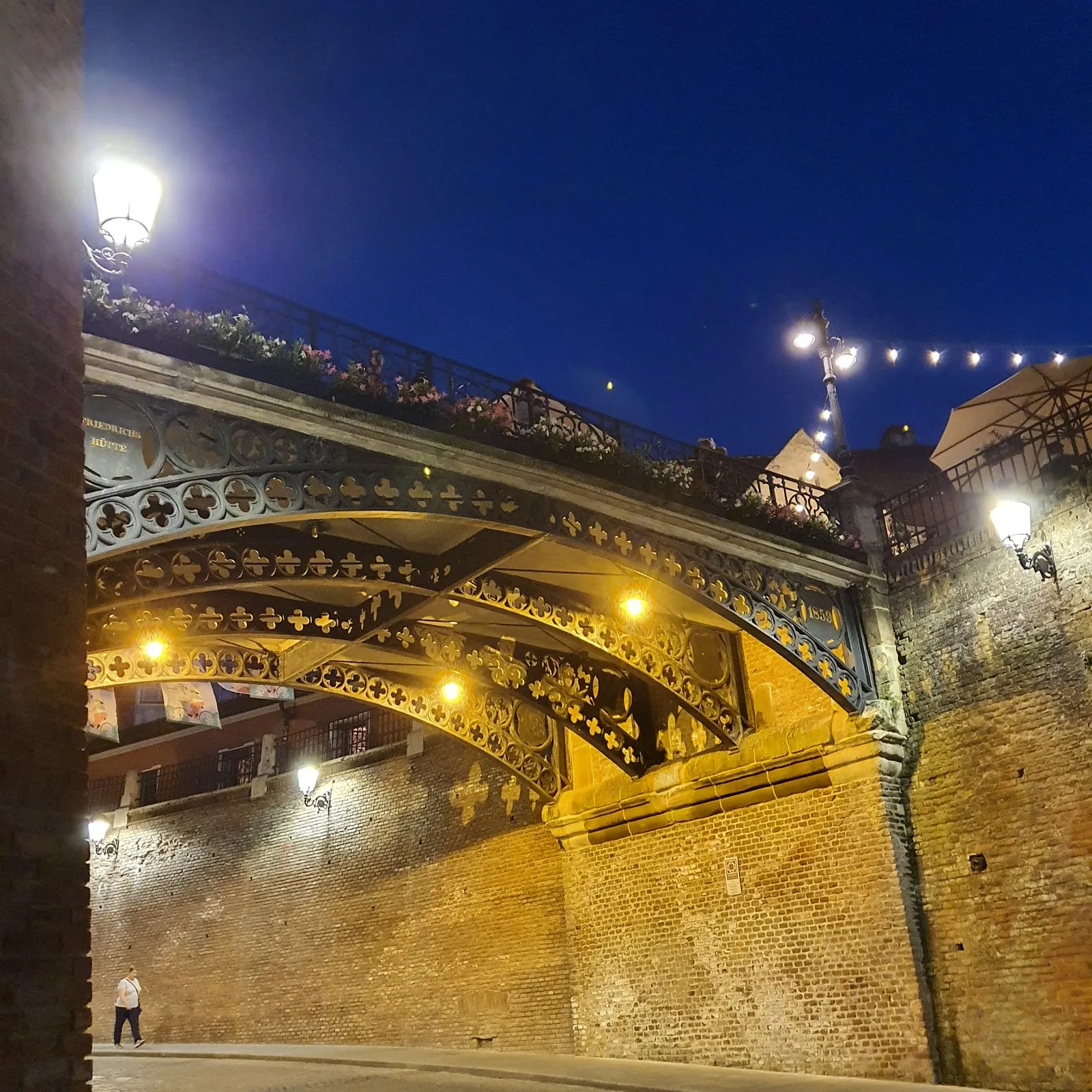
The Bridge of Lies stands at Piața Mică, the Small Square, and crosses Strada Ocnei, the street that runs down to the Lower Town. It is a pedestrian bridge about 10 meters long, and it has no supporting pillars. The date 1859 is inscribed on it.
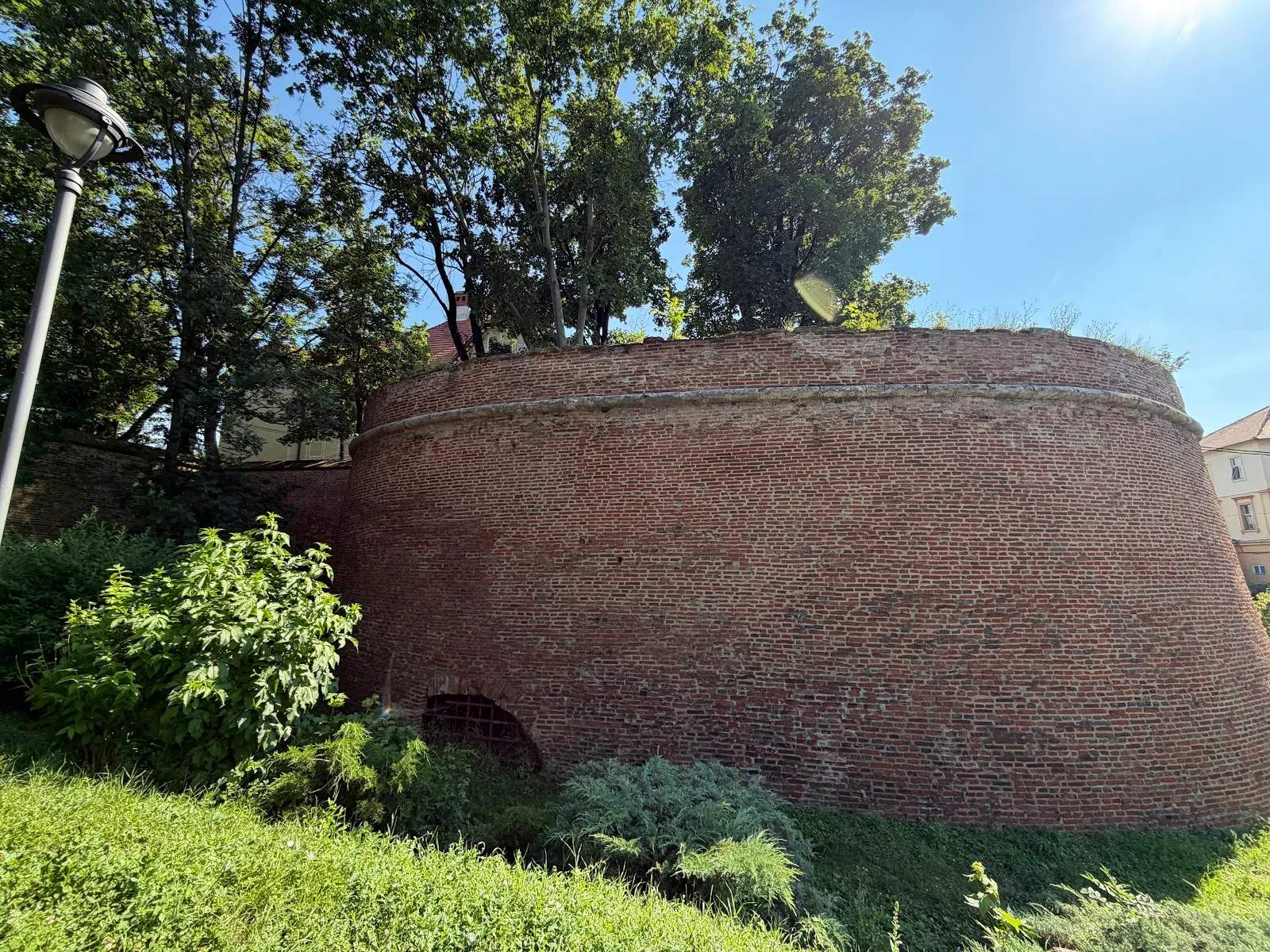
An older wooden bridge stood on the site before. One account places the bridge on the foundation of a gate tower belonging to the second fortification wall. The iron bridge is counted as the first of its kind in Romania and, in some accounts, the second cast-iron bridge in Europe.
The decoration is Neo-Gothic, and the Sibiu coat of arms is part of it. Seen from below on the cobbled street, it is a compact piece of 19th-century ironwork set among much older buildings.
Legends and the name
The best-known story is that the bridge reacts to untruths. In most versions it creaks or shakes when a person lies on it, and in some it collapses. Locals tell it to visitors as a game, and plenty of people try a small fib to see what happens.
The origin of the name is disputed. One explanation is linguistic: in the German spoken in Sibiu the bridge was called the lying bridge because it had no support pillars, and the German word is the same as the one for a lie. Another points to merchants who cheated customers in the market square next to it. A third tells of young couples, or soldiers, who swore love on the bridge and did not keep their promises.
The Small Square also served in medieval times as a place of public punishment, and a local belief links the bridge to the punishment of liars. The legends are folklore, and the bridge's iron frame is no less solid for them.
Views and what is nearby
Piața Mică was the original market of medieval Sibiu. Most of its buildings date from the 14th to the 16th century and began as craftsmen's shops. Around the bridge you will see the narrow roof windows that give Sibiu's houses their watching-eyes look, and the steeple of the Evangelical Church rises overhead.
The Council Tower stands on the square, and its upper terrace gives a wide view of the city. From the tower it is a short walk to the bridge. The Pharmacy Museum, the House of Arts and the Ethnographic Museum are also on the square.
For a loop back to Piața Mare, cross the bridge into Huet Square and walk a few tens of meters. Take the stairs near the Journeymen House down to Turnului Street and turn left. Climb the Stairs Passage to Alexandru Odobescu Street, then turn left again.
FAQ
Why is it called the Bridge of Lies?
The origin of the name is disputed. One explanation is that the German name meant the lying bridge because it had no support pillars. Other stories point to cheating merchants or to lovers who broke their promises.
When was the Bridge of Lies built?
The iron bridge dates from 1859, and the year is inscribed on it. It replaced an older wooden bridge on the same spot.
Where is the Bridge of Lies?
It is in Sibiu's old town at Piața Mică, the Small Square. It links the square with Huet Square and the Upper Town with the Lower Town.
How long do you need at the Bridge of Lies?
About 15 to 20 minutes is enough for the view, a photo and a try at the legend. Add time if you also climb the Council Tower or stroll around the square.
Does the bridge really creak when you lie?
That is a legend, told in several versions. Some say it creaks, others say it collapses. Visitors usually test it for fun.