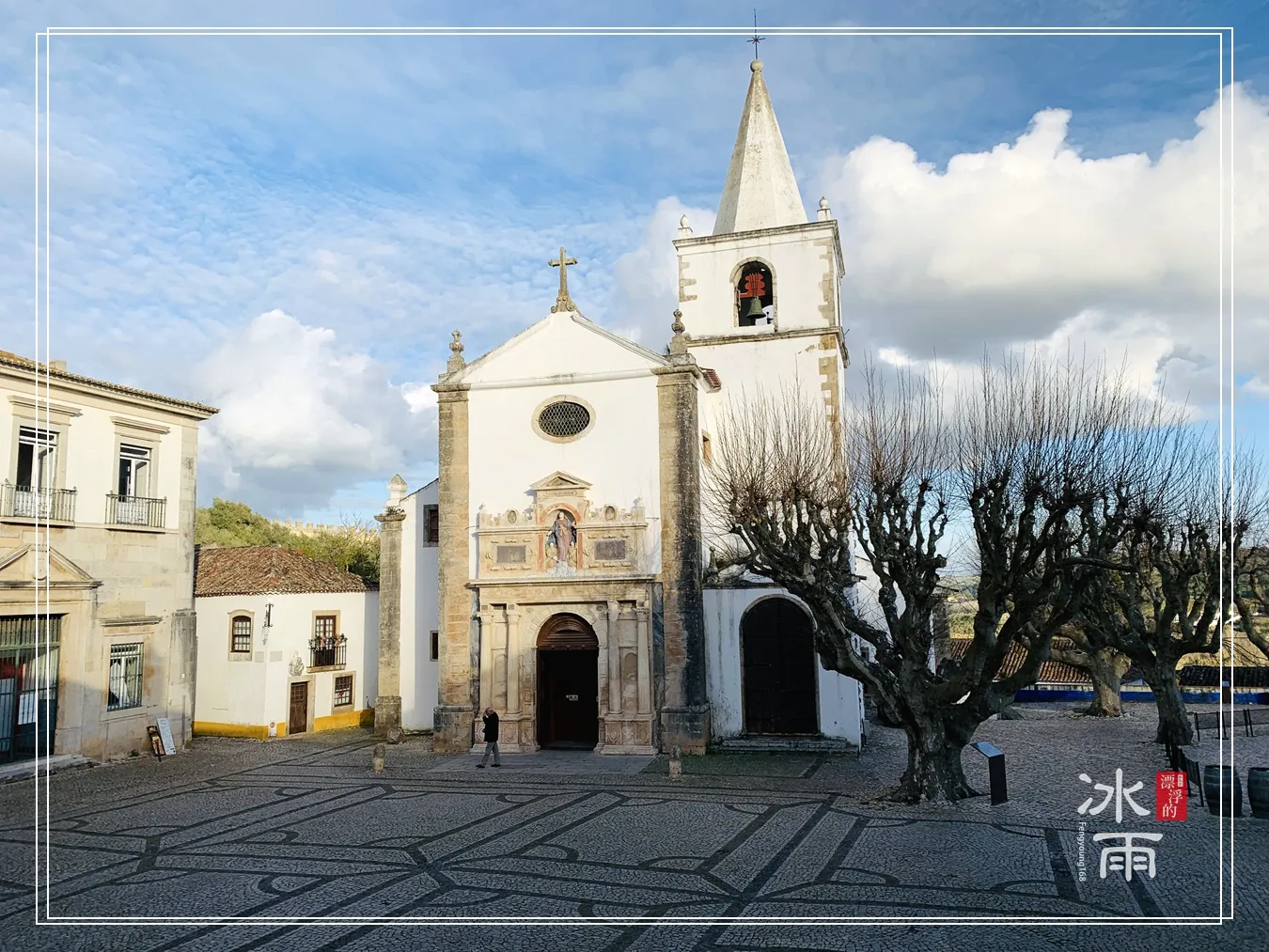
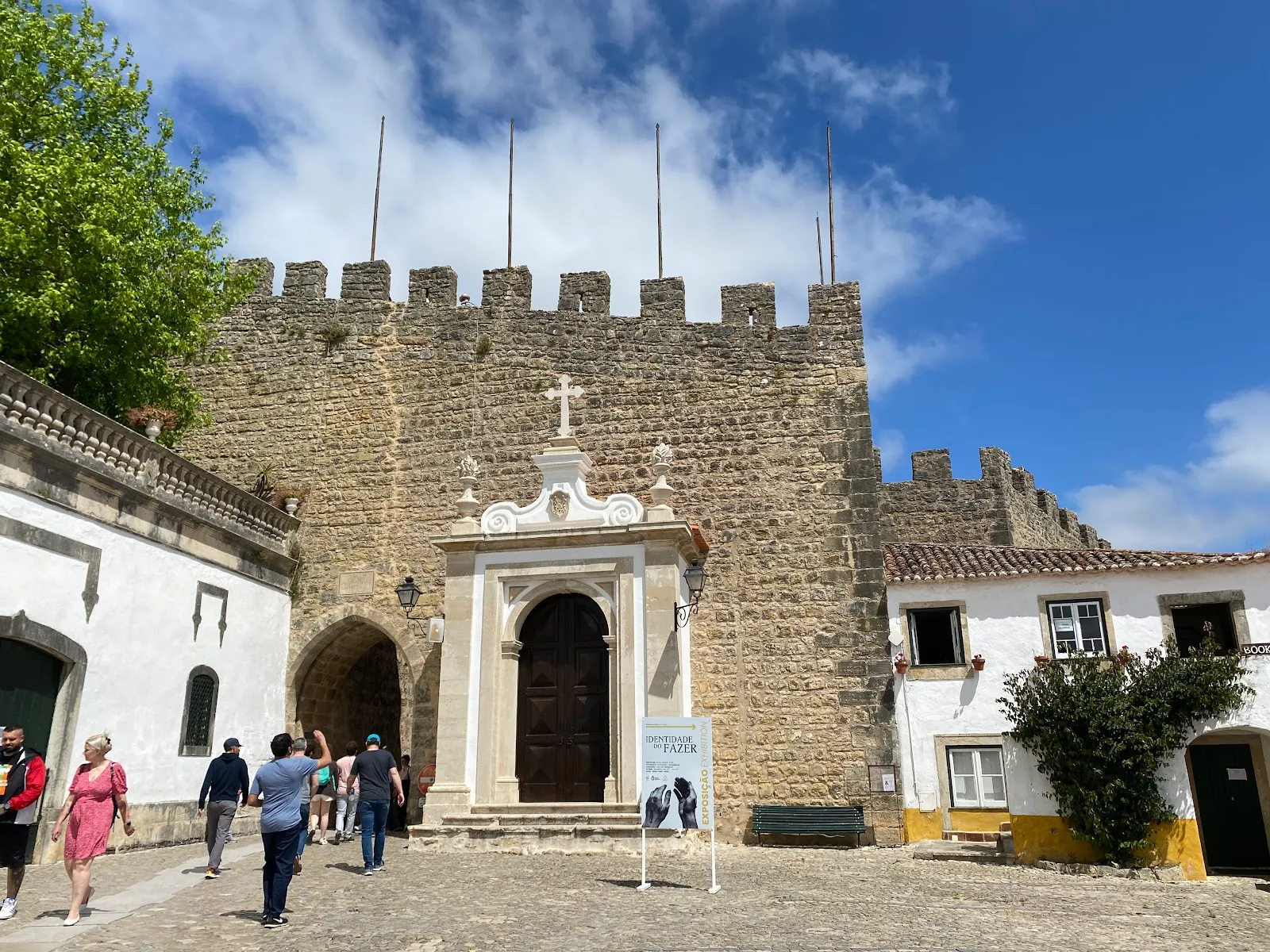
Castelo de Óbidos stands at the highest point of the walled town of Óbidos, about 85 km north of Lisbon. A Moorish fort first stood here, and the present building mostly dates from the 13th century. Part of it is now a pousada, so most of the visit happens around it: the tiled entrance, the narrow streets of the old town and the walk along the ramparts, with white houses below and open countryside beyond. Shops, cafes and restaurants fill the lanes inside the walls.
From a Moorish fort to a royal gift
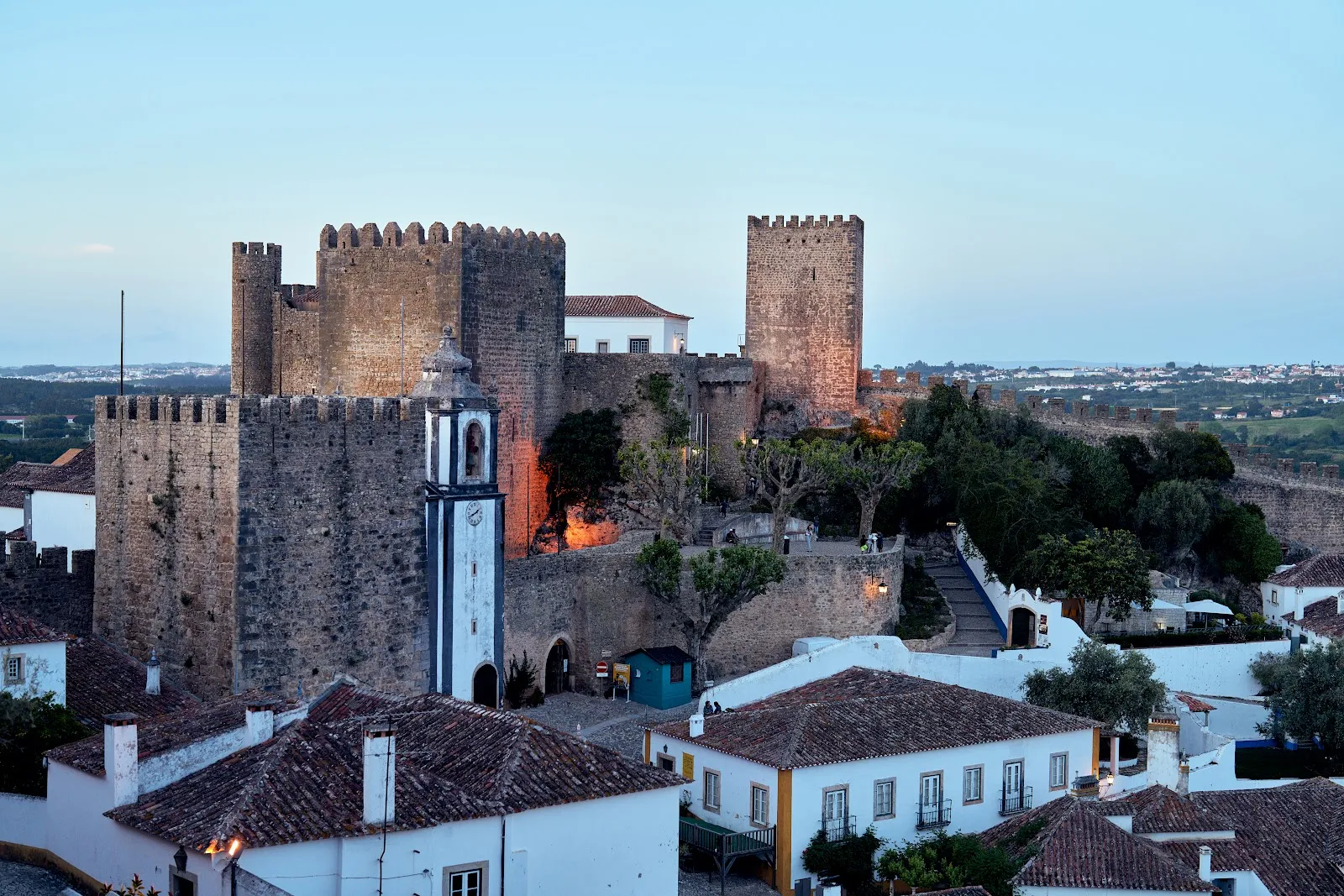
A fortification stood on this hilltop under the Moors from the 8th century. Afonso Henriques, Portugal's first king, recaptured it in 1148 during the Reconquista. The structure seen today largely dates from the 13th century: solid stone walls, a keep and defensive battlements at the highest point of the town.
The castle later became a royal palace. King Dinis gave it to Queen Santa Isabel as a wedding gift. The tradition of presenting Óbidos to the queen goes back further, to 1210, when Afonso II gave the town to his queen. That is why Óbidos is still called the Town of Queens.
The name itself comes from the Latin word oppidum, which means a fortified town.
The castle as a pousada
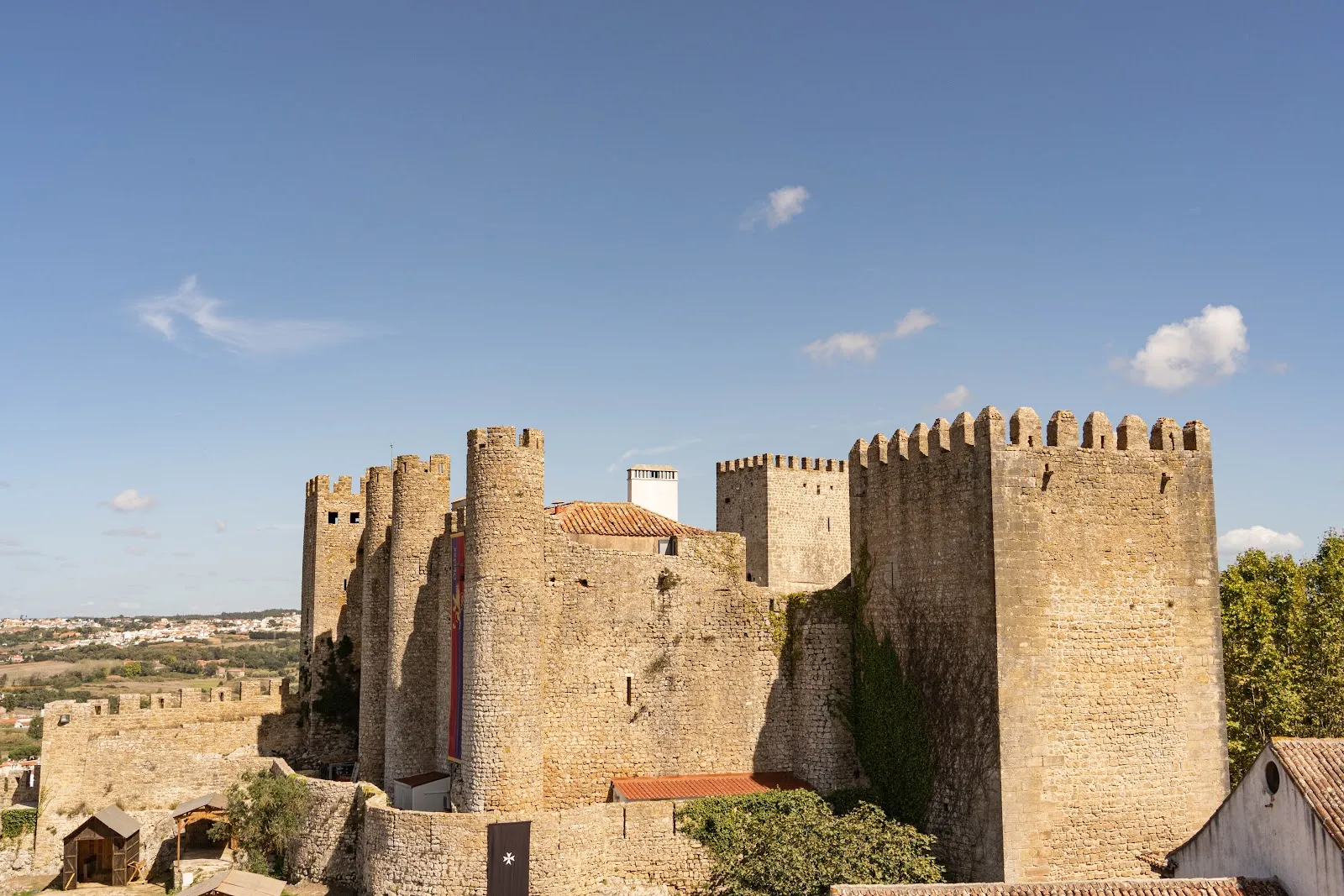
The castle is a classified National Monument. In 1950 it became the first pousada in Portugal set in a historic building. Pousadas are the country's group of heritage hotels, and part of the castle is still run as one.
For a day visitor this shapes the plan. The castle is best seen from outside and from the walls, together with the town around it. The tiled entrance gate sets the tone as you step into the old town.
Walking the walls
The fortress walls surround the whole old town, and much of the circuit can be walked. From the top you look over the white houses with colored frames, down into the lanes and out to the countryside. The castle, the cathedral and the town's other landmarks come into view along the way, and the light near sunset is a popular time for the walk.
Many sections have no railings. Go slowly, mind the edges and keep children by your side. The medieval streets inside the walls are fine for families with kids.
Outside the walls you can see the Óbidos aqueduct, and the Lagoa de Óbidos lies about five kilometres from the village. The lagoon is used for sailing, rowing and windsurfing.
In the streets below
The castle sits at the end of Rua Direita, the main street, which is lined with small shops selling regional goods and souvenirs. Bakeries, sardine shops, cafes and restaurants are spread through the lanes.
A local habit is ginjinha, the cherry liqueur, served in a small chocolate cup. Expect to pay around 1.50 euros for one. Madock Restaurante Castelo de Óbidos has a Harry Potter theme, and it can be busy, so allow time for a wait.
On some dates the town hosts a medieval festival with traditional food, drink and dance. In the festive season there is a Christmas Village.
Getting there
Óbidos is easiest by car, and the walled town can be reached from Lisbon in under a couple of hours by road, about 85 km. The train stops at Óbidos station, which is small and unstaffed. From there it is a 20 to 25 minute uphill walk along a road to the castle. Trains do not always run on time, and taxis or ride-hailing apps work for the return.
FAQ
Is there an entry fee for Castelo de Óbidos?
Visiting the castle area and walking around the old town is free.
Can you stay inside Castelo de Óbidos?
Yes. Part of the castle is a pousada, a heritage hotel, and it was the first one in Portugal in a historic building.
How long do you need at Castelo de Óbidos?
Plan on 2 to 3 hours for the castle area, the walls and the streets of the old town. Add time for a meal.
Is it safe to walk the castle walls?
Many sections of the walls have no railings, so walk carefully and keep children close. The walls can be walked around much of the town.
How do you get to Castelo de Óbidos from Lisbon?
Óbidos is about 85 km north of Lisbon and is easiest to reach by car. Leave the car at the foot of the castle wall, since parking in the centre is limited. By train, get off at Óbidos station and walk 20 to 25 minutes uphill.