Sé de Braga, also called Braga Cathedral, is the oldest cathedral in Portugal. It stands in the historic centre of Braga, a short walk from the main square. It was consecrated in 1089, before the Portuguese kingdom was formed, so its age is part of the country's story. Romanesque walls, Gothic and Manueline additions and a Baroque interior sit side by side, so one visit shows centuries of building. Look for the west portal, the two Baroque organs, the blue-tiled chapels and the museum of sacred art.
From the late 11th century to Portugal's first kingdom
Construction of the cathedral began in the late 11th century. Bishop Pedro is named in the records as the figure behind the work, and the building was consecrated in 1089. The Portuguese kingdom was formed in 1139, so the church was already in use before the country had its own kingdom.
Earlier religious buildings stood on the site before the cathedral was raised, and one account says the foundations sit on the remains of a Roman temple. The church was altered and enlarged over the following centuries. Once it was complete, much of the city of Braga was built up around it.
The cathedral was once a rival to the Santiago de Compostela Cathedral for influence. Its age is still a point of local pride, and a Portuguese saying uses it to describe something very old.
Romanesque, Gothic, Manueline and Baroque
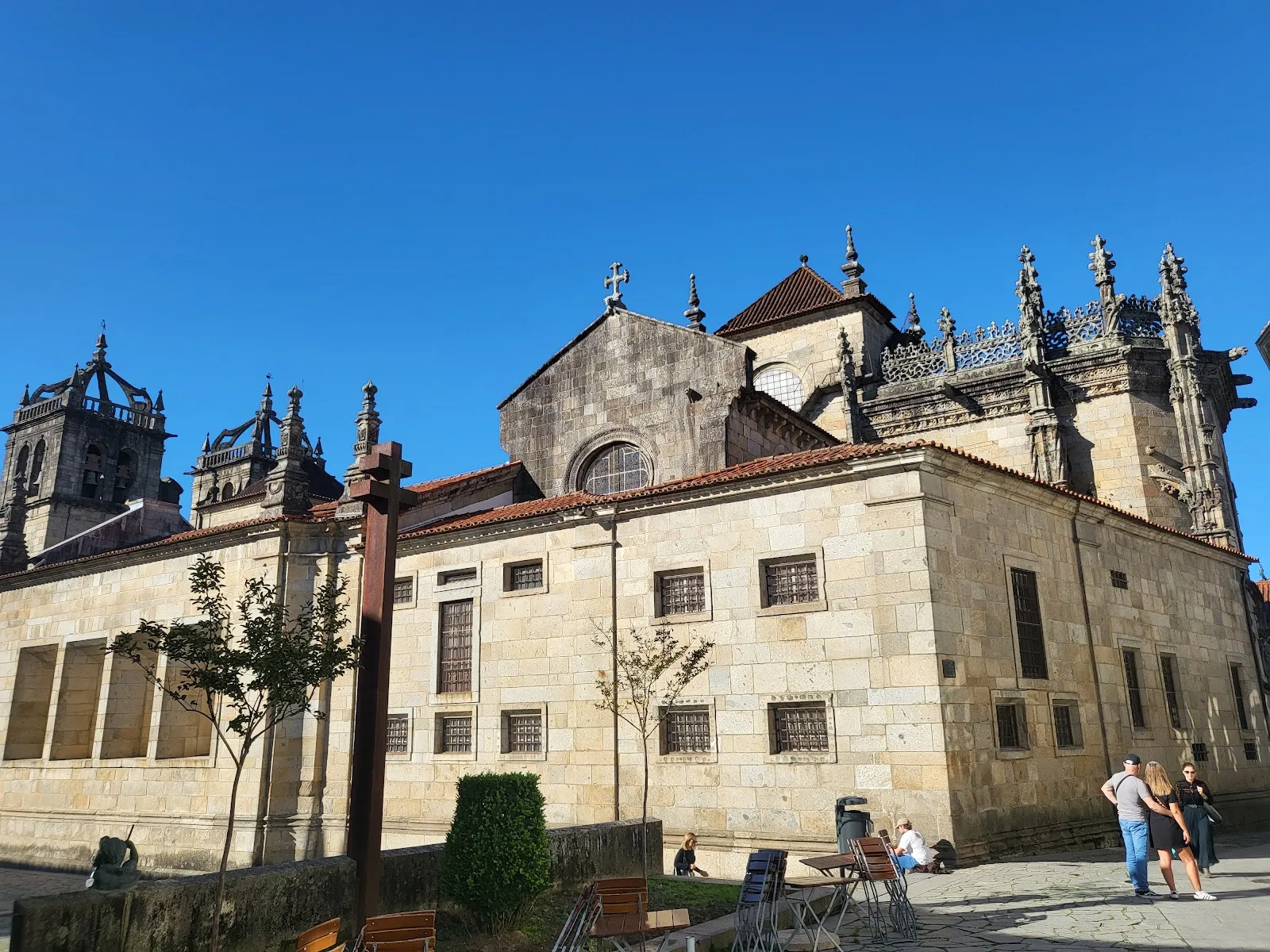
The Romanesque layer is the oldest. The triple nave, the southern entrance and the overall shape of the building come from that first period. The west portal is the best-known Romanesque feature. It is carved with scenes from the medieval story of Reynard the Fox, and it now sits inside a Gothic porch.
The Gothic and Manueline work came later. The façade dates from the end of the 15th century, and it has twin towers. The upper floors and towers were built in the 17th century in the Baroque style, which is the most visible layer from outside.
Architecture students will find elements of nearly every major movement here, including Renaissance details. The Romanesque plan is still easy to pick out once you know what to look for.
Inside: organs, choir and chapels
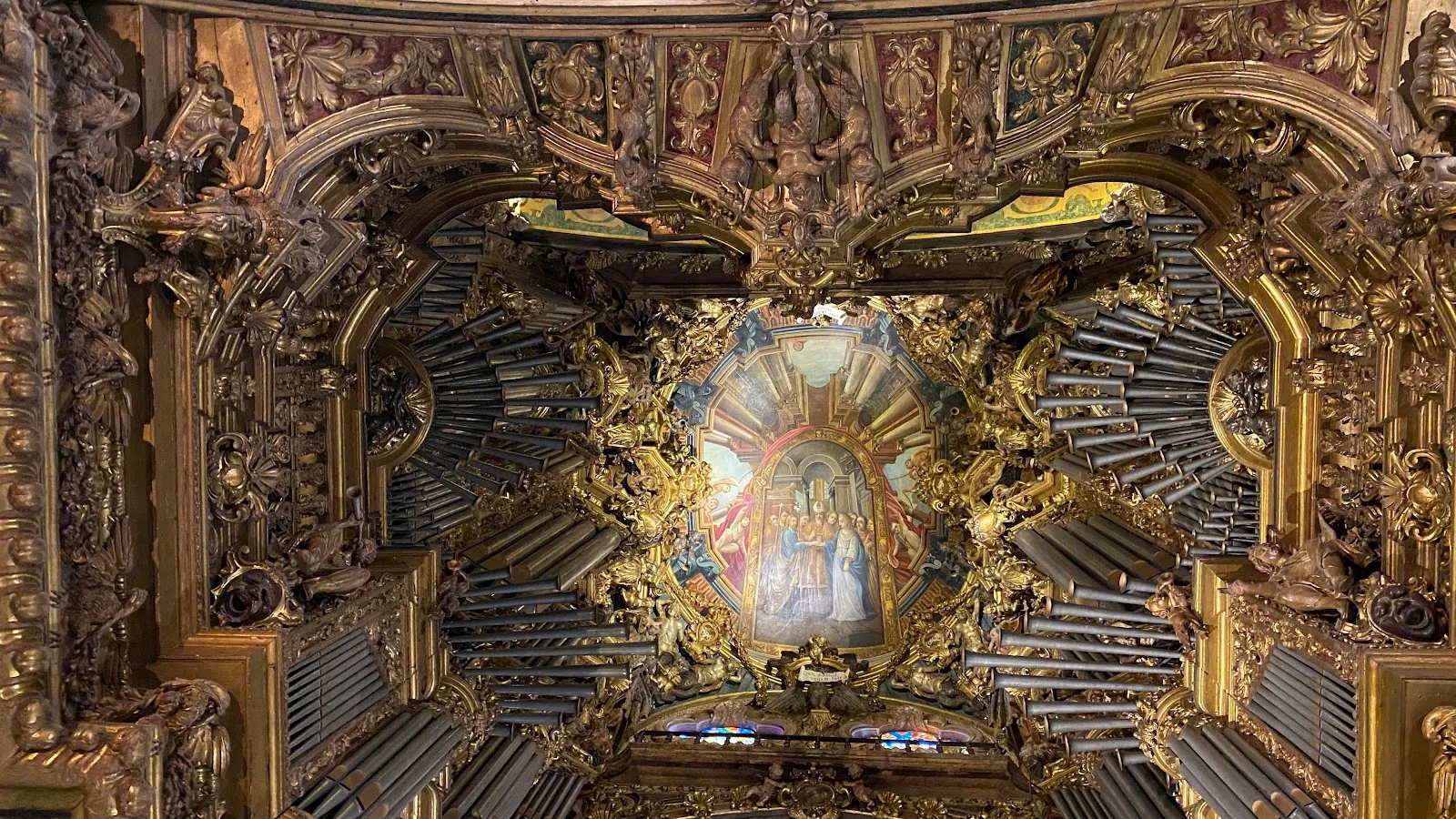
The two Baroque organs are the first things to look for inside. Their cases are covered in gilded wood. The high choir pipes sit on the second level, and the guided tour includes a closer look at them.
The choir stalls are gilded, and the chapels are decorated with the blue tiles that are typical of Portuguese churches. The chapels are part of the guided route and the à la carte option.
Choir practice sessions use the organ. Visiting during one lets you hear the instrument in the space it was built for.
Museum, treasury and tombs
The museum holds sacred art, church objects and relics. The treasury has an iron cross that is linked to the first Mass held in Brazil. Among the other objects is a Roman tomb.
Henry of Burgundy and Teresa, the parents of Afonso Henriques, Portugal's first king, are buried here. Henry lies in the King's Chapel. The tombs are one of the main reasons people visit the chapels.
The museum and treasury are worth a slow visit if you are interested in medieval objects and church history.
Tickets, access and planning a visit
Guided tours are given in English. The guides explain the history and the building, which helps with the mixed styles. A guided tour costs €5 and covers the cathedral, chapels, museum and high choir. Single areas can be booked for €2 to €3 each.
The main entrance is wheelchair accessible. Because the cathedral is an active place of worship, you may have to wait to enter during a mass. Keep quiet around people who are praying.
Holy Week brings thousands of believers to Braga from across Portugal and abroad, with processions and ceremonies held at the cathedral. The city is busy during those days, so plan ahead for that week.
Around the cathedral
The Jardim de Santa Bárbara is a short walk away. It has colourful flowerbeds and shrubs backed by the medieval cloisters of the Episcopal Palace. A 17th-century fountain with a statue of Saint Barbara stands in the middle of the garden, and the garden takes its name from the statue.
Praça da República is nearby, with shops, cafés, restaurants, green space and a fountain. It is a good place to rest after the cathedral.
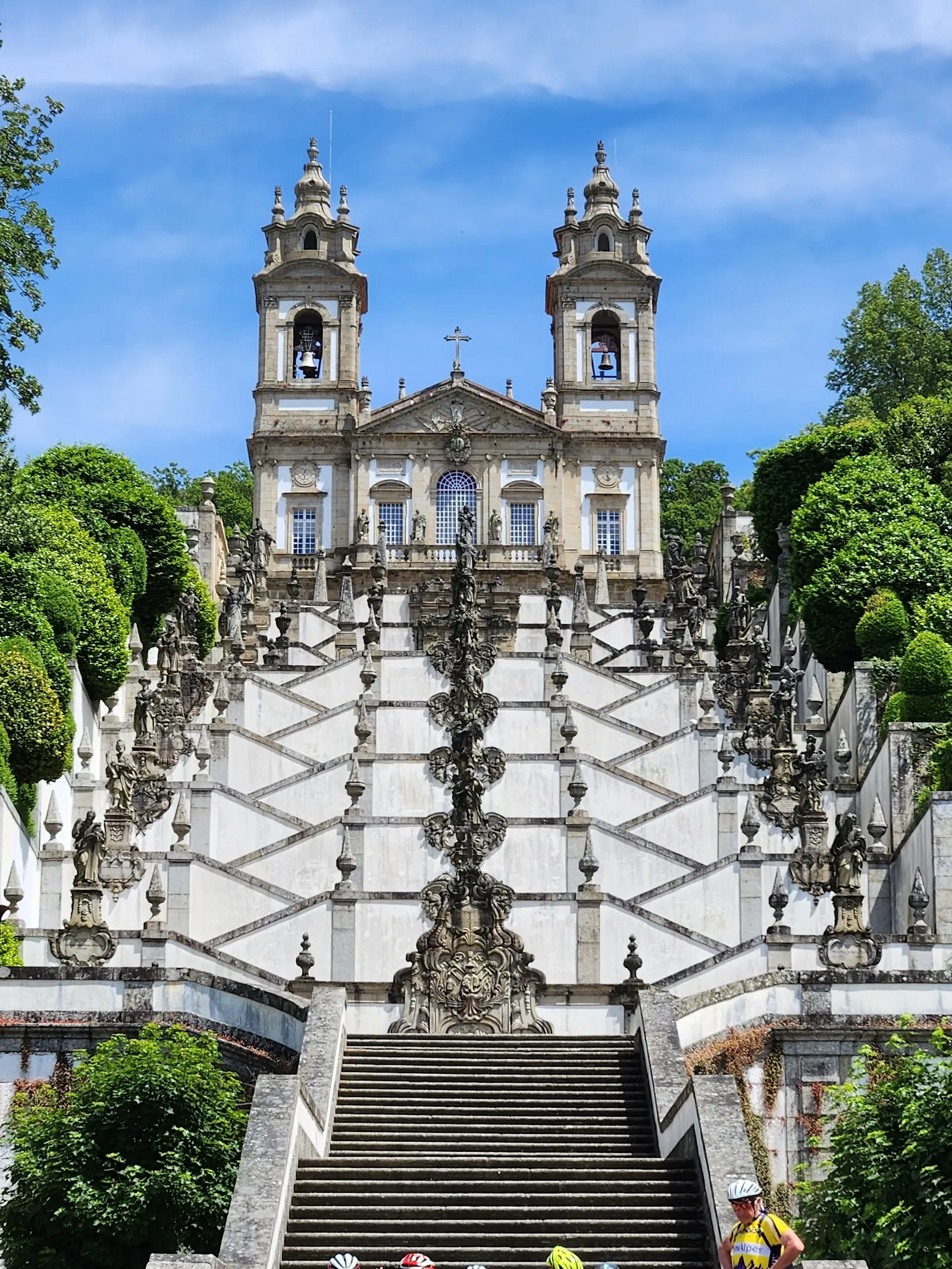
Bom Jesus do Monte, with its long staircase of landings decorated with fountains and statues, is a separate trip from the centre.
FAQ
How much does it cost to visit Braga Cathedral?
A guided tour costs €5 and covers the cathedral, chapels, museum and high choir. Single areas can be booked for €2 to €3 each. Check the website for current prices before you go.
How long do you need at Braga Cathedral?
Plan for 2 to 3 hours. Architecture fans can spend longer comparing the styles, and the guided tour adds time.
Is Braga Cathedral still used for worship?
Yes. It is an active religious site, so you may have to wait to enter during a mass. Keep quiet around people who are praying.
How do I get to Braga Cathedral from Porto?
Braga is just over an hour from Porto by car. Regular buses and trains also run between the two cities.