The Sultan Qaboos Grand Mosque is Oman's largest mosque, in the capital, Muscat. Its white marble interior holds a large crystal chandelier and a hand-woven Persian carpet that is among the largest of its kind. Morning visits are the easiest way to see it, since the grounds are cooler and the building is open to non-Muslim visitors during set hours. Allow about two hours for the halls, courtyards and gardens, and plan your dress before you arrive.
Why the mosque was built
Sultan Qaboos bin Said commissioned the mosque to mark thirty years of his reign. Construction took six years, and the complex was completed in 2001. It is the largest mosque in Oman and one of the few in the country that welcomes non-Muslim visitors.
The complex covers 416,000 square metres. Its central dome, adjoining halls and courtyards can hold up to 20,000 worshippers.
The exterior and grounds
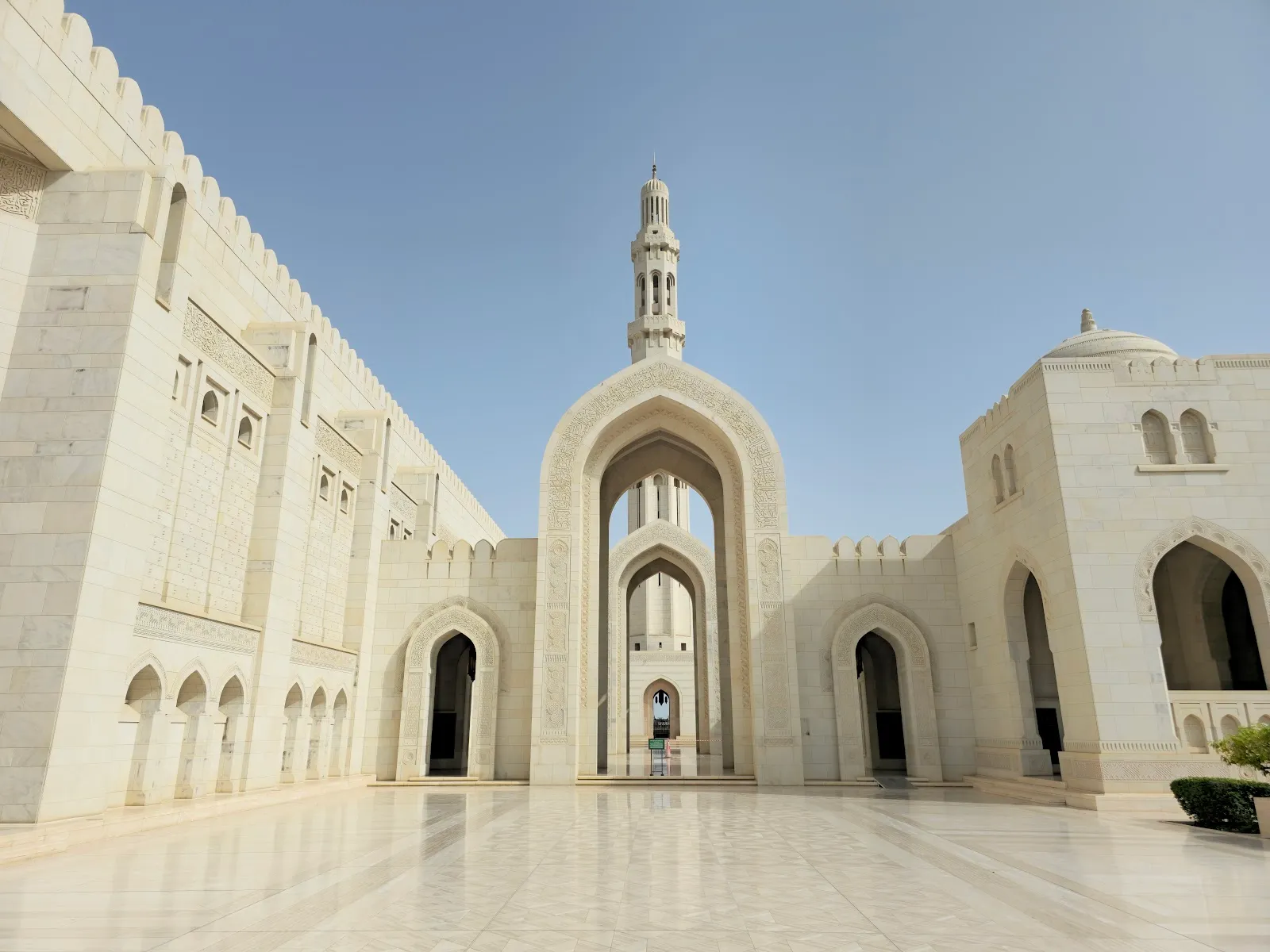
The exterior is built from Indian sandstone and is quieter in tone than the interior. Sandstone arches and latticed stone around the dome catch a subtle gold shine. Five minarets rise above the complex, and the main dome is a clear landmark across the city.
The gardens are well kept and suit a slow walk between visits to the halls. In the evening, the dome glows as if lit from inside, so the mosque is worth seeing from outside after dark as well.
Inside the main prayer hall
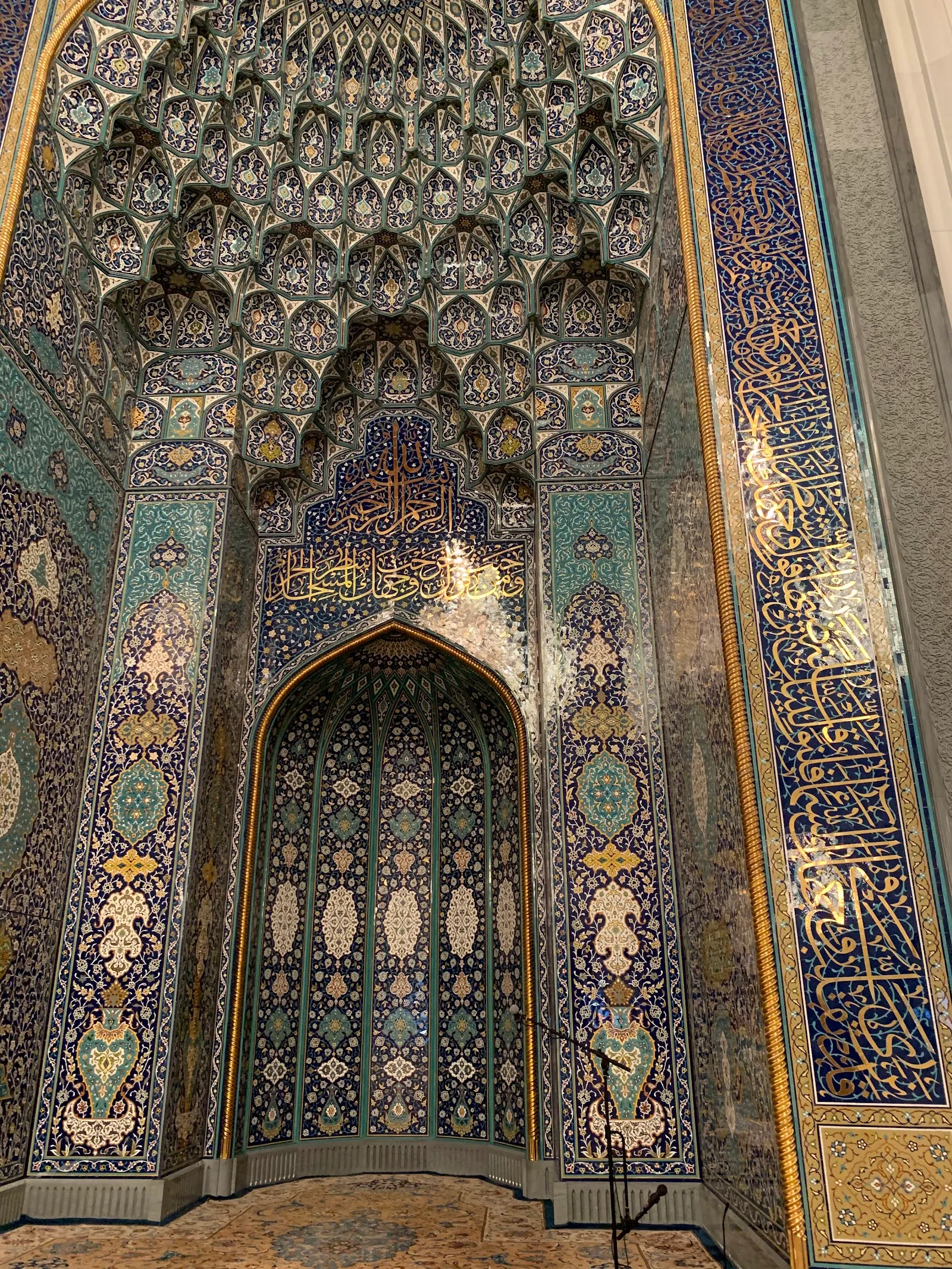
The interior is finished in polished white marble, with colourful tilework and fine carved detail. The main hall holds an eight-ton, gold-plated chandelier of Swarovski crystal, one of the largest in the world.
The hand-woven Persian carpet measures about 70 by 60 metres. It took around four years to make, with about 600 women weavers working on it. It is the second-largest Persian carpet in the world, after the one at the Grand Mosque in Abu Dhabi. When the mosque opened, it held the records for the largest chandelier and the largest single-piece carpet. Abu Dhabi's Sheikh Zayed Grand Mosque has since surpassed both.
Planning the visit
Visitor entry is in the morning. Non-Muslim visitors are admitted during set hours, so check the current times before you go. Photography is allowed during visitor hours. English-language guided tours are offered, and an audio tour explains the building's history and design.
The entrance and restroom are wheelchair accessible, and the parking lot is free and also accessible. Mwasalat buses stop outside the mosque.
FAQ
Is there an entry fee?
Entry is free.
Can non-Muslims visit the mosque?
Yes. It is one of the few mosques in Oman open to non-Muslim visitors, during set visitor hours.
What should I wear?
Women should cover their hair, arms and legs, and wear full-length modest clothing. Men should not wear shorts.
Can I rent an abaya at the mosque?
Yes. Abayas can be rented at the shops near the entrance, at about 4 to 5 OMR each.
How long do you need?
Allow about two hours to see the halls, courtyards and gardens.