Plan a trip
Language: English
Trip plannerPlan your trip on a map

Top destinations

EnglishDeutschFrançaisEspañolPortuguêsPortuguês (BR)Italiano
Travel advisory · MexicoMonterrey is in or near an area where governments advise against all but essential travel: Route 85 Monterrey–Nuevo Laredo.Advice depends on your passport. Read your own government's advice before you book.Official advice
Areas with warnings
  • Colima · avoid all travel · Canada, Germany, France, UK
  • Guerrero · avoid all travel · Canada, Germany, Spain, France, New Zealand, UK
  • Sinaloa · avoid all travel · Canada, Germany, Spain, France, New Zealand, UK
  • Chiapas · avoid non-essential travel · Canada, Spain, France
  • Chihuahua · avoid non-essential travel · Canada, France, UK
  • Federal Highway 199 San Cristóbal de las Casas–Palenque · avoid non-essential travel · France, UK
  • Guanajuato, south of Highways 43D and 45D · avoid non-essential travel · Canada, New Zealand
  • Guatemala border region, Chiapas · avoid non-essential travel · Germany, France, New Zealand
  • Lagunas de Zempoala National Park · avoid non-essential travel · Canada, New Zealand
  • Michoacán · avoid non-essential travel · Canada, Germany, New Zealand, UK
  • Nayarit, within 20 km of Sinaloa and Durango border · avoid non-essential travel · Canada, New Zealand
  • Nuevo León, except Monterrey · avoid non-essential travel · Canada, New Zealand
  • Piedras Negras · avoid non-essential travel · Spain, France
  • Route 85 Monterrey–Nuevo Laredo · avoid non-essential travel · Spain, France
  • Sonora · avoid non-essential travel · Canada, New Zealand
  • Tamaulipas · avoid non-essential travel · Canada, France, UK
  • Tecate · avoid non-essential travel · France, UK
  • Tijuana · avoid non-essential travel · France, UK
  • US border region · avoid non-essential travel · Germany, Spain, France
  • Zacatecas · avoid non-essential travel · Canada, Germany, Spain, France, UK

Also named by one government: Celaya–Irapuato–Salamanca triangle, Guanajuato (France), Culiacán and surrounding area (France), North of Ciudad Victoria, Tamaulipas (Germany), Route 129 Martinez de la Torre–Teziutlán (France), Route 131 Tapacoyan–Perote (France), Route 180 Martinez de la Torre–Papantla secondary roads (France), Route 40 Monterrey–Reynosa (France), Southern Michoacán from Uruapán to the coast (France), Acapulco (France), Baja California, except Tijuana and Tecate (France), Ciudad Acuña (Spain), Ciudad Juárez and surrounding area (Spain), Ciudad Obregón (France), Coahuila, except southern part (New Zealand), Coatzacoalcos (France), Colonias north and north-east of the Zócalo, Mexico City (France), Durango (France), East Nuevo León, bordering Tamaulipas (France), Guanajuato (Spain), Guanajuato, Highway 45 between León and Irapuato (New Zealand), Guanajuato, south-west of Highway 45D (UK), Jalisco, within 50 km of Michoacán border (Canada), Monclova (Spain), Morelos (France), Nayarit (France), Nogales (France), Non-tourist rural areas of Baja California (Spain), Non-tourist rural areas of Chihuahua (Spain), Non-tourist rural areas of Coahuila (Spain), Non-tourist rural areas of Durango (Spain), Non-tourist rural areas of Sonora (Spain), Northern municipalities of Jalisco (UK), Northern Tamaulipas from San Fernando to US border (Spain), Northern Veracruz bordering Tamaulipas (Spain), Northern Veracruz from Martinez de la Torre (France), Route 150D Puebla–Orizaba (France), Route 190 Oaxaca–Santo Domingo Tehuantepec (France), Route 85 and 83 Monterrey–Ciudad Victoria–Tampico (France), Route 95 Mexico City–Cuernavaca (France), Selva Lacandona (France), South and south-west of Lake Chapala, Jalisco (UK), South-west Jalisco and Los Altos, except Puerto Vallarta (France), South-west Michoacán (France), South-west Tamaulipas (France), Southern Guanajuato state (France), Southern Michoacán south of Morelia (Spain), Strip within 40 km of Guatemalan border, Chiapas (UK), Tepic (New Zealand), Toluca (France), Veracruz city (France)

GovernmentAdviceUpdatedRead the advice
United Kingdom (FCDO)No advice against the whole country (regional advisories)–Read the advice
United States (State Dept)Exercise increased cautionMay 29, 2026Read the advice
Canada (Global Affairs)Exercise a high degree of caution (regional advisories)–Read the advice
Germany (Auswärtiges Amt)Besondere Vorsicht walten lassen (Sicherheitslage) (regional advisories)Oct 19, 2026Read the advice
New Zealand (SafeTravel)Exercise increased caution (regional advisories)–Read the advice
France (Ministry for Europe and Foreign Affairs)Vigilance renforcée pour le reste du pays (regional advisories)–Read the advice

Checked daily from the governments' published advice; last checked Nov 3, 2026. RoamLedger summarises official advice; it is not advice from any government.

Museo de Historia Mexicana
Museum

Mexican History Museum

Mexican History Museum in Monterrey: Mexico from pre-Hispanic times to the 20th century, over 1,200 artifacts, and free entry Tuesdays and Sundays.

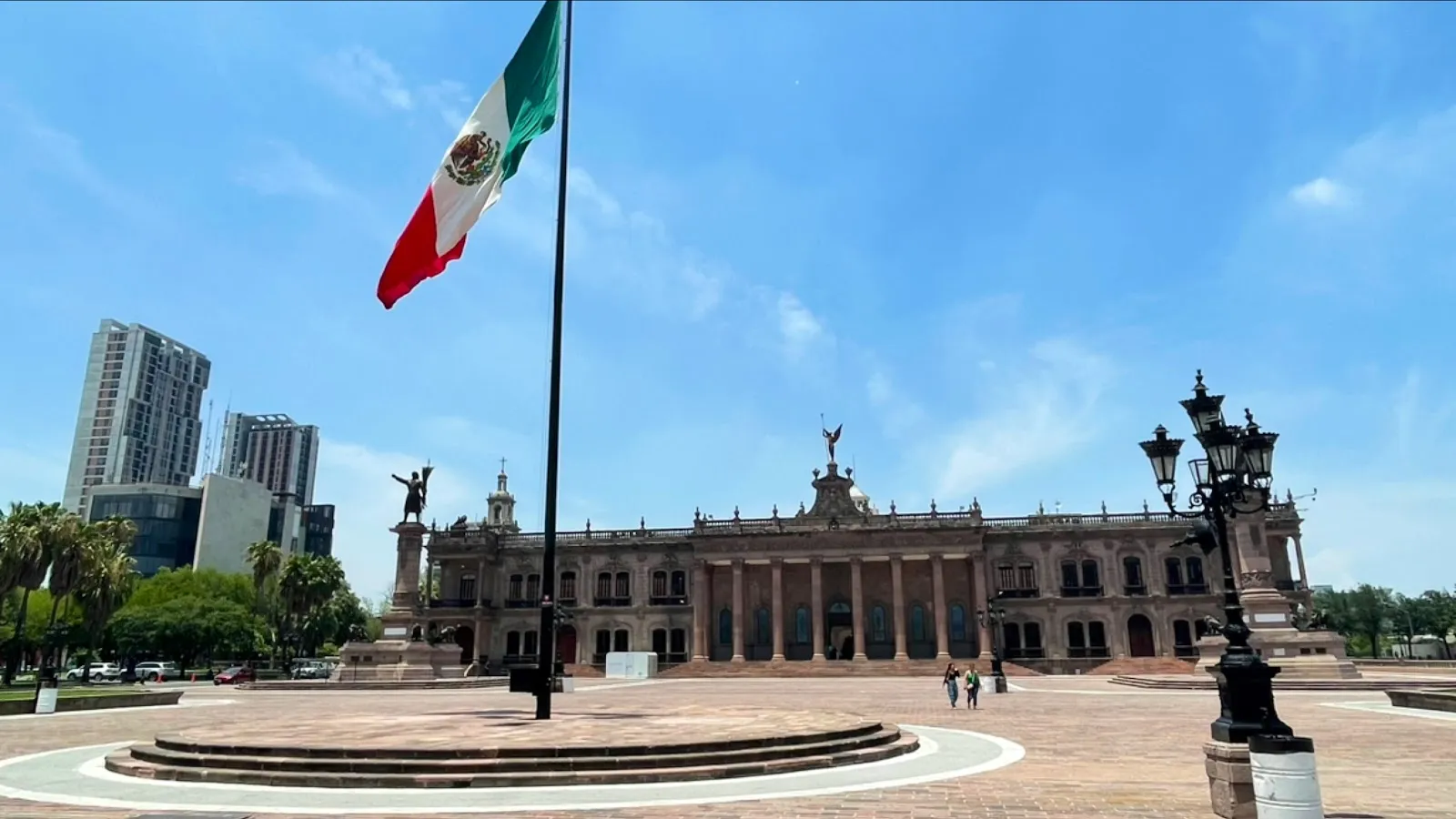
The Mexican History Museum sits on Plaza 400 Años in downtown Monterrey, in a modernist building with more than 1,200 artifacts. The displays follow Mexico's past in order, from pre-Hispanic life to the 20th century, and give particular attention to the north of the country. Highlights include a caste exhibit and an Earth section with mounted animals and realistic landscapes. The museum is one of three in the same complex, with the Palace Museum and the Northeast Museum.

The building and the plaza

The museum stands on Plaza 400 Años, the square that marks where Monterrey was founded for the third and final time, in 1596.

The modernist building covers about 15,000 square meters. Besides the permanent galleries, it has temporary exhibition spaces, an auditorium and a video library.

The museum forms part of a complex with the Palace Museum and the Northeast Museum (MUNE), so a single day can cover all three.

What the galleries cover

The permanent collection runs in chronological order, from pre-Hispanic societies to the 20th century. It holds more than 1,200 artifacts that show key parts of everyday life in Mexico.

The history of the north has its own place in the story. The museum focuses on the role this region played in shaping the nation.

In the middle of the building, the Earth section uses mounted animals and realistic landscapes to show Mexico's biodiversity. The caste exhibit is one of the displays that visitors most often single out for its explanations.

Reading the displays and arranging a tour

Most of the signage is in Spanish. Screens placed at key points give English overviews, and a translation app helps with the rest.

Free guided tours run in either Spanish or English. They need to be arranged by phone in advance.

Indoor and outdoor walkways link parts of the complex, and a cafe is on site for a break between galleries.

FAQ

Is there an entry fee?

Entry is free on Tuesdays and Sundays. On other days there is a fee, which is modest, so check the museum's website for the current amount.

How long do you need at the Mexican History Museum?

Plan at least 2 hours to see the galleries properly.

Can I visit without Spanish?

Most signage is in Spanish, but screens give English overviews of the periods, and a translation app can cover most of the rest. Free guided tours are available in English if you phone ahead.

Is there a cafe at the museum?

Yes, there is a cafe on site.
More must-sees in Monterrey

Explore all