
The Palazzo dei Papi stands on Piazza San Lorenzo in Viterbo. The 13th-century palace was built to house popes when Rome was unsafe for them. Its best-known feature is the Gothic loggia of seven pointed arches above the square. Inside, the Conclave Hall is where cardinals met to elect popes, and an English audio guide explains the palace room by room. The ticket also covers the cathedral and the archaeology museum on the same hill, so the palace fits into a longer visit.
From papal refuge to conclave
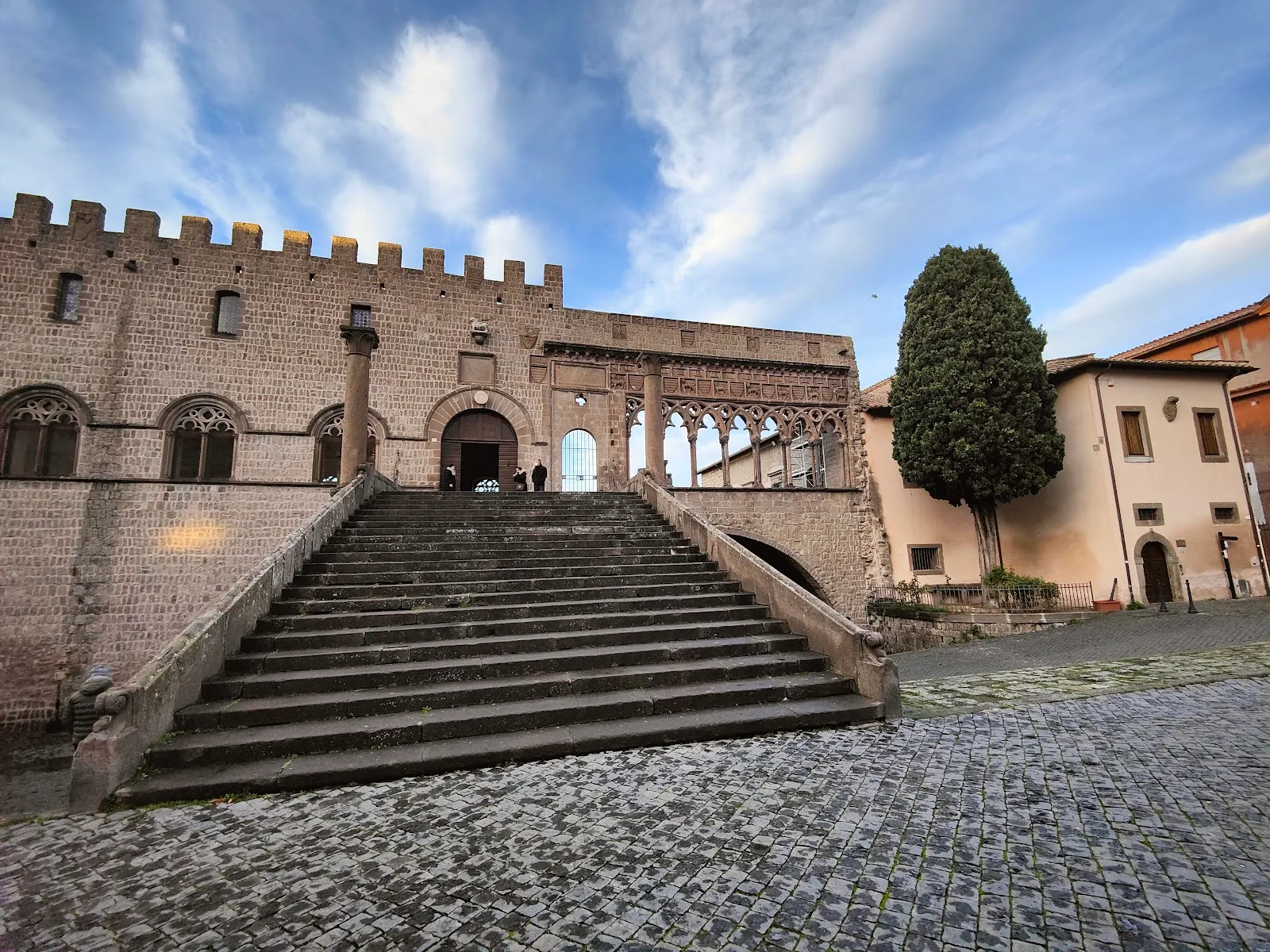
The palace was built in the 13th century, when Rome was considered unsafe for the popes and Viterbo served as an alternative seat. The building was a bishop's residence before it was enlarged for the popes. From 1257 to 1281 it was the papal seat, and six popes lived there.
In 1268, after the death of Pope Clement IV, the papal election held here became the longest in history. It lasted three years, mostly because of in-fighting. One cardinal resigned and three died during the process. Local people got so frustrated with the delay that they locked the cardinals in until they reached a decision, which is why the palace is linked with the first recorded conclave.
Viterbo saw other papal events too. Popes excommunicated opponents and people seen as threats to papal power. Pope John XXI died in Viterbo when the roof of the library in the Papal Palace fell on him as he slept.
The loggia and the courtyard
The loggia is the palace's best-known feature. Seven pointed arches in peperino stone rise above Piazza San Lorenzo, supported by paired slender columns with carved leaf-patterned capitals.
Behind the arches, a small courtyard holds a fountain decorated with lions. From here you look out toward the city walls.
At the entrance to the piazza, large stone blocks at the foundations of the buildings are the remains of the walls of an Etruscan town. The hill was a good site for a settlement because it was easy to defend, and these blocks are the evidence.
Inside the palace
The Conclave Hall, where the papal elections of the 13th century were held, keeps its 14th-century structure. It has cross vaults and walls of exposed peperino blocks.
The route also takes in the Gualterio Hall and the Papal Loggia. The English audio guide covers the popes who lived in the palace and the events of its papal period.
Allow time to look at the rooms rather than rushing from one to the next, since the audio guide is the main source of context for the spaces.
The Colle del Duomo complex
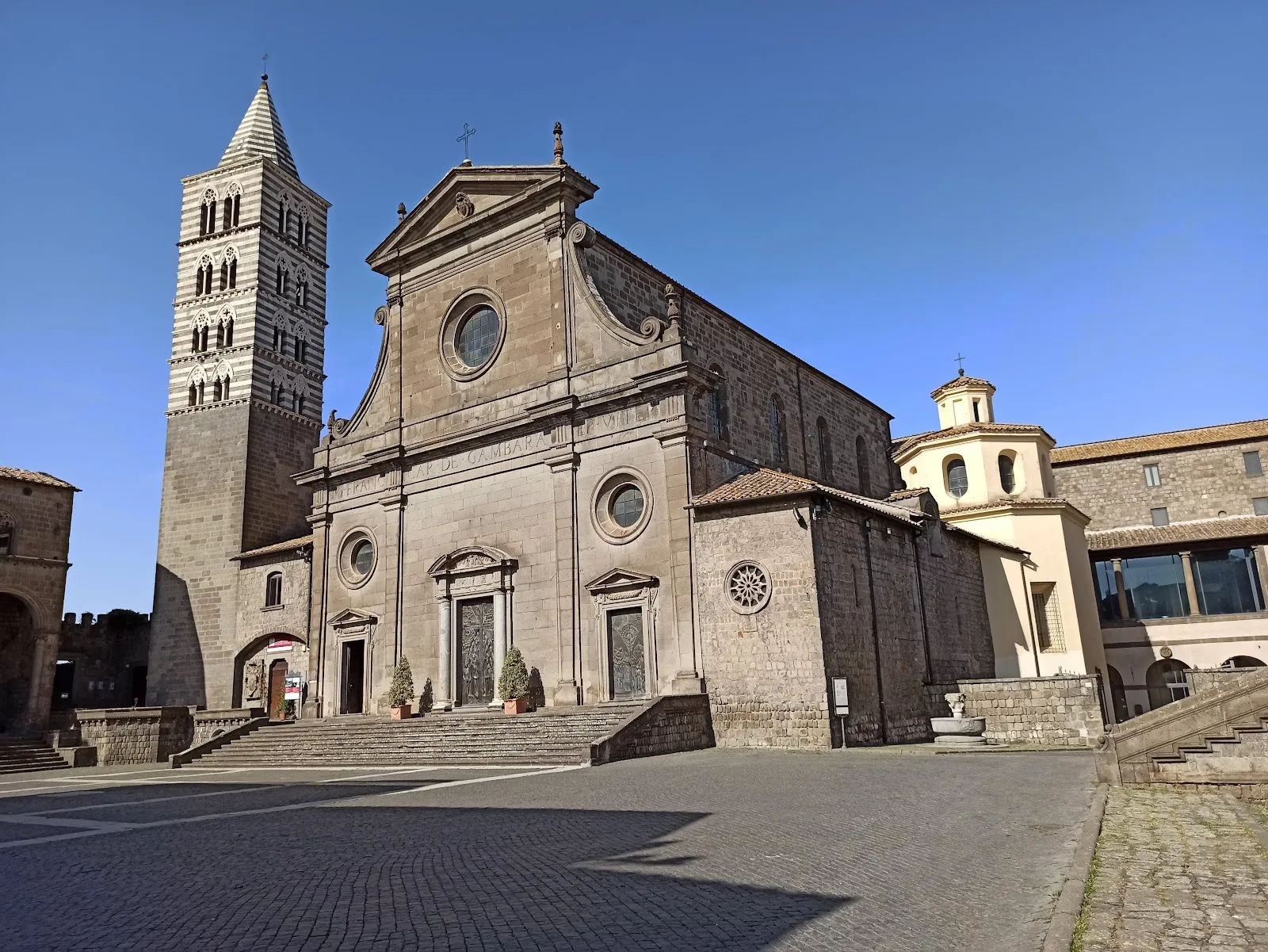
The palace is part of the Polo Monumentale Colle del Duomo, which also includes the Church of San Lorenzo and the Colle del Duomo Museum. The ticket covers the cathedral and the archaeology museum.
In the cathedral, look up at the ceiling and at the frescoes, which are unusual for the building. The cathedral's facade is Romanesque.
The Colle del Duomo Museum holds archaeological finds and artworks from the Tuscia area, including realistic statues and reliquaries. Plan for the museum as a separate stop within the same visit.
FAQ
Is there an entry fee for the Palazzo dei Papi?
Yes, the interior requires a ticket. The square and the outside of the loggia can be seen from Piazza San Lorenzo without paying.
What does the ticket include?
The ticket covers the Cathedral of San Lorenzo and the Archaeology Museum, which are part of the Polo Monumentale Colle del Duomo.
Do I need to book tickets in advance?
Getting tickets in advance is recommended.
Is there an audio guide in English?
Yes, an informative audio guide in English explains the palace's papal history.


