
Villa d'Este is a 16th-century Renaissance villa and garden on a hillside in Tivoli, about 30 km from Rome. Cardinal Ippolito II d'Este had it built after he became governor of Tivoli in 1550. Its frescoed rooms are worth a walk, but the terraced gardens are the main reason to come. Fountains, basins and waterfalls run entirely on gravity, with no pumps. UNESCO listed the site in 2001, and it is now a state museum. Allow time for the Fountain of Neptune, the Organ Fountain and the long avenue of the Hundred Fountains.
From monastery to cardinal's villa
Villa d'Este stands on the edge of Tivoli's town centre, at the foot of the Monti Tiburtini. The site was a monastery before the villa, and its foundations overlie the remains of a Roman villa. In 1550 Ippolito II d'Este, a cardinal from Ferrara, became governor of Tivoli and took over the building. He is said to have been disappointed at not being elected pope, and he wanted a residence to rival the nearby Villa Adriana and the royal palaces of Europe.
The painter, archaeologist and architect Pirro Ligorio designed the project, and the architect Alberto Galvani carried it out. Construction ran from about 1549 to 1569. By 1572 the painted decoration of the palace rooms was almost finished. The estate later passed to the Habsburgs. In the 20th century it was restored after a period of neglect, and it is now an Italian state museum.
UNESCO listed Villa d'Este as a World Heritage Site in 2001. Its garden became an early model for gardens across Europe, one of the first of the Italian "gardens of wonders".
Inside the villa
The palace has two floors, and the visit begins on the main one. Its rooms carry family crests and mythological scenes linked to the history of Tivoli and the d'Este family. Mannerist painters decorated the walls and ceilings. Many of the paintings are secular allegories, and some of the original marble floors survive.
The lower floor holds the grandest room, the Salone della Fontana, used for parties and banquets. Girolamo Muziano painted its frescoes, and it has a real fountain in a rustic style.
The ticket office is at a side entrance. That door was used when the building was a convent, before 1550, and not the grand doorways the cardinal added when he rebuilt it. The villa also hosts temporary exhibitions. Most visitors find the gardens the stronger part of the visit, so plan your time with that in mind.
The gardens and the water
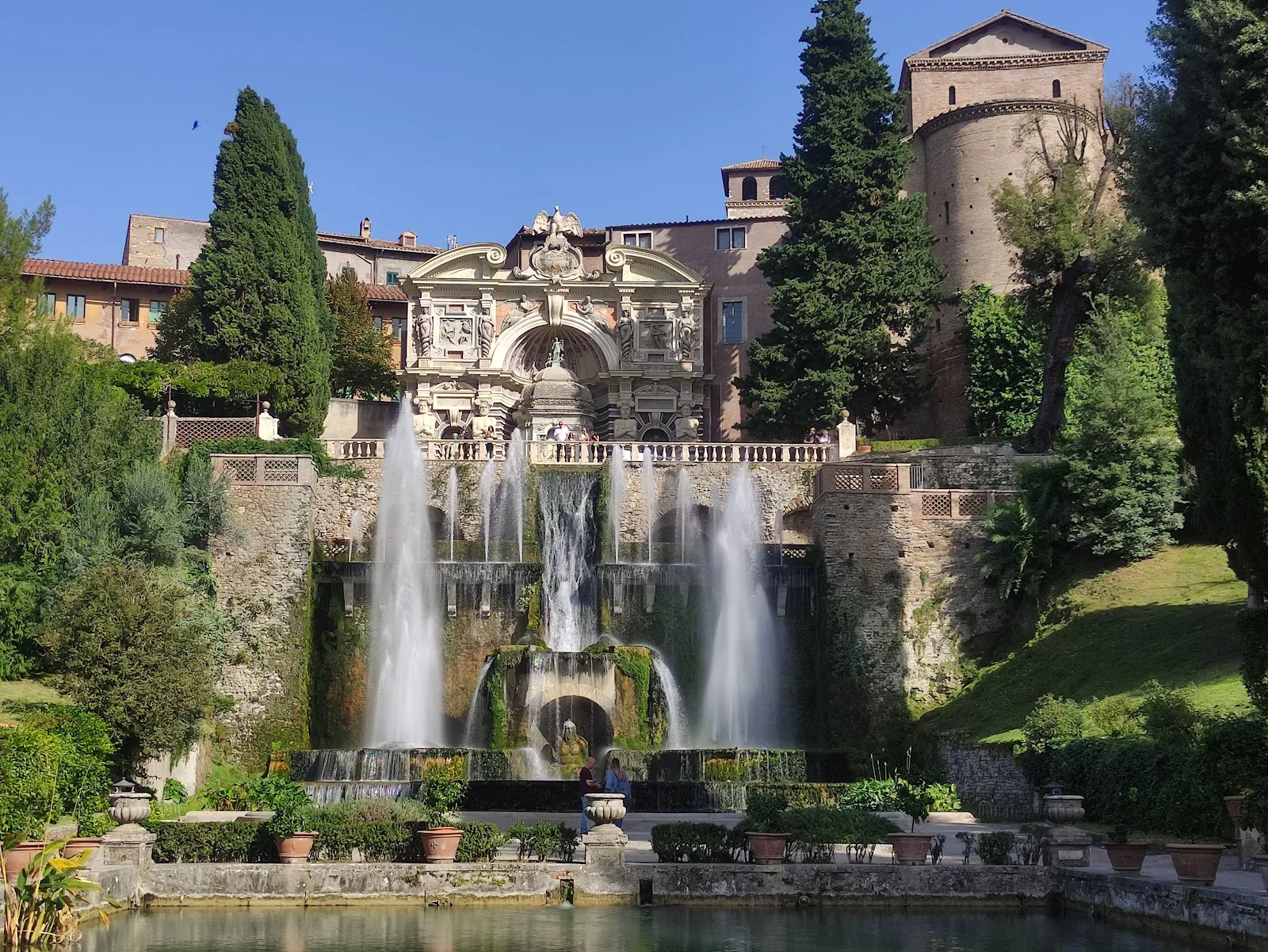
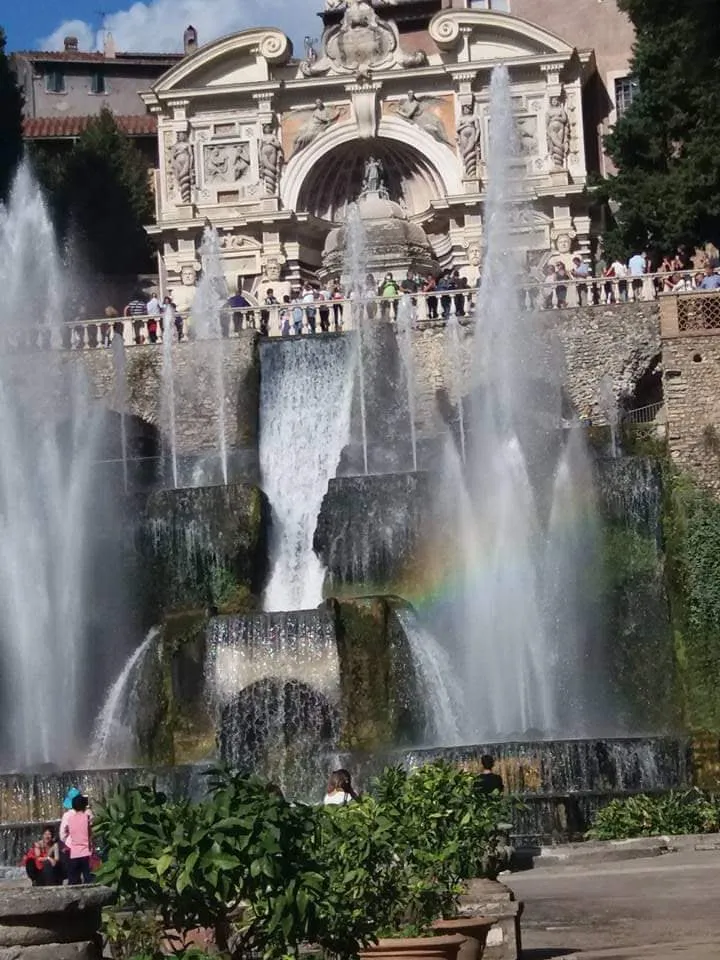
The garden drops down the hillside in terraces linked by stairs and paths. It holds 51 fountains and nymphaea, 64 waterfalls and 220 basins, joined by canals that total 875 metres. Everything runs on natural gravity and water pressure. No pumps are used, which is the engineering feat that set the garden apart in the 16th century.
Several features are worth looking for. The Fountain of Neptune is a large, forceful cascade. The Organ Fountain uses water pressure to play music at set times of the day, so check the schedule on arrival. If you miss a performance, the rest of the garden still has plenty to see. The Avenue of the Hundred Fountains is a long, moss-covered path lined with small jets. The Oval Fountain, the Fountain of the Owls and the Gran Loggia are also part of the route.
The upper terraces give the best views of the villa itself and of the valley and the country around Tivoli. Late afternoon light is golden, and one traveller records evening light displays in August, so ask at the ticket office whether any evening events are running during your stay.
Reaching Tivoli and pairing it with other sites
Tivoli is about an hour from Rome. Trains run from Stazione Tiburtina, and by car the drive takes 40 to 60 minutes. The villa is a short walk from the town centre. Paid parking is available, as is free and paid street parking.
Tivoli has two other major sites. Villa Adriana, the large estate of the Emperor Hadrian, lies a few kilometres below the town. A bus from the centre takes about 15 minutes, and the ruins need at least a few hours on foot. Villa Gregoriana is a park and gorge with waterfalls, within walking distance of the centre. If you plan a full day, visit Villa Adriana first, then walk to Villa Gregoriana and finish at Villa d'Este. Some day tours from Rome combine Villa Adriana and Villa d'Este in about seven hours.
FAQ
Is there an entry fee for Villa d'Este?
Yes. A full ticket is around 15 euros, plus a 2 euro fee when you reserve online. Booking tickets in advance is recommended.
How long do you need at Villa d'Este?
Plan 2 to 3 hours to see both the villa's rooms and the gardens. The grounds are large, with many stairs and terraces.
How do you get from Rome to Villa d'Este?
Trains from Stazione Tiburtina take about an hour to Tivoli, and the villa is a short walk from the centre. By car, expect 40 to 60 minutes.
Do the fountains at Villa d'Este use pumps?
No. The whole water system works by gravity and natural water pressure, as it did in the 16th century.
What is the best time to visit Villa d'Este?
Go in the morning to avoid the tour groups, or late in the day when it is quieter again. Bring water in summer.


