Arena Civica Gianni Brera is a neoclassical sports arena inside Parco Sempione, on the park’s western side. Built in 1807, it was first used for chariot races and later became a venue for sports and events. Look for the elliptical form and the Loggia Reale, whose granite columns stand out in the design. From inside, you can see the park and the arena itself. The historic track is also used for running and walking, though access inside the venue can vary.
Built for spectacle
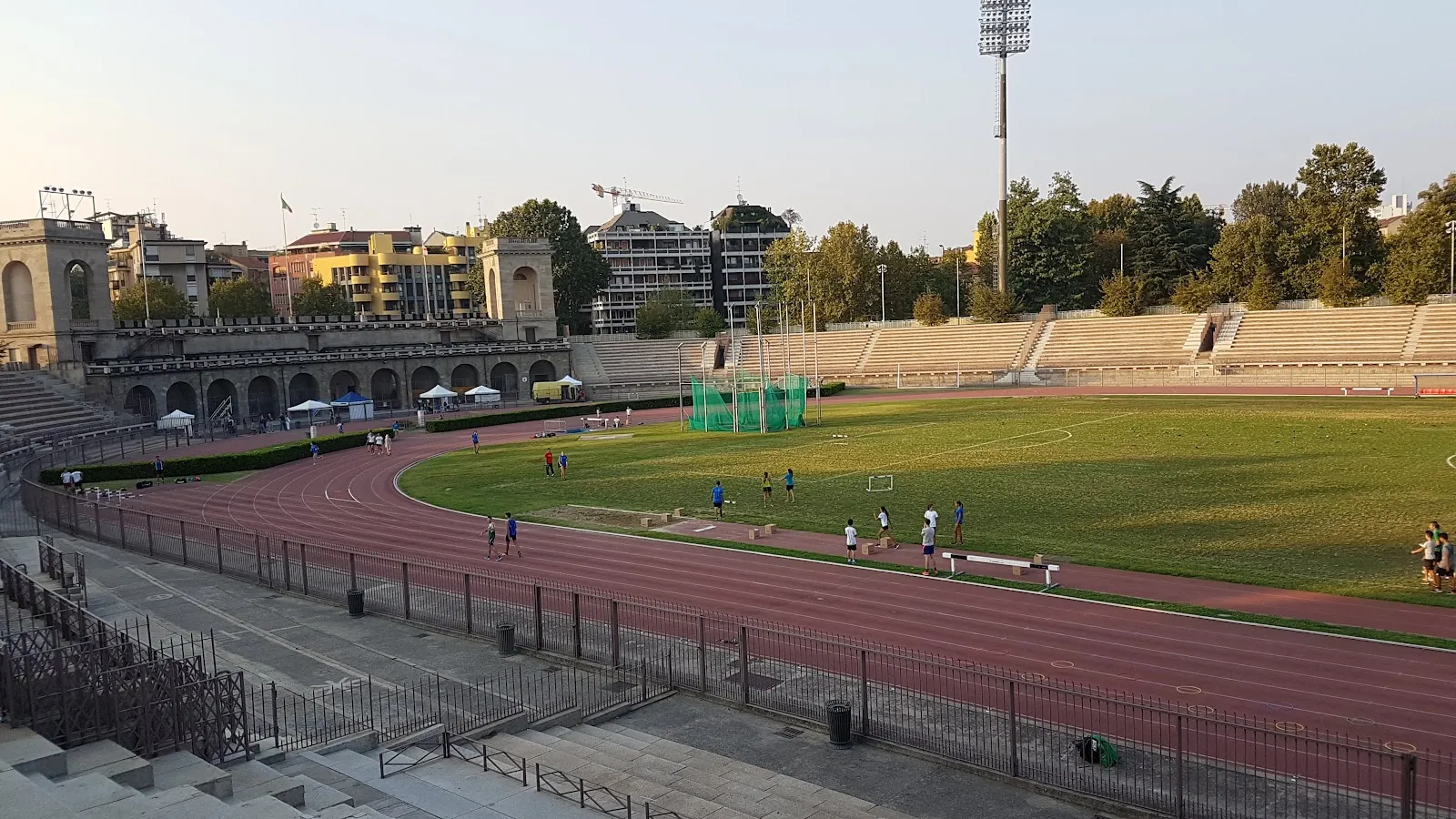
Arena Civica was built in 1807 by architect Luigi Canonica, using ancient Roman amphitheatres as a model. The project took two years and was constructed over the remains of Spanish fortifications. Its first events included chariot races, and during the 19th century it hosted competitions, tournaments, parties and shows.
The arena has an elliptical plan. Its original role as a place for public spectacles later gave way to a sporting one, and it became a major sports venue in Milan in the early 20th century.
Architecture and sport
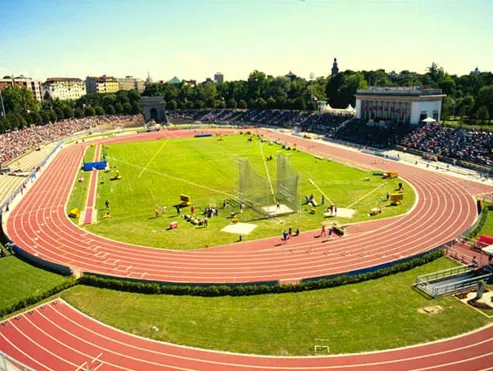
The neoclassical design is clearest in the arena’s overall form and the Loggia Reale, with its granite columns. Inside, views take in both the arena and the surrounding Parco Sempione. The venue has hosted athletics, football and rugby, as well as other events. Inter played here from 1930 to 1947.
The historic track is used for running and walking, and children can also use the space to ride bikes or scooters when access permits. The arena is a relatively small venue, so its scale is better suited to smaller events than to very large ones.
Planning a visit
Arena Civica sits within Parco Sempione, making it easy to combine a look at the arena with time in the park. Access to the interior is not always available, so check ahead before setting out specifically to see inside. The track may also be accessible for exercise when the arena’s interior spaces are not.
Giornate FAI can be an opportunity to join a guided tour and learn more about the building. Advance tickets are recommended for events. The venue has a wheelchair-accessible entrance, restrooms and parking; listed amenities also include changing facilities and a changing table. Cash-only payment is noted.
FAQ
When was Arena Civica built?
It was built in 1807 by architect Luigi Canonica. The first events included chariot races.
Can you run on the track?
The historic track is used for running and walking. Check access before your visit, as the arena may be closed.
Are guided tours available?
Guided tours are available during Giornate FAI.
Is Arena Civica wheelchair accessible?
The venue has a wheelchair-accessible entrance, restrooms and parking.