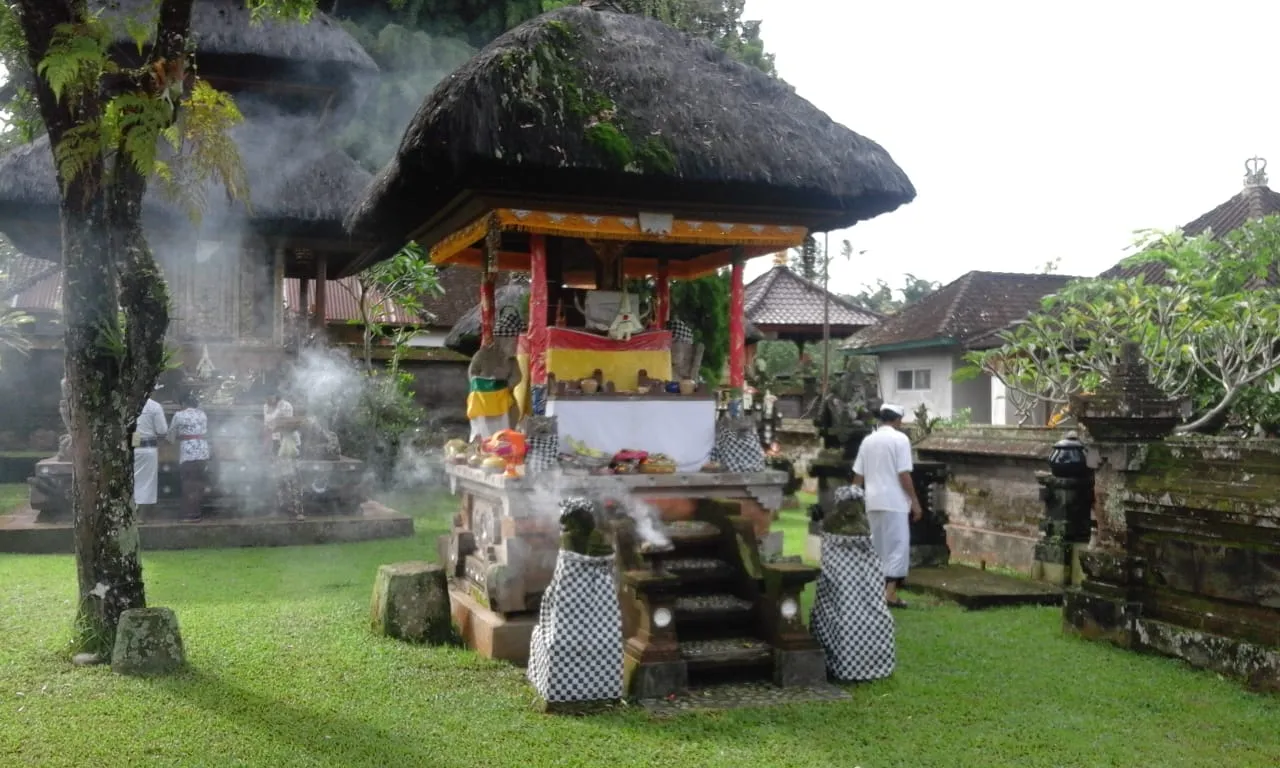
Pulaki Temple, or Pura Pulaki, is an active Hindu sea temple on Bali’s northern coast, about 3 km east of Pemuteran and close to the beach. Its hill-and-ocean setting gives the grounds a striking backdrop, with rocky hills behind the temple and the sea nearby. You may see local ceremonies, and carved details add interest as you walk around the shrine. Macaques live in the jungle behind the temple and roam the grounds, so keep your belongings close and give them space.
A sea temple on Bali’s north coast
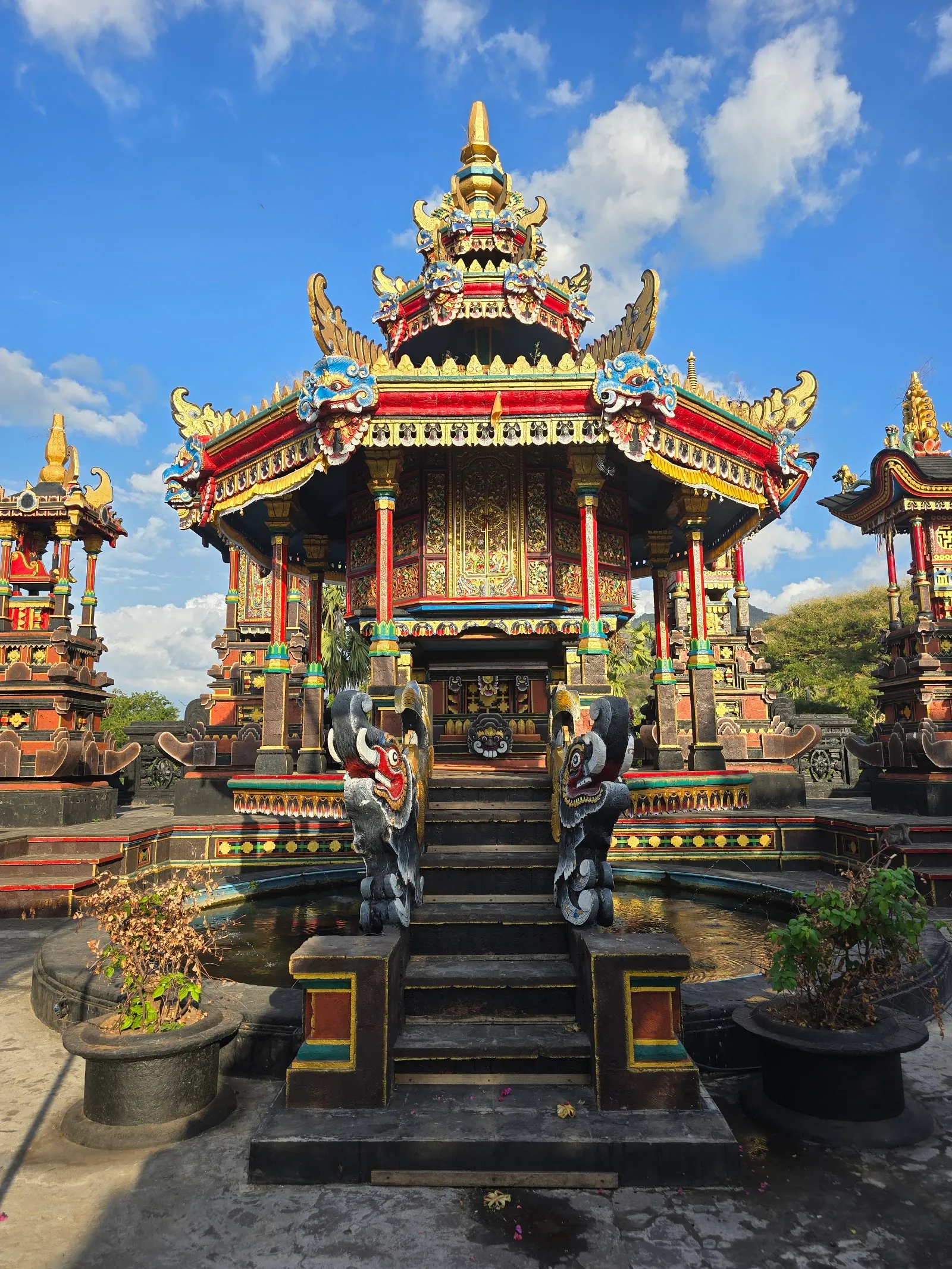
Pulaki Temple, also called Pura Pulaki, is a Hindu sea temple near Banyupoh village, about 3 km east of Pemuteran along the main road. The shrine sits on a hill bank roughly 25 metres from the beach. Rocky hills rise behind it, while the coast lies close by.
Pulaki is part of a chain of sea temples around Bali that are believed to protect the island. Its history is said to reach back to prehistoric times. The temple is counted among Bali’s six most sacred temples.
Macaques and temple etiquette
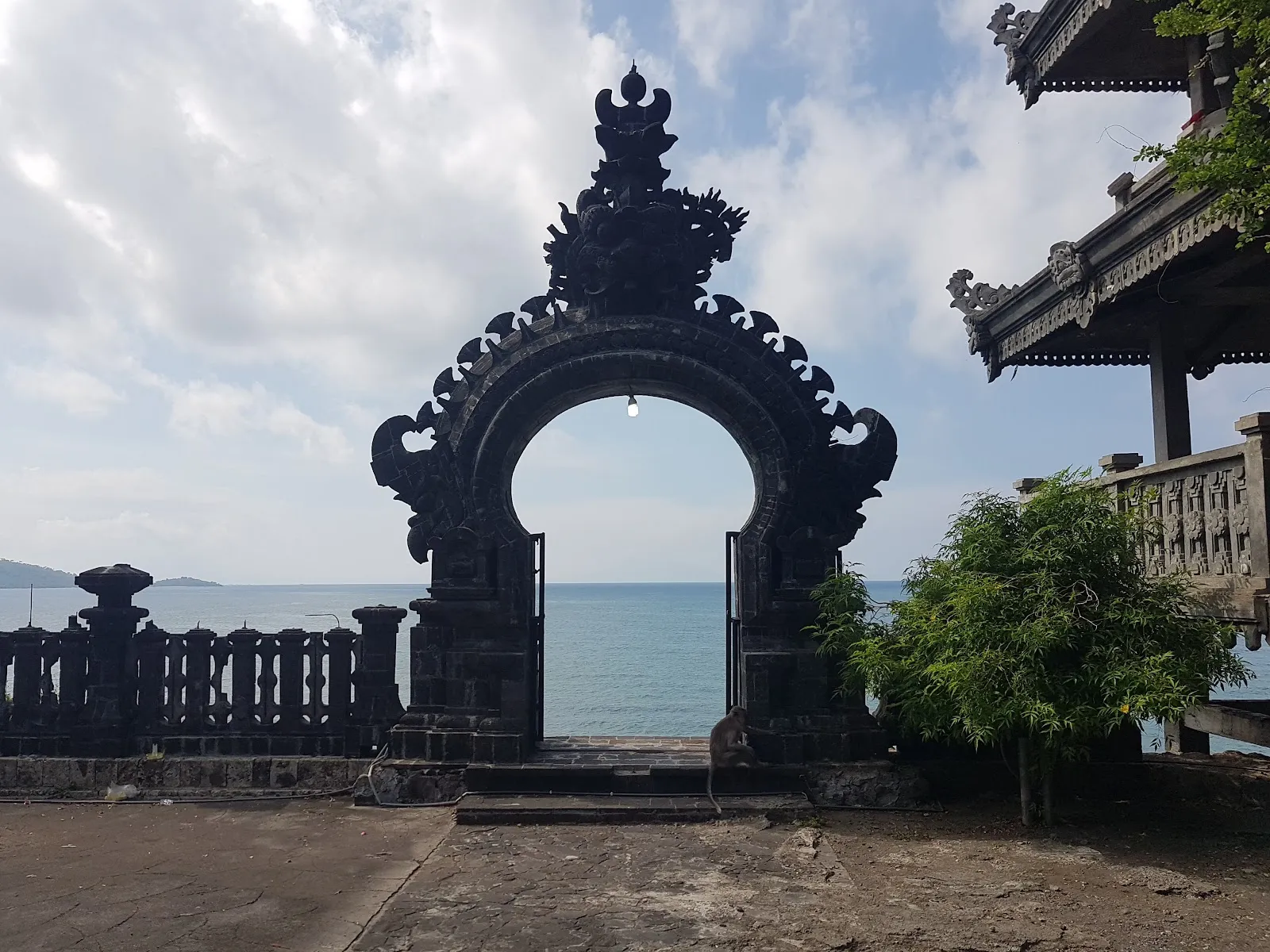
A jungle behind the temple is home to macaques, which wander through the grounds. They are considered descendants of the gods, and their presence is part of the setting. Keep your belongings secure and give the animals space, as they can be aggressive.
Pulaki is an active place of worship, and local ceremonies take place here. Dress respectfully: wear a sarong and sash, or cover your shoulders and legs. Parking away from the temple can help keep belongings out of the monkeys’ reach; a donation may be expected for parking.
FAQ
Where is Pulaki Temple?
It is on Bali’s northern coast, in Banyupoh village, about 3 km east of Pemuteran along the main road.
What should I wear to Pulaki Temple?
Wear a sarong and sash, or cover your shoulders and legs when entering the temple.
Are there monkeys at Pulaki Temple?
Yes. Macaques from the jungle behind the temple roam the grounds. Keep your belongings secure and give them space.
Is Pulaki Temple an active place of worship?
Yes. Local Hindu ceremonies take place at the temple.