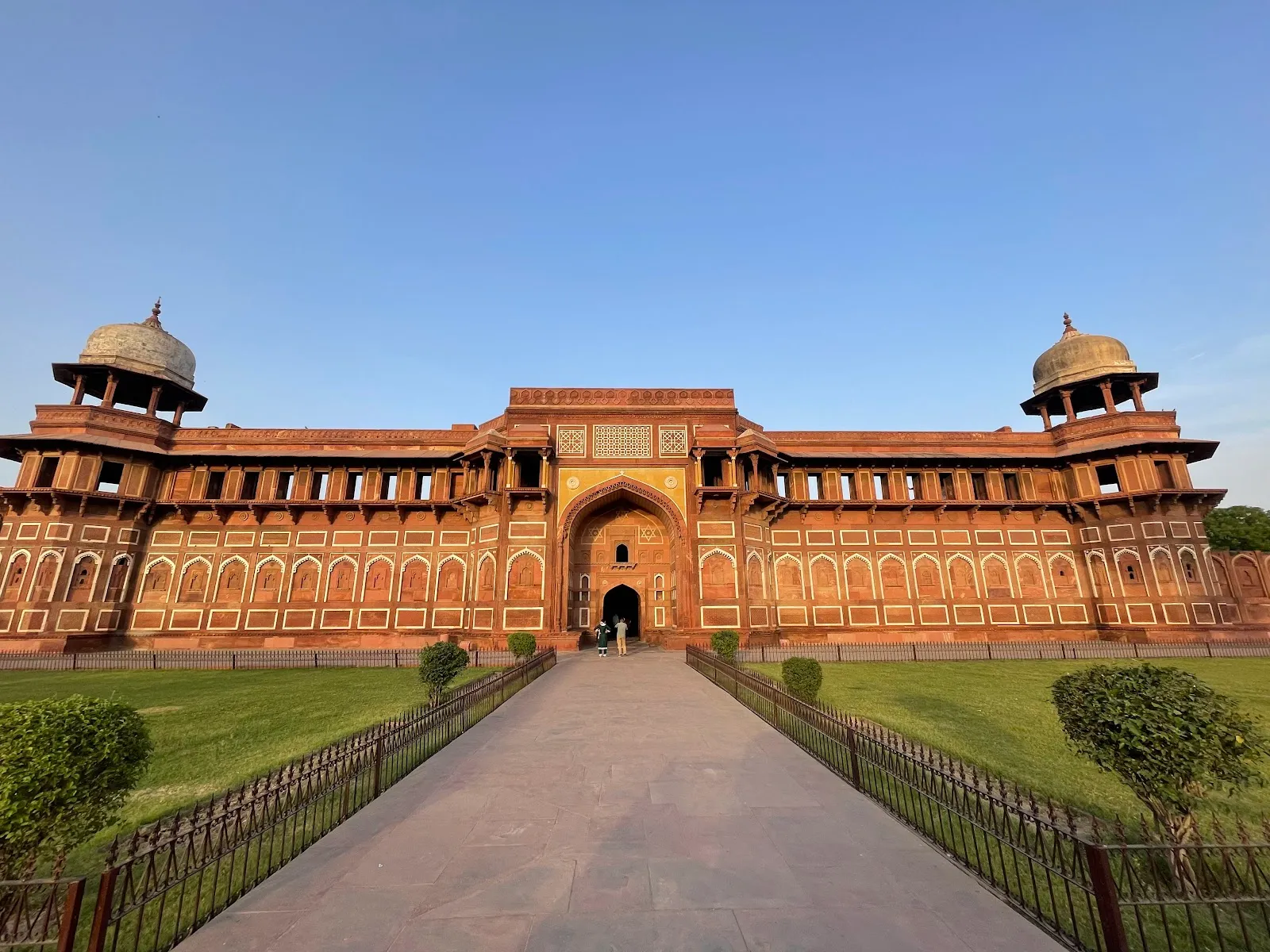
Jahangir Palace, also called Jahangiri Mahal, stands inside Agra Fort in Agra. Built by Akbar in the 16th century for his son Jahangir, it later formed part of the royal family’s living quarters. Its red sandstone walls combine Hindu and Islamic design, with carved brackets, balconies and archways around a central courtyard. Look for the large stone basin associated with Jahangir, then take in views toward the Taj Mahal and the Yamuna. The palace is one stop within the larger fort, so allow time to explore beyond its rooms.
A palace within Agra Fort
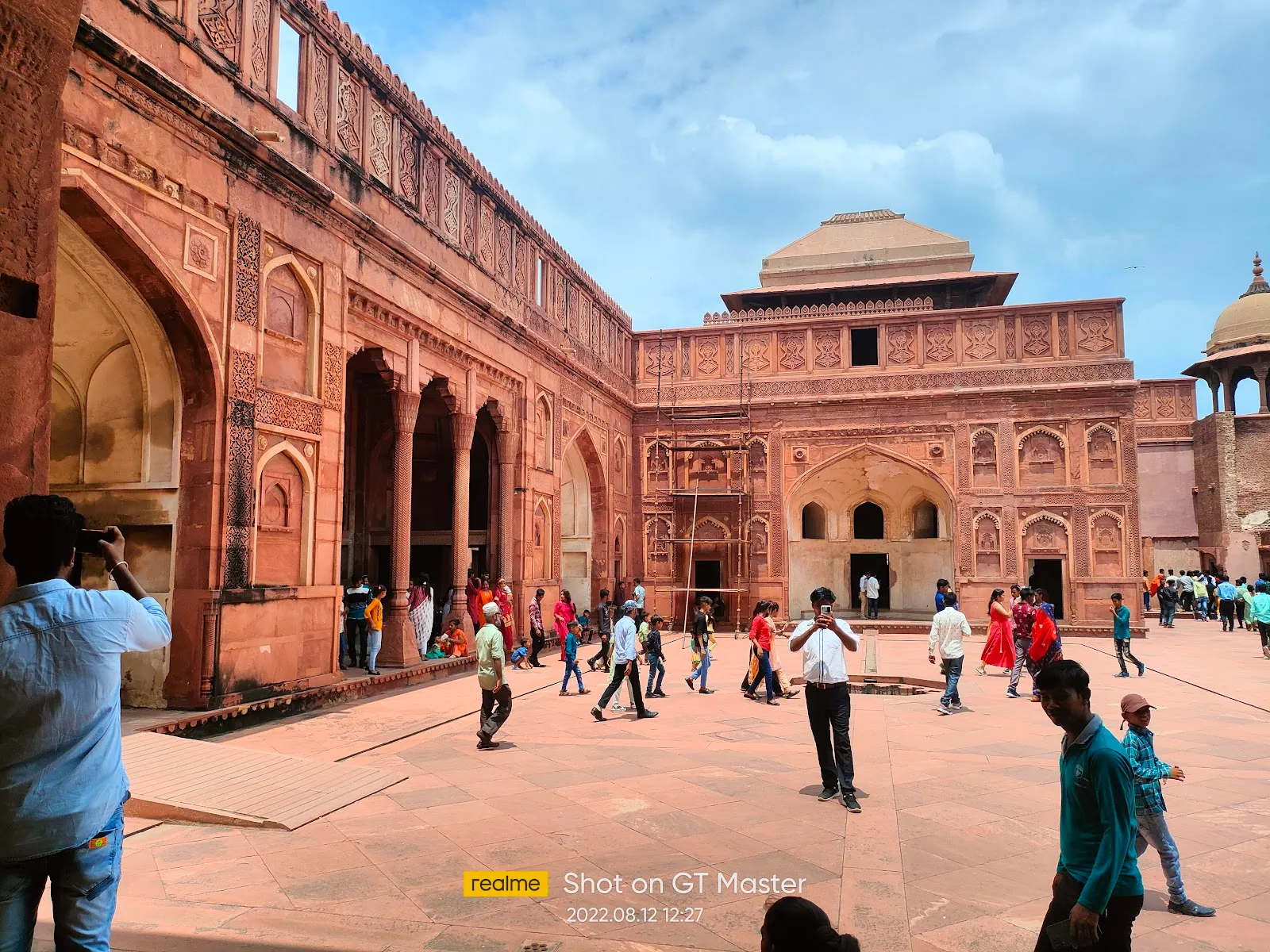
Jahangir Palace, also known as Jahangiri Mahal, is inside Agra Fort. Akbar built it in the 16th century for his son Jahangir. It later served as a residence for members of the royal household, including Jahangir and his wife Nur Jahan.
The palace was designed as a residential space, with rooms arranged around a central courtyard. Its scale and carved surfaces distinguish it from the fort’s public halls. As you move through the rooms and archways, look at the transitions between enclosed spaces and open balconies.
Red sandstone and carved details
The palace is built mainly of red sandstone. Carved brackets, projecting balconies, arched doorways and decorative panels bring together Hindu and Islamic design elements. The result is visible in the details as much as in the broad façade: pause at the carved supports and window openings as you cross the courtyard.
Frescoes, gardens and fountains are also associated with the palace complex. The surviving spaces give a sense of its residential character within the larger fort.
The basin and views
Look for the large stone basin known as Hauz-i-Jahangiri, associated with Jahangir and rose-water bathing. It is near one of the palace gates. The basin is an unusual object within a complex of buildings and courtyards, so it is easy to pass if you focus only on the main rooms.
From the palace area, views extend toward the Taj Mahal and the Yamuna. These are among the reasons to pause outside the interior spaces before continuing through Agra Fort.
Planning your visit
Jahangir Palace is one part of Agra Fort, and access to the fort is limited to designated visitor areas. A guide can help explain the architecture and the palace’s place in the wider complex. If you are exploring independently, take time to look closely at the carved stonework and check the route through the accessible sections.
The fort can be hot around midday. Early morning or later in the day, and cooler months, are more comfortable times to walk through its courtyards. The palace is reached as part of a fort visit, so allow time for other structures within the same complex.
FAQ
Where is Jahangir Palace?
It is inside Agra Fort in Agra, Uttar Pradesh.
Who built Jahangir Palace?
Akbar built the palace in the 16th century for his son Jahangir.
What should I look for inside Jahangir Palace?
Look for the carved red sandstone details, central courtyard, balconies and the large stone basin associated with Jahangir.
When is a comfortable time to visit?
Early morning or later in the day can be more comfortable, especially in the hotter months.


