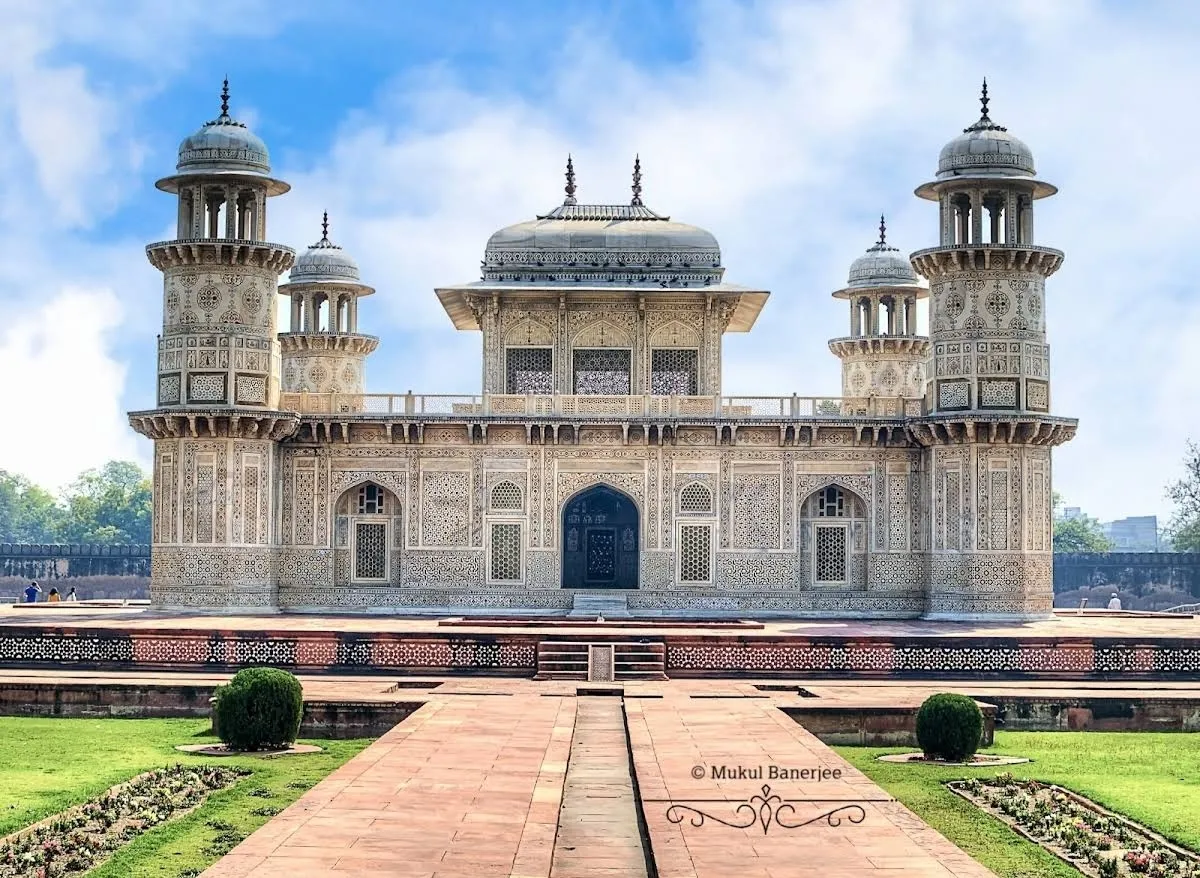
Itmad-ud-Daula is a Mughal tomb on the east bank of the Yamuna River in Agra, about 7 kilometres from Agra Cantt. Nur Jahan built it between 1622 and 1628 for her father, Mirza Ghiyas Beg. People call it the Baby Taj because its design came before the Taj Mahal and shares much of its style. Marble inlay, carved screens and a garden setting make it worth the stop, and the grounds are usually quieter than the Taj.
Who built it and why
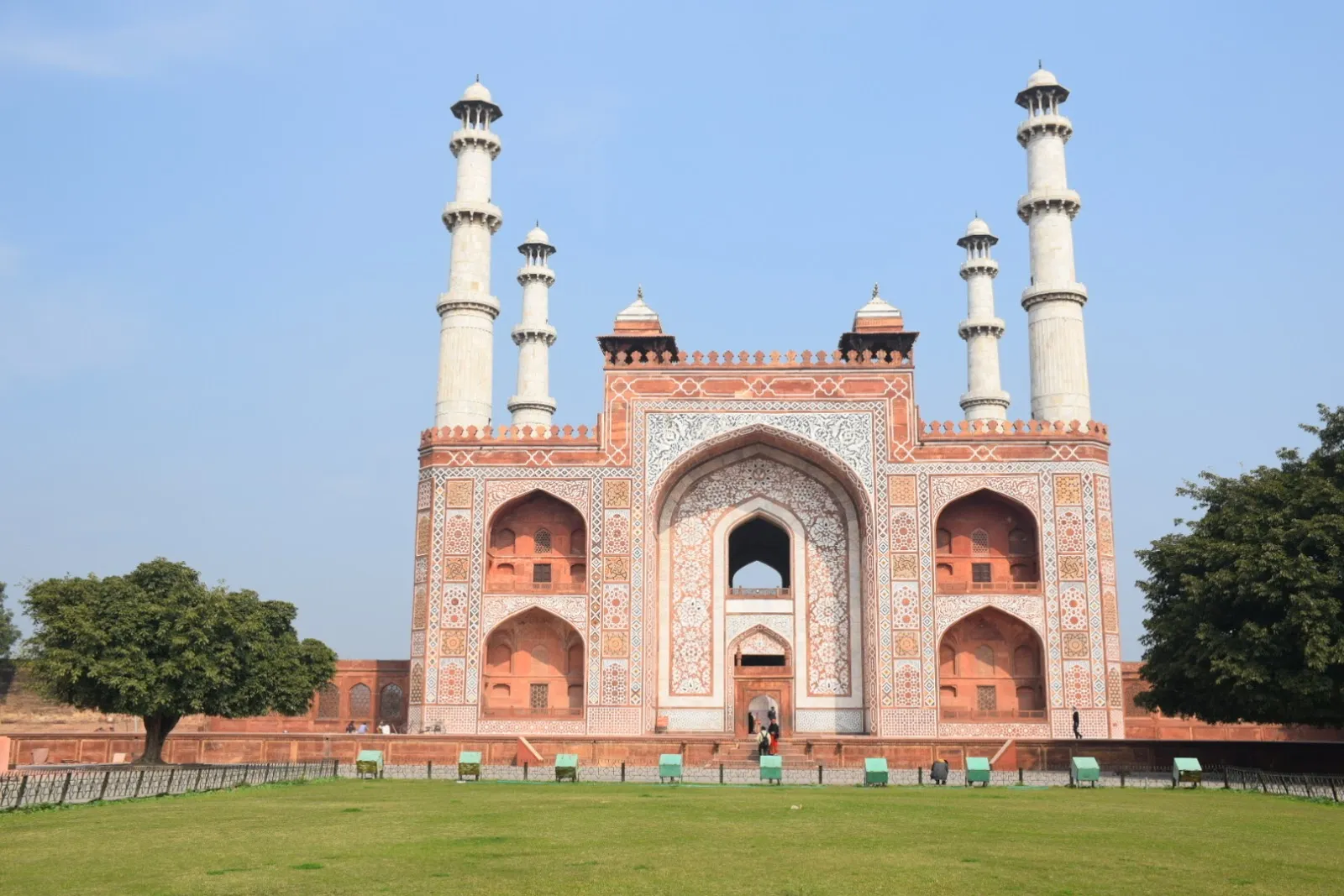
Nur Jahan, the wife of the Mughal emperor Jahangir, commissioned the tomb for her father, Mirza Ghiyas Beg, a Persian noble who served at the Mughal court. Construction ran from 1622 to 1628.
Her father was also the grandfather of Mumtaz Mahal, the woman for whom the Taj Mahal was later built. That family link joins the two monuments as well as their style. Accounts also credit Nur Jahan with trade interests, ships, sarais for travellers and charitable work.
Inside the tomb
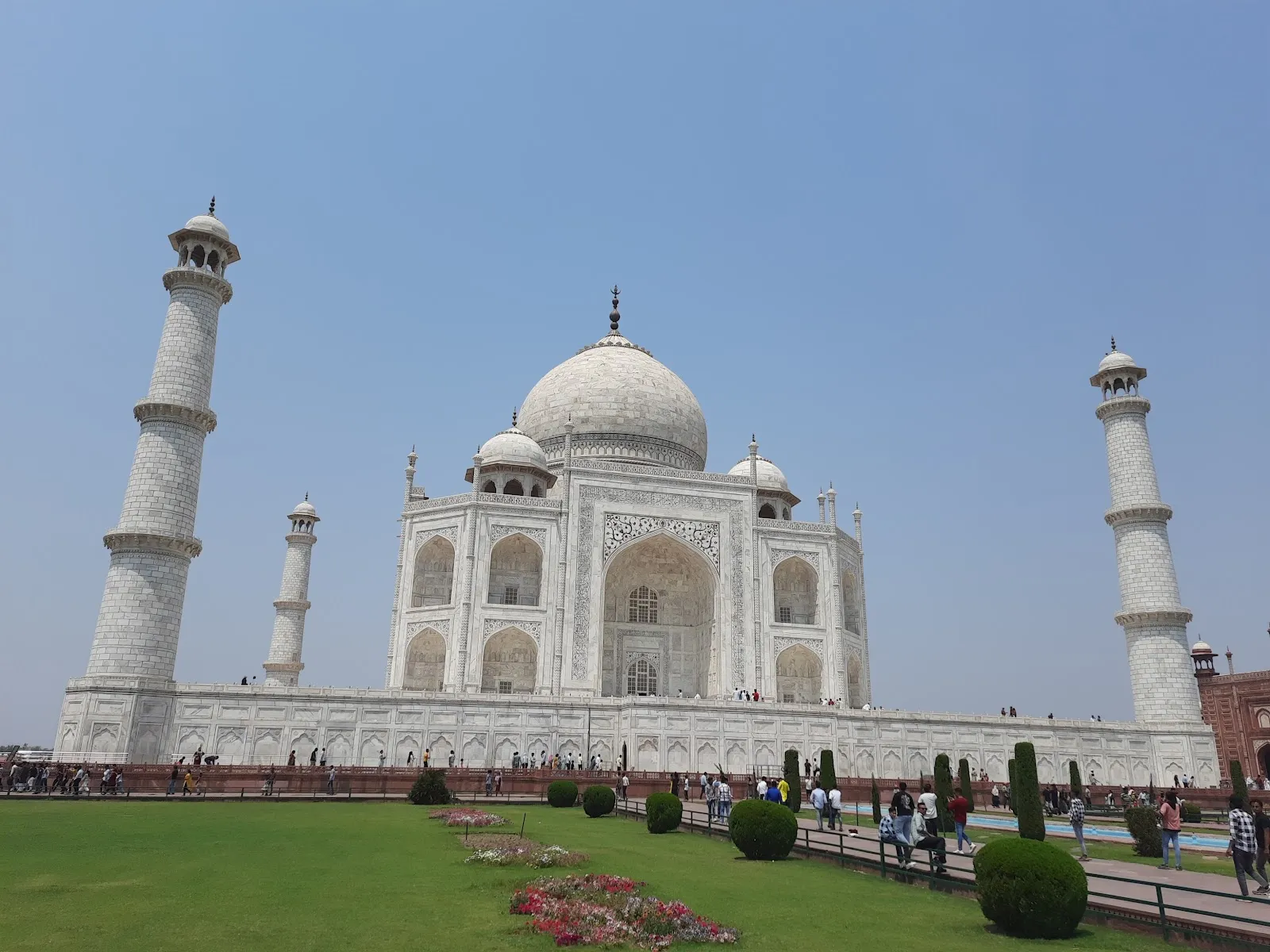
The main hall holds cenotaphs, marked tombs, for her parents. The actual graves lie in a chamber below.
Many visitors find the interior more detailed than the plainer inside of the Taj Mahal, with carved screens and inlay work. Keep your voice low inside, since this is a place of burial and remembrance.
Marble, inlay and design
The tomb is described as the first Mughal monument built entirely of white marble, a shift away from the red sandstone used in earlier structures. It is also called the first all-marble tomb in India.
Its decoration includes pietra dura, marble inlay set in floral and geometric patterns, and jaali screens cut from marble. Many of these techniques were later used on the Taj Mahal, which is why the tomb is seen as its forerunner.
Gardens and the river
The tomb stands on the east bank of the Yamuna, a few miles from central Agra. The gardens have intersecting walkways and water channels, and most visitors walk them slowly before or after the main building.
The river views are calm. Even when the water level is low, the view across the Yamuna is pleasant, and the light over the water at sunset is the most photographed time of day here.
Getting there and moving around
The tomb is about 7 kilometres from Agra Cantt, roughly 20 to 25 minutes by taxi or auto-rickshaw.
Paid parking is available in the lot and on the street outside. The entrance, parking lot, restroom and seating are wheelchair accessible, and the site is suitable for children.
FAQ
Is there an entry fee?
The entry fee reported for this tomb is 20 rupees per person. Check the current price at the gate before you go.
How long do you need?
About 45 minutes covers the complex, and less than an hour is enough to see everything inside.
Is it wheelchair accessible?
The entrance, parking lot, restroom and seating are wheelchair accessible.
How far is it from Agra Cantt?
It is about 7 kilometres away, roughly 20 to 25 minutes by taxi or auto-rickshaw.
When is the best time to visit?
Early morning or near sunset. Sunrise and sunset give the softest light on the marble.


