
Agra Fort is a UNESCO World Heritage Site in Agra, built mainly of red sandstone beside the Yamuna River. Emperor Akbar began its transformation into a fortified imperial complex in 1565; later Mughal rulers added palaces and marble buildings. Inside, explore the audience halls, courtyards and palaces, including Jahangiri Mahal, Diwan-i-Aam and Diwan-i-Khas. Look for the contrast between sandstone walls and marble details, and views of the Taj Mahal from the fort. Some areas are restricted, so allow time for the open sections.
From military fort to imperial complex
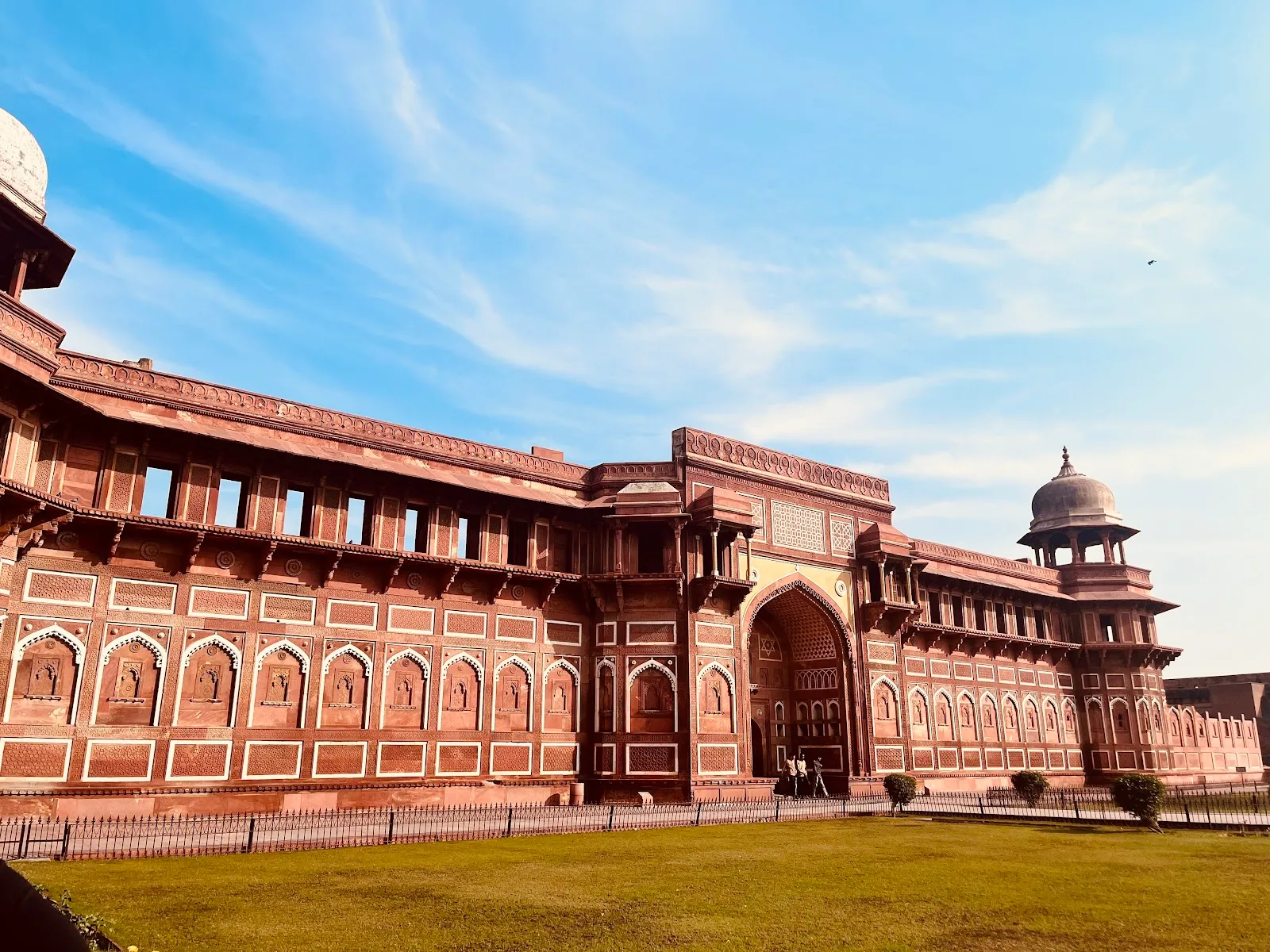
Emperor Akbar began rebuilding Agra Fort in 1565 on earlier fortifications. The work was substantially complete around 1573. Its position beside the Yamuna River and its massive defensive walls reflect its role as a stronghold, but the complex also became a royal residence and an imperial city within walls.
Later rulers altered and added to the fort. Jahangir and Shah Jahan were among those who expanded its palaces, mosques and pavilions. The result combines military architecture with spaces designed for court life. The fort served as the Mughal emperors’ main residence before the imperial capital moved to Delhi in 1638.
Palaces, halls and mosques
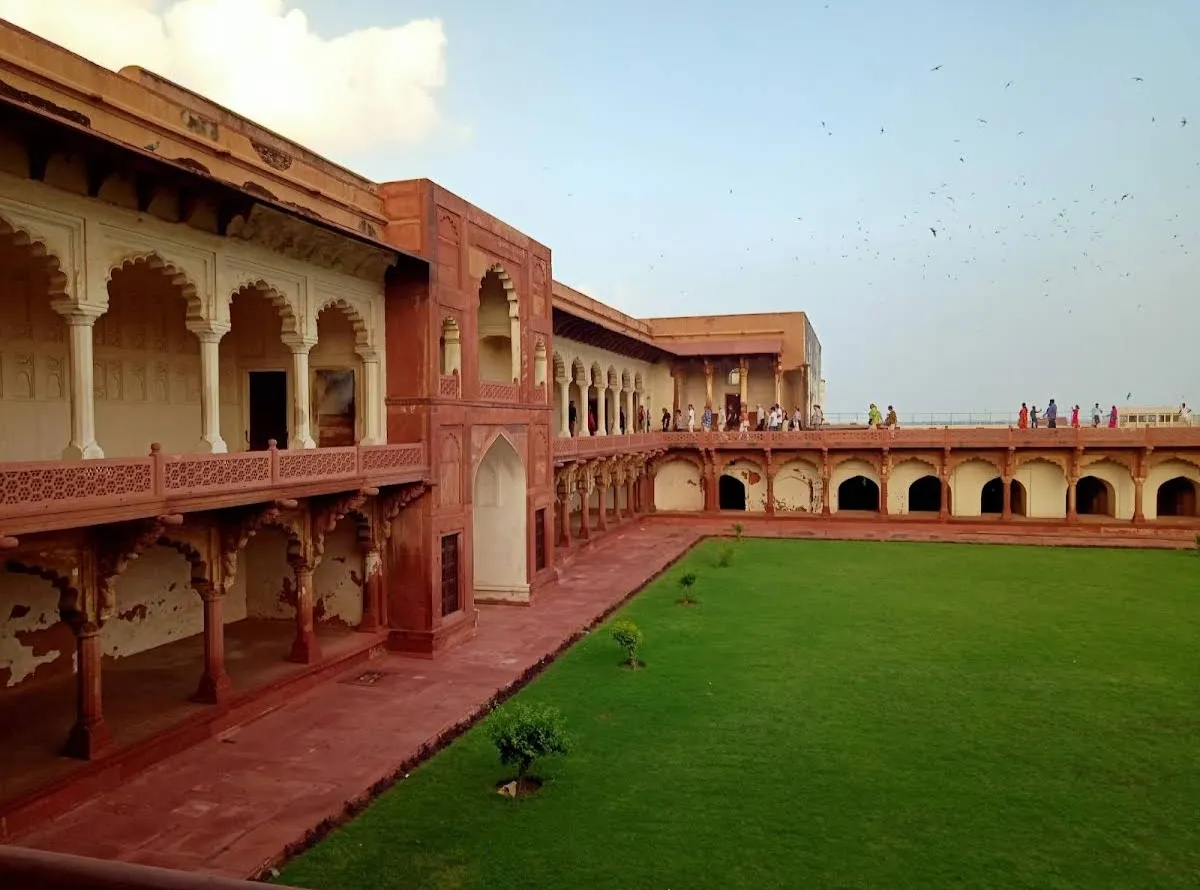
The fort contains a range of buildings arranged around courtyards. Jahangiri Mahal is a major palace, with architectural elements that include enclosed overhanging balconies and pointed arches. Khas Mahal and Sheesh Mahal are among the other palace buildings to look for as you move through the complex.
Diwan-i-Aam, the Hall of Public Audiences, and Diwan-i-Khas, the Hall of Private Audiences, show how the fort accommodated different kinds of court business. Moti Masjid and Nagina Masjid are among its mosques. Across the complex, red sandstone gives way to marble details and decorated surfaces. Some buildings and areas are not open to visitors, so the route through the fort does not include every part.
Views toward the Taj Mahal
Musamman Burj is an octagonal tower within the fort associated with Shah Jahan’s final years. From this area, visitors can see the Taj Mahal across the river. The view links two of Agra’s best-known Mughal sites, while the fort itself provides a different perspective on the city’s imperial history.
The fort’s scale means there is more to see than a single palace or viewpoint. Courtyards connect the buildings, and the changing materials and architectural details reward a slower walk. Allow two to three hours if you want time to explore the accessible sections rather than rushing between highlights.
Planning your visit
The Amar Singh Gate is the visitor entrance. Tickets can be booked online, and advance purchase is recommended. A local guide can explain the history and purpose of the buildings as you move through the site. Photography is restricted in some sections, so check the rules before taking pictures.
Early morning or later in the day can help you avoid some crowds and heat. Wear comfortable shoes for walking through the complex, and expect security checks at entry. Parts of the fort remain in use by the Indian Army and are off-limits to visitors. Accessibility facilities are listed for the entrance, parking, seating and restrooms, though restricted areas and the historic layout may affect which parts you can visit.
FAQ
How long do you need at Agra Fort?
Allow about two to three hours to explore the accessible palaces, halls and courtyards without rushing.
Can you see the Taj Mahal from Agra Fort?
Yes. Views toward the Taj Mahal are available from within the fort, including near Musamman Burj.
Which entrance do visitors use?
Visitors enter through Amar Singh Gate.
Can you visit every part of Agra Fort?
No. Some areas are restricted and are not open to visitors.


