Travel advisory · GuineaSome governments advise against travel to parts of Guinea.The warnings cover only these areas: Côte d'Ivoire border region, Liberia border region, Mali border region, Mandiana, Sierra Leone border region, Siguiri.Advice depends on your passport. Read your own government's advice before you book.Official advice
- Côte d'Ivoire border region · avoid non-essential travel · Spain, France, New Zealand
- Liberia border region · avoid non-essential travel · Spain, New Zealand
- Mali border region · avoid non-essential travel · Germany, Spain, France
- Mandiana · avoid non-essential travel · Germany, France
- Sierra Leone border region · avoid non-essential travel · Spain, New Zealand
- Siguiri · avoid non-essential travel · Germany, France
Also named by one government: Banti border zone (Spain), Forécariah (Spain), Gueckédou (Spain), Guinea-Bissau border region (Spain), Kankan nature reserve (France), Koyama (Spain), Macenta (Spain), Madina Oula-Pamalap (Spain), Mano country (Spain), Quartiers east of Kipé and Taouyah (Conakry upper suburbs) (France), Senegal border region (Spain), Zogota (Spain)
| Government | Advice | Updated | Read the advice |
|---|---|---|---|
| United Kingdom (FCDO) | No specific advice against travel; general precautions only | – | Read the advice |
| United States (State Dept) | Exercise Increased Caution | Feb 25, 2026 | Read the advice |
| Canada (Global Affairs) | Exercise a high degree of caution | – | Read the advice |
| Germany (Auswärtiges Amt) | No advice against the whole country (regional advisories) | Oct 13, 2026 | Read the advice |
| New Zealand (SafeTravel) | Exercise increased caution overall (regional advisories) | – | Read the advice |
| France (Ministry for Europe and Foreign Affairs) | vigilance renforcée (jaune) for the rest of the territory (regional advisories) | – | Read the advice |
Checked daily from the governments' published advice; last checked Nov 2, 2026. RoamLedger summarises official advice; it is not advice from any government.
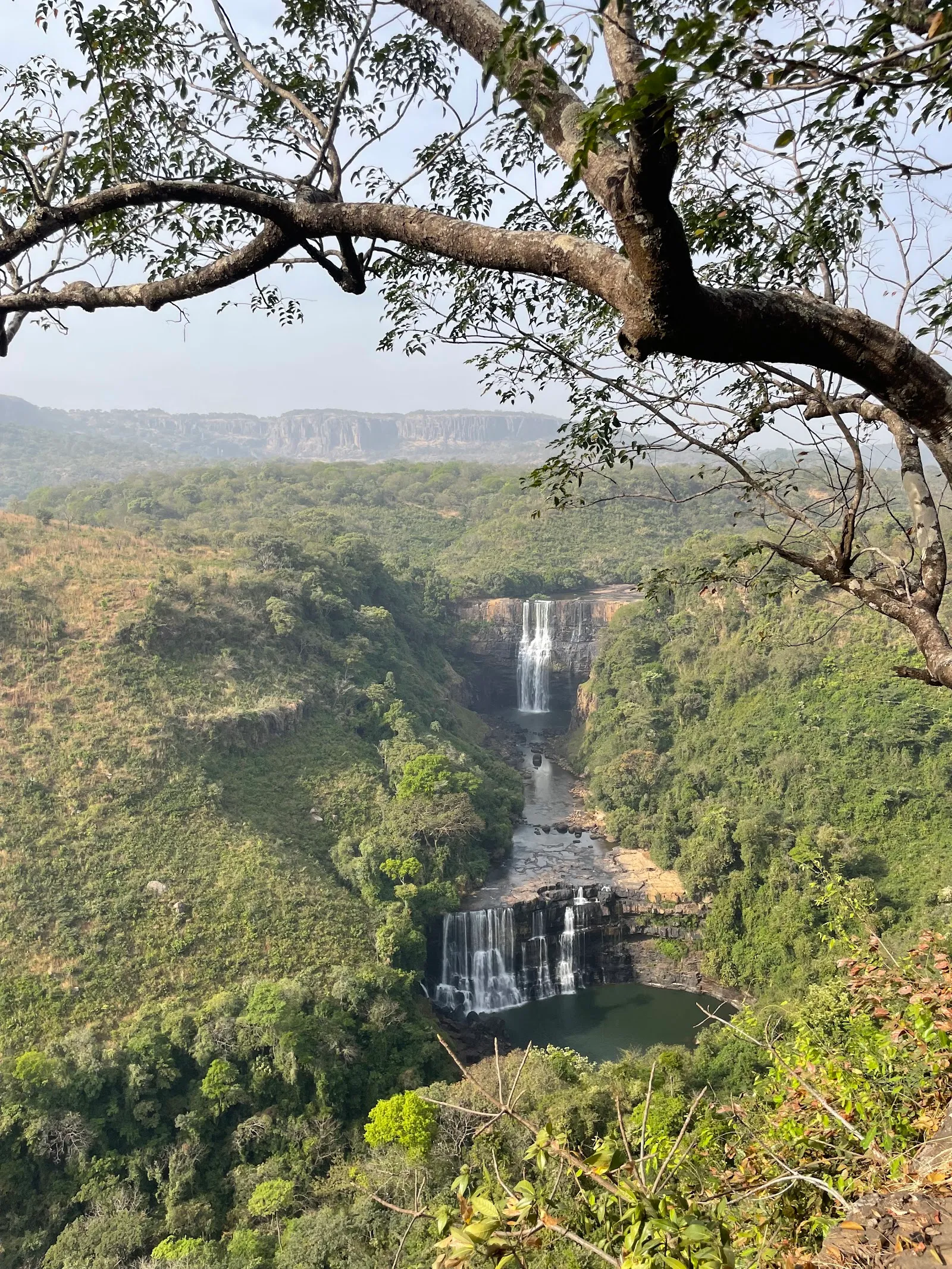
Fouta Djallon
Fouta Djallon is a cool highland region in central Guinea, where you go for waterfalls, mountain roads and a slower pace than the coast.
We may earn a commission. It never decides our picks.
Fouta Djallon is a highland region in central Guinea, West Africa, rising to a broad plateau of mountains, valleys and fast-running rivers. The Senegal and Gambia rivers both begin in its hills. The highlands are cooler and greener than the coast. Towns are small, with markets, mosques and villages of the Fulani (Fulbe) people, who have lived here for centuries.
Travelers come for the scenery, the waterfalls and the mountain drives, and for time to stop in villages between towns. Roads are rough in places, and the rainy season, roughly June to October, can make routes hard to pass, so the dry season from November to April is the usual time to go. Plan at least four days to see more than one area. Fouta Djallon suits travelers who want hiking, nature and local culture more than beach time.
Fouta Djallon in five
- Get a visa before you book flightsMost passports need a visa for Guinea. Check the rule for your passport and apply at a Guinean embassy or consulate before you pay for flights.Visas and entry
- Carry cash in Guinean francsPlan to pay guesthouses, drivers and fuel in cash, and bring enough francs from Conakry for the whole trip.
- Book a driver with a 4x4 for the highlandsThe roads between Mamou, Dalaba, Pita and Labé are long and rough in places, and the rainy season makes some tracks hard to pass. Hire a driver who knows the route.
- Set up a phone plan before the highlandsMobile signal can drop between towns. Download offline maps and tell someone at home where you will sleep each night.Phones and eSIM
- Get insurance that covers evacuationCheck that your policy pays for evacuation to a hospital in another country.Travel insurance
Things to do in Fouta Djallon
See all attractions in Fouta Djallon
Need to know
- Currency
- Guinean franc (GNF)
- Entry
- Visa needed for most passports; check with a Guinean embassy or consulate
- Emergency
- Save your insurer's 24-hour line before you travel
- Tipping
- Ask your driver or guide what they expect
- Time
- UTC+0, no daylight saving
Weather by month
- Best
- Good
- Mixed
- Poor
- JanuaryCool, dry
- FebruaryCool, dry
- MarchCool, dry
- AprilDry season
- MayHot, dry
- JuneRains begin
- JulyRainy season
- AugustHeavy rain
- SeptemberHeavy rain
- OctoberRains ease
- NovemberDry season starts
- DecemberCool, dry
Right now in Fouta Djallon
Local time, today's weather and the exchange rate, refreshed through the day.

21
- Feels like
- 23°
- Humidity
- 81%
- Wind
- 6 km/h
- Chance of rain
- 47%
Fouta Djallon
08:37 PM
Monday, November 2
- Today27°19°47%Monday: Drizzle. High 27°, Low 19°. Chance of rain 47%.
- Tue27°18°35%Tuesday: Drizzle. High 27°, Low 18°. Chance of rain 35%.
- Wed27°18°45%Wednesday: Drizzle. High 27°, Low 18°. Chance of rain 45%.
- Thu28°20°16%Thursday: Drizzle. High 28°, Low 20°. Chance of rain 16%.
- Fri29°19°4%Friday: Cloudy. High 29°, Low 19°. Chance of rain 4%.
- Sat29°19°0%Saturday: Cloudy. High 29°, Low 19°. Chance of rain 0%.
- Sun29°18°4%Sunday: Partly cloudy. High 29°, Low 18°. Chance of rain 4%.
Updated 08:15 PM local time · Weather data by Open-Meteo.com
Money
Mid-market rate1 USD = 8,813 GNF
Rates from Nov 2, 2026 · Rates By Exchange Rate API
Before you go to Fouta Djallon
Rules for Fouta Djallon, checked
- Carry your passport and a copy of your visa at all times.
- Ask before photographing people, especially in villages. Do not photograph police, soldiers or government buildings.
- Dress modestly in towns and villages, and ask before entering a mosque, since most people here are Muslim.
Plan around Fouta Djallon
Entry, regions and money basics for the whole country
Read the guideMoney and costsCash, cards and what to carry into the highlands
Read the guideGetting around GuineaDrivers, road conditions and the trip from Conakry
Read the guideVisas and entryVisa rules by passport and how to apply
Read the guideWhere to stayGuesthouses and hotels in the highland towns
Read the guideFouta Djallon FAQ
Is Fouta Djallon a national park?
No. Fouta Djallon is a highland region in central Guinea with towns, farmland and mountain tracks. Plan it as a region to drive through, not a park with gates and fees.
When is the best time to visit Fouta Djallon?
The dry season, roughly November to April, is the easiest time for roads and hiking. The rainy season from about June to October brings heavy rain and harder driving.
How do I get to Fouta Djallon?
Fly into Conakry, then travel by road to the highland towns such as Mamou and Labé. Hire a driver for the road trip.
How many days do I need in Fouta Djallon?
Allow at least four days to visit the main towns and a few walks. Add more days if you travel slowly by road or stay in remote villages.
What language is spoken in Fouta Djallon?
French is the official language. Pular, the Fula language, is widely spoken in the highlands, so a few greetings in Pular help in villages.
Is it safe to travel in Guinea?
Check your government's current travel advice for Guinea before you go, since it changes. Register your trip with your embassy if your country offers that service.