The White Tower is a cylindrical stone tower on Thessaloniki's waterfront, 34 metres tall and the city's best-known landmark. Ottoman builders raised it in the 15th century to guard the harbour, and it later served as a garrison and a prison. Today it holds a museum on the city's history across six floors, and a balcony at the top looks over the gulf and the rooftops. The seafront promenade starts at its foot, so you can pair the climb with a sunset walk or a drink by the water.
From a Byzantine tower to an Ottoman fortification
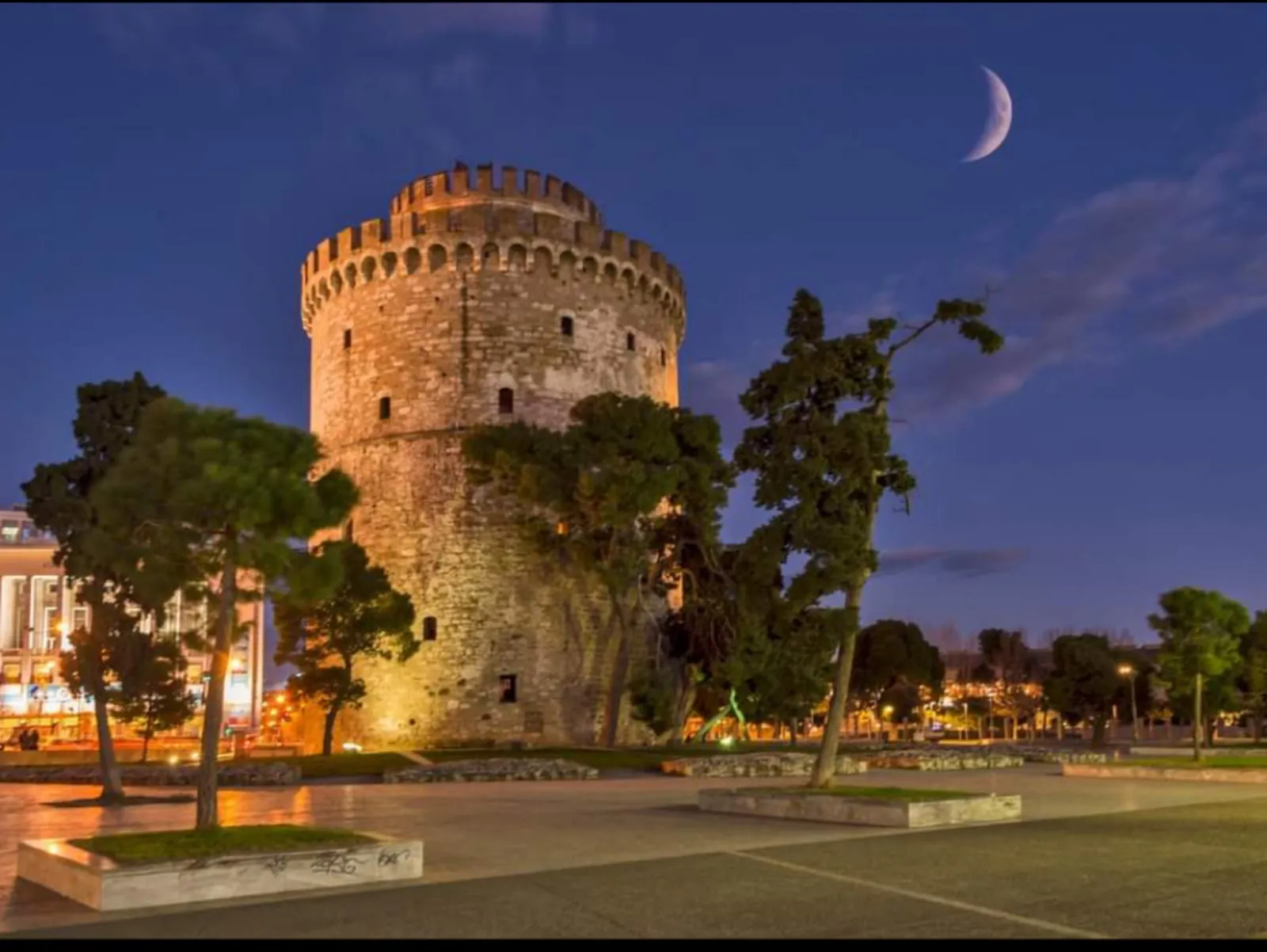
The White Tower was once the south-east tower of a larger fortification. The sea wall in front of the city had three towers, and this one stood at the east end, where the sea wall met the east wall. Most of the wall was pulled down late in the 19th century, and the tower is what remains.
Its exact date is uncertain. It was most likely built in the 15th century, after the Ottoman conquest of Thessaloniki. It replaced a Byzantine defensive tower that stood at the south-east corner of the city. That earlier tower is mentioned by Eustathius, Archbishop of Thessaloniki, in his account of the Norman siege of 1185.
The Ottomans used the tower to strengthen the defences of the eastern harbour. It also worked as a garrison and as a prison.
The names of the tower
The tower has carried several names over the centuries, among them the Lion's Tower, the Janissary Tower and the Blood Tower, in Turkish Kanli Kule. It was also called the Red Tower. These names come from its use as a prison and a place of execution during the Ottoman period.
In 1826 Sultan Mahmud II ordered the massacre of imprisoned Janissaries here, the best-known event in the tower's dark history.
The present name dates from 1912, when Thessaloniki became part of the Hellenic State. The tower was whitewashed and renamed, and it was remodelled at the same time. A prisoner is said to have done the painting in exchange for his freedom. There was some talk of demolishing the Ottoman-era tower, but it became the symbol of the city instead.
Inside the six floors
The tower is 34 metres tall and about 23 metres across. An internal staircase winds against the outer wall and links the six floors. Each floor has a central round hall about 8.5 metres wide.
The halls and the small rooms around them hold a museum on the history of Thessaloniki, laid out by the Museum of Byzantine Culture. Each floor follows its own theme and mixes traditional displays with modern technology. The museum is compact, so it works best as one part of a day on the waterfront.
Most of the signs are in Greek. An audio guide in other languages can be downloaded, and it is worth setting up before you go in. The entrance is wheelchair accessible, but the floors are joined by the internal staircase.
The climb ends at the balcony and the roof. From there you see the curve of the coastline, the ships coming and going, and the city rising behind the seafront. The roof is also a good place to take photos without the crowds at ground level.
The waterfront around the tower
The avenue behind the tower, Leoforos Nikis, was laid out in 1873 after the south wall was demolished. It was first named Beyaz Kule, after the tower.
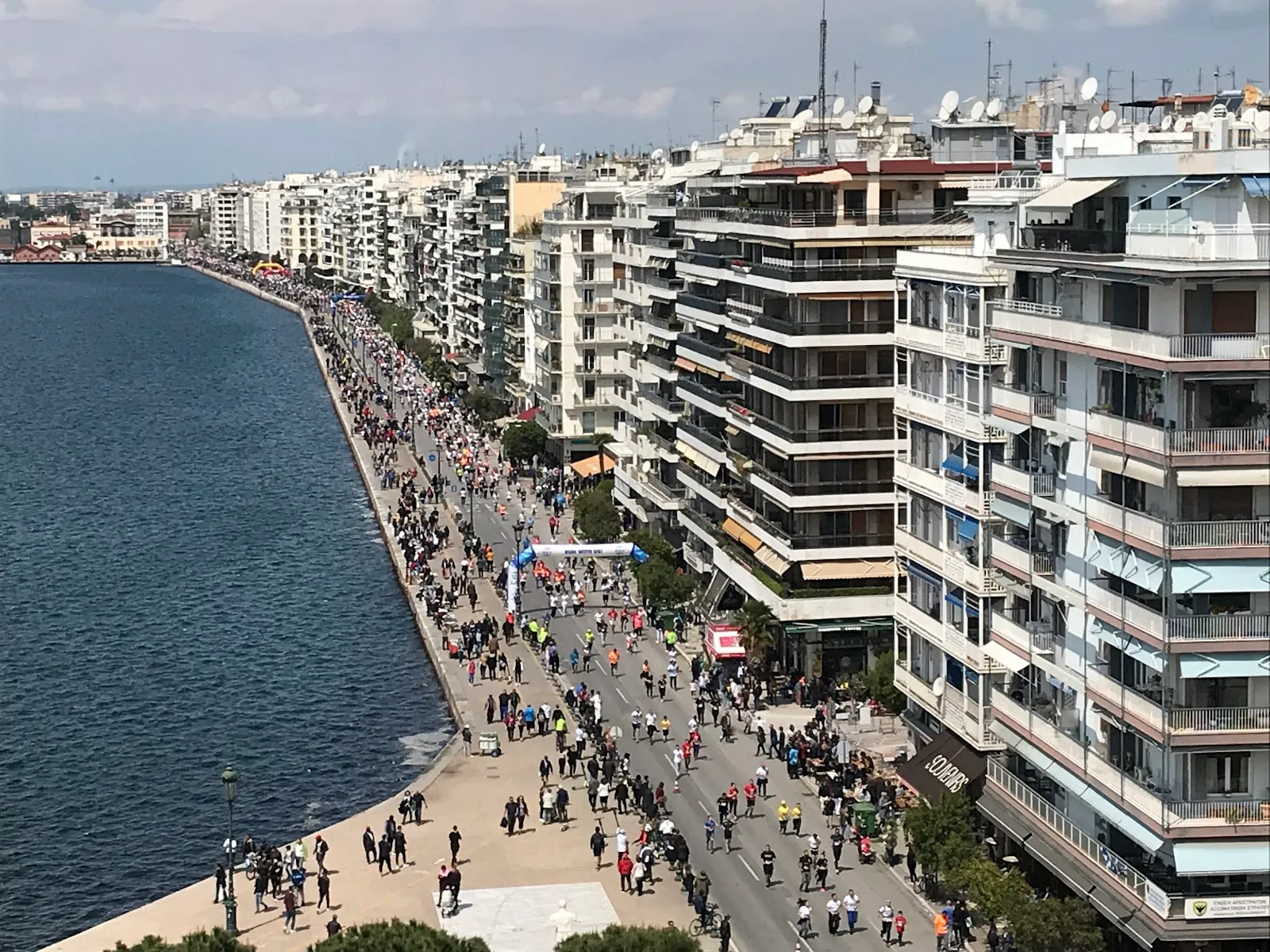
The new promenade starts at the tower and runs for more than 3 km to the Concert Hall. Along the way you can buy ice cream, take a cocktail to go, or rest in the shade of the trees. Walking from Aristotelous Square, you pass the statue of Alexander the Great and the Umbrellas sculpture by George Zongolopoulos. The Garden of the Afternoon Sun is a good place to watch the sunset over the Thermaic Gulf. On a clear day you can see Mount Olympus across the water.
Boats leave from the tower for trips into the Thermaic Gulf. Short outings run hourly, and from May to October there is a six-hour round trip to Shipwreck Bay. The area also has floating bars, including the Arabella Cruise Bar, a pirate-ship bar that sails the gulf.
FAQ
Is there an entry fee for the White Tower?
Yes, the museum inside has an entrance fee. Walking around the tower and looking at the view from the ground is free. Check the current price before you go.
Can you climb to the top of the White Tower?
Yes. An internal staircase links the six floors and leads to the balcony and roof, with a view over the city and the sea. The climb is open during the day.
Why is it called the White Tower?
It was whitewashed after Thessaloniki joined Greece in 1912 and received its new name then. Before that it was known by names such as the Lion's Tower, the Janissary Tower and the Blood Tower.
Is the museum in English?
Most signs inside are in Greek. An audio guide in other languages can be downloaded, so set it up before you start the visit.
Is the White Tower good for kids?
Yes. Children can climb to the top for the view, and the museum uses multimedia. The promenade beside the tower has theme parks along the beach.