The Archaeological Museum of Thessaloniki holds finds from across Macedonia, from prehistoric tools to Roman-era sculpture. It stands on Manoli Andronikou Street in the city centre, and its displays move in rough chronological order through the region's history. The highlights include the Gold of Macedon collection, with its thin gold wreaths and burial masks, and the Derveni Krater, a large bronze vessel covered in relief carving. Plan a few hours for the galleries, then take a break in the garden cafe.
From a 1912 founding to a 1962 building
The museum was founded in 1912, shortly after Thessaloniki became part of the Greek state. Its collections come from excavations carried out across Macedonia by the Greek Antiquities Service.
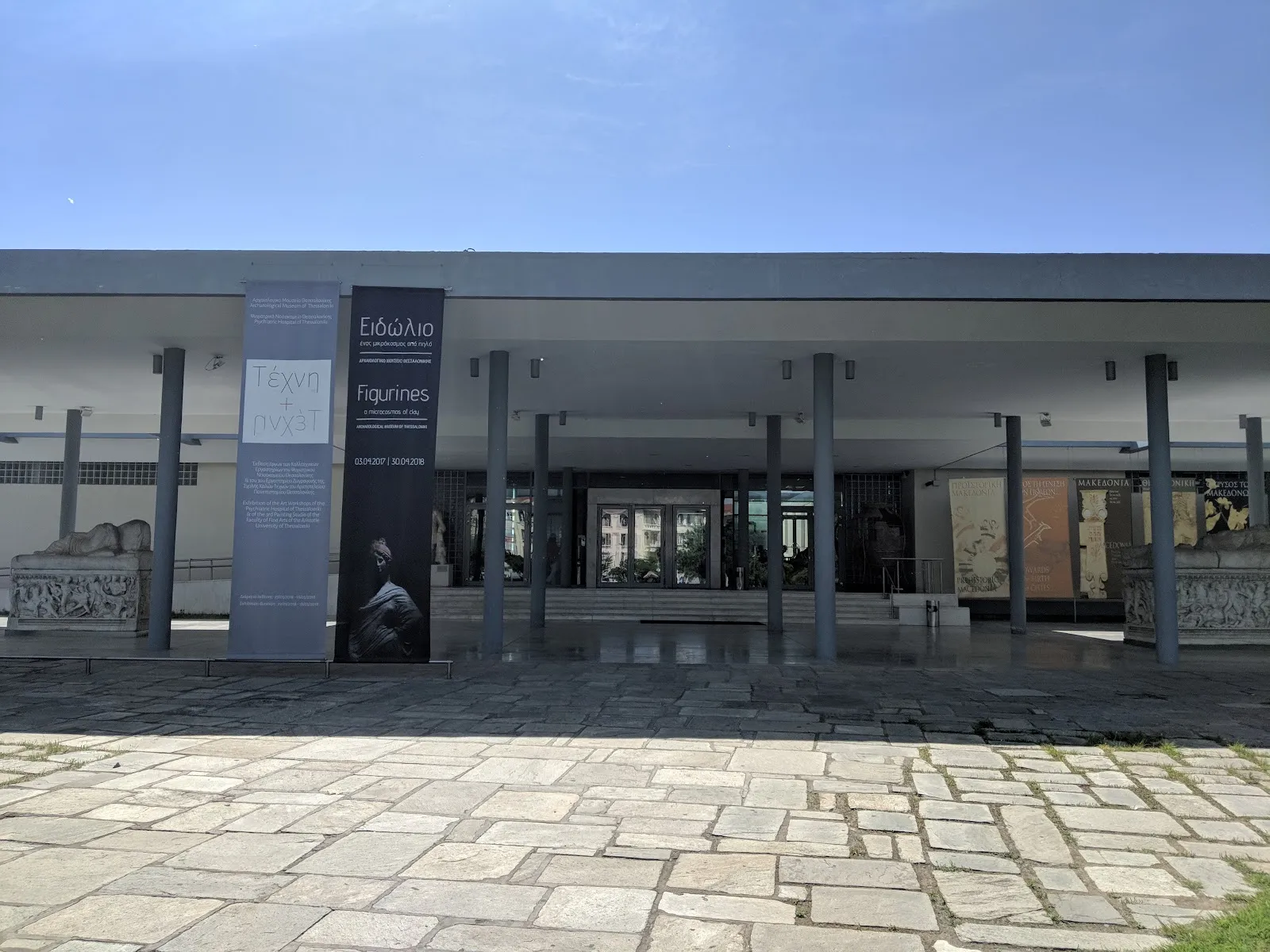
The building on Manoli Andronikou Street was designed by the architect Patroklos Karantinos. Work on it began around 1950, and it was completed in 1962, when the museum opened to mark the fiftieth anniversary of the city's liberation. It is one of the clearest examples of architectural modernism in Greece and is listed as a monument of modern heritage. From outside, the unpretentious white building gives little hint of what is inside.
How the galleries are arranged
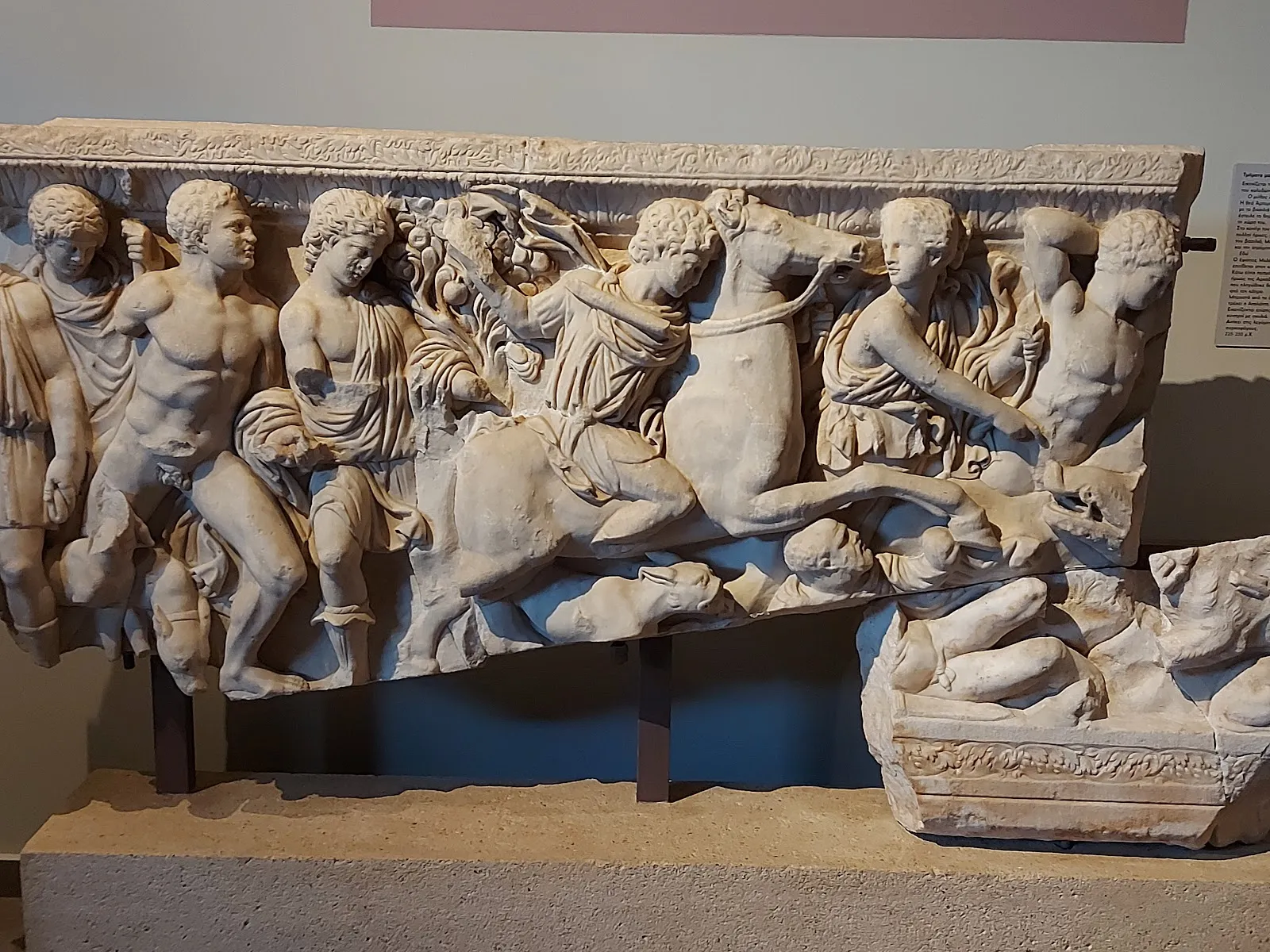
The displays follow a broadly chronological order, starting with prehistoric Macedonia and moving on through the Archaic, Classical, Hellenistic and Roman periods to late antiquity. The early rooms cover Neolithic and Bronze Age settlements, with tools, jewelry and household objects. The museum also holds architectural pieces from an Ionic temple of the 6th century BC, and sculptures from the Archaic period to the late Roman era.
Other galleries show material from the palace complex that Galerius built in the city centre, a reconstruction of the facade of a Macedonian tomb from Agia Paraskevi, and gold finds from the Sindos cemetery. The Gold of Macedon exhibition sits in the newer wing.
The gold, the bronze and the papyrus
Among the gold pieces, the burial masks and wreaths stand out for their fine work. One of the rarest finds is the well-preserved skeleton of an embalmed woman, which still has its hair and eyebrows.
The Derveni Krater is a large Hellenistic vase of bronze and tin, dated 330 to 320 BC. It was used to mix wine and water and later served as a funerary urn. Its relief carvings show Dionysos, mythical figures, animals and ivy vines. The Derveni finds also include a papyrus that is the oldest surviving papyrus piece in Greece, dated 320 to 250 BC.
Outside the galleries, the cafe and the shop
Some sculptures stand outdoors around the building, and that display is free to see.
Mouseio, the museum cafe, sits in a garden courtyard with tables under the trees and offers both indoor and outdoor seating. The shop sells high-quality replicas of the gold jewelry on display, along with academic and art books.
FAQ
Is there an entry fee?
Yes, the museum charges admission. Check the museum website for current ticket prices before you go.
How long do you need?
Most visits take between one and three hours, depending on how closely you read the displays. Two hours suits most people who want to see the main galleries.
Is the museum wheelchair accessible?
Yes. The entrance, restrooms, seating and parking lot are listed as wheelchair accessible.
Is there a cafe?
Yes. Mouseio, the museum cafe, is set in a garden courtyard with tables under the trees, and it has indoor and outdoor seating.