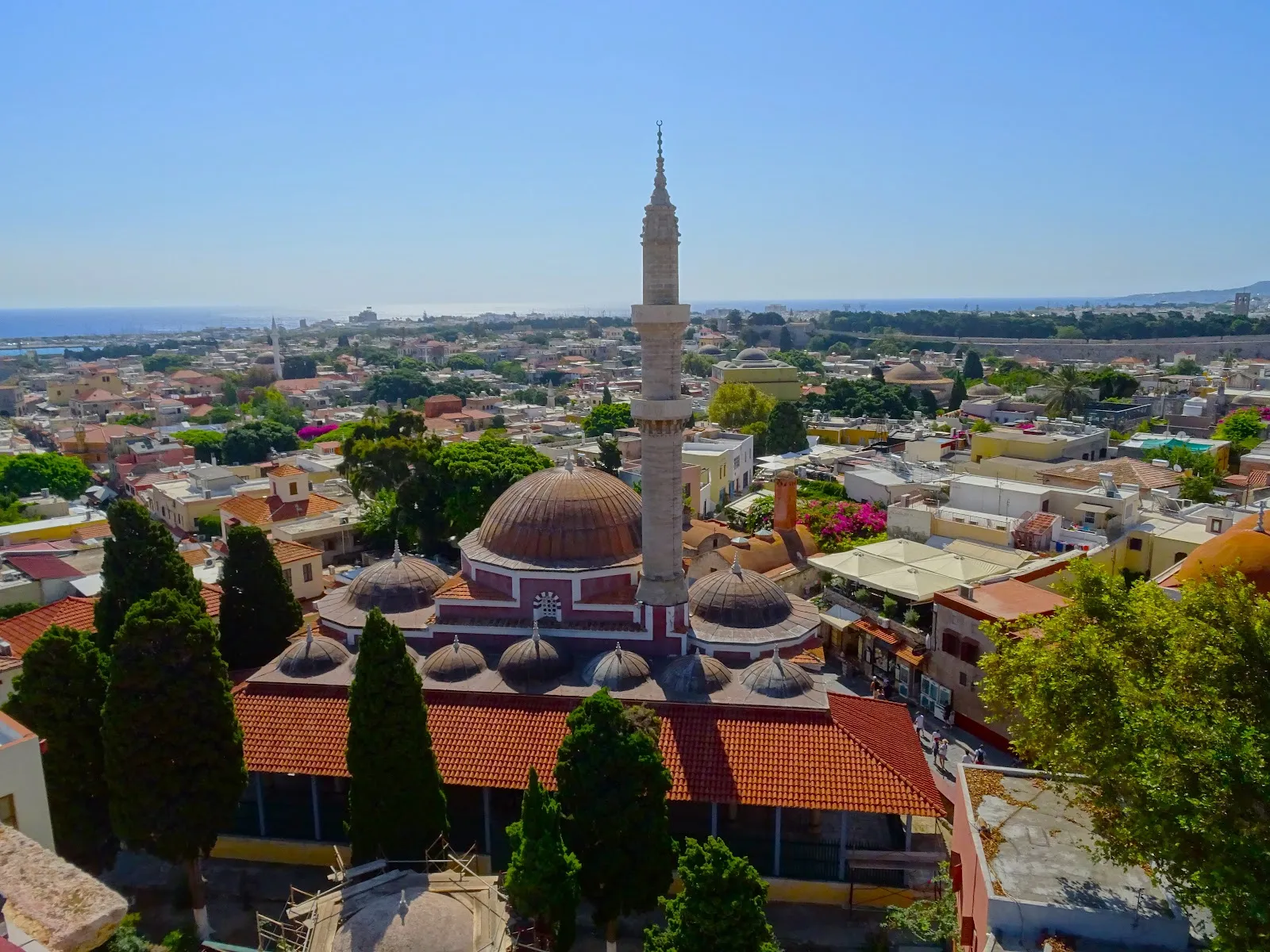
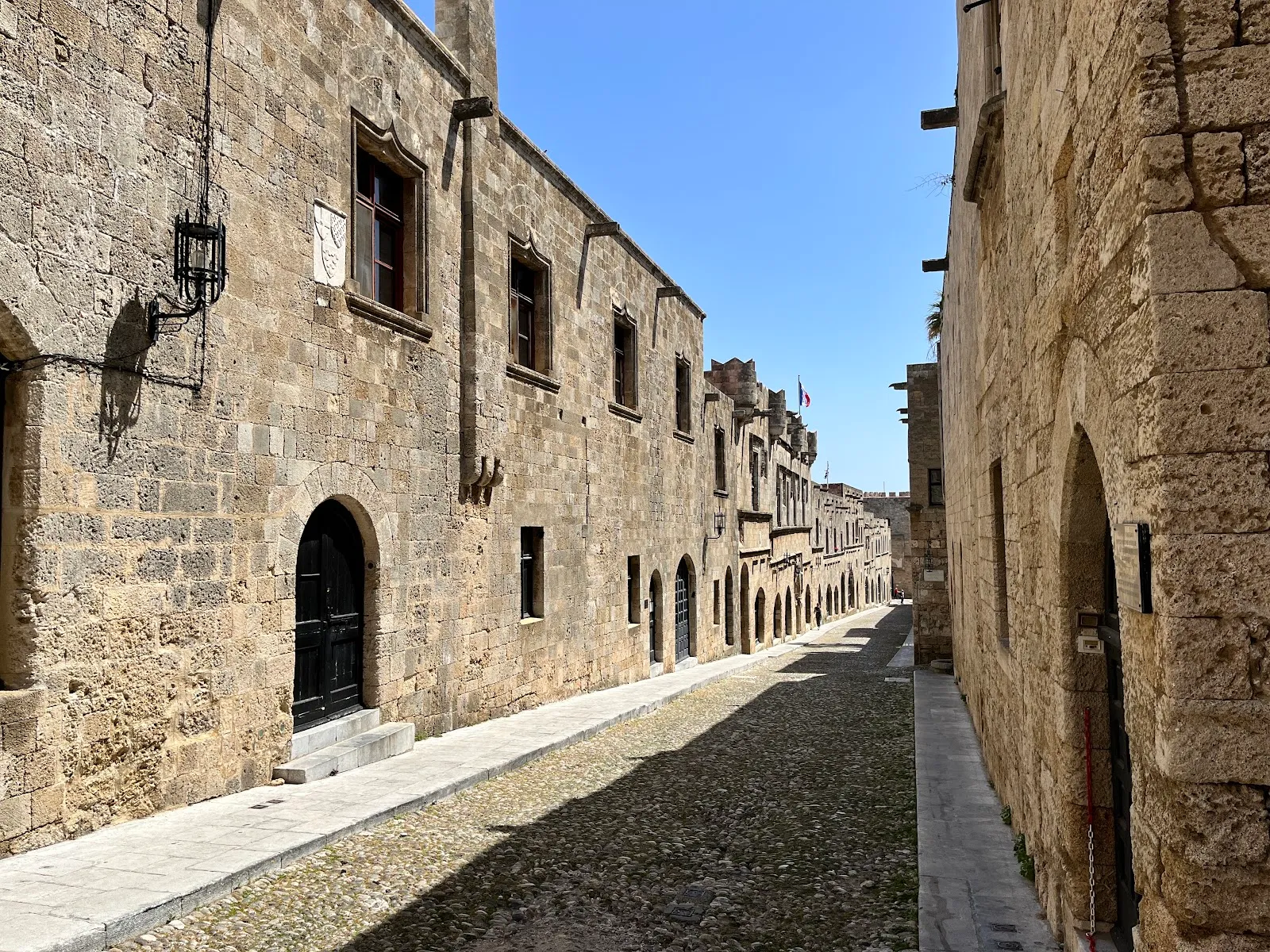
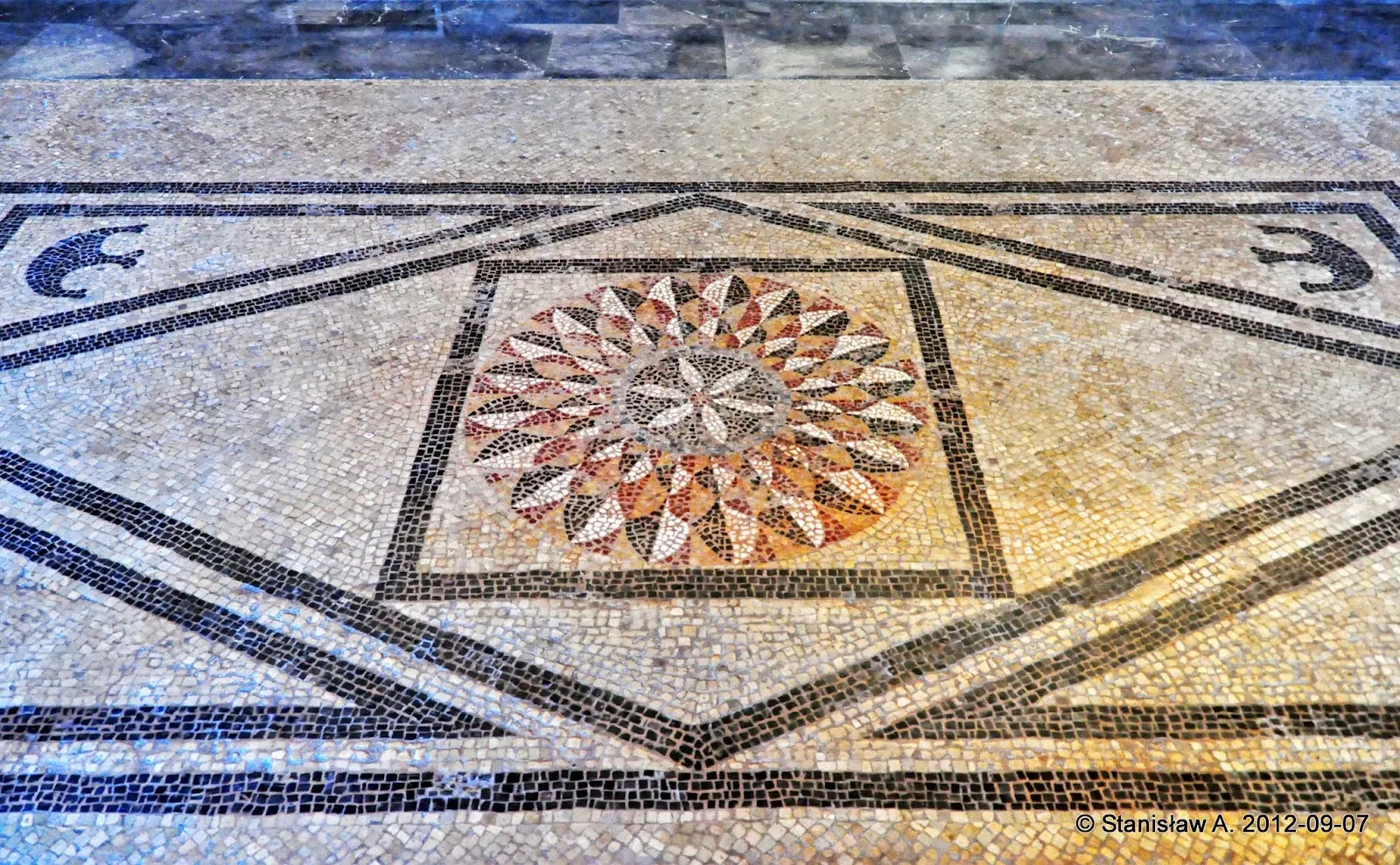
The Palace of the Grand Master stands at the top of the Street of the Knights in the medieval Old Town of Rhodes. The Knights of Saint John built it in the 14th century as their administrative centre and the Grand Master's residence, on the site of a 7th-century Byzantine citadel. Stone towers and battlements surround courtyards and halls with Roman and Early Christian floor mosaics. Two exhibitions, period furniture and sculpture fill the rooms. An explosion in 1856 wrecked the building, and the Italians rebuilt the interior in the late 1930s.
From Byzantine citadel to Knights' palace
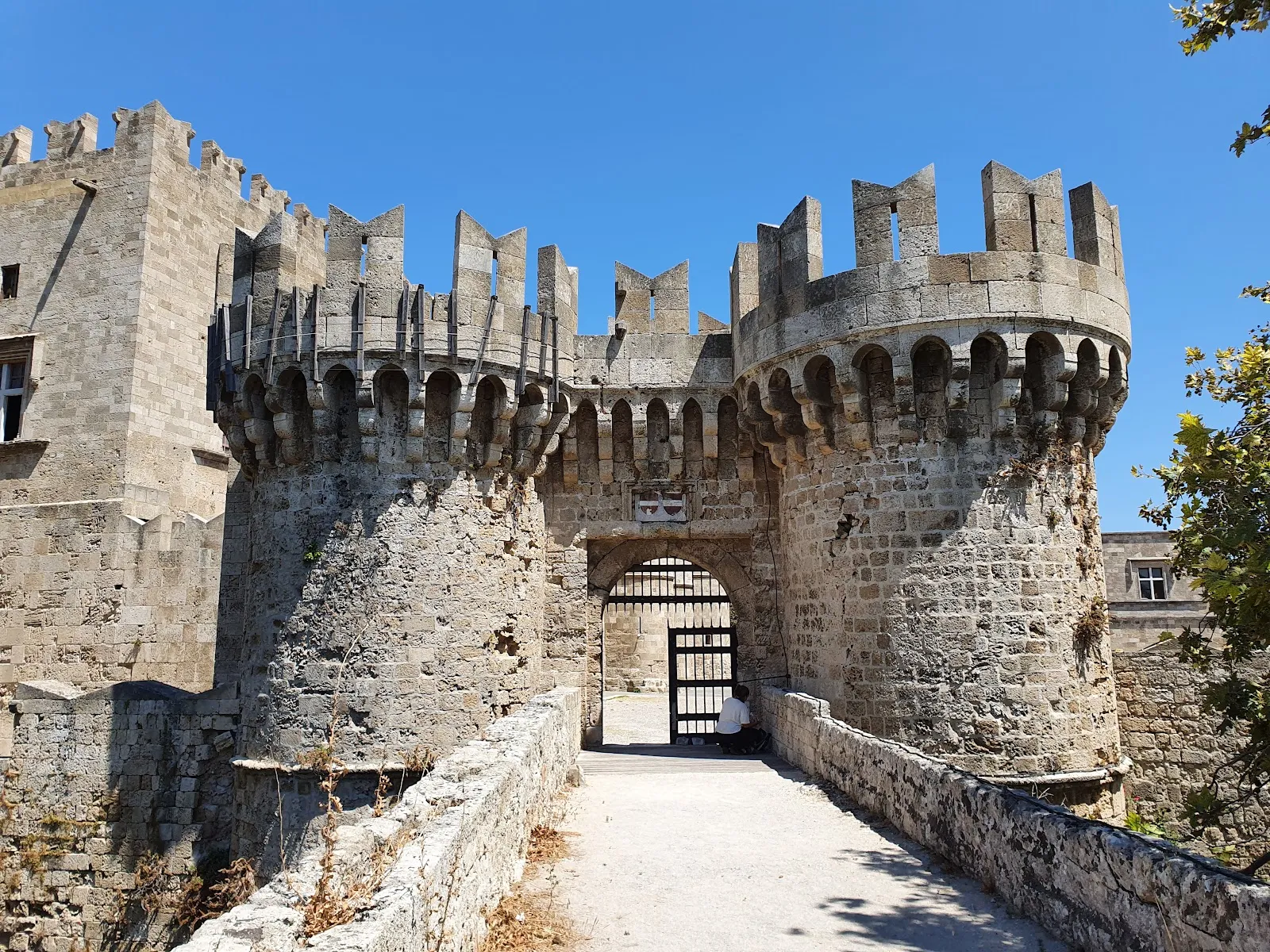
The palace sits at the highest point of the Street of the Knights, in the north-western part of the walled Old Town. Locals call it the Kastello. A Byzantine citadel from the 7th century stood on the site, and the Knights of Saint John, also known as the Knights Hospitaller, rebuilt it in the 14th century. For them it was a fortress, the Grand Master's residence and the administrative seat of the Order.
The Knights ruled Rhodes from the 14th to the 16th century. After the Ottomans took the island in the 1500s, the building lost its importance and was used as a prison. The medieval city around it has been a UNESCO World Heritage Site since 1988.
The explosion of 1856 and the Italian rebuilding
In 1856 an explosion in a gunpowder store beneath the palace destroyed most of the building. It stayed in ruins for almost a century, and earthquakes had already damaged it several times.
The Italians, who held Rhodes in the early 20th century, restored it between 1937 and 1940. The exterior, with its towers, battlements and imposing entrance, is close to the Knights' original. The interior is a reconstruction. It does not follow the old floor plan, and the Italians brought in mosaics and sculpture from other Dodecanese islands, including mosaics from Kos. One account says the rebuilt palace was meant as a residence for Mussolini, who never visited. Knowing this helps when you walk through the rooms, which are arranged as a museum and not as the Knights left them.
Inside the palace
A broad stairway leads up to the halls, which are laid out as a museum. Floor mosaics from the Roman and Early Christian periods are the main attraction, set against the stone walls and ceilings. The rooms also hold period furniture, sculpture, weapons, objects of worship and Murano glass.
There are two exhibitions. A permanent display on the ground floor covers objects from the early Christian era to the end of Ottoman rule. The other shows Hellenistic and Roman antiquities. Upstairs, the chambers of the Grand Master have views from the towers.
The courtyard has Roman statues and old weaponry, and the large granite cannonballs used in the Knights' defence lie around the grounds. A garden with statues and art can be visited too, but it is closed on Tuesdays.
The walls and the Street of the Knights
From the palace you can join a section of the medieval city walls, which runs towards Kokkini Porta in the south-east corner. This costs 5 euros on top of the palace ticket and can be bought after your visit. The walls are open on weekdays only. On Saturdays and Sundays you can walk along the moat below instead, between St Anthony's Gate and Akandia Gate.
Most visitors arrive on foot along the Street of the Knights, where coats of arms still decorate the house facades. It is quietest early in the morning or late in the evening. At its far end is the Knights' Hospital, now the Archaeological Museum of Rhodes.
FAQ
How much does it cost to visit the Palace of the Grand Master?
Recent visitors have paid 20 euros per person, and children enter free. Prices can vary with age, nationality and special programmes, so check the ticket site before you go. The walk on the walls costs an extra 5 euros.
How long do you need at the palace?
Plan one to two hours for the halls, exhibitions and courtyard. Add time if you want to walk along the walls or see the Street of the Knights and the Archaeological Museum.
Should you book tickets in advance?
Advance booking is recommended. Tickets are sold on the Hellenic Heritage website and can be saved to a phone wallet. On a weekday in early summer, buying at the gate meant a queue of about 10 minutes.
When do the exhibition galleries close?
The two galleries inside the palace close at about 17:00, earlier than the palace's closing time, so arrive earlier in the day.
Can you see the palace without paying?
The exterior and the surrounding courtyards within the medieval city can be seen for free. The halls and exhibitions require a ticket.
Is the palace suitable for children and wheelchair users?
Children enter free and the palace suits families. It has a wheelchair accessible entrance and restroom.