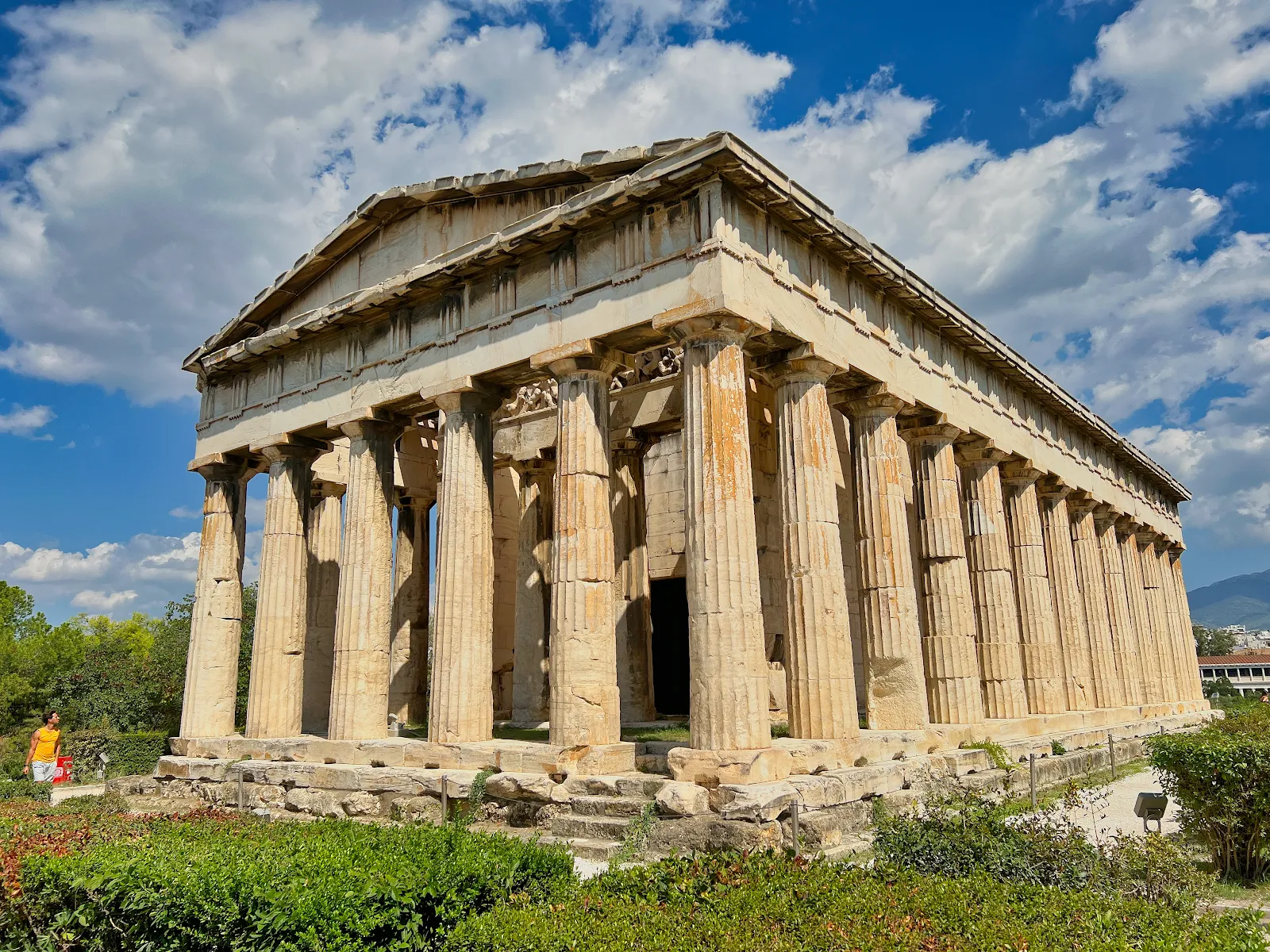
The Temple of Hephaestus stands on a hill in the Ancient Agora, in central Athens. Built in the 5th century BC and dedicated to Hephaestus, god of fire and metalworking, it is among Greece’s best-preserved ancient temples. Its marble Doric columns and surviving roof give a clear sense of the building’s original form. Walk around it to see the columns and sculpted friezes, then continue through the Agora to the Stoa of Attalos and its museum. The grounds are quieter than the Acropolis, though early visits are calmer still.
A temple above the Ancient Agora
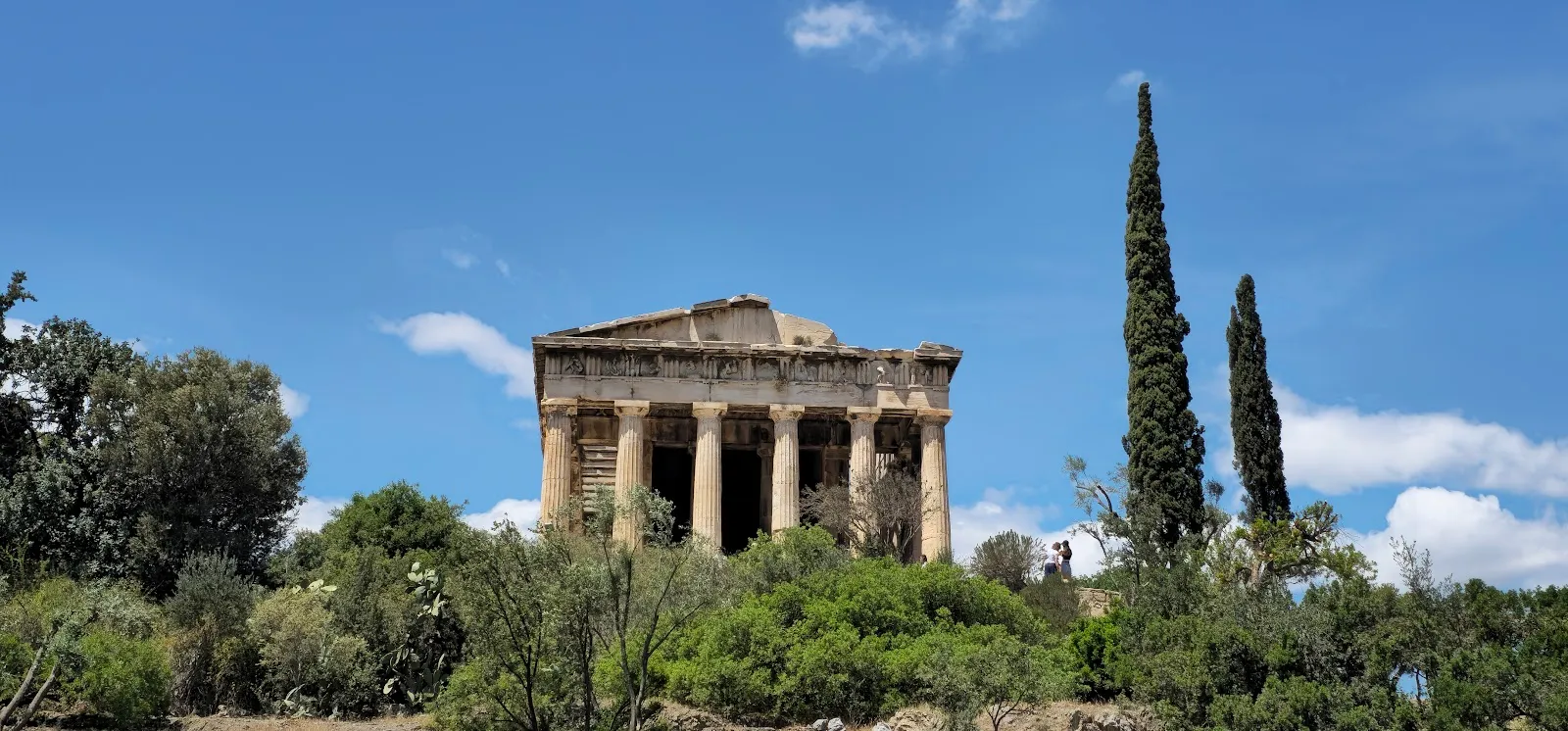
The Temple of Hephaestus sits on Agoraios Kolonos, a low hill on the northwest side of the Ancient Agora. It was built in the 5th century BC and dedicated to Hephaestus, the god associated with fire and metalworking. Athena, linked with crafts, was also honoured here. The temple is also known as the Hephaisteion; the name Thission became associated with it because some of its sculpted scenes were taken to relate to Theseus.
Its position makes it easy to take in the temple and the wider archaeological site together. From the hill, the columns rise above the Agora’s paths and olive trees, with modern Athens visible beyond. The contrast between the ancient structure and the present-day city is part of the view. The Acropolis is nearby, but the Agora offers a quieter setting for looking closely at the temple and the surrounding remains.
Columns, marble and carved scenes
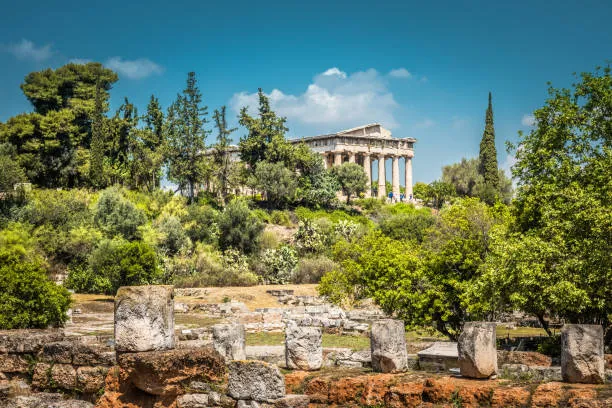
The temple is a Doric building made mainly of marble. Pentelic marble was used for the structure, while the sculpted elements were made from Parian marble. A colonnade surrounds the central sanctuary, where statues of the gods once stood. There are six columns at each short end and thirteen along each long side. The building’s substantial survival, including much of its roof structure, makes it easier to picture the scale and shape of an ancient Greek temple than at many ruined sites.
Look along the temple for sculpted scenes associated with the labours of Heracles and the stories of Theseus. The remaining details are a reminder that the building was decorated as well as monumental. Its old connection with Theseus also explains why the temple and the surrounding area acquired the name Thission, even though the temple was dedicated to Hephaestus and Athena.
How the building survived
The temple’s later use as a Christian church helped preserve its structure. It became a Greek Orthodox church dedicated to Saint George, and an apse was added to the building. It continued in religious use into the 19th century. The change in function left a lasting mark on the building’s history and is one reason so much of its ancient form remains visible.
After seeing the temple, follow the paths through the Ancient Agora to the Stoa of Attalos. The reconstructed, two-storey building houses the Museum of the Ancient Agora, with archaeological objects from the site. Allow time for both the outdoor remains and the museum if you want context for the Agora’s history. There is no café or snack bar within the archaeological site, so plan to bring water; drinking fountains are available at the Stoa.
FAQ
Where is the Temple of Hephaestus?
It is on Agoraios Kolonos hill in the Ancient Agora, on the northwest side of the site in central Athens.
What is the Temple of Hephaestus dedicated to?
It was dedicated to Hephaestus, the god associated with fire and metalworking. Athena, associated with crafts, was also honoured there.
How long should I allow for a visit?
Allow about 1 to 2 hours to see the temple and explore the nearby Agora and Stoa of Attalos museum.
When is the best time to visit?
Go early in the morning for a quieter visit and to avoid the midday heat.