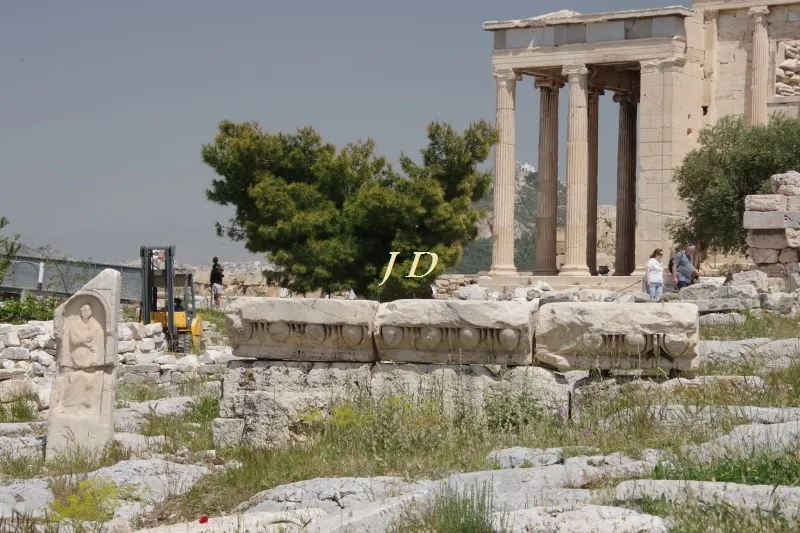
The base of the Athena Promachos statue stands on the Acropolis of Athens, between the Propylaea and the Parthenon. It is the surviving trace of a colossal bronze Athena by the sculptor Pheidias, dedicated in 458 BC. Look closely at the base’s Roman-era relief mouldings and consider how the statue once rose above the ceremonial route. It was said to be visible to sailors approaching Athens by sea. The Acropolis Museum can help put the site’s history in context before your visit.
A statue on the Acropolis route
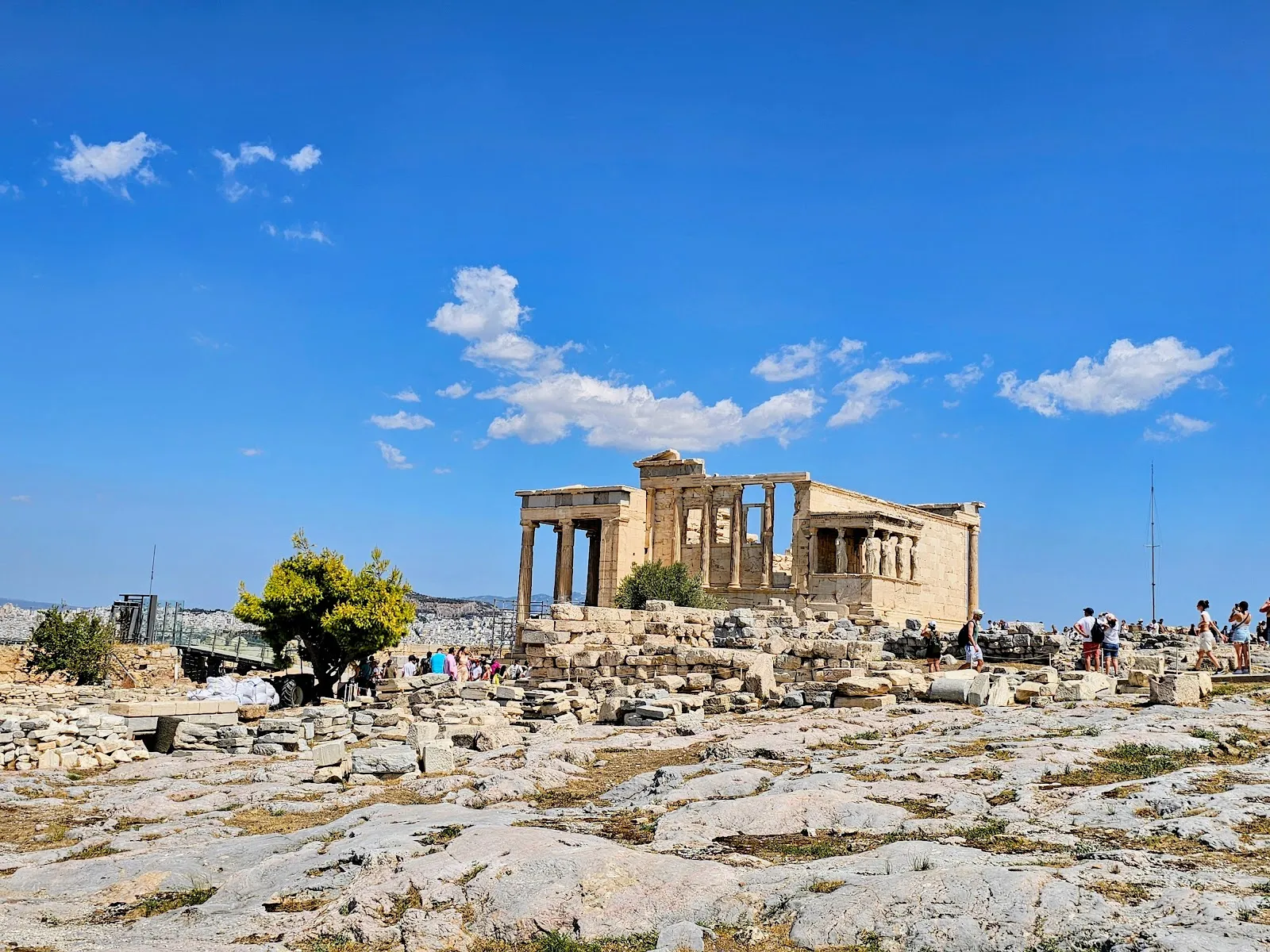
The Athena Promachos was a colossal bronze statue of Athena, the goddess associated with wisdom and warriors and the protector of Athens. The sculptor Pheidias created it, and it was dedicated in 458 BC. Its position between the Propylaea and the Parthenon placed it along the Acropolis’s main ceremonial route.
The title Promachos means “Athena who fights in the front line.” The statue was also known as the great bronze Athena. Its scale made it a prominent feature of the ancient citadel: it was said that sailors could see its top from their ships as they approached Athens.
What remains of the monument
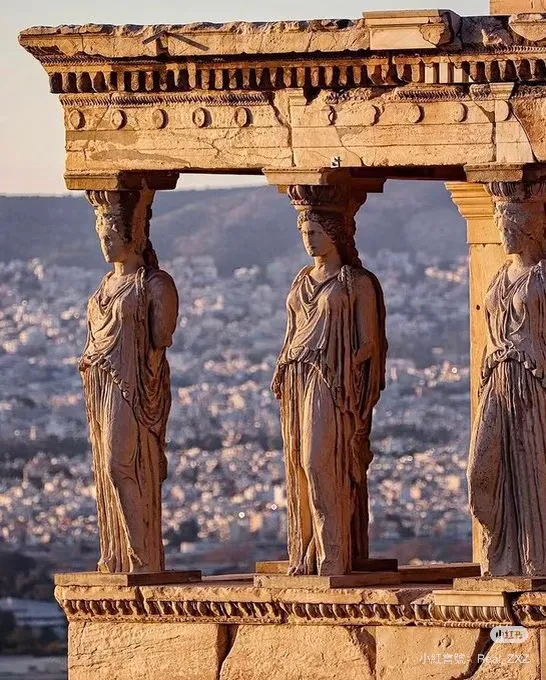
The pedestal is the surviving base of the statue. Its crowning has Roman-era relief mouldings, details worth examining as you pass. The bronze figure itself is gone, so the base is the main physical evidence of this landmark’s presence and scale on the Acropolis.
During the Byzantine period, the statue was taken to Byzantium and placed in the Hippodrome. It was later destroyed during a riot in the early 13th century. The surviving stones allow you to locate the monument in relation to the Propylaea and the Parthenon, and to picture how it once occupied this stretch of the Acropolis.
Putting the site in context
The Acropolis contains several monuments with their own histories, including the Erechtheion, the Propylaea, the Temple of Athena Nike and the Parthenon. The Athena Promachos base is one part of this larger archaeological setting, rather than a separate destination.
A visit to the Acropolis Museum before going up can help you understand the site’s history. Once on the Acropolis, give the remaining stones a close look. Bring water and sun protection, since shade is limited and the hill can be hot even in autumn.
FAQ
Where is the base of the Athena Promachos statue?
It is on the Acropolis of Athens, between the Propylaea and the Parthenon.
What can you see at the site today?
The statue’s surviving base, including Roman-era relief mouldings. The bronze statue itself no longer remains.
When is a good time to visit?
Early morning or late afternoon brings cooler temperatures and fewer crowds.
How can I prepare for a visit?
Bring water, a hat and sunscreen because the Acropolis has little shade. Visiting the Acropolis Museum first can help put the site in context.