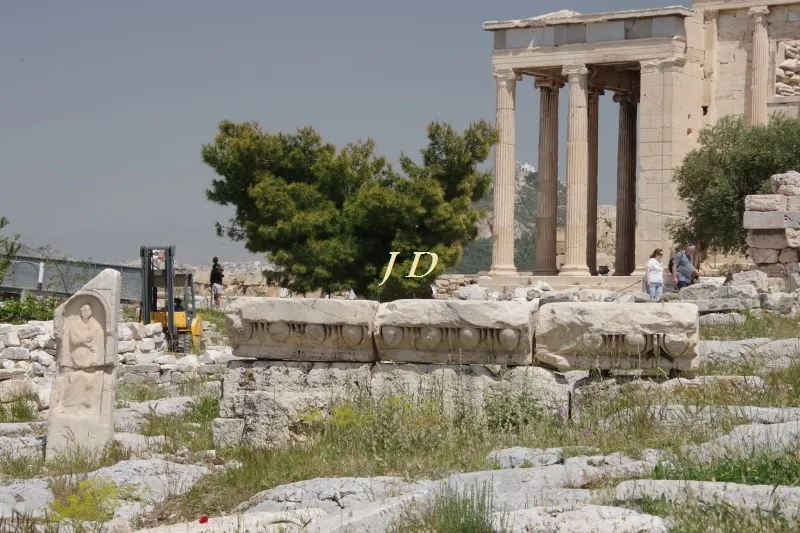
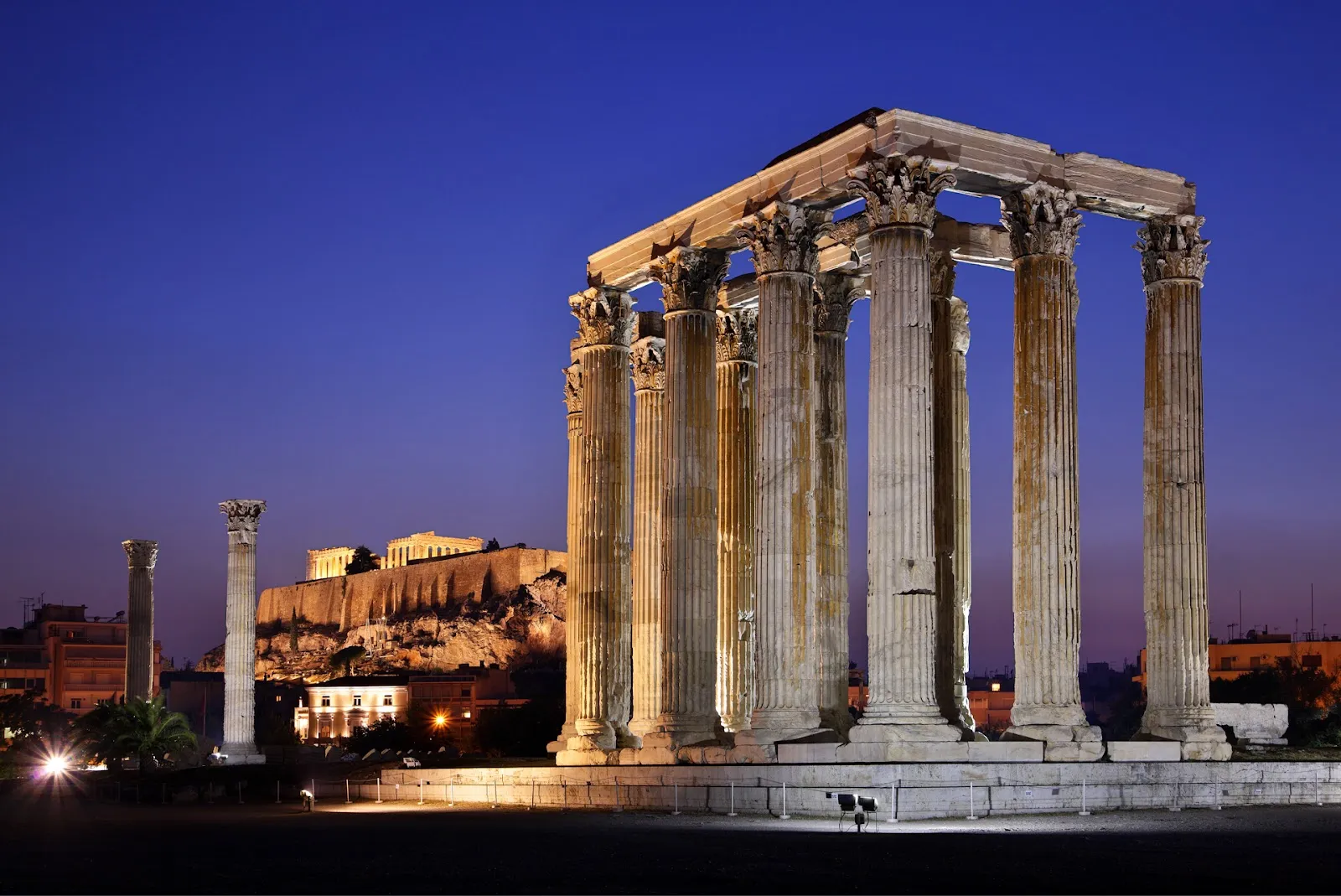
The Parthenon is a fifth-century BC temple to Athena, high on the Acropolis in central Athens. Its marble columns and sculpted details make it the hill’s best-known monument, while the summit gives you broad views across the city. The temple is part of a larger archaeological site, with the Erechtheion, the Propylaea and the Temple of Athena Nike nearby. Restoration work continues, so the structure may look different in places as teams preserve it. Allow time to explore the other monuments on the Acropolis as well.
A temple to Athena
The Parthenon was built on the Acropolis, the rocky citadel above Athens, as a temple dedicated to Athena, the city’s patron goddess. Construction began in 447 BC under the leadership of Pericles, and the temple was completed in 438 BC. It replaced an earlier temple that had been destroyed during the Persian Wars. The building’s name refers to Athena Parthenos, or Athena the Virgin.
The temple belongs to a sacred site with a much longer history. The Acropolis was inhabited from the fourth millennium BC, and its most familiar surviving monuments date to the fifth century BC. The hill later remained a centre of Athenian religious life. Seeing the Parthenon in this setting helps place it among the other buildings and sacred spaces around it, rather than as an isolated ruin.
Columns, marble and sculpture
Architects Iktinos and Kallikrates designed the Parthenon, and the sculptor Phidias was responsible for its sculptural decoration. The building is a major example of the Doric order, with a colonnade and carved elements across its exterior. It was constructed largely from white Pentelic marble, including its columns and sculptural decoration. The metopes, frieze and pediments carried carved scenes drawn from Greek mythology.
Look closely at the surviving stonework, but remember that the temple has lost much of its original decoration and structure. The remains still give a sense of the scale and care of the design. Restoration work is ongoing, so you may see areas being conserved. The work is part of the effort to preserve the monument, not a reconstruction that returns it to its original appearance.
Other monuments on the Acropolis
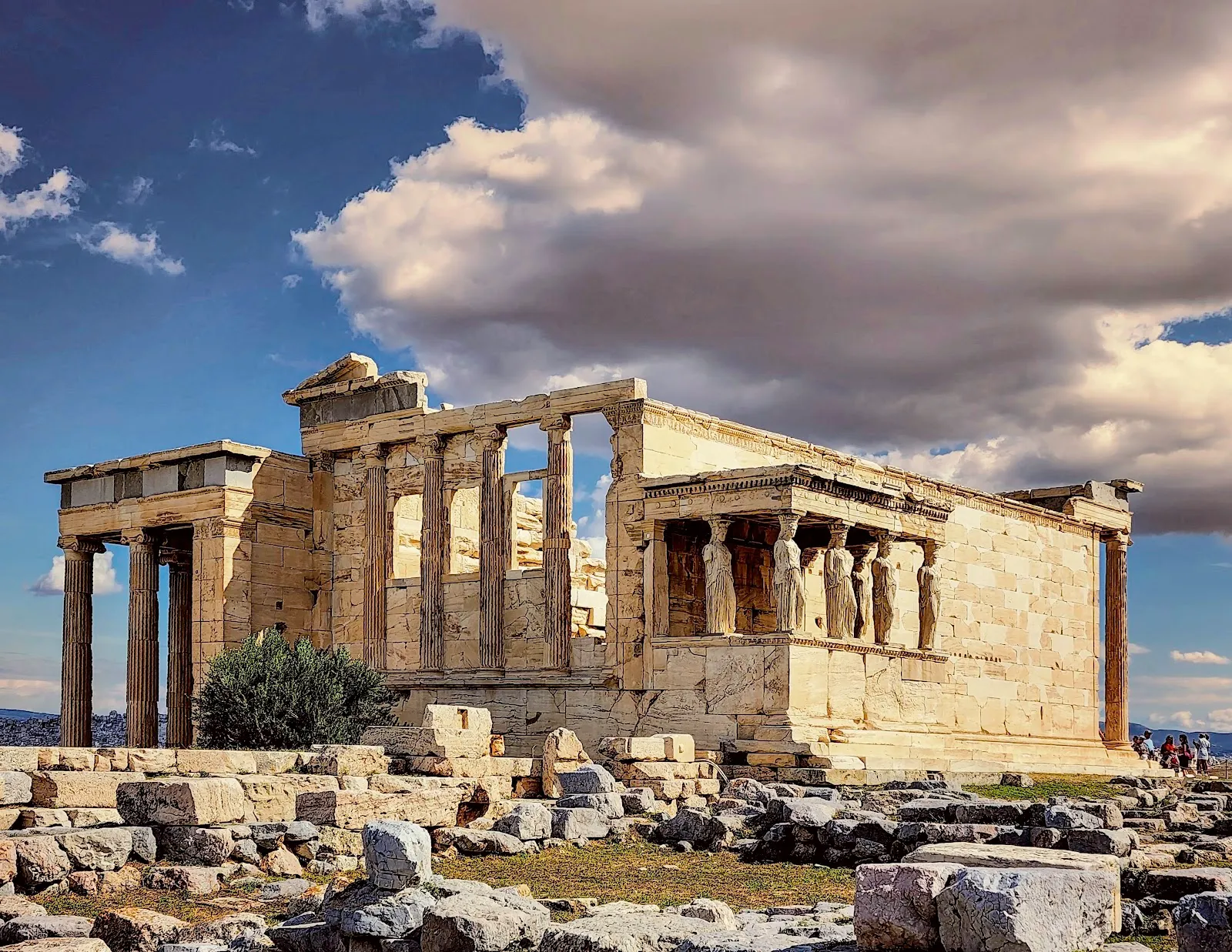
The Parthenon is the best-known building on the hill, but the surrounding Acropolis has several other major monuments. The Erechtheion is associated with both Athena and Poseidon and is known for its Caryatids, sculpted female figures used as architectural supports. The Temple of Athena Nike stands nearby, dedicated to Athena in her role as bringer of victory. The Propylaea forms the monumental entrance to the Acropolis.
The site also includes the Theatre of Dionysus and the Odeon of Herodes Atticus. Allow time to walk between the monuments and look at how they occupy different parts of the hill. A visit to the nearby Acropolis Museum can add context to the sculptures and other objects connected with the site; its displays include material related to the Parthenon’s frieze and pediments.
A building with several lives
The Parthenon’s original role was as a temple to Athena, but its use changed over the centuries. It later became a church dedicated to the Virgin Mary and, during Ottoman rule, a mosque. Damage over time left the building partly ruined, and the surviving structure is not intact. Its history includes the explosion of 1687, after which the monument was not fully rebuilt.
Today the Parthenon is one of the central monuments of the Acropolis and an enduring symbol of ancient Athens. Its history is visible in the surviving architecture, the missing sections and the restoration work. Looking at it alongside the other buildings on the hill gives a fuller picture of the site’s changing religious and civic roles.
FAQ
What was the Parthenon built for?
It was built as a temple dedicated to Athena, the patron goddess of Athens.
How long should I allow to visit the Parthenon?
Allow around 2 to 3 hours to explore the Parthenon and other monuments on the Acropolis.
When is a good time to visit the Parthenon?
Early morning or late afternoon brings cooler conditions than the heat of the day.
Is the Parthenon the only monument on the Acropolis?
No. The Acropolis also includes the Erechtheion, the Propylaea, the Temple of Athena Nike and ancient theatres.