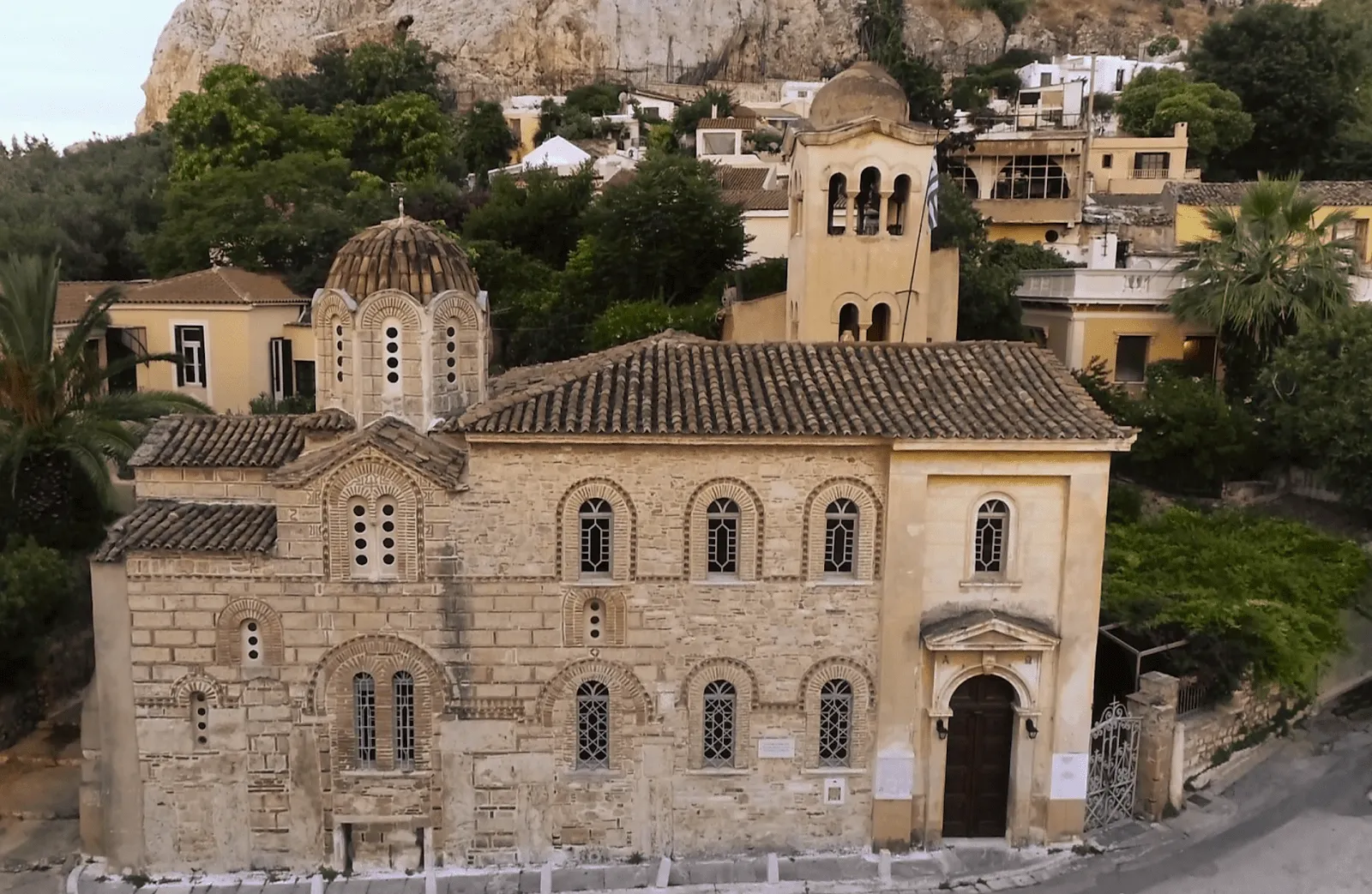
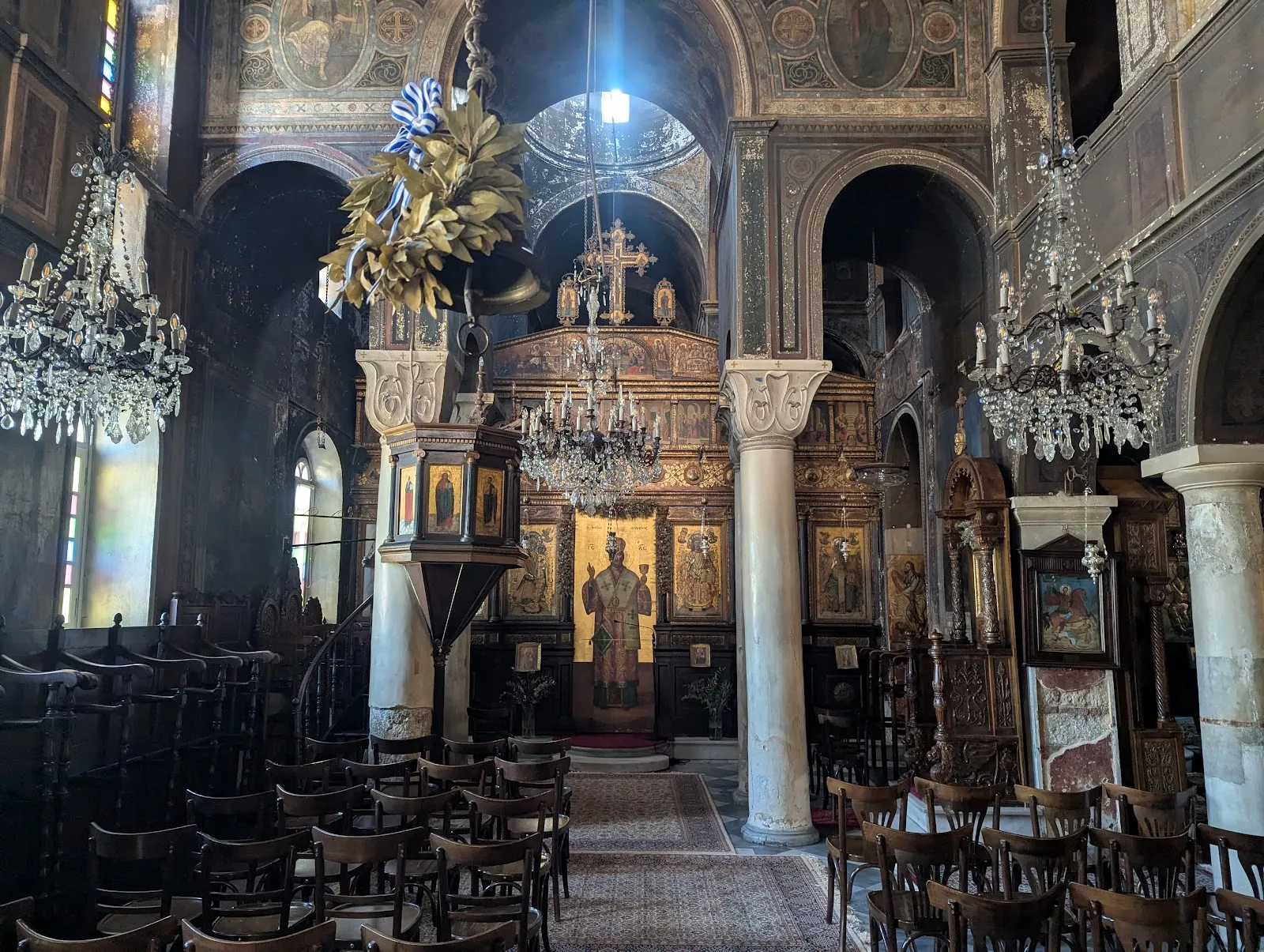
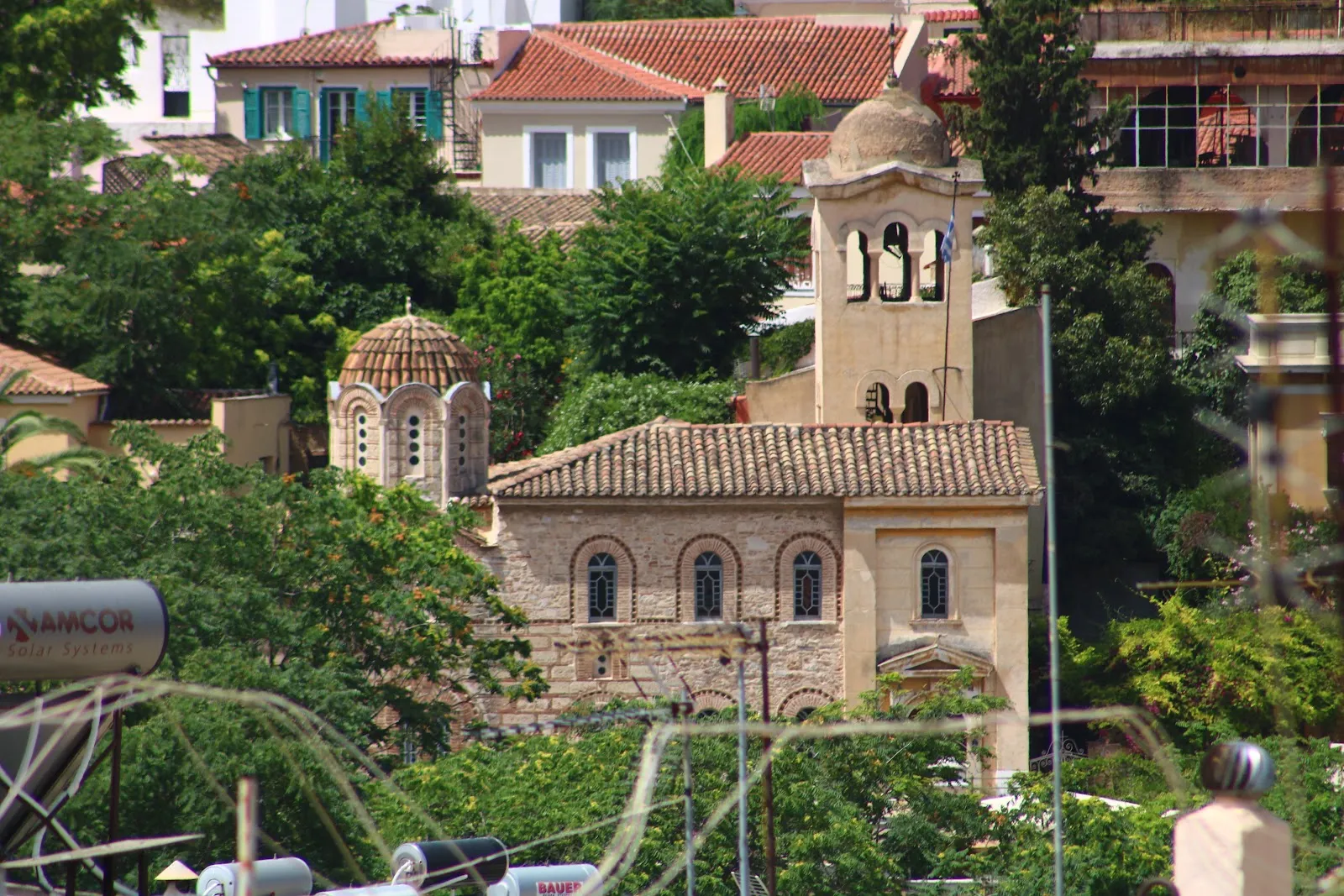
Holy Church of Saint Nicholas Rangavas is an 11th-century Greek Orthodox church in Athens’ Plaka, between Prytaneiou and Epimarchou streets near the Acropolis. Its compact Byzantine design has a cross-in-square plan, a dome, patterned brick-and-stone masonry and reused marble columns. Inside, look for the historic bell associated with Athens’ liberation and independence. Sunday morning brings a chance to hear Byzantine singing during the service; plan to be respectful of worshippers, as the church is an active place of prayer.
An 11th-century church in Plaka
Saint Nicholas Rangavas stands in Anafiotika, on the slopes of the Acropolis, between Prytaneiou and Epimarchou streets. Built in the second half of the 11th century, it is among Athens’ oldest surviving Greek Orthodox churches and an important example of Byzantine architecture in the city. Its name is connected to Byzantine Emperor Michael I Rangabe.
The building is modest in scale. Its cross-in-square plan is crowned by a dome, while stone and brick are arranged in patterned masonry. Ancient marble columns have also been reused in its walls, bringing older building material into the church’s structure.
The bell and the church’s history
The church’s bell is associated with two moments in Athens’ history. It rang in 1833, after the country gained independence from Ottoman rule, and again on October 12, 1944, following the city’s liberation from German occupation. The bell is displayed in the church foyer.
The building also bears traces of conflict and repair. A cannonball struck it during the Venetian siege of 1687, and repairs followed in the 18th century. Restoration work took place in the 1970s. A chapel dedicated to Agia Paraskevi was added in 1838.
Visiting during a service
Saint Nicholas Rangavas remains an active place of worship. Sunday morning services include Byzantine singing, and visitors have described the congregation as welcoming to people attending from abroad. If you enter during worship, move quietly and follow the congregation’s lead; a few Greek words may help you recognise parts of the liturgy.
The church is close to the Lysicrates monument and other historic churches in Plaka. Its location in Anafiotika’s narrow lanes means it can take attention to find, especially on the sloping streets. The church is small, so a service may leave little room for sightseeing. Give worshippers space and save a closer look at the architecture for a quieter moment.
FAQ
Where is Saint Nicholas Rangavas Church?
It is in Anafiotika, Plaka, between Prytaneiou and Epimarchou streets, near the Acropolis.
How old is Saint Nicholas Rangavas Church?
The church was built in the second half of the 11th century.
What is the historic bell known for?
It rang in 1833 after Greek independence and again on October 12, 1944, after Athens was liberated from German occupation. The bell is displayed in the church foyer.
Can you hear Byzantine singing at the church?
Sunday morning services include Byzantine singing. The church is an active place of worship, so be quiet and respectful if you attend.