Heidelberg Castle is a red sandstone ruin on the Königstuhl hillside above the Old Town and the Neckar River. Most of what stands today dates from the Renaissance. French troops destroyed much of it in the 1600s, and lightning finished the job in 1764. Restored rooms and bare ruins sit side by side, so you can see how old the walls are. The visit includes the large inner courtyard, the Heidelberg Tun (a huge wine barrel), the German Apothecary Museum and wide views over the town and river. Gardens and a viewing terrace surround the buildings.
Built, burned and left as a ruin
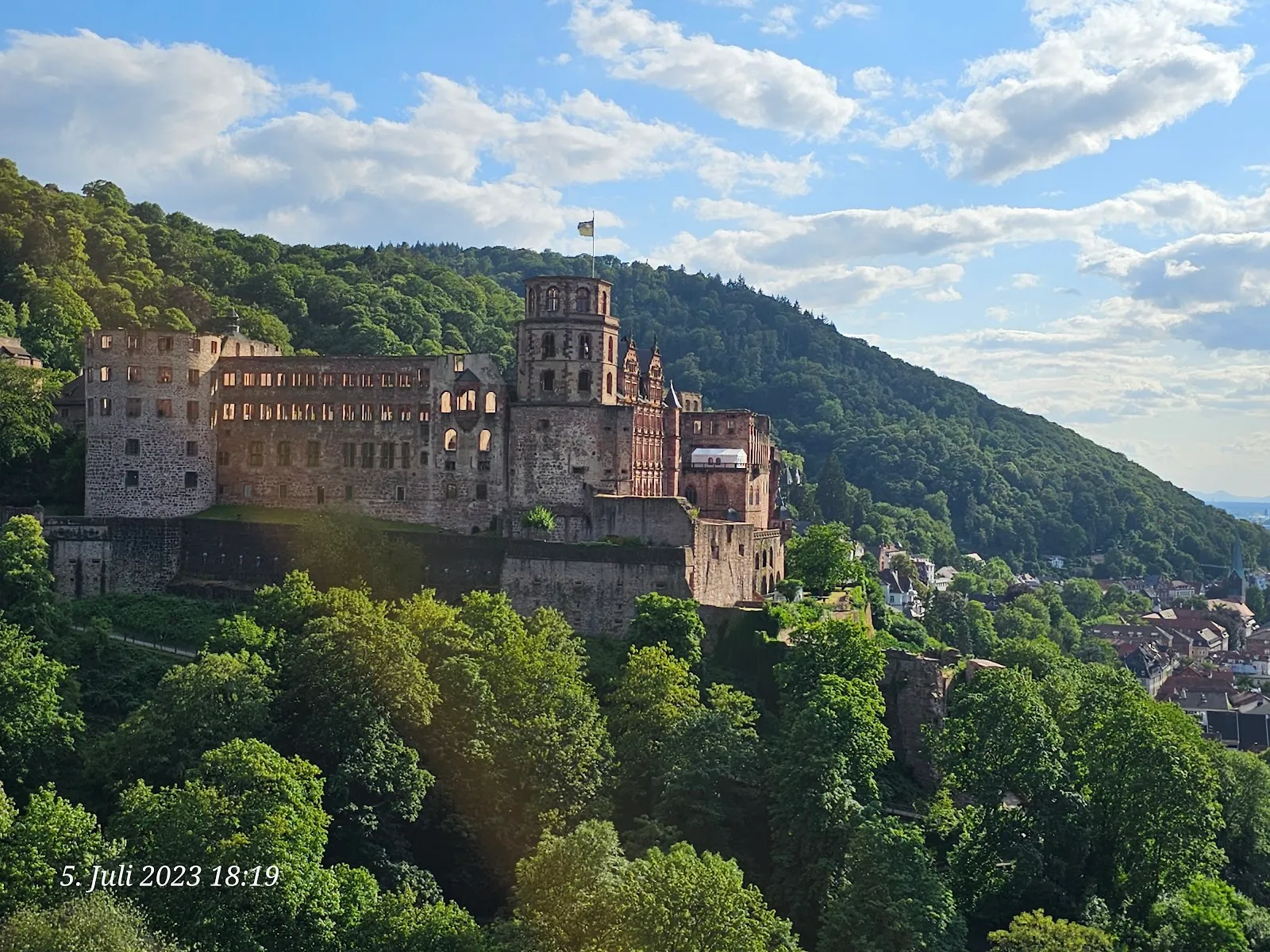
Heidelberg Castle was the residence of the Palatine prince-electors for centuries. Most of the buildings you see were put up in the Renaissance, and the best known of them are the Otto-Heinrichsbau and the Friedrichsbau, both with detailed sandstone facades.
French forces devastated the castle in 1689 and 1693. In 1764 lightning struck it again, and rebuilding was no longer possible. Around 1800, artists from across Europe came to paint the ruin above the river, and German Romantic writers stayed in Heidelberg. The castle became one of the first in Germany to be preserved officially as a historic monument. Some parts have been rebuilt, but the site is still valued as a ruin.
Mark Twain, who visited in 1878, wrote that a ruin has to be rightly placed to work, and that this one could not have been placed better.
The courtyard, the Tun and the Apothecary Museum
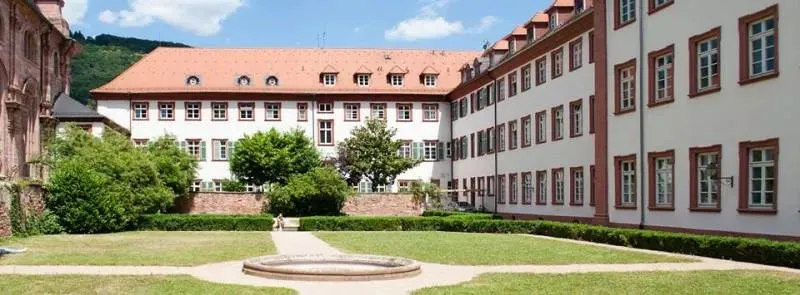
The inner courtyard is the largest and most elaborate of any German castle in the view of some visitors. Facades from different periods surround it, and statues of emperors and kings decorate the walls.
In the cellar is the Heidelberg Tun, widely described as the world's largest wine barrel, with a capacity of over 220,000 liters. It is small details like the stairs beside it that show how big it is.
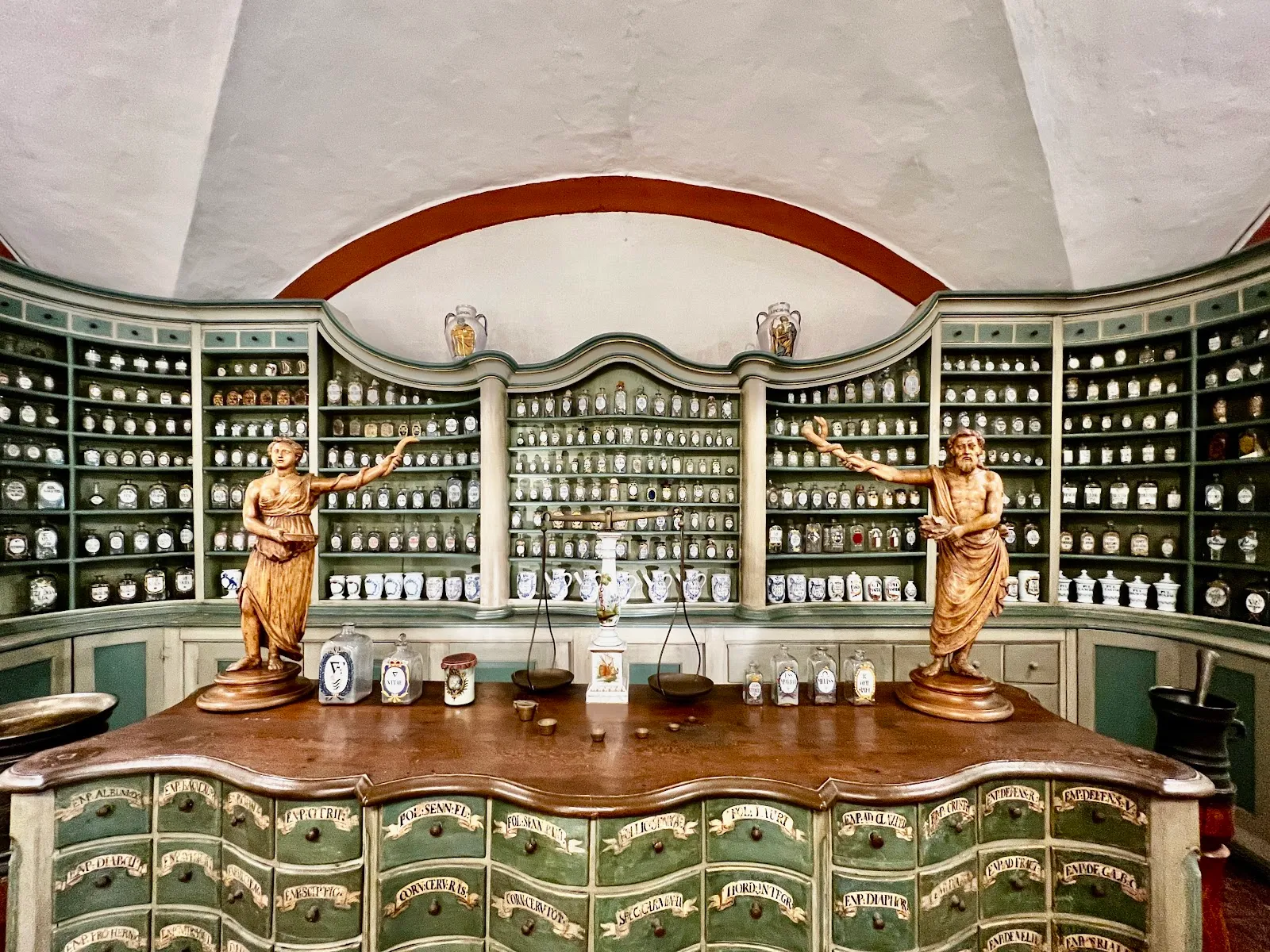
The German Apothecary Museum has been in the castle since 1957. It follows the apothecary trade from ancient times to the 20th century, with old pharmacy workshops, an alchemical laboratory and collections on healing methods that now look unfamiliar. Allow about 45 minutes for it.
Gardens, terraces and viewpoints
The castle is surrounded by gardens and terraces, and the gardens are open around the clock. Plaques and memorials to poets and historical figures stand among the plants, and there are benches for sitting and looking out. The Scheffel Terrace and the main balcony look over the river and the Old Town. Seen from across the Neckar, the castle is lit at night.
The grounds also include two restaurants, a wine bar and a café, so you can stay for a meal or a drink. A path leads further up the hillside above the castle.
Getting up and what the ticket covers
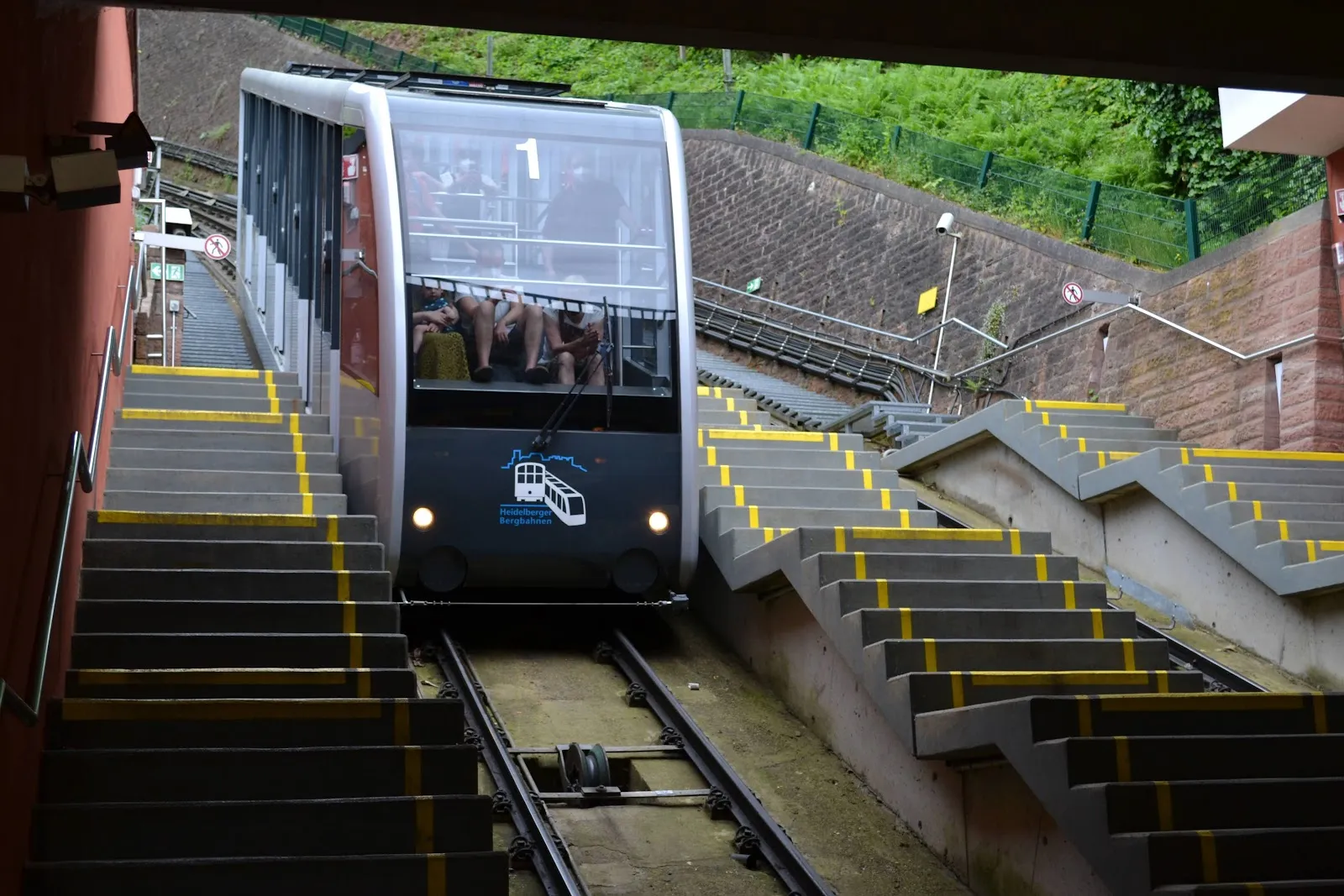
You can walk up from the Old Town on a steep cobbled path, or take the Bergbahn funicular from Kornmarkt station. The funicular continues past the castle station to Molkenkur, and an older electric line goes on to the Königstuhl, the highest point above the town. A funicular ticket also gives access to the castle grounds. It is not covered by the Deutschlandticket, and students get half-price.
The standard castle ticket covers the courtyard, the Great Tun and the German Apothecary Museum. Interior rooms need a guided tour, which lasts about an hour. If you plan to see all of this, including the gardens and a funicular ride, a full visit takes four to five hours.
If you come by car, parking is paid and some distance from the castle. One car park can be paid for and extended through an app.
Summer festival and evening visits
From the end of June to mid August the castle hosts the Heidelberger Schlossfestspiele. Theater und Orchester Heidelberg uses the Schlosshof, the Dicker Turm and the Englischer Bau as stages for plays and gala concerts. The most famous production is the Student Prince.
After 6 pm the grounds can be walked for free, which suits an evening visit when the stone catches the light and the crowds have thinned.
FAQ
Is there an entry fee for Heidelberg Castle?
The courtyard, the Great Tun and the Apothecary Museum need a ticket. The grounds can be walked for free after 6 pm, and the gardens are open day and night.
How long do you need at Heidelberg Castle?
Plan at least a couple of hours for the grounds and courtyard. With a guided tour of about an hour, the Apothecary Museum and a funicular ride, a full visit takes four to five hours.
How do you get up to the castle?
You can walk up a steep cobbled path in roughly 10 to 15 minutes or take the Bergbahn funicular from Kornmarkt station. Walking shows you more of the surroundings.
Can you see the inside of the castle?
Yes, but only on a guided tour, which is sold separately from the standard ticket. The courtyard, the Great Tun and the Apothecary Museum are covered by the standard ticket.
Are dogs allowed at Heidelberg Castle?
Dogs are allowed in nearly all areas of the castle.