
Inside Cologne’s former Church of St Cecilia, the Schnütgen Museum brings together medieval Christian art and the architecture of a Romanesque church. Its collection includes wood and stone sculpture, stained glass, carved ivory, textiles, manuscripts and precious metalwork. Look for the expressive carved figures and intricate religious objects, then take time to notice how the church’s nave and aisles shape the display. The museum shares a lobby with the Rautenstrauch-Joest Museum, and a combined ticket covers both.
St Cecilia’s Church becomes a museum
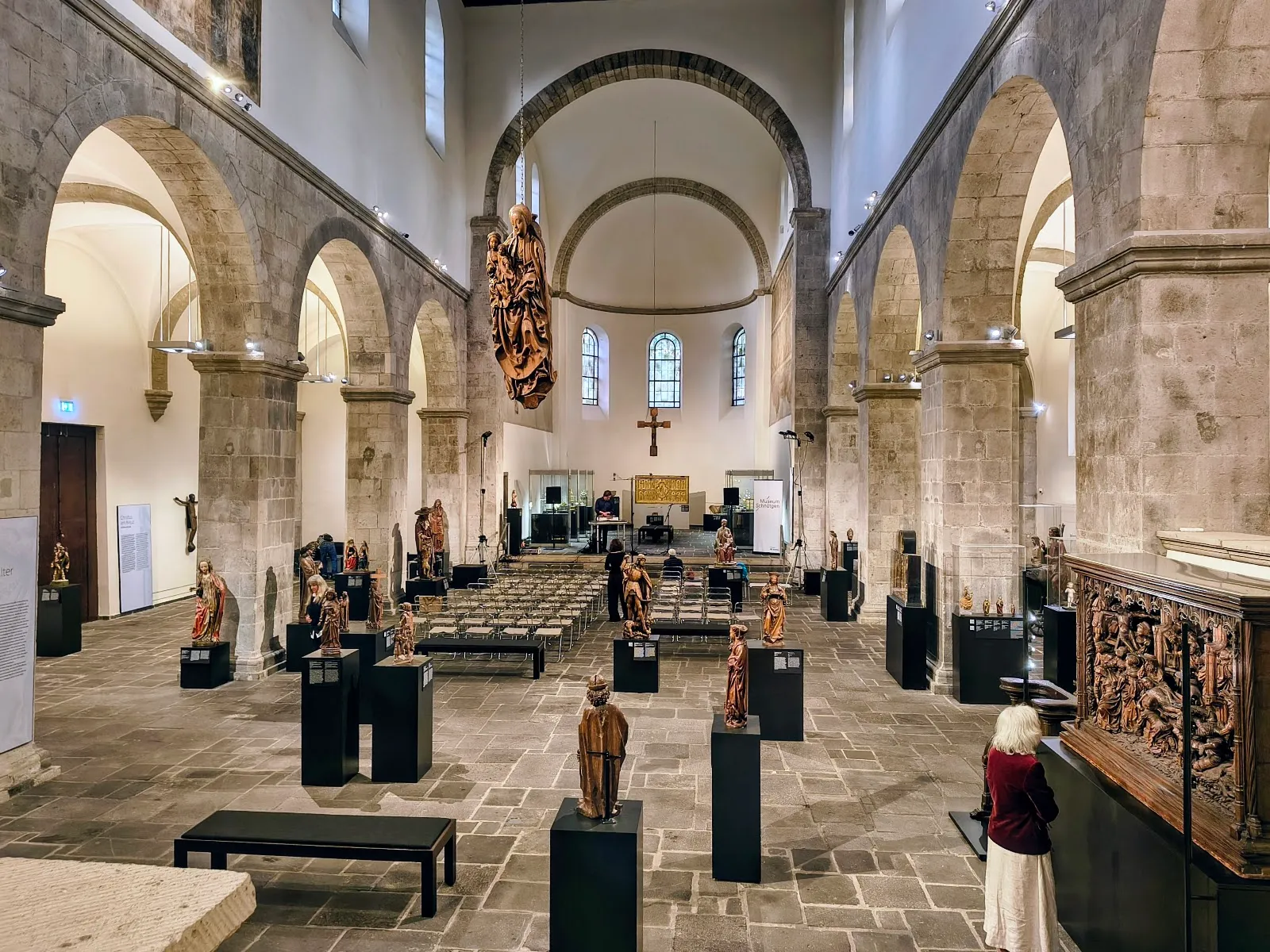
The collection is housed in St Cecilia’s Church, a Romanesque building completed in 1160. The church became a museum in 1956, and it still largely retains its earlier appearance. Here, the architecture is part of the visit: works of religious art stand in the nave and aisles of a former church rather than in a setting separate from their original devotional context.
The museum’s collection began with Alexander Schnütgen, who donated his artworks to the city of Cologne in 1906. It spans Christian art from the 5th to the 19th century, with much of the collection focused on medieval works from the Rhineland. Most of the objects date from the 11th to the 16th centuries, alongside pieces from later periods and other parts of Europe.
Sculpture, glass and finely worked objects
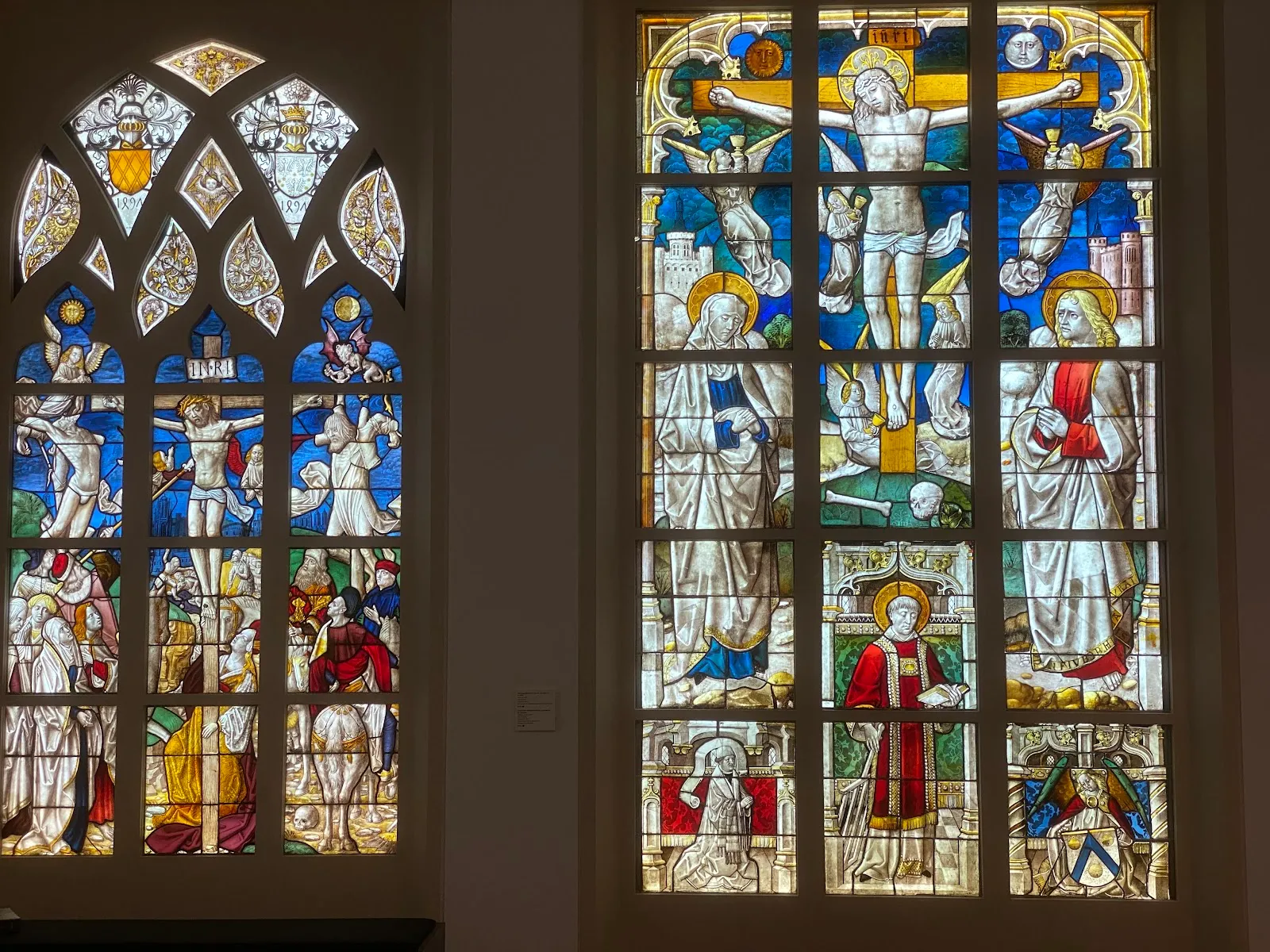
The displays include sculpture carved in wood and stone, stained glass, paintings, textiles, manuscripts and goldsmiths’ work. Smaller objects reward a close look: carved ivory, book covers, reliquaries made with rock crystal and illuminated manuscripts show the care invested in both materials and detail.
Among the works singled out in the collection are the Crucifix from St George’s Church, the Comb of St Heribert and the Parler Bust. The St George Crucifix is noted for its expressive character, while the comb is a delicate ivory carving. The museum also displays original stained-glass windows and carved figures from Cologne Cathedral. The range gives you a sense of the different forms medieval religious art took, from large sculptures to objects designed to be held or handled.
How to explore the collection
Take your time with the carved figures and the details of the smaller objects. The church setting changes the way the works appear together: the building’s older forms and the light in the nave and aisles are part of what you see as you move through the displays. Quiet spaces also make it easier to pause and look closely.
The museum shares a lobby with the Rautenstrauch-Joest Museum, and one combined ticket covers both institutions. If you plan to visit both, allow time for each rather than treating the Schnütgen collection as a quick stop. Lockers are available for bags; you need a €1 coin, which is returned when you leave. Some steps can pose a challenge for visitors with mobility difficulties, but the main level still has plenty to see.
FAQ
How long should I spend at the Schnütgen Museum?
Allow 90 minutes to 2 hours to explore the collection in detail. A quicker visit can take less than an hour.
Is there a combined ticket with another museum?
Yes. One combined ticket covers the Schnütgen Museum and the Rautenstrauch-Joest Museum, which share a lobby.
Are lockers available?
Yes. Lockers are available for bags and require a €1 coin, returned when you leave.
Is the museum accessible for visitors with mobility difficulties?
Some steps may be difficult to navigate. There is still plenty to see on the main level.


